

Essen gegen Rheuma - praktische Ernährungstipps
Rheuma ganzheitlich begegnen: praktische Tipps und Rezepte für eine entzündungshemmende Ernährung als Prävention oder Therapiemassnahme.
Inhaltsverzeichnis
| Wir bieten wissenschaftlich fundierte Informationen zu Gesundheit, Ernährung und Nachhaltigkeit – unabhängig von Sponsoren, Lebensmittelindustrie oder Herstellern von Nahrungsergänzungsmitteln. Hier erfahren Sie mehr: unsere Mission. |
Einführung
Viele Menschen mit Rheuma fühlen sich der Krankheit ausgeliefert – doch die richtige Ernährung kann ein Weg zurück zur Selbstwirksamkeit sein.
Ernährung spielt bei sämtlichen rheumatischen Erkrankungen eine zentrale Rolle: präventiv zur Senkung des Erkrankungsrisikos und therapeutisch zur Linderung akuter Beschwerden. Zwischen diesen Polen existieren individuelle Übergänge - etwa das schrittweise Streichen typischer Rheumatrigger20,33 oder die gezielte Förderung von Darm- und Immungesundheit.35,72 Alles zusammen erreichen Sie mit gesundem Veganismus und gezielten zusätzlichen Empfehlungen (je nach Rheumatyp). Ein wichtiger Baustein sind dabei Rezepte, die entzündungshemmende, ausgewogene und pflanzenbasierte Ernährung alltagstauglich machen. Die Effekte reichen von einem generellen gesteigerten Wohlbefinden über weniger Beschwerden bis hin zu reduzierten Entzündungsmarkern.
Zur besseren Einordnung der praktischen Ratschläge verweisen wir auf zwei ergänzende Artikel:
- Ernährung gegen Rheuma: ein unterschätztes Thema beleuchtet die wissenschaftliche Basis der Ernährungstherapie.
- Rheuma - was bedeutet das? bietet eine medizinische Klassifizierung der Krankheitsbilder und Hintergrundinformationen zu Risiken, Symptomen und Häufigkeit. Der sehr ausführliche Beitrag ist vor allem für ExpertInnen und PatientInnen gedacht.
Beide Texte schaffen ein solides Fundament für die Strategien, die wir im Folgenden vorstellen - von präventiven Massnahmen bis zu konkreten Ernährungstipps bei akuten Symptomen.
Ernährung als Prävention
Gäbe es eine klassische Rheumapatientin oder einen klassischen Rheumapatienten, liessen sich Ernährungsempfehlungen leicht ableiten. In Wirklichkeit offenbart sich aber eine grosse Bandbreite an Ausprägungen, abhängig vom Krankheitsbild und von der individuellen Reaktion.
Menschen mit gesundem Lebenswandel, aber genetischer Vorbelastung in der Familie, sind häufig bereit, ohne Medikamente konsequent die Risikofaktoren zu senken. Für diese braucht es ernährungstechnische Aufklärung, inwiefern eine gesunde Ernährung Rheuma vorbeugen kann; damit meinen wir eine entzündungshemmende, ausgewogene und pflanzenbasierte Ernährungsweise. Empfehlenswert ist ein Umstieg auf gut informierten Veganismus10,30,36,55,68 (oder sogar Roh-Veganismus39). Das führt unter anderem zu einer verminderten Immunantwort auf Nahrungsmittelantigene, senkt Entzündungsmarker und verändert die Darmmikrobiota günstig.17,27,29,36,38,52,68 Allgemein nehmen bewusst essende VeganerInnen mehr Antioxidantien mit der Nahrung auf als KonsumentInnen von Mischkost oder vegetarischer Kost, was mit einer reduzierten Gelenksteifigkeit und weniger Schmerzen einhergeht.10,29 Moderatere Konzepte wie die mediterrane Diät, DASH (Dietary Approaches to Stop Hypertension)10,18,20 oder Varianten der vegetarischen Ernährung11 sind zwar weniger entzündungsfördernd und weniger einseitig als Fastfood bzw. andere westliche Ernährungsweisen; dennoch liefern sie entzündungsfördernde Inhaltsstoffe in Mengen, die nicht vernachlässigbar sind. Daher betrachten wir sie als eine Stufe vom Idealszenario entfernt.
Bei der Umstellung auf vegane Ernährungsweise ist ein ärztlicher Nährstoffcheck (u.a. Urin, Blut) hilfreich, der potenzielle Mängel aufzeigt und beim Erarbeiten eines sinnvollen Ernährungsplans hilft.
Supplemente braucht es bei einer ausgewogenen pflanzenbasierten Ernährung eher selten, darüber informieren wir im Beitrag Veganer essen oft ungesund. Vermeidbare Ernährungsfehler.
- Ein gutes Auge auf die Calciumwerte zu haben, ist sicher bei Osteoporose und Arthrose zentral, jedoch liefert ein gut durchdachter veganer Speiseplan inkl. Mineralwasser grundsätzlich genügend Calcium.10,33
- Möglicherweise ist für gewisse Risikogruppen eine Supplementierung von Vitamin D sowie der Omega-3-Fettsäuren EPA und DHA in Betracht zu ziehen. Vitamin B12 ist immer notwendig.1,23,35,47,56,59,70
Eine wichtige Grundlage für eine gute Reflexion ist die Dokumentation. Wir empfehlen, ein Ernährungstagebuch zu führen - sogar vor Beginn einer Veränderung (analog oder digital). Erst einmal, um festzuhalten, was innerhalb einer Woche auf dem Speiseplan steht (inkl. Getränke). Notieren Sie Ihre Essgewohnheiten so detailliert wie möglich (was, wie viel, wann, wo?). Ergänzen Sie allfällige Symptome, Ihr Wohlbefinden, Beschwerden, alles, was Ihnen auffällt (Verdauung, Müdigkeit, Energie etc.). So erkennen Sie mögliche Unverträglichkeiten oder Allergien besser. Für die Auswertung helfen Farben, um die Häufigkeit der zu sich genommenen Lebensmittel besser zu veranschaulichen und Muster zu erkennen (wie oft Fleisch, Gemüse, Snacks, Süssigkeiten, Süssgetränke etc.).
Das Ernährungstagebuch führen Sie auch bei einer therapiebezogenen Ernährungsumstellung fort. Diese beinhaltet häufig eine (zeitlich begrenzte) Fastenkur oder Exklusionsdiät und endet ebenso in einer pflanzenbasierten, vollwertigen Ernährungsform. Am besten nuancieren Sie diese zusätzlich mittels unserer Spezialtipps, die wir auf verschiedene Rheuma-Arten abgestimmt haben (siehe Kap. Ernährung als Therapie).
Bestandteile einer gesunden Ernährungsumstellung
Wer puncto Ernährungsempfehlungen eine Orientierungshilfe sucht, findet in der Literatur gegen Rheuma oft nicht das Richtige. Auch gängige Ernährungspyramiden / Ernährungsgrafiken gegen Rheuma1,17,56 bilden die gewonnenen Erkenntnisse nicht konsequent ab. Sie stellen also keine Musterlösung dar, sondern bloss eine nicht mehr so schlimme Version der westlichen Ernährungsweise. Siehe unseren Artikel Ernährung gegen Rheuma: ein unterschätztes Thema.
Im folgenden Abschnitt definieren wir Richtwerte für eine gesunde Ernährungsumstellung. Dazu listen wir beispielhaft Lebensmittel auf, die zu einer vollwertigen Pflanzenkost gehören.
- Spezifische Hinweise (inkl. Quellen) finden Sie in den verlinkten Zutaten.
- Weitere Ausführungen in Zutatentexten lokalisieren Sie mittels unserer Zutatensuche, z.B. mit den Stichworten: Arthrose, Rheuma, Osteoporose, Arthrose (für englischsprachige Bezüge: Osteoarthritis) oder Gicht.
- Sekundäre Pflanzenstoffe (SP) sind ein wichtiger Bestandteil einer gesunden Ernährung. Lesen Sie daher unseren Artikel Sekundäre Pflanzenstoffe - Phytochemikalien (oder den kürzeren Überblick: Sekundäre Pflanzenstoffe - Phytochemikalien).
- Für ausführlichere Erklärungen verweisen wir auf das Kapitel Ernährung als Therapie und die Tipps zu einzelnen Krankheiten.
Eine gut durchdachte, gesunde und dauerhaft praktizierte Ernährung gegen Rheuma ist...
...frei von tierischen Fetten und tierischen Proteinen
Das Ziel ist, tierische Produkte zu meiden und auf eine pflanzenbasierte, also vegane Kost umzustellen. Eine vegetarische Ernährung hat zwar Vorteile11 gegenüber der westlichen Ernährung,22 führt uns aber in der Regel mehr entzündungsfördernde Stoffe zu als eine vegane (falls ausgewogen).10,34
- Tierische Lebensmittel enthalten viele gesättigte Fettsäuren (SFAs).13,23 SFAs erhöhen das Risiko für rheumatoide Arthritis (RA).29 Lesen Sie mehr unter Tipps gegen rheumatoide Arthritis.
- Die Omega-6-Fettsäure Arachidonsäure (AA) kommt in tierischen Produkten vor, da Pflanzen keine langkettigen, mehrfach ungesättigten Fettsäuren synthetisieren können.69 Sie ist der Ausgangsstoff für entzündungsfördernde Botenstoffe.55
- Ersetzen Sie tierisches Eiweiss durch pflanzliche Quellen30,55 (siehe Tipps gegen rheumatoide Arthritis).
- Tierisches Eiweiss erhöht allgemein die Säurelast im Körper (siehe Tipps gegen Osteoporose).10
- Überdies enthalten tierische Lebensmittel wie Fleisch und Fisch sehr viel Purin, was zu einer erhöhten Harnsäurebelastung im Körper führt (Achtung bei Gicht - siehe Tipps gegen Gicht).
Das bedeutet:
- Kein Fleisch (inkl. Wurst), keine Milch oder Eier. Pflanzliche Milchalternativen wie z.B. Haselnussmilch oder Hafermilch können die Umstellung erleichtern.
- Essen Sie ausreichend unverarbeitetes Obst und Gemüse (je nach Krankheit reduzieren Sie auch pflanzliches Eiweiss).
...ausgewogen und naturnah
Das Zusammenspiel der verschiedenen Komponenten eines unverarbeiteten Lebensmittels ist für unsere Gesundheit entscheidend,62 weil im menschlichen Körper mehrere biochemische Prozesse gleichzeitig ablaufen.
- Unverarbeitete Lebensmittel enthalten weniger Salz, Lebensmittelzusatzstoffe und Zucker.46
- Naturnahe Kost liefert keine hochkonzentrierten Inhaltsstoffe wie Fructosesirup oder Öle.
- Abwechslungsreiche Kost beinhaltet weniger glutenhaltiges Getreide (z.B. Weizen, Roggen oder Dinkel). Gliadin, das Hauptprotein von Gluten, macht Körperbarrieren durchlässiger (ähnlich wie Lebensmittelzusatzstoffe).58,68
- Vielfalt vermeidet Nährstoffmängel - Stichwort: Eat the Rainbow (siehe Tipps gegen Fibromyalgie).
- Ausgewogene Ernährung macht die meisten Supplementierungen unnötig, ausser Vitamin B12 (siehe Ernährung als Prävention).10,23,47,59
Das bedeutet:
- Frische statt Fertigprodukte:
- Weintrauben, Muscadine: Polyphenole (SP) wirken der Entstehung und Verschlimmerung von RA entgegen.
- Sellerie oder der Tee daraus helfen bei Vorbeugung und Linderung von Gicht und anderen rheumatischen Erkrankungen.
- Frühlings- / Lauch- / Winterzwiebeln, roh: Wirkungen gegen Arthritis und Fettleibigkeit sind belegt.
- Blumenkohl: Kalium und die harntreibenden und blutreinigenden Eigenschaften dieses Kohlgemüses sind hilfreich bei rheumatoider Arthritis und Gicht.
- Linsen, rot, gekocht: Linsen haben für pflanzliche Lebensmittel einen hohen Anteil an Purinen. Menschen mit einem erhöhten Harnsäurespiegel oder Gichterscheinungen sollen purinreiche Nahrungsmittel aus tierischen Quellen strikt vermeiden. Pflanzliche Lebensmittel mit Purinanteil sind besser verträglich.
- Apfel (mit Schale): Rohe Äpfel mit Schale haben positive Effekte auf Begleiterkrankungen, Adipositas und die Darmflora, z.B. bei reumatoider Arthritis.
- Granatapfel: Flavonole (SP) wirken gegen Arthritis.
- Mirabellen: Mirabellen und Pflaumen sind entzündungshemmend, antioxidativ und senken das Risiko für Osteoporose, da vor allem Polyphenole (SP) die Knochendichte erhöhen.
- Sauerkirschen, getrocknet, ungesüsst: Ungesüsste Sauerkirschen versprechen Wirkungen gegen Arthrose.
- Wassermelonen: Luteolin und Chlorogensäure zählen zu den wichtigsten phenolischen Verbindungen. Die Kombination beider Moleküle hat Potenzial zur Eindämmung entzündlicher Prozesse bei rheumatoider Arthritis.
- Meiden Sie aus diesem Grund auch verarbeitete Nahrungsmittel, vor allem mit Zucker und künstlichen Süssstoffen (Aspartam, Acesulfam K, Saccharin und Sucralose – siehe Gesunde Süsse? Zwischen Mythos und Wirklichkeit). Reduzieren Sie auch Produkte aus Weissmehl (Brot, Toastbrot, Pasta, Zwieback) - diese enthalten viel Gliadin.58
- Abwechslung zwischen Vollkorngetreide, glutenfreiem Pseudogetreide und stärkehaltigen Produkten:
- Hafer (Saat-Hafer), Mais
- Reis (Basmatireis, Vollkornreis, Wildreis)
- Pseudogetreide (Quinoa, Amaranth, Buchweizen, Kañiwa)
- Teff, Hirse
- Pellkartoffeln
- Süsskartoffeln, Maniok, Yamswurzel, Esskastanien
...antioxidativ und entzündungshemmend
Besonders wichtig sind Omega-3-Fettsäuren (ALA = Alpha-Linolensäure), Vitamine und sekundäre Pflanzenstoffe.1,12,16,17,20,28,55
Omega-3 ist entzündungshemmend:
- Samen und Nüsse: Leinsamen, Hanfsamen, Chiasamen, Lupinensamen, Walnüsse, Macadamianüsse
- Gesunde Öle (nur in kleinen Mengen!): Leinöl, Hanföl, Walnussöl, Rapsöl
- Falls Sie Omega-3-Fettsäuren (EPA und DHA) als Supplemente einnehmen, achten Sie auf vegane Produkte (z.B. aus Algenöl) - diese ersetzen aber keine ausgewogene Ernährung, sondern dienen als Zusatz.
Ausschlaggebend ist zudem ein günstiges LA-ALA-Verhältnis:1,23,37 Zu viel Omega-6-Fettsäuren (LA = Linolsäure) führen zu einem Überschuss an entzündungsfördernder Arachidonsäure (AA), die der Körper aus LA herstellt.1,55 Cashewkerne, Erdnüsse, Pinienkerne, Kürbiskerne, Mandeln und Sonnenblumenkerne haben einen hohen Anteil an Omega-6-FS (Linolsäure = LA).
Essen Sie vitaminreich:
- Vitamin A: Zitronenverbene, Sauerampfer, Karotten, Süsskartoffeln, Grünkohl
- Vitamin C: Acerola, Sanddornbeeren, Echte Guave, gelbe Gemüsepaprika, rote Gemüsepaprika, Bärlauch, Bockshornkleeblätter
- Vitamin E hemmt den Knochenabbau:29,40,41 Hanfsamen, Haselnüsse, Mandeln, Weizenkeime; speziell Tocotrienol ist in: Gerstenkeimen, Annatto (Gewürz), Reiskleie, Traubenkernen, Hafer, Haferflocken, Mais, Sanddornbeeren und Roggen.41
- Vitamin K ist wichtig für die Mineralisierung von Knochen und Knorpel (siehe Tipps gegen Arthrose):23 Mangold, Grünkohl, Gartenkresse, Spinat, Chicorée, Rosenkohl, Broccoli.
- Folsäure (Vitamin B9): grünes Blattgemüse (Spinat, Römersalat), Kohlgemüse (Rosenkohl, Grünkohl, Blumenkohl, Brokkoli), Spargel, Hülsenfrüchte (Bohnen, Erbsen - siehe Tipps gegen Gicht).
- Vitamin B12: Ein Mangel verstärkt chronische Müdigkeit (Tipps gegen Fibromyalgie).56 Bei veganer Ernährung ist eine Vitamin B12-Supplementierung erforderlich.
- Vitamin D reguliert das Immunsystem und sorgt für ein gesünderes Darmmikrobiom;1,23,29,48,59 die Aufnahme via UV-Licht oder bei starkem Mangel via Supplement senkt das Risiko, an RA zu erkranken, um bis zu 40 %29,59 (lesen Sie dazu Vitamin D - ein Problem für alle?).
Sekundäre Pflanzenstoffe und wichtige Nährstoffe:28,56
- Polyphenole: Weintrauben, Äpfel, Birnen, Kirschen, Beeren (Schwarze Johannisbeeren, Rote Johannisbeeren, Preiselbeeren, Heidelbeeren, Himbeeren), Hafer, Mais, Gerste
- Calcium ist sehr wichtig bei Osteoporose (siehe Tipps gegen Osteoporose) - v.a. aus pflanzlichen Quellen: Kräuter (Rosmarin, Majoran, Oregano, Pfefferminze), Rucola, Grünkohl, Spinat, Hanfsamen und Mineralwasser (siehe Calciumgehalt von Mineralwasser verschiedener Marken im D-A-CH-Raum, wie: D: Bella Fontains: 600 mg/l; A: Rogaska: 380 mg/l; CH: Adelbodner: 550-580 mg/l oder Eptinger: 510 mg/l).
- Selen vermindert entzündliche Prozesse:29,42 Paranüsse (max. 1-2 pro Tag), Senfkörner, Weizenkeime
- Magnesium: Vollkorngetreide, Buchweizen, Quinoa, Samen (Hanfsamen, Leinsamen), grünes Gemüse (Mangold, Spinat)
- Zink: Weizenkeime, getrocknete Steinpilze, Hanfsamen, Wildreis, Flohsamenschalen
Mehr Kräuter und Gewürze statt Salz:
- Ingwer, roh und gemahlen: Ingwerextrakt lindert Schmerzen bei Arthrose und RA.
- Kurkuma, frisch und gemahlen: Entzündungshemmende Inhaltsstoffe lindern entzündliche Gelenkerkrankungen bei RA und Gelenkschmerzen bei Arthrose.
- Schwarzer Pfeffer: Das Alkaloid Piperin wirkt antiarthritisch.
- Cayennepfeffer: Ist ein bekanntes Mittel gegen Arthritis und Arthrose.
- Grosse Brennnessel: Entzündungshemmende und antioxidative Mechanismen der Brennnessel wirken schmerzlindernd. Sekundäre Pflanzenstoffe hemmen den Knorpelabbau - wichtig bei entzündlichen rheumatischen Erkrankungen und Arthrose. Dadurch verlangsamt sich der Gelenkverschleiss und die Beschwerden nehmen ab.
- Korianderblätter, roh: Antioxidative und entzündungshemmende Inhaltsstoffe (ätherische Öle und Polyphenole) helfen gegen rheumatische Beschwerden.
Das bedeutet: Essen Sie mehr Früchte (Beeren sind starke Antioxidantien), mehr vitaminreiches Gemüse, Nüsse und Samen mit gesundem LA-ALA-Verhältnis, aber auch Knoblauch und Zwiebeln (Weiteres: siehe Tipps gegen RA und Tipps gegen Fibromyalgie).
...ballaststoffreich
Auch Ballaststoffe wirken entzündungshemmend (Stichwort kurzkettige Fettsäuren: für Details siehe Konkrete Entzündungshemmer bei RA),27,29,55 verdauungsfördernd und immunmodulierend.29,31,35,37,52 Sie unterstützen sowohl Darmgesundheit als auch Darmbarriere und regulieren die Darmmikrobiota.10,17,27,29,31,38,45,52
Ballaststoffreiche Lebensmittel haben durchschnittlich mehr antioxidative Inhaltsstoffe als ballaststoffarme Lebensmittel.62 Sie unterstützen beim Abnehmen und lindern die Folgen von Übergewicht und Adipositas.10,23,25,29,60
Das bedeutet: Konsumieren Sie mehr ungeschälte Früchte und Gemüse, Nüsse und Samen und Vollkornprodukte. Die ballaststoffreichsten Lebensmittel sind:
- Flohsamenschalen (80,8 g/100g), Weizenkleie (42,8 g), Chiasamen (34,4 g), Hanfsamen (30 g) und Leinsamen (27,3 g).
- Auch diverse Bohnen (20-25 g, Achtung bei Gicht!), Nüsse (6-12,5 g) haben einen hohen Anteil.
- Essen Sie bevorzugt Vollkornprodukte, wie z.B. Haferflocken (10 g), Buchweizen (10 g), Hirse (8,5 g) Vollkorn-Pasta (8,3 g), Quinoa (7 g) und Shirataki-Nudeln (4,1 g).
- Obst und Gemüse mit vielen Ballaststoffen, wie Topinambur (7,1 g), Avocados (6,7 g), Brennnessel (6,9 g), Steinpilz (6 g), Erbsen (,5,7 g), Brombeeren (5,3 g) etc., aber auch Äpfel mit Schale, Orangen, Karotten, Blumenkohl und Rosenkohl tragen zu einer ballaststoffreichen Ernährung bei.
Mögliche Einschränkung: Eine ballaststoffreiche Ernährung führt bekanntermassen zu einer erhöhten Prevotella-Population. Bei einigen Menschen kann damit eine potenzielle Verschlechterung der RA-Symptome verbunden sein. Jedoch hängt der individuelle Einfluss stark von den spezifischen Stämmen von Prevotella, der gesamten Darmflora und der persönlichen Genetik ab.44 Der Forschungsstand ist noch nicht weit genug fortgeschritten, um konkrete Empfehlungen abgeben zu können. Wenn Ihre Verdauung sensibel auf Ballaststoffe reagiert, erhöhen Sie die Menge langsam.
...allgemein fettärmer
Eine fettarme Ernährung ist weniger entzündungsfördernd und unterstützt eine gesunde Darmmikrobiota. Im Gegensatz dazu verringert eine allzu fettreiche Ernährung die Population an nützlichen Darmbakterien und trägt sowohl zu Entzündungen als auch indirekt zur Erhöhung der Harnsäure im Blut (Hyperurikämie) bei.18,52
Das bedeutet: Neben tierischen Fetten (Fleisch, Milchprodukte = z.B. Butter, Eier) sind auch konzentrierte pflanzliche Öle und Fette zu meiden bzw. stark zu reduzieren:
- möglichst keine gesättigten pflanzlichen Fette: Palmöl und Kokosöl, Erdnussöl, Kürbiskernöl, aber auch pflanzliche Margarine
- keine Öle mit schlechtem LA-ALA-Verhältnis: Olivenöl, Kürbiskernöl, Sesamöl, Sonnenblumenöl, Erdnussöl
...angereichert mit fermentierten Lebensmitteln
Fermentierte Lebensmittel (Speisen und Getränke) haben gesundheitliche Vorteile und schützen vor Stoffwechsel- und immunvermittelten Erkrankungen.27
Das bedeutet: integrieren Sie Sauerkraut und Kimchi in Ihren Ernährungsplan. Auch mit Kefir, Kombucha, Tempeh, Natto und Miso können Sie Bifidobakterien und Laktobazillen im Körper steigern (siehe Tipps gegen Fibromyalgie).
Rezepte für eine entzündungshemmende Ernährung
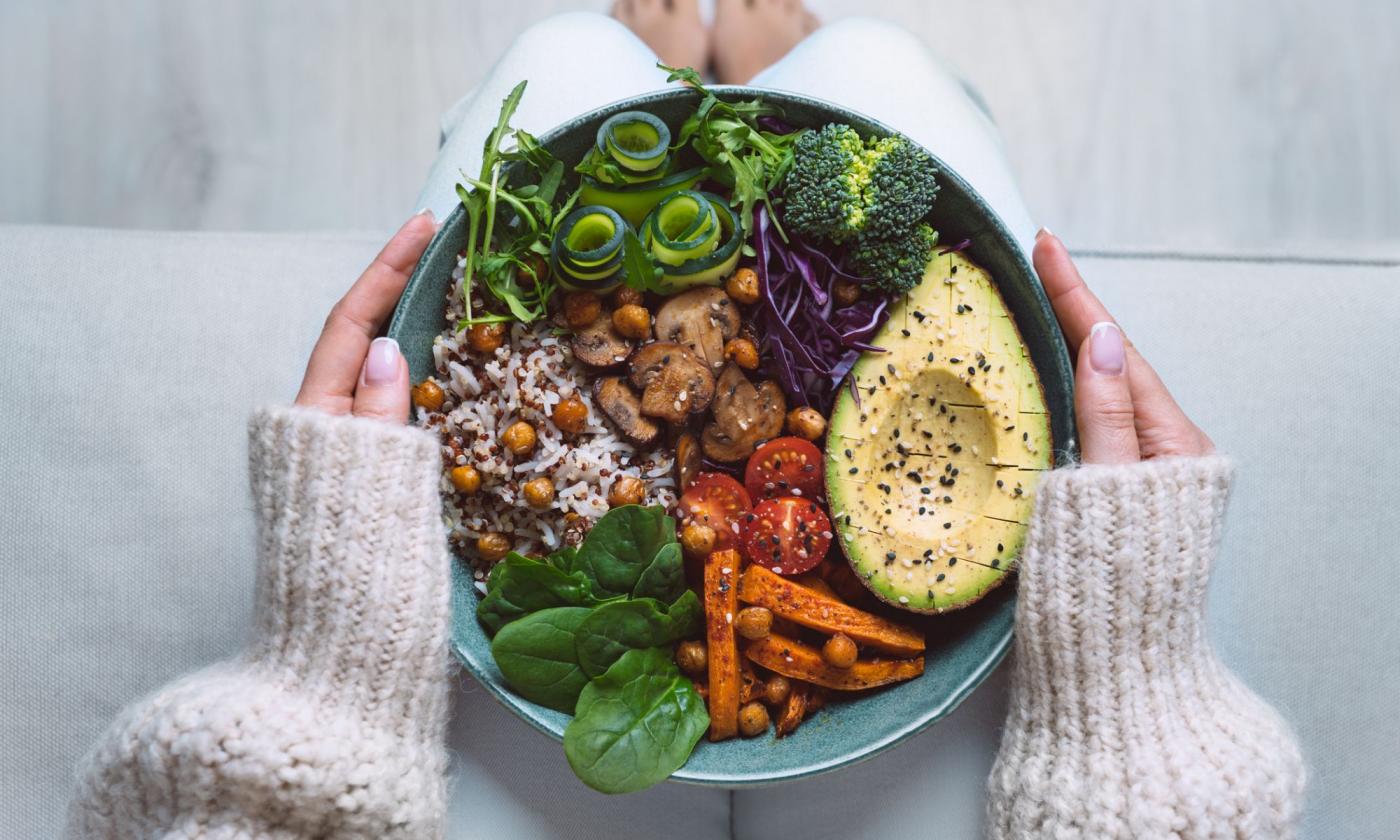
Wir schlagen Ihnen einige Rezepte vor, die viele entzündungshemmende Vorteile einer veganen Ernährung vereinen. Auch wenn einzelne Rezepte nicht alle erwähnten Nährstoffe abdecken, sorgt die bewusste Kombination verschiedener und abwechslungsreicher Gerichte für eine rundum nährstoffreiche Versorgung.
Roh-vegane Rezepte
Die folgenden roh-veganen Rezepte sind vielseitig kombinierbar. Adaptieren Sie die Rezepte nach Vorlieben und Portionsgrösse an Ihre Bedürfnisse (Snacks als Hauptspeise, Hauptspeisen als Vorspeisen etc.).
Frühstück/Snacks
- Das roh-vegane Erb-Müesli ist ein glutenfreies Müesli mit Samen, vielen Vitaminen, sekundären Pflanzenstoffen und Ballaststoffen. Das LA-ALA-Verhältnis liegt bei 1:1 und ist daher ideal für ein gesundes körperliches Gleichgewicht.
- Erb-Pudding mit Flohsamenschalen hat einen hohen Ballaststoffgehalt, viel Omega-3 sowie Vitamin C.
- Neben einem guten LA-ALA-Verhältnis bieten die süssen Dattel-Walnuss-Kugeln mit Carobpulver auch ausreichend Mangan und B-Vitamine.
- Erb-Resveratrol-Dessert mit dunklen Trauben enthält viel Resveratrol (sekundärer Pflanzenstoff) und hat ein gutes LA-ALA-Verhältnis (1:1).
Vorspeisen/Suppen/Salate
- Die roh-vegane Paprikasuppe mit Kurkuma ist nicht nur reich an Vitamin C, Selen und Omega-3-Fettsäuren, sondern liefert auch die entzündungshemmenden Vorteile von Kurkuma.
- Ölfreier Rote-Bete-Salat mit Apfel: Hier bekommen Sie gesunde Ballaststoffe, Omega-3 aus Leinsamen und Walnüssen und die antioxidativen Inhaltsstoffe aus Apfel, Orange, Pfeffer und Dill.
- Der Petersiliensalat mit Tomaten und Zitronensaft ist besonders reich an Vitamin K und Vitamin C.
- Leinsamen-Knoblauch-Röllchen mit Zucchini und Kürbis enthalten reichlich entzündungshemmende Omega-3-Fettsäuren.
- Süsslich-scharfer Grünkohlsalat mit Roter Bete beinhaltet Vitamin K, Vitamin C und Folsäure. Mit Walnüssen statt Sonnenblumenkernen erhöhen Sie den Anteil an Omega-3-FS.
- Gurkenröllchen mit Mangold- und Spinatcreme haben viel Vitamin K und Folsäure.
Hauptspeisen
- Erb-Mischung mit Daikon-Kimchi: Das Rezept deckt viele Mikronährstoffe ab, auch den Tagesbedarf an Selen und Iod. Es ist reich an Folsäure, Vitamin K und Vitamin A und das (fermentierte) Kimchi liefert gesunde Milchsäurebakterien. Kleinere Portionen können Sie auch als Vorspeise geniessen.
- Cremiges Fully Raw Pad Thai mit fruchtiger Sesam-Sauce liefert Ballaststoffe, Vitamin K, Vitamin C, Vitamin A und Folsäure.
- Die Tarte aus getrockneten Tomaten und Zucchini-Hummus hat ein gutes LA-ALA-Verhältnis.
- Ölfreies, roh-veganes Chili ist ein guter Lieferant für Vitamin C, Vitamin K, Vitamin B6 und Folsäure und bietet ein gutes LA-ALA-Verhältnis.
Vegane Kochrezepte
Folgende Rezepte lassen sich einfach in den Alltag integrieren. Achten Sie individuell auf die von Ihnen benötigten Nährstoffe und bevorzugen Sie entzündungshemmende Lebensmittel mit gutem LA-ALA-Verhältnis. Einzelne Lebensmittel können sie gezielt ersetzen.
Frühstück/Snacks
- Mohnsamen-Zitronen-Porridge mit Haferflocken und Vanille enthält viel Calcium; variieren Sie mit Leinsamen statt Mohnsamen und Hafermilch statt Mandelmilch, um das LA-ALA-Verhältnis zu verbessern.
- Ballaststoffreiches Vollkornbrot mit Walnüssen hat neben Ballaststoffen einen hohen Anteil an Omega-3-Fettsäuren, Selen und Mangan.
- Chia-Pudding mit Zimt und Kardamom leistet einen Beitrag zum täglichen Bedarf an Omega-3-Fettsäuren; mit Walnüssen kombiniert kommen Sie dem Ziel noch näher.
Vorspeisen/Suppen/Salate
- Erb-Lycopin-Suppe mit Tomaten ist reich am sekundären Pflanzenstoff Lycopin sowie an Vitamin C und Vitamin K.
- Kartoffelsuppe mit Gemüsetopping hat ein gutes LA-ALA-Verhältnis und bietet neben Vitamin K, Vitamin B6 und Vitamin A noch Folsäure an.
- Pastinakensuppe mit Birne, Thymian und Walnüssen hat ein gutes LA-ALA-Verhältnis und versorgt Sie neben Mangan mit Vitamin C.
- Satay-Salat mit Sobanudeln enthält viel Vitamin K, Vitamin C und Folsäure.
- Pilz-Paté mit Aprikosen und Senf-Kräuter-Crackern hat viel Omega-3-Fettsäuren.
Hauptspeisen
- Mediterran gefüllte Fenchel mit Grünkern: Eine Portion deckt fast das Dreifache des Tagesbedarfs an Vitamin K. Ebenso deckt sie den Bedarf an Mangan und Vitamin B1. Das Verhältnis zwischen Omega-6- und Omega-3-Fettsäuren überschreitet das empfohlene maximale Verhältnis von 5:1 nicht.
- Gefüllte Auberginen mit Nuss-Granatapfelfüllung haben ein gutes LA-ALA-Verhältnis und liefern Folsäure.
- Walnuss-Tortellini mit Pilzen bieten reichlich Vitamin K, Folsäure und ein gutes LA-ALA-Verhältnis.
- Krautrouladen mit Apfel-Sellerie-Bulgur liefern viele Ballaststoffe, Vitamin K, Vitamin C und Folsäure.
Weitere Rezepte, die Sie nach diversen Kriterien filtern können, finden Sie hier: Rezepte mit Inhaltsstoffen, Vegane Rezepte suchen.
Ernährung als Therapie
Eine Ernährungsumstellung ist vor allem wichtig für Menschen mit akuten Rheumaschmerzen, Begleiterkrankungen und körperlichen Abwehrreaktionen gegen gängige Rheumamedikamente, die sich gewohnheitsmässig sehr entzündungsfördernd ernähren.17,20,21,46 Typische Auslöser für rheumatische Beschwerden sind viel tierisches Fett, viel gesättigte Fettsäuren,13 viel Öl, viel Zucker, viel Salz, viele Lebensmittelzusatzstoffe, viel tierisches Eiweiss, wenig Ballaststoffe, wenig Vitamine, wenig Omega-3, wenig sekundäre Pflanzenstoffe, wenig natürliche Kost mit Mineralstoffen und Spurenelementen. Die Forschung stellt ausserdem immer mehr Zusammenhänge zwischen Übergewicht, metabolischem Syndrom und Rheuma fest72 (siehe Tipps gegen rheumatoide Arthritis, Tipps gegen Arthrose, Positive Effekte nach einer erfolgreichen Ernährungsumstellung).
In solchen Fällen empfehlen wir einen Ernährungsplan in mehreren Schritten:
- Bewusstes Fasten zur Entgiftung26,38,68,71,72 (ev. mit Darmspülung) bzw. Intervallfasten bei Untergewicht26,72 mit ausreichend Flüssigkeit; ausser bei Gicht (siehe unten).
- Abwägen von Ursachen und Konsequenzen und Ausbalancieren der Nährstoffzufuhr - wovon mehr? wovon weniger? - zur Retablierung des körperlichen Gleichgewichts. Nach der Fastenperiode können PatientInnen eine sogenannte Exklusionsdiät durchführen, um Symptomtrigger besser einzuschätzen.30,35,68
- Idealerweise ein Einpendeln in eine dauerhaft vegane Ernährungsweise, die wir oben näher beschreiben.10,30,32,34,36,46,55
Oft ist das eine Frage der Machbarkeit, weil die Umstellung Konsequenz und Durchhaltewillen braucht, vor allem in Bezug auf das Wiederbeleben unseres Geschmackssinns. Hochverarbeitete Nahrungsmittel haben eine grosse Anziehungskraft auf uns, da sie viel Fett, Salz und Zucker enthalten. Diese Anziehungskraft ist tief im Gehirn verankert. Zum Beispiel benötigt man etwa drei Monate, um sich an weniger Salz zu gewöhnen und sich eine ganz andere Genussfähigkeit aufzubauen (siehe unsere Buchbesprechung über Salt Sugar Fat). Kurzfristige Diäten oder operative Magenverkleinerungen bei Übergewicht versprechen temporäre Symptomlinderung, jedoch wirken sie nicht dauerhaft. Dasselbe gilt für reine Exklusionsdiäten und kurzzeitiges Fasten, die in keine konsequente Ernährungsumstellung übergehen.26,30,38,71,72
Die Ernährung bei rheumatischen Erkrankungen ist individuell anzupassen, da je nach Krankheitsbild besondere ernährungsbezogene Bedürfnisse bestehen - etwa hinsichtlich Purinzufuhr, Entzündungshemmung, Nährstoffbedarf oder Begleiterkrankungen.
Lesen Sie mehr dazu in den nachfolgenden Tipps gegen die jeweiligen Krankheiten. Beachten Sie, dass diese Tipps nur eine Auswahl rheumatischer Krankheitsbilder abdecken.
Kritische Kommentare zum Forschungsstand finden Sie im Artikel Ernährung gegen Rheuma: ein unterschätztes Thema. Unser Text Wissenschaft oder Glaube? So prüfen Sie Publikationen hilft Ihnen, sich im Dschungel der Studien besser zurechtzufinden.
Tipps gegen rheumatoide Arthritis (RA)
Die Forschung ist sich einig, dass verschiedene Prozesse im Körper, insbesondere eine sogenannte Darmdysbiose (Störung des Gleichgewichts der Darmbakterien) Entzündungen auslösen oder verstärken.6,14,27,29,72 Eine gestörte Mikrobiota fördert also Entzündungsreaktionen bei RA, wohingegen eine angepasste Ernährung das Mikrobiom reguliert, Entzündungen reduziert und damit Immunreaktionen sowie den Krankheitsverlauf verbessert.17,27,29,44,47,68 Dr. Campbells Buch "China Study" verdeutlichte 2005, wie unsere Ernährung Zivilisationskrankheiten verhindern und sogar heilen könnte - sofern die Gesellschaft den Fokus darauf legen wollte (siehe unsere Buchbesprechung "China Study" von T. Colin Campbell).
Gesättigte Fettsäuren (SFA), die vor allem in Milchfett, rotem Fleisch, Palm- und Kokosöl vorkommen, gelten als entzündungsfördernd und haben eine bedeutende Rolle bei der Krankheitsentstehung.2,3,4,13,43 Ein hoher Konsum von SFAs begünstigt entzündliche Prozesse sowie Muskelabbau.13 Eine fettreiche Ernährung verändert die Zusammensetzung der Darmbakterien, was wiederum die Entzündungsprozesse im Körper verstärkt. Diese Erkenntnisse unterstreichen die Bedeutung einer ausgewogenen Ernährung, die den Anteil an gesättigten Fettsäuren minimiert.29 So empfiehlt es auch das American College of Rheumatology, nicht nur gegen Rheuma, sondern auch gegen Übergewicht und dessen Folgen.10,13,17
Tierische, eiweissreiche Produkte fördern eine Reihe chronisch-entzündlicher Prozesse im Körper. Es gibt Hinweise darauf, dass eine höhere Gesamteiweisszufuhr das RA-Risiko und die Entzündungen im Körper verstärkt.66 Allerdings ist die Datenlage uneinheitlich und widersprüchlich.
Nahrungsmittelallergene wie Milch und Eier fördern ebenfalls entzündliche Prozesse bei RA. Untersuchungen bestätigen, dass erhöhte Immunglobulin-Antikörperspiegel mit dem Auftreten von RA korrelieren.57 Dabei reagiert das menschliche Immunsystem sensibel auf bestimmte Proteine (z.B. aus Milch und Eiern), erkennt sie als "fremd" und bildet Antikörper. Deshalb haben RA-Patienten oft erhöhte Antikörper-Spiegel gegen tierische Proteine.67,68
Zudem enthalten sowohl Milch und Eier als auch deren Produkte Arachidonsäure (AA). Dabei handelt es sich um eine Omega-6-Fettsäure, die als Vorläufer von entzündungsfördernden Substanzen wie Prostaglandinen und Leukotrienen gilt. Eine Reduktion des Konsums von Milch und Eiern kann daher bestehende Entzündungen abschwächen (und das Risiko für RA senken).43
Rotes Fleisch ist neben Geflügel, Eiern, Fisch und Milchprodukten die Hauptquelle für Arachidonsäure in der westlichen Ernährung.43 Eine vegetarische Ernährung führt uns deutlich weniger und eine vegane gar keine AA zu. Somit wirkt eine ausgewogene vegane Kost entzündungshemmend.2,3,4,10,30,43,55
Allerdings führt ein hoher Konsum von Linolsäure (LA) dazu, dass der Körper vermehrt Arachidonsäure daraus produziert. Aus diesem Grund kann auch bei veganer Ernährung eine hohe Arachidonsäure-Last im Körper entstehen. Besonders in einem omega-3-armen Umfeld hat das entzündungsfördernde Auswirkungen. Um diese potenziellen Ernährungsfehler zu vermeiden, lesen Sie diesen Artikel: Veganer essen oft ungesund. Vermeidbare Ernährungsfehler.
Studien stellten fest, dass bei RA ein hoher Fleischkonsum mit einem früheren Krankheitsbeginn und stärkeren Symptomen verbunden ist. Der tägliche Verzehr von mehr als 100 g rotem Fleisch ist mit einem um zwei Jahre früheren Ausbruch von RA verbunden. Rotes Fleisch enthält Hämproteine, die während der Verdauung chemische Reaktionen auslösen. Das dabei freigesetzte Häm-Eisen fördert oxidative Prozesse, die Zellen, Proteine und Fette schädigen. Auch der Konsum von Butter, Softdrinks und Gebäck aktiviert die Symptome bei RA-PatientInnen.29
Neben der Reduktion tierischer Produkte ist eine höhere Zufuhr an Omega-3-Fettsäuren durch die Nahrung empfohlen. Diese entfalten eine entzündungshemmende Wirkung, indem sie die Menge an AA in den Zellmembranen senken und entzündungsfördernde Prozesse blockieren.55 Ballaststoffe, die reichlich in pflanzlicher Ernährung enthalten sind, fördern zusätzlich ein gesundes Darmmikrobiom, das ebenfalls zur Reduktion von Entzündungen beiträgt.55,72
Es gibt Hinweise, dass zu viel Salz entzündungsfördernde Stoffe freisetzt.34 Eine natriumarme Ernährung hingegen kann entzündliche Reaktionen dämpfen.51
Ernährungsmassnahmen bei RA
Diätetische Ansätze können Symptome der rheumatoiden Arthritis gezielt lindern. Untersuchungen weisen nach, dass bestimmte Ernährungsformen Entzündungen reduzieren und die Lebensqualität verbessern. Exklusionsdiäten, Fasten mit anschliessender vegetarischer oder veganer Ernährung sowie roh-vegane Kost bieten individuelle Wege, um Beschwerden zu verringern – vorausgesetzt, die Umstellung erfolgt konsequent und langfristig.
Exklusionsdiät
Die Exklusionsdiät gilt als vielversprechende temporäre Ernährungsmassnahme bei RA. Dabei streicht man bestimmte Lebensmittel aus der Ernährung, um herauszufinden, ob sie die Quelle der Symptome darstellen. In einer Studie mit 53 RA-PatientInnen, bei der die TeilnehmerInnen zufällig entweder eine spezielle Diät oder ein Placebo erhielten, führte die Exklusionsdiät zu diversen Verbesserungen: weniger Gelenkschmerzen, weniger Steifigkeit und Senkung der entzündungsbezogenen Blutwerte.39
Häufig schliesst die Exklusionsdiät an eine Fastenperiode an.
Die Diät besteht aus verschiedenen Phasen: Zunächst nehmen die PatientInnen in der "Ausschlussphase" ("Eliminationsphase"63) während einer39 bis mehrerer Wochen (idealerweise mind. 6)63 nur gut verträgliche, nicht-allergene Lebensmittel zu sich.
In der personalisierten Eliminationsdiät AIP (Autoimmunprotokoll), die auf Autoimmunerkrankungen wie RA zugeschnitten ist, sind glutenreiches Getreide, Hülsenfrüchte, Nachtschattengewächse, Nüsse, Samen, Milchprodukte, Eier, Kaffee, Alkohol, raffinierter Zucker, Öle, verarbeitete Lebensmittel, Lebensmittelzusatzstoffe und künstliche Farb- und Aromastoffe zu vermeiden.63 Obwohl in der verwendeten Quelle Fleisch erlaubt ist, raten wir davon ab.
In der "Wiedereinführungsphase" führen Sie schrittweise einzelne Lebensmittel wieder ein, um herauszufinden, welche davon die Symptome verschlechtern. Beginnen Sie entweder mit den Lebensmitteln, die Sie am liebsten essen, oder mit den am wenigsten problematischen. Danach erweitern Sie die Auswahl.63 Lebensmittel, die eine allergische Reaktion oder eine Verschlechterung der Symptome verursachen, schliessen Sie dauerhaft aus Ihrer Ernährung aus.
Besagte Studie39 identifizierte Getreideprodukte wie Mais und Weizen als häufige Auslöser, da mehr als 50 % der PatientInnen berichteten, dass diese ihre Symptome verschlechterten. Auch Schweinefleisch, Milchprodukte, Eier, bestimmte Früchte, Erdnüsse, Lammfleisch, Kaffee und Soja erwiesen sich als problematisch.
Die Exklusionsdiät bietet eine personalisierte Möglichkeit, Entzündungen und Symptome bei RA zu verringern, insbesondere bei PatientInnen mit nachweisbarer Nahrungsmittelintoleranz. Auch wenn Studien zu inkonsistenten Ergebnissen kommen, legen die bisherigen Befunde nahe, dass Nahrungsmittelunverträglichkeiten und die Gesundheit des Magen-Darm-Trakts eine bedeutende Rolle bei der Progression von RA spielen.39
In der "Erhaltungsphase" ist jene gesunde Ernährungsstrategie beizubehalten, die Autoimmunreaktionen reduziert. Jede/r Patient/in setzt jenes Ernährungsmuster um, das mit dem Fehlen von Unverträglichkeiten einhergeht.63
| Vorsicht: Auch wenn die Exklusionsdiät individuelle Symptomtrigger aufzeigen kann, so ist sie nicht als Ersatz für eine gesunde Ernährungsbasis zu verstehen. Wir brauchen eine ausgewogene Mischung an Inhaltsstoffen, die ein blosses Weglassen von gewissen Nahrungsmitteln nicht garantieren kann. |
Fasten/vegetarische/vegane Ernährung
Im März 2025 nahm die Deutsche Gesellschaft für Rheumatologie und Klinische Immunologie e.V. (DGRh) Stellung zum therapeutischen Potenzial von Fastenperioden. Sie kam zum Schluss, dass die Methode bei bestimmten Patientengruppen ein sinnvolles Element der Rheumatherapie darstellt.71 Details dazu liefert ein Artikel über Ernährung und Fasten von 2024: Klassisches Heilfasten während 5-10 Tagen ist symptomatisch wirksam gegen RA. Eine etwas kalorienreichere "fasting-mimicking-diet" soll ähnliche Resultate erzielen. Für Intervallfasten sind primär positive Effekte auf den Herz-Kreislauf und den Stoffwechsel belegt.72
Klinische Erfahrungen deuten darauf hin, dass Fasten, gefolgt von einer vegetarischen Ernährung, PatientInnen mit RA hilft. Eine systematische Untersuchung ergab, dass ein 7- bis 10-tägiges Teilfasten, gefolgt von einer vegetarischen Ernährung über ein Jahr, bei RA-PatientInnen signifikante Verbesserungen bewirkt.39 Während des Teilfastens bestand die erlaubte Nährstoffzufuhr aus Kräutertees, Knoblauch, Gemüsebrühe, einem Aufguss aus Kartoffeln und Petersilie sowie Saftauszügen aus Karotten, Roter Bete und Sellerie – Fruchtsäfte waren nicht erlaubt. Die tägliche Energiezufuhr während des Fastens betrug 800 bis 1260 kJ (= 190 bis 300 kcal). Nach der Ernährungsumstellung konnte man signifikante Verbesserungen in folgenden Bereichen feststellen:2,39
- Reduktion der Anzahl schmerzempfindlicher und geschwollener Gelenke
- Besserung des Schmerzwerts
- Verkürzung der Dauer der morgendlichen Steifigkeit
- Verbesserung der Griffkraft
- Verminderung von Entzündungsmarkern im Blut (Blutsenkungsgeschwindigkeit, C-reaktives Protein)
- Verbesserung des allgemeinen Gesundheitszustands gemäss Fragebogen
Die Vorteile in der Diätgruppe hielten auch nach einem Jahr an, und die Bewertung des gesamten Verlaufs fiel in allen gemessenen Werten positiv aus. Überdies gab es Berichte, dass die durch die Ernährungsumstellung erzielten Verbesserungen sogar nach zwei Jahren noch aktiv waren.
Fasten und eine anschliessende vegane Ernährung können laut dieser und anderen Publikationen für bestimmte RA-PatientInnen vorteilhaft sein. Vermutlich, weil das Immunsystem im Darm weniger stark auf bestimmte Bestandteile von Lebensmitteln reagiert, wenn diese durch die Ernährungsumstellung wegfallen.38,39,68 Der Mangel an seriösen Langzeitstudien ist auch hier ein unvermeidlicher Stolperstein.10,71,72
Lassen Sie sich, wenn möglich, beim Fasten durch eine Fachperson mit ernährungsmedizinischen Kenntnissen begleiten. Für Personen mit starkem Untergewicht oder Essstörungen sind längere Fastenperioden nicht geeignet.71
Was allzu oft unerwähnt bleibt: Wenn die Ernährungsumstellung nach der Fastenperiode nicht dauerhaft ist, kehren die Symptome wieder zurück. Wer wieder anfängt, wie früher zu essen, fällt in die Entzündungsspirale und in die Rheumaerkrankung zurück.26,30,38,46,68
Roh-vegane Ernährung
Eine oft zitierte Studie untersuchte die Auswirkungen einer roh-veganen Ernährung auf RA-PatientInnen. Sie berichtete, dass eine Rohkost-Diät mit vielen Laktobazillen ("Living-Food-Diät") subjektive Symptome im Vergleich zur Kontrollgruppe verringerte. Die Teilnehmer berichteten von weniger Gelenksteifigkeit, weniger Morgensteifigkeit und geringeren Schmerzen im Ruhezustand und gaben an, sich insgesamt gesundheitlich besser zu fühlen. Da diese Diät das Darmmikrobiom positiv beeinflusst, geht man davon aus, dass die Verbesserung der RA-Symptome auf diesen mikrobiologischen Effekt zurückzuführen ist. Der tägliche Verzehr von grossen Mengen an lebenden Laktobazillen hatte auch positive Effekte auf objektive Messwerte der RA.10,39,65
Unsere Artikel zu Rohkost beschreiben die Umstellung auf eine roh-vegane Ernährung.
Konkrete Entzündungshemmer bei RA
Ballaststoffe, Omega-3-Fettsäuren, Vitamin D3, Vitamin E, Selen und Kurkuma gelten als wirksame natürliche Entzündungshemmer bei rheumatoider Arthritis (RA).
Eine ballaststoffreiche Ernährung stärkt die Darmbarriere, fördert antimikrobielle Stoffe und reguliert die Darmflora – Faktoren, die Entzündungen reduzieren und das Immunsystem stabilisieren.27
Omega-3-Fettsäuren wie Alpha-Linolensäure (ALA), Eicosapentaensäure (EPA) und Docosahexaensäure (DHA) wirken entzündungshemmend und senken in vielen Fällen den Bedarf an Medikamenten; sie lindern Gelenkschmerzen, verringern Morgensteifigkeit und reduzieren die Anzahl entzündeter Gelenke um bis zu 35 %.29 Jüngste Untersuchungen bestätigen eine statistisch und klinisch relevante Schmerzreduktion bei RA durch niedrig dosierte Langzeitsupplementierung von Omega-3-Fettsäuren.70 Da der Körper EPA und DHA aus ALA synthetisiert, sind wir der Ansicht: Grundsätzlich reicht die bewusste Zufuhr von genügend ALA und eine Reduktion von LA durch die Ernährung aus (siehe oben bei ...antioxidativ und entzündungshemmend). Im Alter hingegen ist eine Supplementierung zu empfehlen.
Vitamin D3 reguliert das Immunsystem, hemmt entzündungsfördernde Zellen und beeinflusst das Mikrobiom positiv. Niedrige Vitamin-D-Spiegel stehen mit erhöhter RA-Aktivität in Zusammenhang, während eine Supplementierung dem entgegenwirkt.29,59 Vitamin E schützt Immunzellen, reduziert oxidativen Stress und kann Gelenkschmerzen sowie Morgensteifigkeit lindern. Tocotrienol, eine Form von Vitamin E, hemmt zusätzlich den Knochenabbau.29,40
Selen wirkt antioxidativ, unterstützt die T-Zell-Funktion und verbessert die Darmflora. RA-PatientInnen haben oft einen Mangel, der Entzündungen verstärken kann.29,42 Kurkuma, insbesondere Curcumin, hemmt entzündungsfördernde Zellen, schützt vor oxidativem Stress und reguliert das Immunsystem – ein vielversprechender Ansatz zu Prävention und Therapie von RA.17
Tipps gegen Arthrose
Da die aktuellen Behandlungsmöglichkeiten für Arthrose begrenzt sind, ist es für Betroffene von grossem Vorteil, ihre Erkrankung zumindest teilweise selbst zu managen. Besonders für übergewichtige oder fettleibige PatientInnen ist es zentral, Gewicht zu reduzieren, idealerweise in Kombination mit Bewegung. Die Ernährung spielt eine potenziell wichtige Rolle und senkt neben dem Risiko für Arthrose auch die Verlaufsschwere der Krankheit.30
Der Zusammenhang zwischen metabolischem Syndrom, Typ-2-Diabetes und Arthrose erklärt, warum eine Ernährungsumstellung, insbesondere der erhöhte Verzehr von langkettigen Omega-3-Fettsäuren (EPA, DHA), von Vorteil ist. Dazu kommt, dass arthrotische Gelenke viel Omega-6-Fettsäuren akkumulieren. Bei Personen mit Kniearthrose (oder hohem Risiko) besteht ein positiver Zusammenhang zwischen Omega-6, Arachidonsäure (AA) und Synovitis (Entzündung der Gelenkinnenhaut), jedoch eine umgekehrte Beziehung zwischen der Gesamtkonzentration an Omega-3 im Plasma, DHA und Knorpelverlust. Da die Ernährung auf den systemischen Lipidspiegel einwirkt, ist es plausibel, dass eine Ernährungsumstellung die Zusammensetzung des Gelenkknorpels beeinflusst und strukturelle Schäden bei Kniearthrose verhindert.23
Ein weiterer wichtiger Aspekt ist eine ausreichende Zufuhr an Vitamin K, das eine essenzielle Rolle spielt bei der Mineralisierung von Knochen und Knorpel.23 Gute Quellen für Vitamin K sind unter anderem Mangold, Grünkohl, Gartenkresse, Spinat, Chicorée, Rosenkohl und Broccoli.
Weitere Ernährungsempfehlungen gegen Arthrose ähneln denjenigen gegen RA, die wir oben ausführlicher erklären.
Tipps gegen Fibromyalgie
Obwohl es offiziell keine spezielle Diät gegen Fibromyalgie gibt, hilft eine gesunde und ausgewogene Ernährung, die Symptome zu lindern. Wir fassen die wichtigsten Empfehlungen hier zusammen.48,56
Darmgesundheit und Reduktion von oxidativem Stress
Viele stark verarbeitete tierische Produkte und wenig pflanzliche Antioxidantien erzeugen oxidativen Stress (Zellstress). Essen Sie daher zu jeder Mahlzeit ballaststoffreiche Lebensmittel wie Blattgemüse, Gemüse im Allgemeinen, unverarbeitetes Obst, viele Beeren, Nüsse, Samen, Vollkornprodukte, ergänzt mit Bohnen und Linsen. Integrieren Sie Lebensmittel, die reich an phenolischen Verbindungen (Polyphenolen) sind, v.a. Beeren, grünen Tee, Leinsamen und rote Zwiebeln. Verwenden Sie phenolreiche Gewürze wie Nelken, Rosmarin, Oregano und Kurkuma (letzteres kombiniert mit Pfeffer). Essen Sie täglich 2 bis 3 Gabeln fermentierte Lebensmittel (sofern Sie diese vertragen), z.B. Sauerkraut oder Kimchi.48
Essen Sie täglich Kreuzblütengemüse wie Rucola, Pak Choy, Rosenkohl, Brokkoli, Kohl, Blumenkohl, Grünkohl, Rettich, Radieschen, Kohlrabi und Rüben. Achten Sie auf eine ausreichende Flüssigkeitszufuhr mit Wasser sowie Kräutertee oder grünem Tee. Vermeiden Sie Zucker und künstliche Süssstoffe, insbesondere Aspartam, Acesulfam K, Saccharin und Sucralose (Siehe Gesunde Süsse? Zwischen Mythos und Wirklichkeit).48
Achten Sie auf Lebensmittel mit Carotinoiden56 (in unserem Überblick über die sekundären Pflanzenstoffe finden Sie eine Liste mit typischen Lebensmitteln).
Reduzieren Sie Stress, da dieser das Mikrobiom beeinflusst. Essen Sie in einer ruhigen, entspannten Umgebung, sitzen Sie während der Mahlzeiten und kauen Sie gründlich.48
Nährstoffmängel vermeiden
- Vitamin D bildet sich durch sichere Sonneneinstrahlung. In pflanzlichen Nahrungsmitteln wie Pilzen (Pfifferlingen, Morcheln und Shiitake-Pilzen) kommt nur das Provitamin Ergosterol in Spuren vor. Bei starkem Mangel hilft eine Supplementierung.56
- Vitamin B12: Ein allzu niedriger Spiegel verstärkt chronische Müdigkeit.56
- Folsäure ist z.B. enthalten in dunklem Blattgemüse, Spargel, Rosenkohl, Nüssen, Bohnen und Erbsen.
- Selen bekommen Sie aus Paranüssen (nicht mehr als 1 bis 2 Paranüsse pro Tag, um eine Selentoxizität zu vermeiden).
- Magnesium kommt in dunklem Blattgemüse, Avocados, Bananen, Beeren und Vollkornprodukten vor.
- Zink: Gute Quellen sind Weizenkeime, getrocknete Steinpilze und ungeschälte Hanfsamen.
- Omega-3-Fettsäuren (ALA) sollten Sie primär aus Leinsamen, Chiasamen und Walnüssen beziehen.
Der zitierte Leitfaden48 schlägt als Selenquelle bzw. Zinkquelle auch Fleisch vor (Truthahn, Poulet bzw. Rind, Schwein, Huhn) - sowie als Proteinquelle Eier und Hühnerfleisch.48 Diese Aussagen unterstützen wir nicht, ebensowenig die Notwendigkeit, Zink aus Cashewnüssen zu beziehen (siehe unsere Zutatenbeschreibung: Cashewnüsse, roh?, bio?). Zur Frage der Proteine äussern wir uns u.a. in der Buchbesprechung zur "China Study".
Seien Sie kritisch, wenn der Ausdruck "healthy fats" fällt:56 Olivenöl gehört unserer Ansicht nach nicht dazu. Details diskutieren wir in der Zutat Olivenöl (kaltgepresst, roh?, bio?).
Einschränkung von problematischen Nahrungsmitteln
Vermeiden Sie rotes Fleisch, Milchprodukte, Gluten, raffinierte Zucker, Zusatzstoffe und hochverarbeitete Nahrungsmittel, da sie die Beschwerden verstärken.48,56
| Wir unterstreichen:
|
Tipps gegen Gicht
Gegen Gicht sind Exklusionsempfehlungen nützlich, da sie die Purinzufuhr reduzieren und Symptomtrigger ausschliessen.8,18,19,24
- Verzichten Sie auf purinreiche Lebensmittel wie Meeresfrüchte, rotes Fleisch, Wurst, Innereien und Geflügel mit Haut. Purinreiche pflanzliche Lebensmittel wie Hülsenfrüchte (Leguminosen), Kakaobohnen, Hefe, Weizenkeime, Petersilie, Spinat, Algen und Pilze sind trotz ihres relativ hohen Puringehalts meist besser verträglich; mehr Informationen über pflanzliche Purine erhalten Sie über unsere Suche in einzelnen Zutaten und unseren Artikel über Purine.11 Ein dauerhafter Purinüberschuss überlastet Leber und Nieren und verstärkt das Risiko für Gicht und Harnsäuresteine.
- Konsumieren Sie wenig gesüsste Getränke und wenig Zucker. Meiden Sie vor allem "versteckten" Fructosesirup in Süssgetränken und industriell hergestellten Lebensmitteln (High Fructose Corn Syrup, HFCS).64 Aber auch Agavensirup, Maissirup, Ahornsirup und Honig enthalten viel Fructose. Darüber informiert unser Beitrag Gesunde Süsse? Zwischen Mythos und Wirklichkeit.
- Begrenzen Sie fettreiche Nahrungsmittel (high fat consumption) und Transfette. Eine fettreiche Ernährung verursacht über geringere Purinausscheidung und metabolische Effekte eine Hyperurikämie.18
- Verzichten Sie auf Alkohol11 (und auch auf alkoholfreie, hefereiche Biere).
- Vorsicht: Fasten (kurz- und langfristig) erhöht den Harnsäurespiegel im Blut (Hyperurikämie), was einen Gichtschub auslösen kann.53,54
Gleichzeitig raten wir zu einer ganzheitlichen und dauerhaften Ernährungsumstellung, welche die Darmflora stärkt und dadurch der epigenetischen und metabolischen Neuprogrammierung von Immunzellen entgegensteuert:5,6,7,18,19 siehe oben unter Bestandteile einer gesunden Ernährungsumstellung und Tipps gegen rheumatoide Arthritis. Vor allem profitieren GichtpatientInnen von einer pflanzenbasierten, basischen Ernährung. Sie reduziert den Harnsäurespiegel (Harnsäure ist das Endprodukt des Purinstoffwechsels).50
| Auch hier gilt:
|
Tipps gegen Osteoporose
Bei einer symptomatischen Osteoporose lassen sich frühere Ernährungsfehler leider nicht rückgängig machen. Auf die Auslöser von Osteoporose gehen wir im Kapitel Gicht, Pseudogicht und Osteoporose in der Rheuma-Übersicht ein. Wir empfehlen zur Unterstützung des Wohlbefindens und zur Abschwächung des Krankheitsverlaufs:
- Befolgen Sie eine ausgewogene und naturnahe vegane Ernährung (siehe Bestandteile einer gesunden Ernährungsumstellung und Tipps gegen RA).10,30,36,55
- Streben Sie eine knochenfreundliche Ernährung mit genügend Vitamin D, Vitamin K, pflanzlichem Calcium, Natrium und Magnesium an.10 Bei starkem Mangel hilft eine Supplementierung von Vitamin D.49
- Einhalten des Säure-Base-Gleichgewichts verhindert Übersäuerung.10
- Konsumieren Sie keine Milchprodukte, dafür mehr Calcium aus pflanzlichen Quellen (Gemüse, Gewürzen, Kräutern und Samen/Nüssen). Wir besprechen dieses Thema ausführlicher im Artikel Veganer essen oft ungesund, beim Untertitel: 5. Calcium (Kalzium).
- Verzichten Sie auf tierisches Eiweiss, weil eine Ernährung mit viel tierischen Lebensmitteln (insbesondere schwefelhaltiger Aminosäuren) zu einer erhöhten Säurebelastung im Körper führt. Diese Übersäuerung wirkt sich negativ auf den Kalziumhaushalt aus (Details finden Sie ebenso im Kapitel Gicht, Pseudogicht und Osteoporose in unserer Rheuma-Übersicht).11
Positive Effekte nach einer erfolgreichen Ernährungsumstellung
Sowohl präventive Massnahmen als auch therapeutische Ansätze bei akuten Schmerzen führen bei einem Grossteil der Risikogruppen bzw. PatientInnen zu positiven Effekten.
Sind die genannten Bestandteile einer gesunden Ernährungsumstellung erfüllt, dann...
...macht die erfolgreiche Umstellung das Erstauftreten einer Rheumaerkrankung deutlich unwahrscheinlicher20,34
...leistet sie bei akuten Rheumaschüben oder chronischen Entzündungen einen wichtigen Beitrag zur Symptomlinderung:34
- Belegt sind weniger Gelenkschmerzen26,46 und Schwellungen26 sowie reduzierte Gelenksteifigkeit10 bzw. weniger Beeinträchtigungen im Bewegungsapparat.17
- Ebenso stellte man Verringerungen der Morgensteifigkeit und Ruheschmerzen sowie eine Verbesserung der selbst erlebten Gesundheit29 und weniger Erschöpfungszustände56 fest.
- Die Forschungsliteratur schreibt diese Effekte u.a. folgenden Stoffen zu: Omega-3,58 Polyphenolen,28 Ballaststoffen. Diese gleichen Störungen des Immunzell-Gleichgewichts wieder aus und tragen so deutlich zur Symptomlinderung bei (Details zu Ballaststoffen siehe weiter oben).
...zögert sie nachfolgende Krankheitsschübe hinaus.12
...mildert sie das entzündliche Milieu ab34,37,52,68 und stellt das systemische Gleichgewicht allmählich wieder her.30
...stärkt sie anti-inflammatorische Immunwege.17,29
...senkt sie das Risiko für Begleiterkrankungen und tödliche Komplikationen (u.a. Herz-Kreislauf-Erkrankungen, metabolisches Syndrom, Adipositas und Diabetes15,52,62).20 Konkret bei Arthrose gehören Diabetes, Bluthochdruck, Insulinresistenz oder entzündliche Reaktionen (v.a. bei aktivierter Arthrose) dazu.9,17,23,37,52,61
...reduziert sie die negativen Implikationen von Übergewicht und Rheuma,24 z.B.:1,52,61
- milderer Krankheitsverlauf und bessere Behandlungsergebnisse
- verbessertes und anhaltendes Ansprechen auf medikamentöse Therapien und reduzierte Nebenwirkungen, einschliesslich reduzierter Infektionen
- Verbesserung der psychischen Gesundheit und der Aktivitäten des täglichen Lebens mit potenziell weniger Schmerzen und Müdigkeit
- weniger übergewichtbedingte Begleiterkrankungen, insbesondere Herz-Kreislauf-Erkrankungen, Fettlebererkrankungen, Bluthochdruck und Typ-2-Diabetes
...rückt sie eine gestörte Darmflora wieder ins Lot.10,17,27,29,34,38,44,52,72
...ist sie eine grosse Hilfe auf dem Weg zur Remission bzw. erhöht sie die Chancen auf eine Symptomfreiheit ohne Medikamente.
Literaturverzeichnis - 72 Quellen (Link zur Evidenz)
| 1. | ● Kapitel in Buch Ernährungspyramide S. 1106 entspricht nicht konsequent den gewonnenen Erkenntnissen, sondern bringt v.a. eine Abschwächung der schädlichen Faktoren. Omega-3 fatty acids are immunoregulatory. Vitamin D has multiple immunosuppressive effects. Antioxidants can be acquired through the diet. Adipose tissue is metabolically active and has effects on the inflammatory response. Importance of the Balance of n-3 and n-6 Fatty Acids in the Inflammatory Process The balance of AA and EPA can be altered through dietary fatty acid intake. Production of reactive oxygen species (ROS), such as superoxide and hydrogen peroxide, are part of the normal immune response. Acting through transcription factors such as NF-κB, ROS increase production of proinflammatory eicosanoids and cytokines, including PGE2, TNF, and IL-1β. Thus unchecked production of ROS may cause inflammation and tissue damage. Antioxidant enzymes such as superoxide dismutase and glutathione peroxidase remove superoxide, thereby providing protection from oxidative damage. Vitamin C (ascorbic acid), vitamin E (α-tocopherol), and β-carotene are acquired through the diet and can act as ROS scavengers. Obesity might affect disease activity and outcomes in RA. Increased BMI predisposes to gout. Obesity is associated with knee osteoarthritis (OA). Direct biomechanical effects of obesity contribute to OA. Increased leptin provides another link between obesity and OA. Trotzdem ist das Fazit verhalten: Omega-3 fatty acids modestly reduce disease activity and NSAID requirements. There is no evidence for the benefit of antioxidants in the management of RA. Fasting, vegetarian/vegan, and elimination diets are difficult to sustain, and it is difficult to predict which patients may respond DOI: 10.1016/B978-0-323-31696-5.00068-1 Book: moderate evidence | Stamp LK, Cleland LG. Nutrition and rheumatic diseases. In: Firestein GS, Budd RC (Ed.). Kelley and Firestein’s Textbook of Rheumatology. Elsevier; 2017:1096-1114.e5. |
| 2. | * Narratives Review Effects of Dietary Cholesterol and Egg Intake on Lipoprotein Metabolism and Immune Inflammation Diets rich in cholesterol appear to have the capacity to regulate immune function through modulation of cellular cholesterol levels and lipoprotein metabolism . The effects of dietary cholesterol and cholesterol-rich foods, specifically eggs, on plasma lipids have been reviewed by Blesso and Fernandez ; thus, the following sections focus on the effects of dietary cholesterol on immunomodulatory lipid pathways. In interpreting these findings, it is important to note that human studies evaluating the effects of dietary cholesterol often use whole eggs as the intervention treatment. Eggs are considered to be a rich source of dietary cholesterol, providing approximately 186 mg of cholesterol per large egg. Rheumatoid Arthritis RA is a chronic autoimmune disorder characterized by severe joint inflammation and damage. Activated T lymphocytes are found within synovial joint fluid from RA patients, yet they exhibit impaired TCR responsiveness and proliferative capacity [87,88]. Proinflammatory HDL and reduced HDL-mediated cholesterol efflux has additionally been observed in RA patients [94,181,182,183], whereas RA treatment improves markers of HDL function [184] and increases PBMC mRNA ABCA1 expression [185]. Increases in HDL-cholesterol have additionally been associated with improvements in radiographic hand osteoarthritis [186]. However, it is unclear whether cholesterol metabolism or lipid raft formation is modified within activated T cell populations, or whether cholesterol-rich diets can directly modulate HDL dysfunction and T lymphocyte activity in joint tissues of RA patients [24,101]. Interestingly, dietary regimens that are low in cholesterol or cholesterol-free—including medically supervised fasting (7–10 days), vegan diets, and lactovegetarian diets—have been shown to reduce inflammation and improve clinical measures of RA [187]. Hafström et al. [171] demonstrated that a greater percentage of RA patients following a gluten-free vegan diet for at least nine months exhibited clinical improvement according to the American College of Rheumatology 20 (ACR20) criteria, as compared to patients consuming a non-vegan diet. Patients following a 4-week, very low-fat diet (10%) vegan diet additionally experienced improved RA symptoms, including a reduction in pain, joint swelling, and joint mobility [172]. Vegan and vegetarian diets have further been shown to reduce total cholesterol and LDL-cholesterol levels in RA patients [188,189], as well as reduce leukocyte counts and pro-inflammatory CRP [173,174]. Conversely, high cholesterol diets have been shown to exasperate joint inflammation and osteoarthritis development in APOE*3Leiden.CETP mice, potentially due to cholesterol-induced inflammation and joint cartilage degradation [28,190,191]. These findings suggest that dietary cholesterol restriction improves RA outcomes, yet further research is warranted to elucidate the mechanisms by which this occurs. DOI: 10.3390/nu10060764 Study: weak evidence | Andersen CJ. Impact of Dietary Cholesterol on the Pathophysiology of Infectious and Autoimmune Disease. Nutrients. 2018;10(6):764. |
| 3. | * Narratives Review Effects of Dietary Cholesterol from Egg Intake on LDL-C, HDL-C, and the LDL-C/HDL-C Ratio Berger et al. [29] examined the serum lipid responses to dietary cholesterol across 19 intervention trials. Dietary cholesterol intake, which came mostly from eggs, was shown to significantly increase both serum LDL-C (6.7 mg/dL net change) and HDL-C (3.2 mg/dL net change), resulting in only a marginal increase in the LDL-C/HDL-C ratio (0.17 net change) [29]. Using the LDL-C/HDL-C ratio may provide an estimate of how much cholesterol is delivered to plaques via LDL, as well as potentially how much is being removed by HDL [47]. An LDL-C/HDL-C ratio <2.5 is considered optimal based on individual lipoprotein recommendations, while evidence suggests there is an increase in the risk for cardiovascular events above this level in some populations . Table 1 summarizes results from clinical studies examining the effects of added dietary cholesterol via egg intake on serum lipids during weight maintenance in healthy and hyperlipidemic populations. In children and adults with normal cholesterol levels, consumption of 2–4 eggs per day vs. yolk-free egg substitute significantly increased both LDL-C and HDL-C in most studies, with no change in the LDL-C/HDL-C ratio . Healthy men who were classified as hyper-responders (15 out of 40 participants) did show a significant increase in the LDL-C/HDL-C ratio with the consumption of three eggs per day for 30 days, however, the mean ratio (2.33 ± 0.80) was still within the optimal range of <2.5 [45]. Similar responses were observed in hyperlipidemic adults; consuming two eggs per day resulted in elevated HDL-C without a change in LDL-C in hypercholesterolemic adults, while there was an increase in both LDL-C and HDL-C in combined hyperlipidemics (elevated serum cholesterol and triglycerides) [49]. In older adults taking statins, consuming either two or four eggs per day did not significantly increase LDL-C, whereas HDL-C was increased with both doses of eggs. DOI: 10.3390/nu10040426 Study: weak evidence | Blesso CN, Fernandez ML. Dietary Cholesterol, Serum Lipids, and Heart Disease: Are Eggs Working for or Against You? Nutrients. 2018;10(4):426. |
| 4. | * prospektive Kohortenstudie Importance Cholesterol is a common nutrient in the human diet and eggs are a major source of dietary cholesterol. Whether dietary cholesterol or egg consumption is associated with cardiovascular disease (CVD) and mortality remains controversial. Objective To determine the associations of dietary cholesterol or egg consumption with incident CVD and all-cause mortality. Design, Setting, and Participants Individual participant data were pooled from 6 prospective US cohorts using data collected between March 25, 1985, and August 31, 2016. Self-reported diet data were harmonized using a standardized protocol. Exposures Dietary cholesterol (mg/day) or egg consumption (number/day). Main Outcomes and Measures Hazard ratio (HR) and absolute risk difference (ARD) over the entire follow-up for incident CVD (composite of fatal and nonfatal coronary heart disease, stroke, heart failure, and other CVD deaths) and all-cause mortality, adjusting for demographic, socioeconomic, and behavioral factors. Results This analysis included 29 615 participants (mean [SD] age, 51.6 [13.5] years at baseline) of whom 13 299 (44.9%) were men and 9204 (31.1%) were black. During a median follow-up of 17.5 years (interquartile range, 13.0-21.7; maximum, 31.3), there were 5400 incident CVD events and 6132 all-cause deaths. The associations of dietary cholesterol or egg consumption with incident CVD and all-cause mortality were monotonic (all P values for nonlinear terms, .19-.83). Each additional 300 mg of dietary cholesterol consumed per day was significantly associated with higher risk of incident CVD (adjusted HR, 1.17 [95% CI, 1.09-1.26]; adjusted ARD, 3.24% [95% CI, 1.39%-5.08%]) and all-cause mortality (adjusted HR, 1.18 [95% CI, 1.10-1.26]; adjusted ARD, 4.43% [95% CI, 2.51%-6.36%]). Each additional half an egg consumed per day was significantly associated with higher risk of incident CVD (adjusted HR, 1.06 [95% CI, 1.03-1.10]; adjusted ARD, 1.11% [95% CI, 0.32%-1.89%]) and all-cause mortality (adjusted HR, 1.08 [95% CI, 1.04-1.11]; adjusted ARD, 1.93% [95% CI, 1.10%-2.76%]). The associations between egg consumption and incident CVD (adjusted HR, 0.99 [95% CI, 0.93-1.05]; adjusted ARD, −0.47% [95% CI, −1.83% to 0.88%]) and all-cause mortality (adjusted HR, 1.03 [95% CI, 0.97-1.09]; adjusted ARD, 0.71% [95% CI, −0.85% to 2.28%]) were no longer significant after adjusting for dietary cholesterol consumption. Conclusions and Relevance Among US adults, higher consumption of dietary cholesterol or eggs was significantly associated with higher risk of incident CVD and all-cause mortality in a dose-response manner. These results should be considered in the development of dietary guidelines and updates. DOI: 10.1001/jama.2019.1572 Study: moderate evidence | Zhong VW, Van Horn L, et al. Associations of Dietary Cholesterol or Egg Consumption With Incident Cardiovascular Disease and Mortality. JAMA. 2019;321(11):1081–1095. |
| 5. | * Narratives Review Traditionally considered an episodic crystal-induced arthritis, gout is now increasingly recognized as a disease with underlying dysregulation of innate immune memory mechanisms. Growing evidence supports the central hypothesis of this review: that trained immunity, defined as persistent epigenetic and metabolic reprogramming of innate immune cells, plays a critical role in gout pathogenesis and progression, contributing to heightened inflammatory responsiveness even in the presence of urate-lowering therapy (ULT). Understanding these mechanisms opens new therapeutic opportunities by directly targeting the maladaptive immune memory that sustains chronic inflammation [10]. Up to this date, observational studies have demonstrated that innate immune cells can undergo epigenetic, transcriptional, and metabolic reprogramming resulting in a heightened and sustained response to future triggers/stimuli [14–16]. Metabolism and epigenetics serve as fundamental pillars of trained immunity, engaging in a dynamic and reciprocal interplay [17]. Altered metabolic pathways not only provide the energy and biosynthetic precursors for immune activation but also generate key metabolites, such as acetyl-CoA and fumarate, which directly modify the epigenetic landscape by influencing histone acetylation and methylation, thereby regulating pro-inflammatory gene expression [18]. Consequently, recent research increasingly implicates these interconnected pathways in gout and related rheumatic diseases [10]. Despite the growing interest in trained immunity and immune modulation, it is important to emphasize that hyperuricemia remains the essential upstream driver of gout. The innate immune cascade cannot be activated in the absence of elevated uric acid levels, as no MSU crystals form in normouricemic conditions. Therefore, ULT remains the cornerstone of gout management. In parallel with therapies targeting immune pathways, ongoing research into novel agents that modulate uric acid synthesis, renal excretion, and metabolism, including xanthine oxidase inhibitors, uricosurics, recombinant uricase, and newer dual-mechanism agents, offers additional opportunities for comprehensive disease control. DOI: 10.37349/emd.2025.1007103 Study: weak evidence | Gaal OI, Joosten LAB, Crișan TO. Targeting innate immune memory: a new paradigm for gout treatment. Explor Musculoskeletal Dis. 2025;3:1007103. |
| 6. | * Narratives Review The gut microbiota plays a crucial role in chronic inflammation associated with HUA. Dysbiosis increases intestinal permeability, which promotes the translocation of bacteria or their products, such as lipopolysaccharide (LPS), into the bloodstream[8]. High serum levels of LPS induce chronic inflammation, thus increasing the risk of HUA[19]. This information on the underlying mechanisms can provide insights into the complexity of HUA and the potential for targeted interventions[20]. Gout treatment is complex, with the main challenges related to low rates of urate-lowering therapy initiation and continuation, along with the side effects of traditional drugs. These side effects include gastrointestinal toxicity, tolerance, allopurinol hypersensitivity syndrome, nephrotoxicity, and contraindications in patients with other prevalent comorbid conditions[34-36]. About 40% of gout patients are affected by chronic kidney disease and a decrease in glomerular filtration rate[37]. Even the use of NSAIDs, colchicine, and uricosuric medications has limitations[38]. Therefore, safer treatment methods that can effectively intervene in gout development are urgently needed. Several important directions for future research and development have emerged. A well-designed human clinical trial is needed to evaluate the efficacy of microbiome-targeted interventions for treating gout with respect to their effect on clinically relevant endpoints, UA, and inflammation. Personalized treatment strategies for gout based on the makeup of the microbiome of each person should be developed using the capabilities of high-throughput sequencing and machine-learning tools for deducing microbial signatures associated with susceptibility to gout or response to treatment. Future research should focus on elucidating the complex relationships between the gut microbiome and gout pathogenesis, particularly examining specific metabolites and signaling pathways involved in microbiota-host interactions related to UA metabolism and inflammation. Microbiome studies offer promising avenues for developing novel therapeutic agents, including designer probiotics, UA degradation methods, and targeted prebiotics that selectively promote beneficial bacteria growth. In the future, microbiome data analysis and other omics technologies need to be combined to gain deeper insights into the systemic effects of gut microbiota dysbiosis in gout patients.
DOI: 10.3748/wjg.v30.i40.4404 Study: weak evidence | Singh AK, Durairajan SSK, et al. Elucidating the role of gut microbiota dysbiosis in hyperuricemia and gout: Insights and therapeutic strategies. World J Gastroenterol. 2024;30(40):4404-4410. |
| 7. | * Klinische Beobachtungsstudie mit cross-sectional design (Querschnittsstudie) Camilla et al. highlighted that WHO projections suggest that gout mortality may increase by 55% by 2060. Hyperuricemia represents the primary risk factor for gout. However, epidemiological studies indicate that the majority of individuals with hyperuricemia remain asymptomatic throughout their lifetime; only approximately 10% progress to clinically evident gout (14). One-third of patients have normal SUA levels during acute flares of gouty arthritis. Interestingly, the proportion of MSU deposits in patients with early clinical gout (one or two joint flares) seems similar to that in asymptomatic hyperuricemic patients according to ultrasound scans (15). Thus, it is difficult to predict gout attack by monitoring the uric acid level or deposits of MSU crystals, and more factors that have not yet been studied should be considered. An increasing number of studies have shown that the gut microbiota may modulate local immune responses in mice and that the human gut microbiota is linked to inflammatory cytokine production (20, 21). However, few studies have examined the association between the gut microbiota and hyperuricemia in humans. DOI: 10.3389/fendo.2025.1643566 Study: moderate evidence | Wang W, Wang L, et al. The gut microbiome: a vital link to hyperuricemia, gout and acute flares? Front Endocrinol. 2025;16:1643566. |
| 8. | * Narratives Review Today, gout and hyperuricemia are recognized as systemic metabolic disorders associated with a range of comorbidities, including cardiovascular diseases, chronic kidney disease, metabolic syndrome, and hepatic steatosis. These associated conditions, if left unaddressed, can significantly impact the patient quality of life and long-term health outcomes. Thus, the effective management of gout necessitates a comprehensive approach that considers the underlying metabolic disturbances and comorbid conditions, rather than focusing solely on joint pain management. ...and discuss the clinical implications for optimizing patient care. In doing so, we highlighted the need for a holistic approach that addresses both gout itself and its broader health impacts. Hyperuricemia does not necessarily lead to gout. It has been reported that only up to 36% of hyperuricemic individuals develop gout attacks [22]. Many pharmacologic agents influence SUA levels. The drugs that increase SUA levels include diuretics (particularly thiazide diuretics), low-dose aspirin, nicotinic acid, testosterone, xylitol, the anti-tubercular drugs pyrazinamide and ethambutol, and some immunosuppressants, such as ciclosporin, tacrolimus, and mizoribine [80]. Cytotoxic chemotherapy may induce tumor lysis syndrome, which leads to an increase in SUA levels due to the massive breakdown of tumor cells [81]. Tumor lysis syndrome has also been reported following treatment with dexamethasone, zoledronic acid, thalidomide, bortezomib, rituximab, and ibrutinib [82]. Several drugs prescribed for indications other than treating hyperuricemia decrease the SUA levels. These include losartan, calcium channel blockers, high-dose aspirin, leflunomide, statins, fenofibrates, sodium glucose co-transport 2 (SGLT2) inhibitors, and estrogen [83]. Dietary modifications should also be considered. Patients with gout and hyperuricemia should be advised to limit purine-rich foods, such as red meats, seafood, and legumes, and to avoid sugar-sweetened drinks and foods rich in fructose. Alcohol avoidance should be encouraged as well. DOI: 10.3390/jcm13247616 Study: weak evidence | Timsans J, Palomäki A, Kauppi M. Gout and hyperuricemia: a narrative review of their comorbidities and clinical implications. JCM. 2024;13(24):7616. |
| 9. | * Querschnittsstudie (cross-sectional study) in einer Kohortenstudie Results: This cohort included 211 RA patients: D2TRA-PIRRA (n=32), DT2RA-NIRRA (n=34), non-D2TRA (n=145). At least one EULAR comorbidity was present in 46% of patients (range 0 to 4). The most represented EULAR comorbidities were cardiovascular diseases (29.5%), osteoporosis (19.5%) and gastrointestinal diseases (8.0%). The number of EULAR comorbidities was similar across groups (p=0.581 by Kruskal-Wallis test), and it was moderately correlated with age at RA onset (r=0.439, p<0.0001). When separately analyzing each comorbidity, there were no significant differences yet a numerical increase in the prevalence of gastrointestinal diseases (15.6% vs 7.3% vs 0.0%, p=0.162) and serious infections (12.5% vs 6.0% vs 5.9%, p=0.328) in D2TRA-PIRRA compared to D2TRA-NIRRA and non-D2TRA patients (Figure 1A). With regard to comorbidities not encompassed in the EULAR domains, fibromyalgia was highly prevalent among D2TRA-NIRRA (23.5%) compared to DT2-RAPIRRA (3.1%) and non-D2TRA (2.7%) patients (p<0.0001; Figure 1A). Extra-articular manifestations were recorded in 27.2% of non-DT2RA, 25.0% of DT2RA-PIRRA and 17.62% of DT2RA-NIRRA (p=0.787), without significant differences in single manifestations. DT2RA-PIRRA patients had numerically more serositis, inflammatory eye disease, and interstitial lung disease than non-D2TRA, while D2TRA-NIRRA patients only showed features of serositis and Sjogren's syndrome (Figure 1B). DOI: 10.1136/annrheumdis-2023-eular.1864 Study: moderate evidence | Salvato M, Giollo A, et al. Pos1074 comorbidities and extra-articular involvement in persistent inflammatory and non-inflammatory difficult-to-treat rheumatoid arthritis and controls. Annals of the Rheumatic Diseases. 2023;82:859–860. |
| 10. | ● Book: strong evidence | Englert H, Siebert S, eds. Vegane Ernährung. 2., aktualisierte und erweiterte Auflage. Haupt Verlag; 2020. |
| 11. | ● Book: strong evidence | Leitzmann C, Keller M. Vegetarische Ernährung: 74 Tabellen. 3., aktualisierte Aufl. Ulmer; 2013. |
| 12. | * Narratives Review Siehe Tabelle S. 4: Although findings are inconsistent, some studies suggest that fish or fish oil intake decreases the risk of RA, mostly due to long-chain n-3 polyunsaturated fatty acids (PUFAs) content [102–104]. Especially long-term intake of more than 0.21 g/day long-chain n-3 PUFAs was associated with a decreased risk of developing RA [105]. As the estimated dietary intake of n-3 PUFAs may not correlate with their plasma levels, the percentage of long-chain n-3 PUFAs in erythrocyte membranes may serve as a surrogate measure [106]. Higher erythrocyte membrane content of n-3 PUFAs was associated with a lower prevalence of anti-CCP antibodies and RF in subjects at risk for RA and a lower risk of transition from anti-CCP positivity to inflammatory arthritis [107–109]. However, in a large prospective cohort study, no association between n-3 PUFAs, but a significant inverse association with n-6 PUFA linoleic acid levels and risk of RA was described [110]. Other foods are considered in association with the risk of RA, although findings are inconsistent as well. Moderate alcohol intake [111,112], fruit and vitamin C [113], olive oil, cooked vegetables [114], mushrooms, beans, poultry, and dairy products [115] are considered protective in RA. The protective effect of alcohol intake was included in the risk calculation formula of RA development [116]. Interestingly, an inverse relationship between the presence of RA and the consumption of alcohol at or before disease onset was predominantly confined to ACPApositive RA, while a non-significant association was observed for ACPAnegative RA [117]. The possible mechanisms for the protective effect of alcohol are via attenuation of the innate inflammatory response shown in vitro and in vivo or via intrinsic corticosteroid production [112,118–120]. DOI: 10.1016/j.autrev.2021.102797 Study: weak evidence | Petrovská N, Prajzlerová K, et al. The pre-clinical phase of rheumatoid arthritis: From risk factors to prevention of arthritis. Autoimmun Rev. 2021;20(5):102797. |
| 13. | * Bidirektionale Mendelian Randomisation (MR)-Analyse basierend auf grossen GWAS-Datensätzen A recent observational study suggested that excessive SFA intake might trigger inflammation and muscle degradation in patients with RA, possibly leading to sarcopenia and inflammatory processes. The American College of Rheumatology dietary guidelines for RA recommend a Mediterranean diet with limited SFA intake. Nevertheless, given the extant controversies and inherent biases in observational research methodologies, it is imperative to rigorously assess the causative implications of SFAs for RA. DOI: 10.3389/fnut.2024.1337256 Study: weak evidence | Yao X, Yang Y, et al. The causal impact of saturated fatty acids on rheumatoid arthritis: a bidirectional Mendelian randomisation study. Front Nutr. 2024;11:1337256. |
| 14. | * Querschnittsstudie (cross-sectional study) innerhalb einer grossen Kohorte Results: A total of 1,388 participants (mean age 61.3 years, 57.4% women) were included in the study, of whom 72 had symptomatic hand OA (prevalence of symptomatic hand OA 5.2%). Beta-diversity of the gut microbiome, but not α-diversity, was significantly associated with the presence of symptomatic hand OA (P = 0.003). Higher relative abundance of the genera Bilophila and Desulfovibrio as well as lower relative abundance of the genus Roseburia was associated with symptomatic hand OA. Most functional pathways (i.e., those annotated in the KEGG Ortholog hierarchy) that were observed to be altered in participants with symptomatic hand OA belonged to the amino acid, carbohydrate, and lipid metabolic pathways. Conclusion: This large, population-based study provides the first evidence that alterations in the composition of the gut microbiome were observed among study participants who had symptomatic hand OA, and a low relative abundance of Roseburia but high relative abundance of Bilophila and Desulfovibrio at the genus level were associated with prevalent symptomatic hand OA. These findings may help investigators understand the role of the microbiome in the development of symptomatic hand OA and could contribute to potential translational opportunities. DOI: 10.1002/art.41729 Study: moderate evidence | Wei J, Zhang C, et al. Association between gut microbiota and symptomatic hand osteoarthritis: data from the xiangya osteoarthritis study. Arthritis Rheumatol 2021;73(9):1656–1662. |
| 15. | * Querschnittsstudie (cross-sectional observational study) Results. CC were most common in FM, followed by SLE. FM comorbidity was dominated by depression, mental illness, and symptom-type comorbidity (e.g., gastrointestinal and genitourinary disorders). In SLE, there were substantial increases in hypertension, depression, cataract, fractures, and cardiovascular and cerebrovascular, neurologic, lung, gall bladder and endocrine disorders compared with RA. Any current CC reduced the EQ-5D utility by 0.08 to 0.16 units. The lowest EQ-5D score was noted for current psychiatric illness (0.55) and current depression (0.60). Conclusion. Four patterns of comorbidity emerged: that associated with aging; that associated with aging but enhanced by the index condition, as in SLE and cardiovascular disease; comorbidity that is part of the symptoms complex of the index condition; and CC that represent lifetime traits or manifestations of the underlying illness. Depression was the most strongly associated correlate of EQ-5D quality of life, and current depression was present in about 15% of patients with RA or NIRD and 34% to 39% of those with SLE and FM. (First Release January 15 2010; J Rheumatol 2010; 37:305–15; doi:10.3899/jrheum.090781).
DOI: 10.3899/jrheum.090781 Study: moderate evidence | Wolfe F, Michaud K, Li T, Katz RS. Chronic conditions and health problems in rheumatic diseases: comparisons with rheumatoid arthritis, noninflammatory rheumatic disorders, systemic lupus erythematosus, and fibromyalgia. J Rheumatol. 2010;37(2):305–315. |
| 16. | * Prospektive Kohortenstudie her population samples. In this prospective observational study, we have found no strong evidence to suggest that increased dietary intake of antioxidant nutrients protects against the incidence of knee OA. Knee OA progression, however, and the development of knee pain, appears to be reduced in people with high intakes of vitamin C and possibly other antioxidants. The possibility that dietary modification might contribute to the secondary prevention of this public health problem requires further investigation. DOI: 10.1002/art.1780390417 Study: moderate evidence | McAlindon TE, Jacques P, et al. Do antioxidant micronutrients protect against the development and progression of knee osteoarthritis? Arthritis Rheum. 1996;39(4):648–656. |
| 17. | * Narratives Review The most important bioactive chemical constituents of turmeric are curcuminoids, including curcumin, demethoxycurcumin and bis-demethoxycurcumin, which are extracted from the rhizome of the herb Curcuma longa which belongs to the Zingiberaceae family. The best known, curcumin, is a hydrophobic polyphenol which, thanks to its antioxidant and anti-inflammatory properties, seems to be effective in the prevention of various pathologies, including autoimmune and inflammatory ones, going to interact with numerous molecular targets. Curcumin, in particular, has shown an interesting preventive effect, proving effective in the prevention of RA. In vitro, curcumin showed antiproliferative and anti-inflammatory action in fibroblast-like synoviocytes in rheumatoid arthritis (RA-FLS) inducing apoptosis and causing inhibition of COX-2 pathways leading to the production of prostaglandin E2 (PGE2). Furthermore, the exposure of RA-FLS to curcumin led to the decrease of cytokines and growth factors, such as Interleukin-6 (IL-6) and the growth factor of the vascular endothelium and the deactivation of the nuclear factor kB (NF-kB). The influence of curcumin on specific signal transduction pathways is therefore an interesting point, because the activation of these pathways can alter the threshold for immune activation in rheumatoid arthritis. In animal model studies, curcumin has been shown to increase anti-inflammatory cytokines, reduce pro-inflammatory cytokines and activate the antioxidant defense system. DOI: 10.1016/j.clnu.2020.08.020 Study: weak evidence | Rondanelli M, Perdoni F, et al. Ideal food pyramid for patients with rheumatoid arthritis: A narrative review. Clin Nutr. 2021;40(3):661-689. |
| 18. | * Narratives Review High fat consumption can cause excessive accumulation of triglycerides, inducing increased fat mass and obesity. It has been reported that overweight/obesity was connected with 60% of hyperuricemia cases in a clinical trial of 14,624 adults [70], possibly due to lipid metabolic disorder promoting purine metabolism by elevating XO activity [71]. Sugar-sweetened beverages containing high-fructose corn syrup and sucrose or almost equal amounts of fructose and glucose, which account for approximately one-third of added sugar consumption in the diets of American adults [80], have been thought to be closely connected with a high prevalence of hyperuricemia in Western countries [81]. Long-term high sugar consumption has been found to accelerate the accumulation of uric acid and promote MSU deposition in fly renal tubules, suggesting that a similar problem may occur in human excretory systems under dietary challenges [82]. In a follow-up study of 650 participants, the results confirmed that a high-sugar diet participates in kidney dysfunction and uric acid metabolism disorders [82]. For example, the plasma concentrations of vitamin C saturation ranges daily from 200 to 400 mg, implying that exceeding the recommended supplemental dose has little effect on the consequences [120]. More importantly, taking high-dose and long-term supplements of vitamin C may be associated with adverse effects, and the resulting excessive uric acid excretion could elevate the risk of kidney stones in gouty patients [121,122]. The typical dietary patterns include a DASH and Mediterranean diet, both of which are comprised of fruits, vegetables, and low-fat dairy products with reductions in total and saturated fats. Increasing evidence supports that consuming a DASH diet can continuously attenuate SUA in hyperuricemia patients and reduce the incidence of gout in participants [34,45]. Similar SUA-lowering effects have been observed in a research investigations of the Mediterranean diet [58]. Moreover, intervention with the DASH diet combined with adequate sodium and plant-derived protein shows more beneficial functions in reducing SUA levels [33,37]. Therefore, our recommendation is for individuals to follow a healthy diet for prevention purposes, and for patients with mild gout, we recommend the DASH and Mediterranean diet, which focus on plant-based components. Additionally, we recommend a reduction in the consumption of high-fat foods (fast food and cream products), especially foods with trans fatty acids (such as margarine and butter), and for individuals to pay attention to the amount of nutrient supplements consumed. For patients with severe gout, dietary modification and medication should be combined, and health care providers should remind patients of food–drug interactions to achieve synergistic effects. DOI: 10.3390/nu14173525 Study: weak evidence | Zhang Y, Chen S, et al. Gout and Diet: A Comprehensive Review of Mechanisms and Management. Nutrients. 2022;14(17):3525. |
| 19. | * Narratives Review Excessive consumption of products with high fructose content can cause hyperuricemia and gout. In addition, the increase in uric acid resulting from excessive consumption of fructose, and overall and sustained high serum uric acid levels have been shown to cause various disorders that will give rise to metabolic syndrome. In this review, the interwoven relationships between hyperuricemia—an increase in serum uric acid levels—and the resulting gout, as well as metabolic syndrome, and the role excessive fructose consumption plays in these, have been investigated. Alcohol, fructose-sweetened foods and beverages, and purine-rich foods are dietary factors that cause an increase in uric acid levels. Metabolic syndrome is a condition related to type 2 diabetes, hypertension, dyslipidemia, and abdominal obesity. Cardiovascular diseases and NAFLD are also associated with metabolic syndrome. It is stated that the prevalence of gout and metabolic syndrome increases in parallel with each other.40 DOI: 10.5152/cjm.2024.24001 Study: weak evidence | Aydın Ü, Kozanoğlu E, Tuli A. High fructose consumption and metabolic syndrome from gout perspective. Cerrahpaşa Med J. 2024;48(2):191-196. |
| 20. | * Narratives Review Consumption, and Metabolic Syndrome Metabolic syndrome is a condition related to type 2 diabetes, hypertension, dyslipidemia, and abdominal obesity. Cardiovascular diseases and NAFLD are also associated with metabolic syndrome. It is stated that the prevalence of gout and metabolic syndrome increases in parallel with each other.40 DOI: 10.1016/j.autrev.2018.05.009 Study: weak evidence | Philippou E, Nikiphorou E. Are we really what we eat? Nutrition and its role in the onset of rheumatoid arthritis. Autoimmunity Reviews. 2018;17(11):1074-1077. |
| Wir haben Studien und Bücher zu Ernährung und Gesundheit nach folgenden 3 Evidenz-Kategorien markiert: grün=starke Beweiskraft, gelb=mittlere, violett=schwache. Die restlichen Quellen sind grau markiert. Eine ausführliche Erklärung finden Sie in unserem Beitrag: Wissenschaft oder Glaube? So prüfen Sie Publikationen. | ||
Kommentare