


Inhaltsverzeichnis
| Wir bieten wissenschaftlich fundierte Informationen zu Gesundheit, Ernährung und Nachhaltigkeit – unabhängig von Sponsoren, Lebensmittelindustrie oder Herstellern von Nahrungsergänzungsmitteln. Hier erfahren Sie mehr: unsere Mission. |
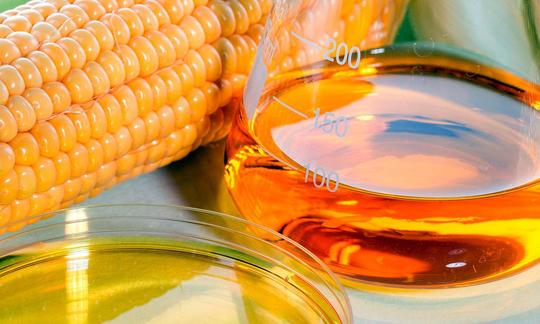
Maissirup – ein Zuckerkonzentrat aus Maisstärke – hat mit dem Ursprungsprodukt Mais nur noch sehr wenig zu tun. Für die Industrie ist Maissirup, 'High Fructose Corn Syrup (HFCS)', eine besonders praktische Zutat.
Verwendung in der Küche
In der Küche findet hochverarbeiteter Maissirup als solcher keine Anwendung; nur indirekt über verarbeitete Lebensmittel.
Was ist Maissirup (High Fructose Corn Syrup)? Es ist ein industriell erzeugter Zuckersirup aus Mais. In einem aufwendigen chemischen Prozess verarbeitet man Mais zu Maisstärke; die Maisstärke zu Saccharose und danach spaltet man diese zu Fruktose und Glukose. Dieser Maissirup eignet sich aufgrund seiner funktionalen, chemischen wie auch physikalischen Eigenschaften besonders für Rezepturen von Getränken, Backwaren, konservierten Früchten, Saucen, Suppen und Milchprodukten.18
Es gibt aber auch noch Maissirup (Corn Syrup), hergestellt aus Maisstärke, der vorwiegend Glukose enthält. In Europa heisst er Glukosesirup (Glucosesirup). Auch kombinierte Siruparten, wie z.B. Malz-Maissirup (Malzsirup aus Gerstenmalz) sind erhältlich. Sie finden vorwiegend Verwendung in Backwaren und Süssspeisen, ähnlich wie Reissirup, Ahornsirup und Agavensirup. Davon zu unterscheiden ist Maltose, also Malzzucker, das Abbauprodukt von Stärke, das beim Keimen von Getreide entsteht.
Vegane Rezepte mit Maissirup finden Sie unter dem Hinweis: "Rezepte, die am meisten von dieser Zutat haben".
| Nicht nur Veganer oder Vegetarier sollten das lesen: Veganer essen oft ungesund. Vermeidbare Ernährungsfehler. |
Einkauf - Lagerung
Maissirup (HFCS) ist ein Industrieprodukt, das nicht bei den üblichen Supermärkten für Privatkunden erhältlich ist. Coop, Migros, Denner, Volg, Spar, Aldi, Lidl, Rewe, Edeka, Hofer, Billa oder Bio-Supermärkte wie Denn's Biomarkt oder Alnatura bieten diesen Sirup daher nicht an. In Online-Shops, Spezialläden oder Reformhäusern sind Maissirup (Corn Syrup) und daraus hergestellte Mischformen sowie Reissirup erhältlich.
Er ist jedoch in sehr vielen Fertigprodukten enthalten. Achten Sie in Europa beim Kauf von Fertigprodukten auf die Bezeichnung 'Glukose-Fruktose-Sirup' (GFS) oder Isoglukose. Die deutsche Zuckerartenverordnung schreibt vor, Glukosesirup mit einem Fruktoseanteil zwischen 5 und 50 % (Gewicht in der Trockenmasse) so zu bezeichnen. Enthält der Sirup mehr als 50 % Fruktose, heisst er 'Fruktose-Glukose-Sirup' (FGS).1 Je mehr Fruktose enthalten ist, umso süsser schmeckt das Produkt. In Europa gilt eine Kennzeichnungspflicht bei Verwendung von HFCS. In Amerika verwendet man meist HFCS-42 oder HFCS-55, es gibt aber auch HFCS-90, den die Industrie häufig beimengt. Zur Erklärung: Die Trockensubstanz von HFCS-55 enthält 55 % Fruktose, 41 % Glukose, ca. 2 % Maltose und 2 % höhere Kohlenhydrate. Andere Stoffe sind kaum vorhanden.16
Inhaltsstoffe - Nährwerte - Kalorien
Zusammensetzung und Menge der Inhaltsstoffe, inkl. sekundäre Pflanzenstoffe, variieren extrem je nach Sorte, Wachstumsbedingungen und Verarbeitungsmethoden etc.
Maissirup hat 281 kcal/100g und besteht zu 76 % aus Zucker, die restlichen 24 % sind hauptsächlich Wasser.9
Die gesamten Inhaltsstoffe von Maissirup, die Abdeckung des Tagesbedarfs und Vergleichswerte mit anderen Zutaten finden Sie in unseren Nährstofftabellen. Im Artikel Nährstoffe umfassend erklärt bekommen Sie einen detaillierten Einblick in das Thema.
Wirkungen auf die Gesundheit
Maissirup mit einem hohen Fruktoseanteil hat ähnliche Effekte auf die Gesundheit wie Haushaltszucker (Sacchaose, Sucrose mit 50 % Glukose und 50 % Fruktose). HFCS hat aber einen stärkeren negativen Einfluss auf das C-reaktive Protein, einen Biomarker für Entzündungen.8 Ein sehr hoher Anteil an Fruktose kann deutlich negativere Effekte mit sich bringen.10
Ein wichtiger Faktor für die Gesundheit ist die konsumierte Menge. Auch Obst enthält Fruktose und Glukose; aber in kleineren Mengen und verpackt in Vitaminen und Ballaststoffen. Die WHO empfiehlt 6 bis maximal 12 TL zugesetzten Zucker pro Tag (25-50 g).5 Diese Menge ist meist schon mit einem Softdrink erreicht. Das ist wohl die Wurzel des Problems: wie viel Zucker wir zu uns nehmen, ist uns oft nicht bewusst.
Es gibt starke Hinweise darauf, dass der allgemeine Konsum von zugesetztem, im Gegensatz zu natürlich enthaltenem Zucker, mit Veränderungen des Stoffwechsels sowie einem erhöhten Risiko für verschiedene Krankheiten in Verbindung steht. Zucker ist aber ein sehr kontroverses Thema.
Die erhöhte Aufnahme von Kalorien durch Zucker im Allgemeinen begünstigt Fettleibigkeit.7,8 Die überschüssige Aufnahme an Energie speichert der Mensch in Form von Fett. Wenn wir Süsses essen, schüttet das Gehirn Glücksgefühle aus. Daher neigen wir dazu, zu viel Zucker zu essen, oder gar eine Zucker-Sucht zu entwickeln.20
Der Konsum von High-Fructose Corn Syrup (HFCS) steht in engem Zusammenhang mit der Entwicklung von Herz-Kreislauf-Erkrankungen. HFCS führt zu einer erhöhten Aufnahme von Fruktose, die die Lipogenese ankurbelt. Dies begünstigt die Bildung von Triglyceriden sowie sehr niedrig dichten Lipoproteinen (VLDL), die im Blut zirkulieren und zur Entstehung von Atherosklerose beitragen können.1 Ferner erhöht HFCS den Harnsäurespiegel, was oxidativen Stress und Entzündungsprozesse fördert – beides sind bekannte Risikofaktoren für Bluthochdruck und andere kardiovaskuläre Erkrankungen. Ein langfristiger Konsum von HFCS kann zudem Insulinresistenz und Gewichtszunahme begünstigen, wodurch das Risiko für Herz-Kreislauf-Erkrankungen weiter steigt.21
Auch die Entstehung von Diabetes kann mit Maissirup zusammenhängen. Aufgrund begrenzter Belege zu den gesundheitlichen Auswirkungen von HFCS (High Fructose Corn Syrup) ist jedoch derzeit nicht abschliessend geklärt, ob HFCS gesundheitliche Folgen hat, die über die von zugesetztem oder freiem Zucker hinausgehen.7,18 ForscherInnen stellten aber fest, dass ein erhöhter Konsum von Zucker durch Süssgetränke mit Maissirup zu einer gestörten Glukosetoleranz führt, die durch einen Insulinsekretionsfehler entsteht.2
Auch Sport scheint die negativen Effekte von Süssgetränken mit HFCS auf die Gesundheit und das Herz-Kreislaufsystem nicht ausgleichen zu können, wie eine Kohortenstudie mit über 100'000 Frauen und Männern zeigt.6
Sogar Studien der Lebensmittelindustrie empfehlen, einen übermässigen Konsum von fruktosehaltigem Zucker zu vermeiden.3
Unter unseren Artikeln Zucker (Kristallzucker, Sucrose, Saccharose) und Brauner Zucker (Rohzucker, Vollrohrzucker, Vollzucker, bio?) können Sie die gesundheitlichen Wirkungen von zugesetztem Zucker nachlesen.
| Auch Zuckeralternativen enthalten viel freien Zucker. |
Sekundäre Pflanzenstoffe
Für das Nährstoffprofil von Maissirup (HFCS) sind die sekundären Pflanzenstoffe nicht relevant. Erfahren Sie mehr über Bedeutung und Einteilung dieser bioaktiven Stoffe in Lebensmitteln im Artikel über sekundäre Pflanzenstoffe.
Gefahren - Unverträglichkeiten - Nebenwirkungen
Ein sehr hoher Gehalt an Fruktose, wie er in Maissirup vorkommt, kann kurzfristig zu einer Fruktosemalabsorption führen. In der Natur kommt es nicht vor, dass mehr Fruktose als Glukose enthalten ist. Die Verdrängung von Saccharose durch HFCS (mit hohem Fruktosegehalt) hat zu einem beispiellosen Anstieg der täglichen Aufnahme von überschüssiger freier Fruktose geführt. Hinzu kommen seine allgegenwärtige Präsenz in Lebensmitteln und die Praxis der Industrie, HFCS mit höheren Fruktoseanteilen zu versehen. Zusätzlich hat die verstärkte Verwendung von Apfelsaft als Süssungsmittel diesen Trend weiter verstärkt. Schliesslich führen auch die zunehmende Nutzung von kristalliner Fruktose, Agavensirup (70–90 % Fruktose) und Apfelpulver zu einer weiteren Erhöhung der Aufnahme von zu viel freier Fruktose. Die aufgenommenen Mengen überschreiten teilweise die Schwellenwerte und lösen eine Fruktosemalabsorption aus (~5–10 g). Überschüssige freie Fruktose fördert im Darm die Bildung proinflammatorischer 'Advanced Glycation End Products' (FruAGE) und verursacht ein Ungleichgewicht der Darmflora (Dysbiose des Darms). Asthma, COPD, Autoimmunerkrankungen, entzündliche Darmerkrankungen (IBD), Reizdarmsyndrom (IBS), Herz-Kreislauf-Erkrankungen (CVD), nicht-alkoholische Fettlebererkrankung (NAFLD), chronische Nierenerkrankungen (CKD) sowie kardio-metabolische und psychische Störungen stehen damit in Verbindung.10
Ca. eine Person unter 100 leidet an einer angeborenen Stoffwechselerkrankung, der hereditären Fruktoseintoleranz (HFI). Der Verzehr von Fruktose bei HFI löst sofort Symptome wie Übelkeit und Erbrechen aus, begleitet von Unterzucker (Hypoglykämie), akuter Leber- und tubulärer Nierenfunktionsstörung.11
Ökologischer Fussabdruck - Tierwohl
Die meisten Umweltauswirkungen im Lebenszyklus von Maissirup sind auf die Rohstoffproduktion (Maiskörner) zurückzuführen.12
Carboncloud, eine schwedische Plattform zur Analyse von Klimabilanzen, berechnete den CO2-Fussabdruck von HFCS aus den USA und kam auf 1,09 kg CO2eq/kg.13
Das ist durchaus eine gute Bilanz, vergleichbar mit jener von konventionellem Zucker, dessen Fussabdruck 2,65 kg CO2eq/kg beträgt.22
Der durchschnittliche Wasser-Fussabdruck von Maissirup beträgt 1125 l/kg, der von Rohrzucker 1500 l/kg und von Rübenzucker 935 l/kg. Die Berechnung des Maissirups inkludiert die Nutzung von Maisstroh zur Ethanol-Herstellung.14 Daher ist der Wasser-Fussabdruck von Maissirup scheinbar niedriger als der von Mais. Früchte benötigen durchschnittlich nur 967 l Wasser pro kg.15
Ausführliche Erläuterungen zu verschiedenen Nachhaltigkeitsindikatoren (wie z.B. ökologischer Fussabdruck, CO2-Fussabdruck, Wasser-Fussabdruck) lesen Sie in unserem Artikel: Was bedeutet der ökologische Fussabdruck?
Tierschutz - Artenschutz
Die Produktion von Maissirup hat durch den intensiven Maisanbau erhebliche Auswirkungen auf Tierschutz und Artenschutz. Monokulturen führen zum Verlust von Lebensräumen und gefährden die Artenvielfalt, während der hohe Einsatz von Pestiziden und Düngemitteln Insekten, Vögel und aquatische Ökosysteme schädigt. Abflüsse aus der Landwirtschaft verschmutzen Gewässer und schaffen 'tote Zonen', die das Überleben vieler Arten gefährden. Zudem trägt der Ressourcenverbrauch des Maisanbaus zum Klimawandel bei, der natürliche Lebensräume weiter bedroht.
Weltweites Vorkommen - Anbau
High Fructose Corn Syrup (HFCS) entstand durch die Entwicklung von Enzymen und chemischen Prozessen zur Umwandlung von Maisstärke in süssere Substanzen. 1811 entdeckte der russische Chemiker Kirchoff, dass Stärke durch Säurebehandlung in eine süsse Substanz umwandelbar ist – später Traubenzucker bzw. Glukose (Glucose) genannt. In den 1960er Jahren führten WissenschaftlerInnen die Umwandlung von Glukose zu Fruktose mithilfe des Enzyms Glukose-Isomerase ein, was die Grundlage für HFCS bildete. 1967 stellten sie die erste HFCS-Variante mit 15 % Fruktose her, und durch Prozessverbesserungen erhöhten sie den Fruktosegehalt auf 42 %. Ab 1972 setzten sie einen kontinuierlichen Produktionsprozess um, was die Effizienz steigerte und die Kosten senkte.16
Die USA produzieren die grösste Menge an Maissirup, gefolgt von Japan und Kanada. Auch in der EU produziert und konsumiert man immer mehr Maissirup. Die gesamte weltweite Maissirup-Produktion beläuft sich auf 12,5 Millionen Tonnen.7,19
Industrielle Herstellung
Die Herstellung von Maissirup (HFCS) beginnt mit der Extraktion von Maisstärke. In einer Lösung mit Wasser entsteht 'Stärkeslurry'. Hinzu kommen heisses Wasser und eine Säure, um die Stärke in Dextrose (Glukose) umzuwandeln. Der nächste Schritt ist die Isomerisierung, bei der das Enzym Glukose-Isomerase die Glukose in Fruktose umwandelt, was den Sirup süsser macht. Anfangs enthält der Sirup etwa 15 % Fruktose, schrittweise ist der Anteil auf 42 %, 55 % oder sogar 90 % erhöhbar. Insgesamt sind etwa 18 Prozessschritte erforderlich.16
Weiterführende Informationen
Alle Zuckerarten bestehen aus Kohlenstoff, Wasserstoff und Sauerstoff. Nach ihrer chemischen Struktur lassen sie sich in Einfach-, Zwei- und Mehrfachzucker unterteilen. Zu den häufigsten Monosacchariden gehören Glukose und Fruktose. Saccharose – der Kristallzucker – ist ein Disaccharide, wie auch Laktose und Maltose – sie bestehen aus zwei Zuckermolekülen. Während Kristallzucker aus Disacchariden besteht, enthält Maissirup auch Monosaccharide. Zu den Polysacchariden gehören Stärke und Ballaststoffe.4
Alternative Namen
Die englische Bezeichnung lautet 'High Fructose Corn Syrup (HFCS)' oder 'High Fructoe Maize Syrup (HFMS)'. In englischsprachigen Studien ist die Bezeichnung 'sugar-sweetened beverages' oft gleichgesetzt mit HFCS-haltigen Getränken.7
Auch in deutschen Ländern verwendet man die englische Bezeichnung High fructose corn syrup. Die wortwörtliche Übersetzung der englischen Bezeichnung 'High Fructose Corn Syrup' wäre auf Deutsch übersetzt 'Maissirup mit hohem Fruktosegehalt', verwendet man jedoch kaum. Übliche Namen sind Maissirup, Fruktose-Glukose-Sirup, Glukose-Fruktose-Sirup oder Isoglukose.
Sonstige Anwendungen
Teilweise streckt man verschiedene Sirupe mit Maissirup (HFCS). Beispielsweise hat Ahornsirup ohne HFCS einen viel höheren Preis.17
Literaturverzeichnis - 22 Quellen (Link zur Evidenz)
| 1. | ● (4) Enthalten die in Anlage 1 Nr. 7 oder 8 aufgeführten Erzeugnisse mehr als 5 Prozent Fruktose in Gewicht in der Trockenmasse, so sind sie als "Glukose-Fruktose-Sirup", als "Fruktose-Glukose-Sirup", als "getrockneter Glukose-Fruktose-Sirup" oder als "getrockneter Fruktose-Glukose-Sirup" zu bezeichnen, abhängig davon, ob der Glukose- oder Fruktoseanteil überwiegt. Website | BMJV Bundesministerium der Justiz und für Verbraucherschutz Deutschland. Verordnung über einige zur menschlichen Ernährung bestimmte Zuckerarten (Zuckerartenverordnung). 2003. |
| 2. | * Tierstudie (in vivo), experimentelle Interventionsstudie Excessive intake of sweetened soft drinks has been reported to be associated with a relatively higher risk of T2D and obesity [12,13,14]. Sweetened soft drinks contain large amounts of sweeteners, such as high-fructose corn syrup (HFCS). HFCS was developed in the 1960s as a liquid sweetener to replace sucrose, and it was introduced to the food and beverage industry in the 1970s. The use of HFCS in soft drinks has increased rapidly owing to its inexpensive and sweet and tasty properties. The intake of HFCS-containing sweetened soft drinks induces gain in body weight and adipose tissue hypertrophy [15,16], and increases fasting blood glucose [17] and blood triglyceride levels [18]. On the contrary, there are reports that fructose-containing sugar intake is not associated with the development of T2D and obesity [19,20]. There is thus a disagreement on whether HFCS can be a direct risk factor for T2D or obesity. However, the caloric intake has been considered in only a few of these studies. Furthermore, few studies have been conducted to evaluate the effects of excessive intake of HFCS drinks on T2D and obesity under the same conditions of caloric intake. Therefore, it is unclear whether HFCS directly induces diabetes or whether excessive energy intake causes obese T2D.
Under controlled caloric intake and nutritional imbalance, the excessive intake of HFCS–water did not induce obesity, but did induce IGT. This condition was induced by insulin-secretion defect and decreased expression of Glut2, Gck, and Khk in the pancreas. However, no inflammation was observed. These results suggest that excessive consumption of HFCS drinks, such as soft drinks, without a proper diet, induces nonobese IGT due to insulin-secretion defect. impaired glucose tolerance (IGT) DOI: 10.3390/biomedicines9050541 Study: weak evidence | Hattori H, Hanai Y et al. Excessive Intake of High-Fructose Corn Syrup Drinks Induces Impaired Glucose Tolerance. Biomedicines. 2021;9(5):541. |
| 3. | * Narratives Review JMR and Rippe's research laboratory have received unrestricted grants and JMR has Few topics in nutrition are as controversial as added sugars.1–17 It Subsequent research trials, however, have failed to The worldwide pandemic of obesity and the dramatic increases in DOI: 10.1038/ijo.2016.10 Study: weak evidence | Rippe JM, Angelopoulos TJ. Added Sugars and Risk Factors for Obesity, Diabetes and Heart Disease. Int J Obes. 2016;40(S1):S22–S27. |
| 4. | ● Allen Zuckerarten gemein ist, dass sie aus Kohlenstoff, Wasserstoff und Sauerstoff DOI: 10.1007/978-3-662-46280-5_10 Book: moderate evidence | Rimbach G, Nagursky J, Erbersdobler HF. Zucker, Honig und Sirup. In: Lebensmittel-Warenkunde für Einsteiger. Berlin, Heidelberg: Springer Berlin Heidelberg; 2015:237–260. |
| 5. | ● WHO recommends a reduced intake of free sugars throughout the lifecourse (strong recommendation6). Website | WHO. Guideline: Sugars Intake for Adults and Children. 2015. |
| 6. | * Prospektive Kohortenstudie (65'730 Frauen aus der Nurses’ Health Study und 39'418 Männer aus der Health Professionals Follow-up Study) Higher SSB intake was associated with CVD risk regardless of physical activity levels. These results support current recommendations to limit the intake of SSBs even for physically active individuals. (The underlying biological mechanism by which SSB intake is associated with an increased risk of CVD includes not only their capacity to induce weight gain but also the high amounts of quickly absorbable carbohydrates (i.e., sugar or high-fructose corn syrup), contributing to an increase in blood glucose and insulin levels and thereby glycemic load [13]. ) DOI: 10.1016/j.ajcnut.2024.01.001 Study: moderate evidence | Pacheco LS, Tobias DK et al. Sugar-Sweetened or Artificially-Sweetened Beverage Consumption, Physical Activity, and Risk of Cardiovascular Disease in Adults: A Prospective Cohort Study. The American Journal of Clinical Nutrition. 2024;119(3):669–681. |
| 7. | * EU-Report - Expertenbericht The reviews have been designed to provide policymakers with summaries of recent and High fructose syrups are liquid fructose-glucose sweeteners, commonly derived via the There was strong evidence that the general consumption of added sugars is linked to inconclusive whether HFCS has health consequences related to overweight and obesity Consequently, non-systematic reviews of peer-reviewed research indicate inconsistent HFCS use is highest in the US (24.78 kg/year per capita), whilst Europeans DOI: 10.2875/494851 Study: weak evidence | ICF Consulting Services Ltd. Consumption and impact of High Fructose Syrups. European Commission. 2018. |
| 8. | * Systematisches Review mit Meta-Analyse In conclusion, analysis of data from the literature suggests that HFCS consumption was associated with a higher level of CRP compared to sucrose, whilst no significant changes between the two sweeteners were evident in other anthropometric and metabolic parameters. Meta-analysis of effect of High-fructose corn syrup on. (A) Weight. (B) Waist circumstance. (C)Body mass index. (D) Fat mass. (E) Systolic blood pressure. (F) Diastolic blood pressure. (G)Fasting blood glucose. (H) Triglyceride. (I) Low-density lipoprotein. (J) High-density lipoprotein. (K) Total Cholesterol. (L) C-reactive protein. CRP is a biomarker for inflammation; and several previous investigations have shown that fructose-containing sweeteners, such as HFCS and sucrose, can induce the inflammatory process (32, 33). It has been demonstrated in a rat study that the addition of sugars, in general, and HFCS directly or indirectly contribute to obesity, as well as various types of metabolic disorders and diseases Studies have shown that excess consumption of sugar can lead to weight gain, confers a greater risk of developing metabolic heart disease, and an increased risk of early mortality (2, 13–15). DOI: 10.3389/fnut.2022.1013310 Study: strong evidence | Li X, Luan Y et al. The Effect of High-Fructose Corn Syrup vs. Sucrose on Anthropometric and Metabolic Parameters: A Systematic Review and Meta-Analysis. Frontiers in Nutrition. 2022;9:1013310. |
| 9. | ● Website | USDA United States Department for Agriculture. Syrups, corn, high-fructose. 2019. |
| 10. | * Sekundäranalyse von USDA-Daten The displacement of sucrose with HFCS, its ubiquitous Excess-free-fructose, also known as unpaired fructose, triggers fructose malabsorption [..] – a condition associated with gut dysbiosis and the gut/lung, gut/heart, gut/brain, and gut/kidney axes [..], and a wide range of adverse health consequences (asthma, COPD, autoimmune disease, inflammatory bowel disease (IBD) / syndrome (IBS), cardiovascular disease (CVD), non-alcohol associated fatty liver disease (NAFLD), chronic kidney disease (CKD), and mental health and cardiometabolic disorders) ...; excess-free-fructose forms gut immunogens (advanced glycation end-products (FruAGE)) via glycation / fructosylation of dietary peptides and incretins with far reaching consequences [..]. FruAGE bind receptors (RAGE) that are central mediators of asthma [..]. Sucrose, a disaccharide of fructose and glucose, is not associated with fructose malabsorption, nor are equimolar concentrations of fructose and glucose [..], i.e., when in a ~ 1:1 fructose-to-glucose ratio DOI: 10.1186/s12937-024-00919-3 Study: weak evidence | DeChristopher LR. 40 Years of Adding more Fructose to High Fructose Corn Syrup than is Safe, through the Lens of Malabsorption and Altered Gut Health–Gateways to Chronic Disease. Nutr J. 2024;23(1):16. |
| 11. | * Randomisierte, kontrollierte, Crossover‑Interventionsstudie (nur geringe Teilnehmerzahl) Ingestion of fructose in HFI immediately triggers symptoms as nausea and vomiting accompanied by hypoglycemia, acute hepatic and tubular renal dysfunction. This is due to the rapid accumulation of fructose-1-P in hepatocytes and proximal tubular renal cells expressing aldolase B, associated with ATP and inorganic phosphate consumption and cellular energy depletion. DOI: 10.1016/j.clnu.2021.01.026 Study: moderate evidence | Debray FG, Seyssel K et al. Effect of a High Fructose Diet on Metabolic Parameters in Carriers for Hereditary Fructose Intolerance. Clinical Nutrition. 2021;40(6):4246–4254. |
| 12. | * Ökobilanz-Studie The comparative cradle-to-gate assessment of inverted liquid sugar and HFCS has revealed that the later has higher impact (i.e. causes more damage) in14 out of the 18 analysed impact categories. Inverted liquid sugar has lower carbon and water footprint (by 38% and 95%, respectively) and its production requires less fossil energy (by 31%) and agricultural land (by 67%). The processing stage has relatively low contribution to the overall impact of inverted sugars and HFCS (in general less than 20% in most of the impact categories); therefore, further improvements in the process energy efficiency would have just minor impact on the overall results. Most of the life cycle impacts are attributable to the raw material production (i.e. beet sugar and corn grain) on which the inverted liquid sugar or HFCS producer has no, or very limited, influence DOI: 10.14232/analecta.2019.1.28-39 | Kis F, Maravić N et al. Life Cycle Assessment of Liquid Inverted Sugar and High-Fructose Corn Syrup. Anal Tech Szeged. 2019;13(1):28–39. |
| 13. | ● Website | CarbonCloud. High-fructose corn syrup: USA. 2024. |
| 14. | * Figure 7. The green, blue and grey water footprint of HFMS 55 for the main maize producing countries. The weighted global average WF of cane sugar is 1500 m3/ton, of HFMS 55 1125 m3/ton and of beet sugar 935 | Gerbens-Leenes W, Hoekstra AY. The Water Footprint of Sweeteners and Bio-Ethanol from Sugar Cane, Sugar Beet and Maize. Value of Water Research Report Series No. 38. 2009. |
| 15. | * 56 Maize (corn) 947 81 194 1222 Fruits 727 147 93 967 DOI: 10.5194/hess-15-1577-2011 | Mekonnen MM, Hoekstra AY. The Green, Blue and Grey Water Footprint of Crops and Derived Crop Products. Hydrol Earth Syst Sci. 2011;15(5):1577–1600. |
| 16. | ● The developement of high fructose corn syrup can be tracesd back to 1811 when the Russian chemist Kirchoff reported his discovery that starch yielded a sweet substance when heted with acid. In 1815, de Saussure determined that the reaction of Kirchoff on starch was hydrolysis. He found thtat the end product of the hydrolytic reaction was grape sugar or dextrose. The discovery, isolation, and application of various carbohydrase enzymes resulted in the development of many new corn syrups. These enzymes, principally bacterial alpha amylase, fungal glucoamylase, and fungal alpha amylase could be produced cheaply by fermentaion processes. These enzymes could be used sinfly, in sequence, or in combinations on starch to produce a broad range of syrup compositions with different properties. These product were called corn sweeteners. The commercial development of glucose isomerase which converts glucose to its sweeter isomer fructose was a major milestone in the corn sweetener industry. A historical perspective of this exciting development is presented by Casey. The enzymatic transfomation of glucose to fructose was first introduced to corn sweetener production in 1967. The first HFCS produced contained 15 percent fructose. The manufacturing process, known as isomerization, originally involved the direct addition of an isomerase enzyme to a dextrose substrate in a batch process. Further process improvments resulted in the HFCS product containing 42 percent fructose. High fructose corn syrup products 42, 55, 90 (=% fructose) Modern Process technlogy: The manufacturing process may be divided into about 18 separate steps in five major phases of operation, each of which has a major objective. The phases include dextrose production, primary refining and chemical treatment to produce dextrose feedstock, isomerization of dextrose feedstocl to produce 42 % fructose, secondary refining of 42 % fructose, and fractionation of 42 percent fructose for the production of 55 percent fructose. Fig. 7.1. High fructose corn syrup manufactoring simplified process schematic.Steps: Mill Starch slurry, liquification- saccharification-filtration-primary carbon treatment-primary ion exchange-evaporation-chemical treatment-isomerization-secondary carbon treatment-secondary ion exchange-evaporation-42 HFCS-fractionator-10 VEFCS-Blending-evaporation-55 EFCS Book: moderate evidence | Yadav PR. Industrial Biotechnology. Discovery Publishing House; 2005. 174-179. |
| 17. | * Narratives Review DOI: 10.1016/j.jfca.2021.103901 Study: weak evidence | Gad HA, Ramadan MF, Farag MA. Authentication and Quality Control Determination of Maple Syrup: A Comprehensive Review. Journal of Food Composition and Analysis. 2021;100:103901. |
| 18. | * Narratives Review Due to presence of free monosaccharaides (fructose and glu- Due to higher sweetness of HFCS-55 DOI: 10.1080/09637486.2020.1862068 Study: weak evidence | Khorshidian N, Shadnoush M et al. Fructose and High Fructose Corn Syrup: Are They a Two-Edged Sword? International Journal of Food Sciences and Nutrition. 2021;72(5):592–614. |
| 19. | * Expertenmeinung In 1831, the US, the After the year 2000, HFCS production in the US increased the market share A product like HFCS, which was not available before 1970 in the US and whose usage increased 1,000 percent over the last 30 years should be considered closely (BWI, 2007). DOI: 10.5281/zenodo.4429694 | Nar M, Nar MŞ. The Effects of Regulatory Authorities on Sugar Markets: An Evaluation of the Usa Case. IJCEAS. 2020;10(2):273-299. |
| 20. | * Expertenmeinung The constant consumption of foods enriched with high-fructose corn syrup exerts a direct effect on the dopaminergic mesolimbic system, estimulate the synthesis of dopamine causing a sensation of pleasure. Continued use of these foods establishes the process of food addiction, which causes neuroadaptive changes and increased reactive tolerance. This causes overeating even knowing the health consequences. The uncontrollable weight gain highlights the need that obesity to be considered as a condition derived from an addictive process. The main function of the adipocyte is to store excess energy in the form of triglycerides and then release them in situations of energy need [26]. DOI: 10.35702/clinres.10001 | Torres-Valadez R, Soval-Parra MG et al. Obesity and Food Addiction: Consumption of High-Fructose Corn Syrup and the Effectiveness of Clinical-Nutritional Management. Clinical Research. 2020;1(1):1–14. |
| Wir haben Studien und Bücher zu Ernährung und Gesundheit nach folgenden 3 Evidenz-Kategorien markiert: grün=starke Beweiskraft, gelb=mittlere, violett=schwache. Die restlichen Quellen sind grau markiert. Eine ausführliche Erklärung finden Sie in unserem Beitrag: Wissenschaft oder Glaube? So prüfen Sie Publikationen. | ||




Kommentare