

Inhaltsverzeichnis
| Wir bieten wissenschaftlich fundierte Informationen zu Gesundheit, Ernährung und Nachhaltigkeit – unabhängig von Sponsoren, Lebensmittelindustrie oder Herstellern von Nahrungsergänzungsmitteln. Hier erfahren Sie mehr: unsere Mission. |
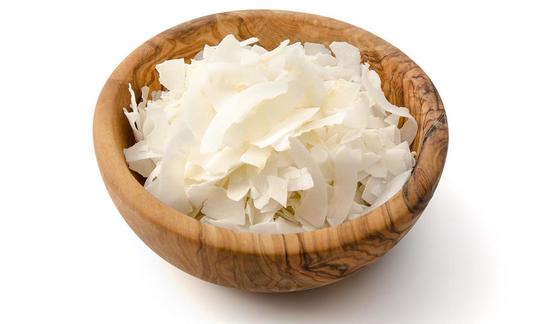
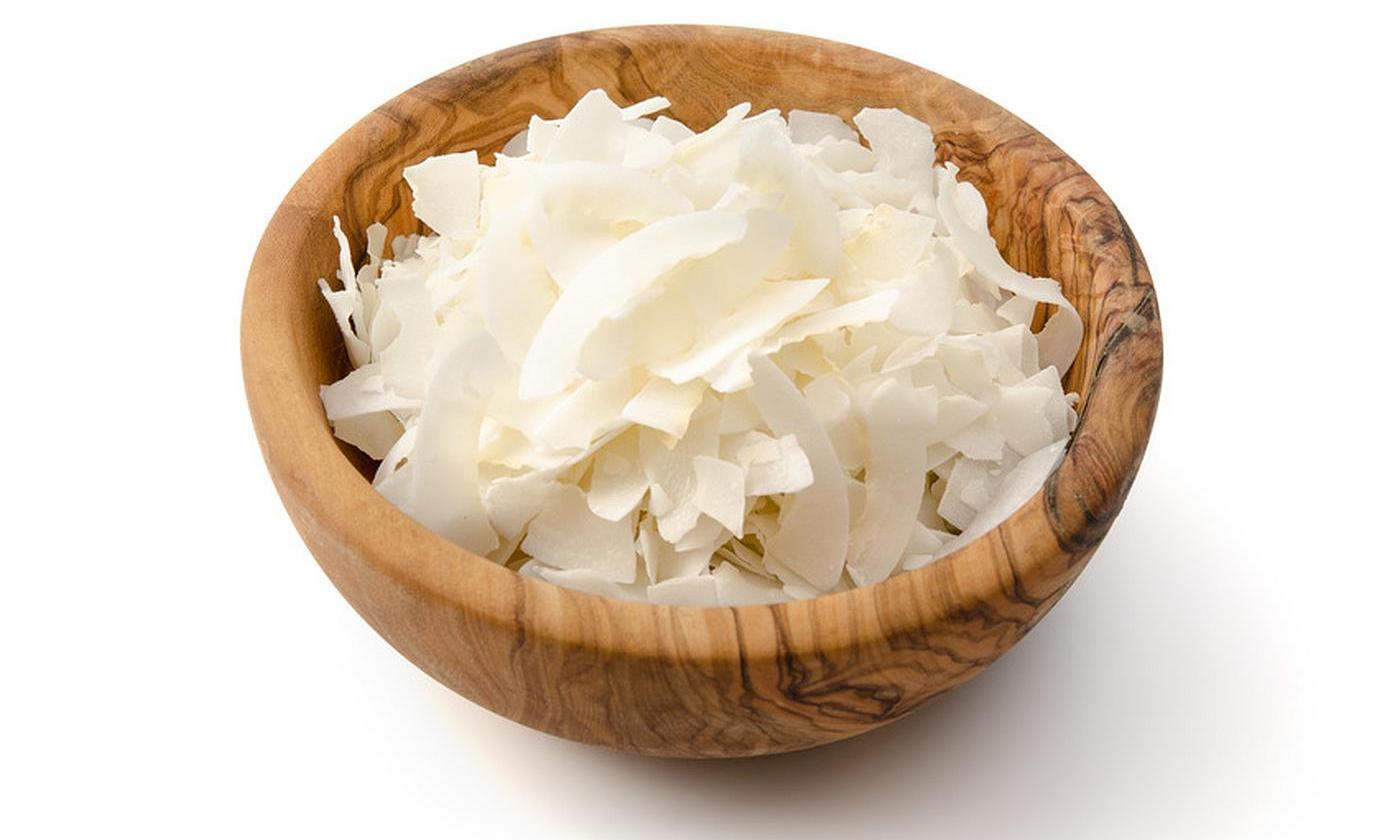
Kokos-Chips oder Kokoschips sind dünn gehobelte, getrocknete Stücke des Fruchtfleisches der Kokosnuss (Cocos nucifera), die sich als Snack für zwischendurch oder als Zutat in Müeslis, Desserts und herzhaften Gerichten eignen. Sie sind in Bio-Qualität und gelegentlich als Rohkost (roh) erhältlich.
Verwendung in der Küche
Kokos-Chips oder Kokoschips sind schonend getrocknete bzw. gebackene, dünne Stücke des Kokosnussfleisches. Sie weisen einen mild-süssen, leicht nussigen Geschmack auf. Ihre charakteristische längliche und leicht gebogene Form erhalten sie aufgrund der natürlichen Rundung des Fruchtfleisches in der Kokosnuss. Meistens sind Kokos-Chips weiss bis cremefarben und ein bis mehrere Zentimeter gross. Neben Kokos-Chips gibt es auch Kokosraspeln.
Was kann man mit Kokoschips machen? Sowohl zu Süssem als auch zu Pikantem passen Kokoschips. Sie finden Verwendung als schmackhafte Knabberei oder als Topping für das Müsli oder die Smoothie-Schale. Ein paar Kokos-Chips im Obstsalat geben diesem einen leichten Kokosgeschmack. Sie machen sich auch hervorragend als Garnitur auf veganen Torten, Kuchen sowie weiteren Desserts und Süssspeisen. Zum Backen können Sie entweder Chips oder Raspeln verwenden, z.B. für ein exotisches Bananenbrot mit Mango und Ingwer. Kokos-Chips schmecken auch gut zu pikanten Gerichten, wie z.B. zur Curry-Butternuss-Suppe oder Curry-Bowl mit Kürbis und Grünkohl.
Anmerkung: Der hohe Fettgehalt von reifem Kokosfleisch darf nicht unberücksichtigt bleiben. Insbesondere der sehr hohe Anteil an gesättigten Fettsäuren in der Kokosnuss ist ungesund.
Eigene Zubereitung
Wollen Sie Kokos-Chips selbst herstellen, schneiden Sie dafür das frische, rohe Kokosfleisch mit einem Sparschäler, Käsehobel oder einem scharfen Messer in dünne Streifen. Anschliessend bei 170 °C Umluft im Backofen 10-12 Min. rösten. Für die Rohkostvariante verwenden Sie am besten ein Dörrgerät und stellen die Temperatur nicht über 40 °C ein.
Veganes Rezept für Fruchtsalat mit Kokos-Chips
Zutaten (für 4 Personen): 1 Papaya, 3 grüne Kiwis, ½ Wassermelone, Saft einer Zitrone, 1 cm Ingwer, 2 EL Kokos-Chips, 1 Bund Pfefferminze.
Zubereitung: Papaya halbieren, entkernen und schälen. Kiwis und Wassermelone schälen resp. Fruchtfleisch herauslösen. Alle Früchte in mundgerechte Stücke schneiden. Ingwer fein reiben. Früchte und Ingwer in eine Schüssel geben und mit Zitronensaft mischen. Für ca. 30 Min. ziehen lassen. Nochmals umrühren und in kleinen Schüsselchen anrichten. Veganen Fruchtsalat mit Kokos-Chips und Minzblättern garnieren.
Vegane Rezepte mit Kokos-Chips finden Sie unter dem Hinweis: "Rezepte, die am meisten von dieser Zutat haben".
| Nicht nur Veganer oder Vegetarier sollten das lesen: Veganer essen oft ungesund. Vermeidbare Ernährungsfehler. |
Einkauf - Lagerung
Bei Grossverteilern, wie Coop, Migros, Rewe, Edeka, Hofer und Billa, sind Kokos-Chips (ohne Zucker) meist ganzjährig erhältlich - teilweise auch in Bio-Qualität. Andere Supermärkte, wie z.B. Volg, Denner, Spar, Aldi und Lidl, verkaufen sie gelegentlich im Sonderangebot. In Bio-Supermärkten (z.B. Denn's Biomarkt, Alnatura) gibt es Kokos-Chips häufig zu kaufen. Sie sind auch in asiatischen Lebensmittelläden oder Online-Shops zu finden. Vorwiegend sind sie pur resp. ungesüsst oder ungewürzt erhältlich, gelegentlich auch gesüsst, gewürzt oder mit Schokolade überzogen. Wer Wert auf Rohkost-Qualität legt, sollte ausschliesslich klar deklarierte Produkte kaufen.
Die Verfügbarkeit von Kokos-Chips ist je nach Grösse des Ladens, Einzugsgebiet etc. unterschiedlich. Bei Interesse klicken Sie auf unsere erfassten Lebensmittelpreise für die D-A-CH-Länder (oben unter dem Zutatenbild). Dort finden Sie aktuelle Preise aus verschiedenen Supermärkten und deren Preisentwicklung.
Tipps zur Lagerung
Kokos-Chips sollten Sie trocken und vor Licht und Wärme geschützt lagern. Ungeöffnet sind Kokos-Chips bei Zimmertemperatur etwa zwei Jahre und geöffnet etwa ein Jahr haltbar.
Inhaltsstoffe - Nährwerte - Kalorien
Zusammensetzung und Menge der Inhaltsstoffe, inkl. sekundäre Pflanzenstoffe, variieren extrem je nach Sorte, Wachstumsbedingungen und Verarbeitungsmethoden etc.
Die Inhaltsstoffe von Kokos-Chips sind vergleichbar mit denjenigen von Kokosfleisch, nur dass sie konzentrierter sind.
Kokos-Chips enthalten 704 kcal pro 100 g. Sie weisen mit 69 g/100g einen sehr hohen Fettgehalt auf und sind reich an Ballaststoffen (14 g/100g). Der Gehalt an Kohlenhydraten beträgt 24 g/100g, der an Proteinen 7,4 g/100g.1
Kokoschips weisen einen nennenswerten Anteil an Mangan auf. Die 2,1 mg/100g entsprechen 105 % des Tagesbedarfs an Mangan. Quinoa sowie Amarant enthalten vergleichbare Gehalte (2 mg bzw. 2,3 mg/100g), weisen jedoch viel weniger Fett auf als Kokos-Chips.1
Kalium ist zu 912 mg pro 100 g Kokos-Chips enthalten (46 % des Tagesbedarfs). Ähnlich viel ist in getrockneter Mango (835 mg/100g) und getrockneten Pfirsichen (996 mg/100g) zu finden. Getrocknete Tomaten weisen mit 3427 mg/100g fast das Vierfache an Kalium auf.1
Ebenfalls enthalten ist Magnesium. Der Gehalt von 116 mg/100g (31 % des Tagesbedarfs) ist vergleichbar mit demjenigen von roher Hirse (114 mg/100g) und Pistazien (121 mg/100g). Mit 700 mg/100g sind geschälte Hanfsamen besonders reich an Magnesium.1
Es ist empfohlen, Kokoschips aufgrund des hohen Fettgehalts nur in kleinen Mengen zu verzehren, weshalb sich der tatsächlich aufgenommene Nährstoffgehalt relativiert.
Die gesamten Inhaltsstoffe von Kokos-Chips, die Abdeckung des Tagesbedarfs und Vergleichswerte mit anderen Zutaten finden Sie in unseren Nährstofftabellen. Im Artikel Nährstoffe umfassend erklärt bekommen Sie einen detaillierten Einblick in das Thema.
Wirkungen auf die Gesundheit
Sind Kokoschips gesund? Kokoschips sowie andere Kokosprodukte bestehen überwiegend aus Fett. Häufiger Verzehr oder grosse Mengen führen zu erhöhter Kalorien- und Fettaufnahme, was mit gesundheitlichen Risiken verbunden ist. Eine ausgewogene Ernährung mit Schwerpunkt auf pflanzlicher Vollwertkost ist die richtige Basis für eine lang anhaltende Gesundheit. Kokosprodukte sollten darin lediglich in kleinen Portionen und als Ausnahme Platz finden.
Ein häufig diskutierter Aspekt von Kokosprodukten betrifft ihren Gehalt an mittelkettigen Fettsäuren (MCT) und deren potenziellen Einfluss auf Gewichtsverlust resp. auf das Abnehmen. Studien untersuchten, ob MCT den Energieverbrauch und die Gewichtsreduktion fördern können.7,8 Meta‑Analysen zeigen, dass eine Ernährung, die mit reinen MCT angereichert ist, zu einem moderaten, doch nicht signifikanten Gewichtsverlust führen kann, im Vergleich zu Kost mit langkettigen Fettsäuren (LCT). Allerdings trat dieser Effekt hauptsächlich bei reinen MCT auf und nicht bei Mischungen aus mittelkettigen und langkettigen Fettsäuren (MLCT).9
In Studien, in denen man langkettige Fettsäuren durch MCT ersetzte, fielen die Veränderungen in Körpergewicht und Körperfett meist moderat aus (z.B. -0,5 kg Körpergewicht, -1,5 cm Taille), die Resultate blieben oft bescheiden.5 Auch beeinflusste eine MCT‑reiche Kost das Blutlipidprofil nur wenig, wobei Untersuchungen einen leichten Anstieg der Triglyceride beobachteten.6
Aufgrund dieser Befunde erscheint es fragwürdig, ob handelsübliche Kokosprodukte - wie Kokoschips oder normales Kokosöl, deren MCT‑Anteil vergleichsweise gering ist - ähnliche Effekte auf Gewicht oder Körperfett erzielen können wie isolierte MCT‑Öle.
Für eine nachhaltige Gewichtskontrolle erweist es sich daher als sinnvoller, die Gesamtkalorienaufnahme im Blick zu behalten und bevorzugt Fette aus Nüssen oder Samen (z.B. Walnüsse, Leinsamen, Chia) aufzunehmen. Erfahren Sie mehr zum Thema Abnehmen im Artikel "Gesund und dauerhaft abnehmen".
Sekundäre Pflanzenstoffe
Viele gesundheitliche Wirkungen von Kokos-Chips kann man auf die enthaltenen sekundären Pflanzenstoffe zurückführen. Unser Artikel über sekundäre Pflanzenstoffe bietet einen Überblick über die Klassifizierung der Stoffgruppen, das Vorkommen in Lebensmitteln und mögliche Wirkungen auf den Menschen.
Kokos-Chips enthalten u.a. folgende sekundäre Pflanzenstoffe:15,16
- Isoprenoide: Beta-Sitosterol
- Polyphenole: Flavonoide (u.a. Catechin), Phenolsäuren (u.a. Hydroxyzimtsäuren)
Kokosnussfleisch, damit sehr wahrscheinlich auch Kokoschips, enthält einige sekundäre Pflanzenstoffe, insbesondere Phenolverbindungen, die zu einer antioxidativen Wirkung und zu potenziell gesundheitsfördernden Eigenschaften beitragen. Eine Analyse von 2025 stellte fest, dass es deutliche Unterschiede im Phenolgehalt von zarten und reifen Kokosnüssen gibt. Zartes Kokosfleisch wies einen signifikant höheren Gehalt an phenolischen Verbindungen auf als reifes Kokosfleisch. Ein ähnliches Muster zeigte sich bei Kokosnusswasser. Das Phenolprofil ist nebst dem Entwicklungsstadium auch abhängig vom Gewebetyp. Kokoswasser enthält einen höheren Anteil an Phenolen als Kokosnussfleisch.15
Gefahren - Unverträglichkeiten - Nebenwirkungen
Aus ernährungswissenschaftlicher Sicht zeichnet sich Kokosnussfleisch durch einen sehr hohen Anteil an gesättigten Fettsäuren aus, häufig zwischen 80 und 90 % der Gesamtfette. Ein regelmässiger und hoher Konsum gilt aufgrund der gesättigten Fettsäuren und des ungünstigen Verhältnisses von Omega-6- zu Omega-3-Fettsäuren (Linolsäure, LA, zu Alpha-Linolensäure, ALA) nicht als ideal für eine gesunde Ernährung. Insbesondere im Vergleich zu pflanzlichen Fetten mit einem höheren Anteil ungesättigter Fettsäuren.17,18 Die im Kokosöl enthaltenen gesättigten Fettsäuren heben den Blutcholesterinspiegel an, was Herzerkrankungen begünstigt.19
Ein Review aus dem Jahr 2016 analysierte 21 Forschungsarbeiten, darunter 8 klinische Studien und 13 Beobachtungsstudien. Die Beobachtungsdaten deuten darauf hin, dass der Verzehr von Kokosnussfleisch im Rahmen traditioneller Ernährungsgewohnheiten nicht zu negativen kardiovaskulären Auswirkungen führt. Aufgrund der grossen Unterschiede in den Ernährungs- und Lebensgewohnheiten lassen sich diese Ergebnisse jedoch nicht auf eine typische westliche Ernährung übertragen. Insgesamt deuten die bisherigen Ergebnisse aus Interventionsstudien darauf hin, dass der Ersatz von Kokosnussöl durch cis-ungesättigte Fette das Blutfettprofil in einer Weise verändert, die mit einer Verringerung der Risikofaktoren für Herz-Kreislauf-Erkrankungen einhergeht.4
Eine Kokosnuss-Allergie tritt selten auf. Dennoch finden sich mit der Verbreitung des Konsums, immer mehr Fälle von allergischen Reaktionen. Besonders vulnerabel sind Kinder. Kreuzallergien mit Nüssen, Hülsenfrüchten und Samen, vor allem mit Macadamia, können vorliegen.20
Ökologischer Fussabdruck - Tierwohl
Der CO2-Fussabdruck von Kokos-Chips hängt von verschiedenen Faktoren ab, unter anderem von der Anbauweise der Kokosnüsse, der Verarbeitung, dem Transport und der Verpackung. Trotz umfangreicher Recherche konnten wir keine genauen Zahlen zum CO2-Fussabdruck von Kokos-Chips finden. Für Kokosmilch beträgt dieser laut The Big Climate Database 6,33 kg CO2eq/kg.13 Laut einer deutschen Studie von 2020 für Kokosöl 2,3 kg CO2eq/kg.14 Es ist anzunehmen, dass der CO2-Fussabdruck für Kokoschips ähnlich ist.
Der globale durchschnittliche Wasserfussabdruck von Kokosnüssen liegt bei 2687 l/kg. Das ist ein sehr hoher Wasserverbrauch im Vergleich zu Gemüse (322 l/kg) und liegt über dem globalen Durchschnitt von Öl-Früchten allgemein (2364 l/kg).21 Butter kommt auf 7692 l/kg.22
Ausführliche Erläuterungen zu verschiedenen Nachhaltigkeitsindikatoren (wie z.B. ökologischer Fussabdruck, CO2-Fussabdruck, Wasser-Fussabdruck) lesen Sie in unserem Artikel: Was bedeutet der ökologische Fussabdruck?
Die Kokosindustrie ist in Bezug auf Nachhaltigkeit äusserst kritisch zu betrachten: Die für den Anbau von Kokospalmen benötigte Fläche ist mit Landraub, Waldrodungen und der Bedrohung der lokalen Biodiversität verbunden.23 Um die grosse Nachfrage zu stillen, pflanzen LandwirtInnen kaum Mischkulturen, sondern umweltschädliche Monokulturen.24 In Bezug auf die Menge an bedrohten Arten pro Millionen Tonnen produzierten Öls, hält Kokosöl mit dem biodiversitätsschädigenden Palmöl mit.10
Kokospalmen wachsen langsamer und liefern weniger Ertrag pro Hektar als Ölpalmen, was zu einem deutlich höheren Flächenbedarf führt. Gleichzeitig verursacht der weltweite Transport der Kokosnüsse erhebliche CO2-Emissionen. Auch die sozialen Auswirkungen sind problematisch: Häufig bewirtschaften Kleinbäuerinnen und Kleinbauern die Plantagen für den westlichen Markt, während grosse Handelskonzerne die Preise festlegen, was zu prekären Existenzbedingungen führt. Viele der in Plantagen Beschäftigten arbeiten saisonal und ohne formelle Verträge – stabile Arbeits- und Lebensbedingungen fehlen in vielen Fällen.11,25
Viele Kokosnuss-Bäuerinnen und -Bauern leben unter der Armutsgrenze. Gleichzeitig roden Menschen Regenwälder für den Anbau, was zu einem Biodiversitätsverlust führt. Zertifikate versichern soziale und ökologische Standards, die der Welt zugutekommen.27 Es gibt mehrere Zertifizierungsoptionen für Kokosnuss-Bäuerinnen und -Bauern. Das sind Standards zur Erfüllung bestimmter Nachhaltigkeitsziele wie Menschenrechte, Einkommensgleichheit, Gesundheit und Sicherheit, Umweltschutz, usw. (z.B. Bio, Fair Trade oder Rainforest Alliance).26
Tierschutz - Artenschutz
In einigen Regionen Südostasiens, vor allem in Thailand, trainieren Menschen Affen (Makaken) zur Kokosnuss-Ernte. Die Tiere tragen häufig Metallhalsbänder, klettern an kurzen Leinen auf bis zu 20–25 Meter hohe Palmen und wickeln dort die reifen Früchte ab. "Gut" trainierte Affen ernten laut Berichten bis zu 1600 Kokosnüsse pro Tag. Ein menschlicher Pflücker schafft im Durchschnitt etwa 80 Nüsse pro Tag. Berichte von Tierschutzorganisationen wie PETA dokumentieren grausame Misshandlungen: Diese Affen leben in Ketten, haben keine Möglichkeit zu freiem sozialen Kontakt, und "Trainer" entfernen ihnen teilweise die Eckzähne, um Bisse zu verhindern.12,27
Weltweites Vorkommen - Anbau
Die Kokospalme (Cocos nucifera), ein tropisches Palmengewächs, hat ihren Ursprung in Südostasien (Malaysia, Indonesien, Philippinen) und den Inseln zwischen dem Indischen und Pazifischen Ozean. Von dort aus gelangte die Frucht der Kokospalme vermutlich nach Indien und dann nach Ostafrika. Nach der Entdeckung des Kaps der Guten Hoffnung in Südafrika führten Menschen die Pflanze in Westafrika ein, von wo sie sich weiter verbreitete (amerikanischer Kontinent, weitere tropische Regionen).28
Indonesien, die Philippinen und Indien waren laut FAOSTAT 2023 die drei Länder mit der grössten Kokosnussproduktion.2
Informationen zum Anbau und zur Ernte von Kokosnüssen finden Sie im Artikel zu Kokosfleisch, roh (Kokosnussfleisch, bio?).
Industrielle Herstellung
Für die Verarbeitung von Kokosnüssen zu Kokoschips schält man die Kokosnüsse und entfernt danach die braune Haut (Testa). Die geschälten Kerne mit dem Fruchtfleisch schneidet man auf und entfernt das Kokoswasser. Anschliessend wäscht man das Fruchtfleisch, um Kokoswasser und andere Ablagerungen zu entfernen und Verfärbungen zu vermeiden. Danach findet die Pasteurisierung des Kokosfleisches im Wasserdampf während mind. 5 Min. bei ca. 88 °C oder während 8 bis 10 Min. bei 70-80 °C statt. Anschliessend taucht man es in eine Sulfitlösung zur Stabilisierung. Danach folgen die Zerkleinerung des Fruchtfleisches in die gewünschte Grösse und die Trocknung, bis es einen Feuchtigkeitsgehalt von nur noch 2,5–3 % enthält. Zum Schluss kühlt man Kokos-Chips ab und verpackt sie für den Verkauf.29
Weiterführende Informationen
Die Kokospalme (Cocos nucifera) stellt die einzige Art der Gattung Cocos dar, doch gibt es viele verschiedene Sorten. Zwei wichtige übergeordnete Sorten sind 'dwarf' und 'tall' Kokospalmen – kleine und grosse Kokospalmen.30
Kokosnüsse gehören nicht zu den Nüssen, sondern sind einsamige Steinfrüchte. Sie besteht aus drei miteinander verwachsenen Karpellen, was auch zu ihrer oft leicht dreieckigen Form führt. Die drei Augen, die auf einer Seite zu sehen sind, sind die drei Keimlöcher, wobei immer nur ein Keim zu wachsen beginnt.31
Kokosnüsse sind für viele Menschen von grosser Bedeutung. Die weltweite Ernte liegt bei rund 17 Milliarden Stück. Über 80 Millionen Menschen leben vom Anbau und der Verarbeitung. Alleine auf den Philippinen sind es ca. 25 Millionen Menschen.3,30
Kokos-Chips sind feine, dünne Streifen aus getrocknetem Kokosfleisch. Es gibt auch Kokosraspeln, die ebenfalls aus getrocknetem Kokosfleisch bestehen, das man jedoch nach dem Trocknen fein raspelt. Nicht zu verwechseln sind diese mit Kokosmehl, das aus dem Trester (ausgepresstes Fruchtfleisch) hergestellt ist, der bei der Produktion von Kokosmilch, Kokossahne oder Kokosöl übrigbleibt.
Alternative Namen
Alternative Namen oder Schreibweisen für Kokoschips sind Kokos-Chips (Kokos Chips), Kokosnusschips, Kokosnuss-Chips (Kokosnuss Chips), Cocoschips oder Cocos-Chips (Cocos Chips).
Die englische Bezeichnung für die Frucht, den Baum oder den Samen lautet coconut oder cocoanut. Das Produkt, die Kokos-Chips, nennt man coco chips oder coconut chips.
Nicht zu verwechseln sind die coconut chips mit coconut husk chips. Es handelt sich bei Zweiterem um Kokosfasern, die aus der Schale der Kokosnuss hergestellt sind und im Garten als Substrat oder zum Mulchen Verwendung finden.
Literaturverzeichnis - 31 Quellen (Link zur Evidenz)
| 1. | ● Nährstofftabellen. Website | ÖNWT Die Österreichische Nährwerttabelle. Kokos Chips. |
| 2. | ● Coconuts, in shells. 2023. Production Quantity. Website | FAOSTAT Food and Agriculture Organization of the United Nations. Production Quantity. Coconuts, in shells. 2023. |
| 3. | ● "Für über 400 Millionen Menschen der tropischen Regionen ist die Kokospalme die wichtigste Nutzpflanze und die entscheidende Fett- und Eiweissquelle..." Book: moderate evidence | Brücher H. Tropische Nutzpflanzen. Ursprung, Evolution und Domestikation. Springer: Berlin, Heidelberg, New York; 1977:509-518. |
| 4. | * Systematisches Review: 21 Studien "Overall, the weight of the evidence from intervention studies to date suggests that replacing coconut oil with cis unsaturated fats would alter blood lipid profiles in a manner consistent with a reduction in risk factors for cardiovascular disease." DOI: 10.1093/nutrit/nuw002 Study: strong evidence | Eyres L, Eyres MF, et al. Coconut oil consumption and cardiovascular risk factors in humans. Nutr Rev. 2016;74(4):267–280. |
| 5. | * Systematisches Review mit Meta-Analyse "Medium-chain triglycerides (MCTs) may result in negative energy balance and weight loss through increased energy expenditure and lipid oxidation. However, results from human intervention studies investigating the weight reducing potential of MCTs, have been mixed." "Replacement of LCTs with MCTs in the diet could potentially induce modest reductions in body weight and composition without adversely affecting lipid profiles. However, further research is required by independent research groups using large, well-designed studies to confirm the efficacy of MCT and to determine the dosage needed for the management of a healthy body weight and composition." "Thirteen trials (n=749) were identified. Compared with LCTs, MCTs decreased body weight (–0.51 kg [95% CI–0.80 to –0.23 kg]; P<0.001; I2=35%); waist circumference (–1.46 cm [95% CI –2.04 to –0.87 cm]; P<0.001; I2=0%), hip circumference (–0.79 cm [95% CI –1.27 to –0.30 cm]; P=0.002; I2=0%), total body fat (standard mean difference –0.39 [95% CI –0.57 to –0.22]; P<0.001; I2=0%), total subcutaneous fat (standard mean difference –0.46 [95% CI –0.64 to –0.27]; P<0.001; I2=20%), and visceral fat (standard mean difference –0.55 [95% CI –0.75 to –0.34]; P<0.001; I2=0%). No differences were seen in blood lipid levels." DOI: 10.1016/j.jand.2014.10.022 Study: strong evidence | Mumme K, Stonehouse W. Effects of medium-chain triglycerides on weight loss and body composition: a meta-analysis of randomized controlled trials. Journal of the Academy of Nutrition and Dietetics. 2015;115(2):249–263. |
| 6. | * Systematic Review & Meta-Analysis: 7 randomisierte Studien "MCT oil does not affect total cholesterol, LDL cholesterol, or HDL cholesterol levels, but does cause a small increase in triglycerides." DOI: 10.1093/jn/nxab220 Study: strong evidence | McKenzie KM, Lee CM, et al. Medium-chain triglyceride oil and blood lipids: a systematic review and meta-analysis of randomized trials. The Journal of Nutrition. 2021;151(10):2949–2956. |
| 7. | * Randomisierte, kontrollierte Ernährungsintervention RCT 24 Men, 28 days Diet, crossover randomized controlled trial "Consumption of a diet rich in MCTs results in greater loss of AT compared with LCTs, perhaps due to increased energy expenditure and fat oxidation observed with MCT intake. Thus, MCTs may be considered as agents that aid in the prevention of obesity or potentially stimulate weight loss." DOI: 10.1038/oby.2003.53 Study: strong evidence | St-Onge MP, Ross R, et al. Medium-chain triglycerides increase energy expenditure and decrease adiposity in overweight men. Obes Res. 2003;11(3):395-402. |
| 8. | * Randomisierte, Crossover-Studie mit stationärer Ernährungskontrolle RCT 17 women, 27 days, "These results show that long-term consumption of MCT enhances EE and fat oxidation in obese women, when compared to LCT consumption. The difference in body composition change between MCT and LCT consumption, although not statistically different, was consistent with differences predicted by the shifts in EE. It can be concluded that substitution of MCT for LCT in a targeted energy balance diet may prevent long-term weight gain via increased EE." DOI: 10.1038/sj.ijo.0802169 Study: strong evidence | St-Onge MP, Bourque C, et al. Medium- versus long-chain triglycerides for 27 days increases fat oxidation and energy expenditure without resulting in changes in body composition in overweight women. Int J Obes Relat Metab Disord. 2003;27(1):95-102. |
| 9. | * Systematisches Review mit Meta-Analyse "Our findings revealed diets enriched with MCTs are more effective in achieving weight reduction (WMD: −1.53%; 95% CI: −2.44, −0.63; p < 0.01), particularly those containing pure MCTs (WMD: −1.62%; 95% CI: −2.78, −0.46; p < 0.01), compared to long-chain fatty acids (LCTs) enriched diets. However, our subgroup analysis indicates that an MLCTs-enriched diet did not significantly reduce weight loss. Additionally, MCTs-enriched diets were associated with significant reductions in blood triglyceride levels and Homeostatic Model Assessment for Insulin Resistance (HOMA-IR) scores, compared to LCTs-enriched diets." "Hence, the authors recommend incorporating pure MCTs in dietary interventions for individuals with overweight and obesity, particularly those with comorbidities such as dyslipidemia and impaired glucose metabolism." "In the present study, we evaluated the differential effects of various types of MCTs (pure MCTs versus MLCTs) on body weight reduction and glucolipid metabolism in individuals with overweight and obesity. Our findings suggest that MCTs-enriched diets potentially lead to greater weight reduction than LCTs-enriched diets. However, our subgroup analysis revealed that MLCTs-enriched diets did not result in significant weight changes, indicating the need to further explore the underlying mechanism" DOI: 10.1016/j.clnu.2024.06.016 Study: strong evidence | He H, Liu K, et al. The impact of medium-chain triglycerides on weight loss and metabolic health in individuals with overweight or obesity: A systematic review and meta-analysis. Clin Nutr. 2024;43(8):1755-1768. |
| 10. | * analytische Literaturarbeit/Kommentar, die Daten zu Biodiversität und Ölproduktion zusammenführt, um die ökologischen Kosten von Kokosöl im Vergleich zu anderen Pflanzenölen zu diskutieren. "We used the number of threatened species per million tons of oil produced to assess the environmental impacts from coconut and other oil crops. This measure indicated that coconut has greater relative impact than, for example, oil palm (Figure 1; Table S1). If we consider impact by area rather than amount of product — as is typically done — that is, threatened species per hectare, the impact of oil palm (17 species/mha) surpasses that of coconut (5.3 species/mha; Table S1)." DOI: 10.1016/j.cub.2020.05.059 Study: weak evidence | Meijaard E, Abrams JF, et al. Coconut oil, conservation and the conscentious consumer. Current Biology. 2020;6;30(13):R757-R758 |
| 11. | ● "Der Ertrag der Ölpalme liegt mit durchschnittlich etwa 3,8 Tonnen Öl pro Hektar weit über dem von Kokosöl mit 0,7 Tonnen Öl pro Hektar. Weitet sich der Trend, Palmöl durch Kokosöl zu ersetzen, aus, hätte das negative Effekte auf die Umwelt, da mehr Fläche benötigt würde. Überdies bedroht auch der Anbau von Kokospalmen die Artenvielfalt." "Die Anbaubedingungen vor Ort müssen dringend verbessert werden. Und die Kleinbäuerinnen und Kleinbauern, sowohl im Kokosanbau als auch bei Palmöl, benötigen dringend Unterstützung. Beim Einsatz von jeglichen Pflanzenölen, egal ob aus Übersee oder aus heimischem Anbau, sollten strenge ökologische und soziale Kriterien erfüllt werden. Wie so oft zeigt die Biobranche den Weg. Sie hat auch im Kokosanbau vorbildliche Projekte mit Kleinbäuerinnen und Kleinbauern." Website | WWF. WWF-Report Speiseeis: Like Ice in the Sunshine. 2021. |
| 12. | ● "For eight months, from December 2021 to July 2022, PETA Asia conducted its third investigation into Thailand’s coconut industry, in which chained monkeys are forced to spend long hours climbing tall trees and picking heavy coconuts. In response to international criticism following the release of PETA Asia’s two previous investigations, the Thai government and companies that make coconut products have claimed that monkeys are no longer used in the making of exported products, but PETA Asia’s new investigation has confirmed that rampant abuse of primates is still going unchecked – and that Thai coconut industry insiders are deliberately hiding monkey labor in their supply chain." The owner of one “monkey school” that investigators visited admitted to buying from farmers who use nets to kidnap wild infant monkeys from their homes and families—even though it’s typically illegal. In nature, macaques live in large groups with strict hierarchies and an intense focus on social relationships. But at one of the facilities investigated, juvenile monkeys slated to be trained for coconut picking were kept away from other members of their own species in cages. At another facility, investigators saw a chained female monkey who was also kept away from other monkeys, with no food or water nearby and little access to shade." "The terrified young monkeys are forced to perform frustrating and difficult tasks, such as twisting heavy coconuts until they fall off the trees from a great height. An investigator learned that if monkeys try to defend themselves, their canine teeth may be pulled." Website | Peta. A PETA Asia Investigation - No Monkey Is Safe in the Thai Coconut Industry. |
| 13. | ● Coconut milk Website | The Big Climate Database. Version 1. Coconut milk. 2025 |
| 14. | ● Kapitel 4.1.4. Nr.12 Kokosöl Website | Reinhardt G, Gärtner S, Wagner T. Ökologische Fussabdrücke von Lebensmitteln und Gerichten in Deutschland. Institut für Energie - und Umweltforschung Heidelberg. 2020. |
| 15. | * Vergleichende Laboranalyse von Kokosnussproben in unterschiedlichen Reifestadien (zart vs. reif). "Beyond its lipid profile, coconut milk contains diverse bioactive phytochemicals, particularly phenolic compounds, which contribute to its antioxidant activity and potential health benefits [7]. These compounds include phenolic acids (e.g., gallic acid, caffeic acid, p-hydroxybenzoic acid, chlorogenic acid, ferulic acid, and syringic acid) and flavonoids such as catechin [8]. Previous studies, such as those by Arivalagan et al. [9] and Mahayothee et al. [10], have identified and quantified these compounds in coconut meat. Nevertheless, detailed characterization of these compounds remains limited, particularly regarding their variation across different geographic origins and maturity stages of the coconut fruit." "Phenolic compounds are widely considered as key contributors to the functional properties of coconut, and their concentration can serve as an important indicator of nutritional and bioactive potential. In this study, TPC of all samples was determined using the Folin–Ciocalteu method. As shown in Figure 1A, distinct differences were observed between tender and mature coconuts. In coconut meat, TCM exhibited a significantly higher TPC (248.19 ± 35.89 mg GAE/kg) compared with MCM (190.90 ± 6.94 mg GAE/kg). A similar pattern was evident in coconut water, where TCW contained 92.41 ± 14.83 mg GAE/L and MCW contained 33.26 ± 6.99 mg GAE/L." "In coconut meat (Figure 2A), the predominant categories (>1% relative abundance) included organooxygen compounds (42.00%, 199 compounds), fatty acyls (13.09%, 130 compounds), carboxylic acids and derivatives (13.06%, 231 compounds), hydroxy acids and derivatives (9.96%, 12 compounds), flavonoids (7.97%, 58 compounds), followed by glycerolipids (3.30%), prenol lipids (1.45%), unsaturated hydrocarbons (1.12%), and benzene derivatives (1.06%). Collectively, the top five categories accounted for approximately 86% of the phytochemical profile. Notably, phenolic compounds (flavonoids, hydroxycinnamic acids and derivatives, and benzoic acids and derivatives) represented 8.58% of total constituents, underscoring their potential nutritional relevance." "Overall, the phenolic profile revealed clear influences of both tissue type and developmental stage. Coconut water contained a higher proportion of phenolics than coconut meat, particularly flavonoids and hydroxycinnamic acids, highlighting its role as a polyphenol-rich beverage. In addition, tender samples consistently exhibited greater phenolic abundance than mature ones, indicating that phenolic richness declines with fruit maturation as metabolic resources shift toward lipid accumulation in the kernel. Importantly, the identified flavonoids such as catechin, epicatechin, and procyanidins, which are well known for their antioxidant and cardioprotective properties, underscore the nutritional and functional potential of coconut-derived products, especially in their tender stage." DOI: 10.3390/foods14234023 Study: weak evidence | Jiang R, Xue D, et al. Comparative study of the fatty acid and phenolic profiles of tender and mature coconut for coconut milk production. Foods. 2025;14(23):4023. |
| 16. | * Vergleichende Untersuchung von Kokosnussfleisch aus drei Herkunftsländern (Thailand, Indonesien, Vietnam). "Table 2 indicates that the same pattern of phytosterol in coconut meat from different sources. The phytosterol content found in the coconut meat from these sources ranged only from 19-26 mg per 100 g. However, the total phytosterol content in coconut meat from Indonesia was significantly higher than the others (P ≤ 0.05). β-sitosterol was the main phytosterol found and accounted more than 50% of the total content." "The phytosterol content mainly as beta-sitosterol was highest in the coconut meat from Indonesia." DOI: 10.12982/CMUJNS.2019.0037 Study: weak evidence | Ngampeerapong C, Chavasit V. Nutritional and bioactive compounds in coconut meat of different sources: thailand, indonesia and vietnam. CMUJ Nat. Sci. 2019;18(4). |
| 17. | ● "Coconut oil is 100% fat, 80-90% of which is saturated fat. This gives it a firm texture at cold or room temperatures. Fat is made up of smaller molecules called fatty acids, and there are several types of saturated fatty acids in coconut oil. The predominant type is lauric acid (47%), with myristic and palmitic acids present in smaller amounts, which have been shown in research to raise harmful LDL levels. Also present in trace amounts are monounsaturated and polyunsaturated fats." "Although epidemiological studies find that groups of people who include coconut as part of their native diets (e.g., India, Philippines, Polynesia) have low rates of cardiovascular disease, it is important to note that many other characteristics, dietary and other, could be explanatory. Also, the type of coconut they eat is different than what is used in a typical Western diet. These groups do not eat processed coconut oil, but the whole coconut as coconut meat or pressed coconut cream, along with an indigenous diet of foods rich in fiber and low in processed and sugary foods. [2]" Website | Harvard T.H. Chan. The Nutrition Source. Coconut Oil. |
| 18. | ● "TFA recommendations: 1. WHO recommends that adults and children reduce trans-fatty acid intake to 1% of total energy intake (strong recommendation). 2. WHO suggests further reducing trans-fatty acid intake to less than 1% of total energy intake (conditional recommendation). 3. WHO recommends replacing trans-fatty acids in the diet with polyunsaturated fatty acids or mono unsaturated fatty acids primarily from plant sources (conditional recommendation)." Website | WHO World Health Organization. Saturated fatty acid and trans-fatty acid intake for adults and children: WHO guideline. 2023. |
| 19. | * prospektive Beobachtungsstudie (Kohortenstudie) "Higher dietary intakes of major SFAs are associated with an increased risk of coronary heart disease. Owing to similar associations and high correlations among individual SFAs, dietary recommendations for the prevention of coronary heart disease should continue to focus on replacing total saturated fat with more healthy sources of energy." "Intervention studies have consistently linked SFA intake with deteriorated blood lipid profile, with individual SFAs conferring heterogeneous effects, which might also explain the current controversies over SFAs.9 10 For example, a recently updated meta-analysis of clinical trials found that lauric acid (12:0), myristic acid (14:0), and palmitic acid (16:0) significantly raised levels of total cholesterol and low density lipoprotein (LDL) cholesterol when mixed carbohydrates in diet were replaced by these fatty acids.9 10 The effects of stearic acid (18:0), however, were largely neutral." DOI: 10.1136/bmj.i5796 Study: moderate evidence | Zong G, Li Y, et al. Intake of individual saturated fatty acids and risk of coronary heart disease in US men and women: two prospective longitudinal cohort studies. BMJ. 2016; 355:i5796. |
| 20. | * retrospektive Beobachtungsstudie "Although the rate of reactivity to coconut in sensitized individuals is low, half of the reactions from consumption met the criteria for anaphylaxis. Clinicians should be aware of the spectrum of reactions and diagnostic use of sIgE and SPT." "Coconut allergy is becoming a more common concern among parents of children with food allergy, in part owing to the required labeling on packaged foods.1 In addition, coconut has increasingly become part of the US diet and is a nutritional alternative beverage for children with cow’s milk allergy. It is striking that coconut is the most common food allergen present in commercially available skin care products, with 1 study revealing approximately 75% of shampoos and body soaps contain coconut.2 Furthermore, coconut has been popularized as a natural moisturizer for babies, particularly children with atopic dermatitis at high risk for food allergy.3 In infants, applying coconut to inflamed skin and not engaging in oral consumption is a concerning set-up for percutaneous sensitization and ultimately food allergy, not oral tolerance.4–6" "Coconut allergy is becoming a more common concern among parents of children with food allergy, in part owing to the required labeling on packaged foods.1 In addition, coconut has increasingly become part of the US diet and is a nutritional alternative beverage for children with cow’s milk allergy. It is striking that coconut is the most common food allergen present in commercially available skin care products, with 1 study revealing approximately 75% of shampoos and body soaps contain coconut.2 Furthermore, coconut has been popularized as a natural moisturizer for babies, particularly children with atopic dermatitis at high risk for food allergy.3 In infants, applying coconut to inflamed skin and not engaging in oral consumption is a concerning set-up for percutaneous sensitization and ultimately food allergy, not oral tolerance.4–6" "Cosensitization with tree nuts, legumes, and seeds was common. Macadamia nut had the strongest correlation with coconut (r = 0.81, P < .001, n = 101)." DOI: 10.1016/j.anai.2021.01.027 Study: moderate evidence | Kruse L, Lor J, et al. Coconut allergy: Characteristics of reactions and diagnostic predictors in a pediatric tertiary care center. Ann Allergy Asthma Immunol. 2021;126(5):562-568. |
| Wir haben Studien und Bücher zu Ernährung und Gesundheit nach folgenden 3 Evidenz-Kategorien markiert: grün=starke Beweiskraft, gelb=mittlere, violett=schwache. Die restlichen Quellen sind grau markiert. Eine ausführliche Erklärung finden Sie in unserem Beitrag: Wissenschaft oder Glaube? So prüfen Sie Publikationen. | ||



Kommentare