

Inhaltsverzeichnis
| Wir bieten wissenschaftlich fundierte Informationen zu Gesundheit, Ernährung und Nachhaltigkeit – unabhängig von Sponsoren, Lebensmittelindustrie oder Herstellern von Nahrungsergänzungsmitteln. Hier erfahren Sie mehr: unsere Mission. |
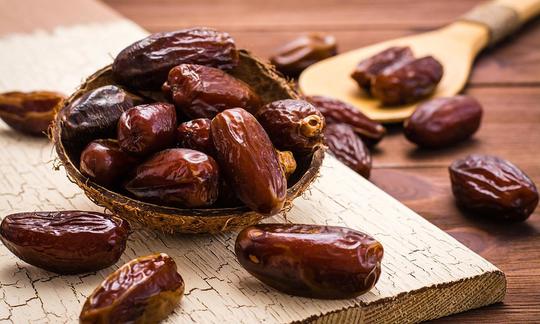
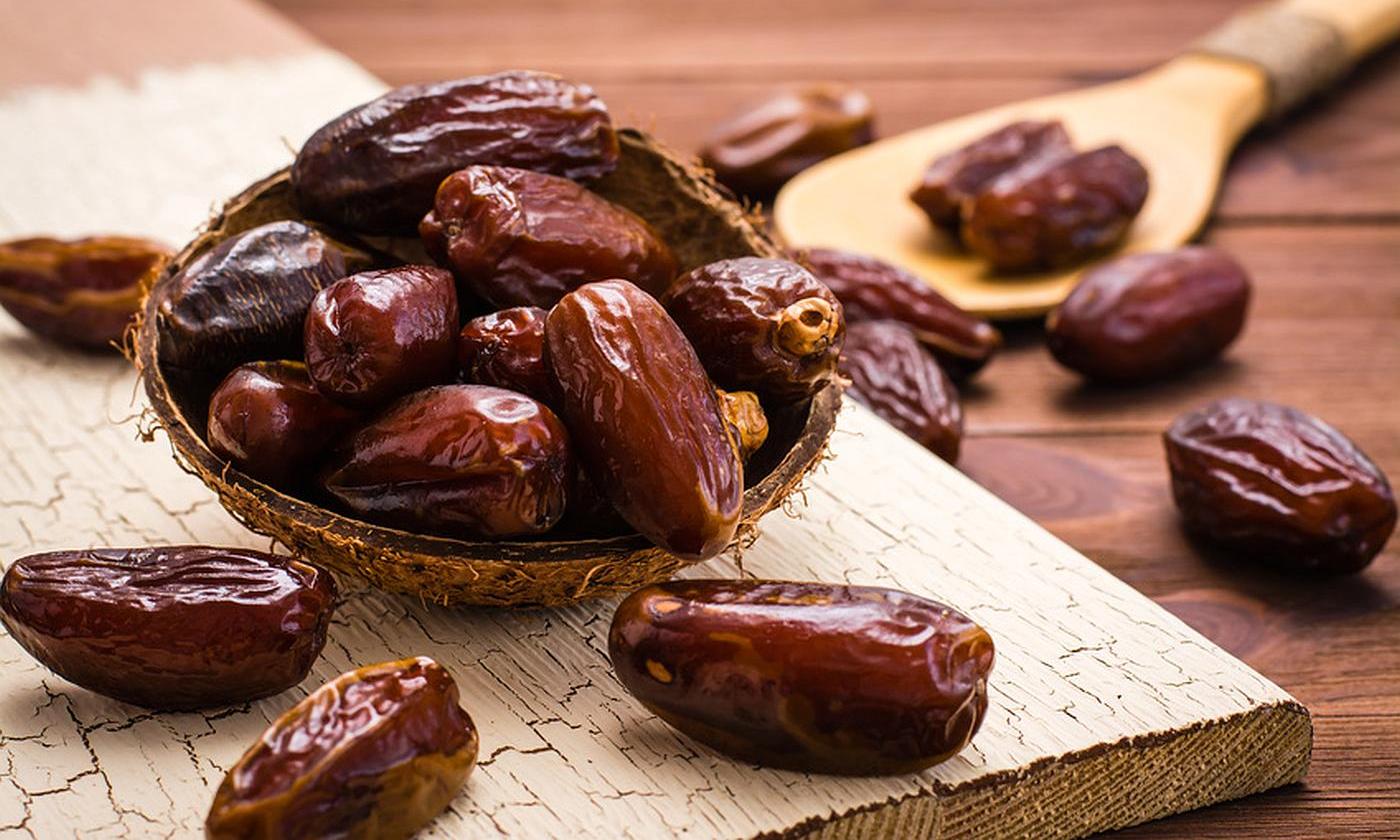
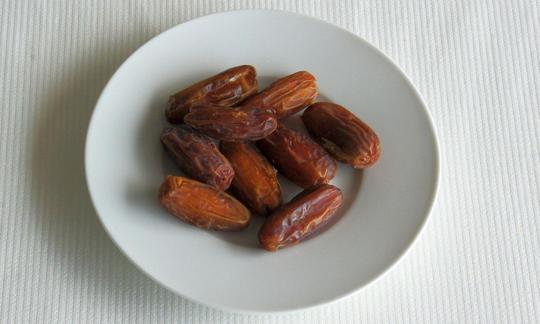
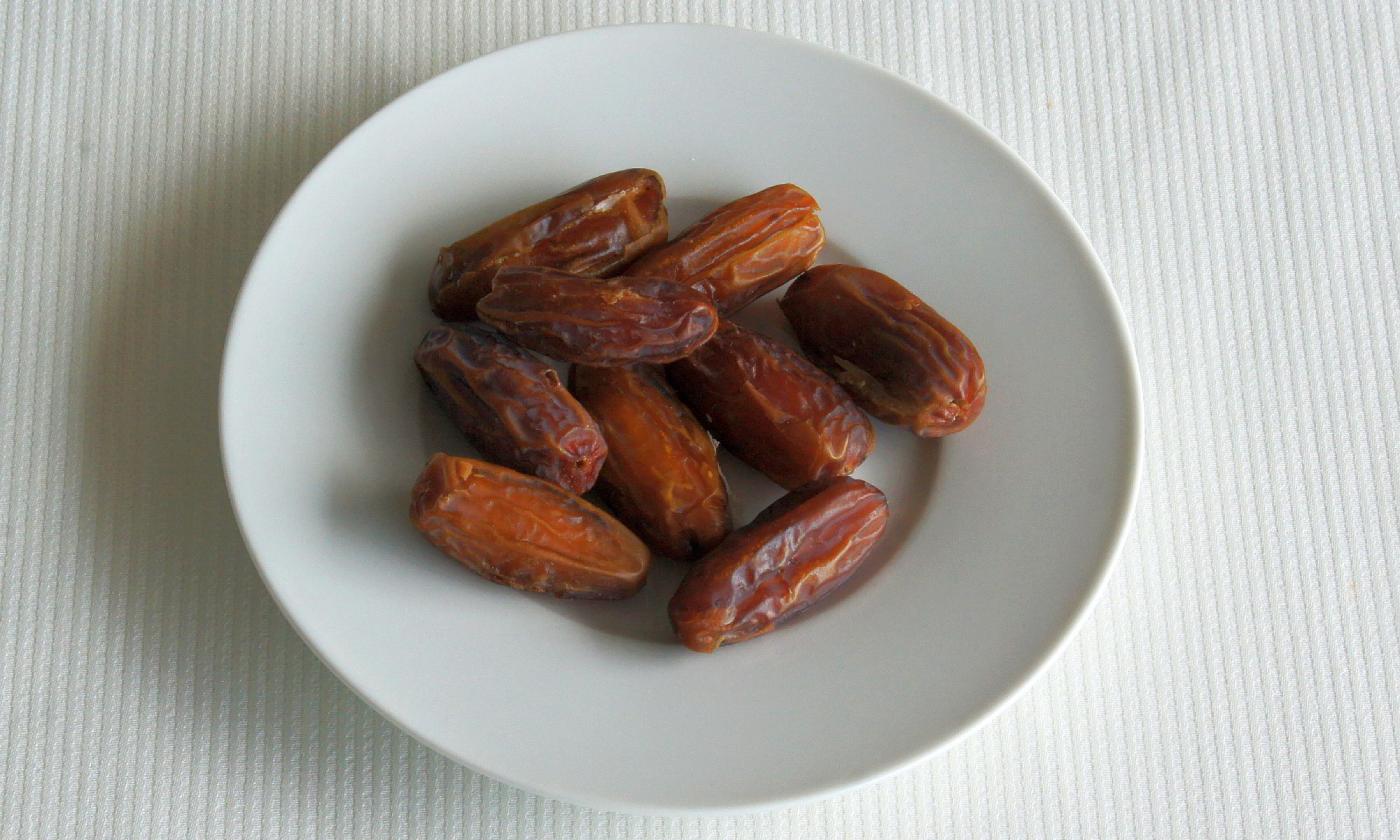
Die Dattelsorte Deglet Nour, auch Deglet Noor (Phoenix dactylifera) ist eine von mehr als 400 Dattelsorten. Sie ist die beste Dattelsorte zum Ersetzen von Zucker für Backwaren. Die Datteln sind ausserdem roh und in Bio-Qualität erhältlich.
Verwendung in der Küche
Praktisch alle Datteln ausserhalb der Produktionsgebiete sind getrocknet und gelten als Trockenfrüchte. Aber wenige Datteln weisen Rohkost-Qualität auf, da sie für eine längere Haltbarkeit häufig einen Erhitzungsprozess durchlaufen.
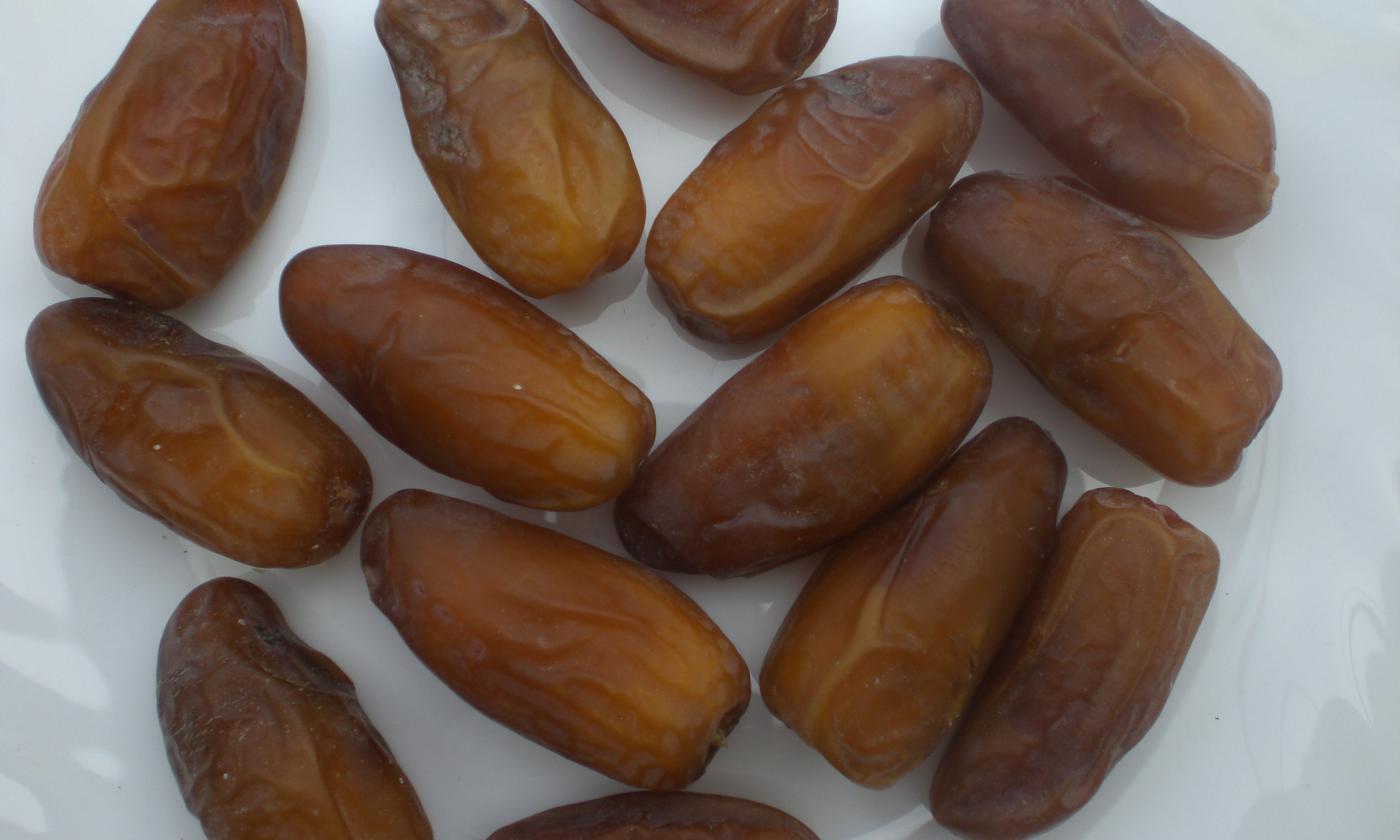
Deglet-Nour-Datteln sind vier bis sechs Zentimeter lang und enthalten ein bissfestes und saftiges Fruchtfleisch. Sie haben einen honigartigen Geschmack und schmecken leicht karamellartig. Ebenfalls beliebt sind Medjool-Datteln, die sich durch ihre Grösse und das dicke, saftig-süsse Fruchtfleisch auszeichnen und sich gut zum Füllen eignen.
Deglet-Nour-Datteln schmecken pur als Snack. Aus ihnen lassen sich auch unterschiedliche Sorten von 'Energy Balls' herstellen, etwa Dattel-Walnuss-Kugeln oder Mandel-Dattel-Kugeln mit Zimt und Ingwer. Diese bestehen aus pürierten Datteln, die man mit allerlei Nüssen und weiteren Zutaten mixt und dann zu kleinen Bällchen formt. Sie sind ein leckerer Snack für zwischendurch. Zerkleinerte Datteln passen ausgezeichnet als Topping fürs Müsli (Erb-Müesli), Salate oder Suppen.
Als Ersatz für raffinierten Zucker eignen sich gemixte Datteln oder Dattelsirup, beispielsweise für eine rohe Schokoladencreme oder für rohes Ketchup aus getrockneten Tomaten. Zudem kann man gehackte Datteln in einer Reihe von Süssspeisen und Gebäck verwenden. Man kann aus Datteln auch pikante Speisen zubereiten, etwa eine Dattelsauce, die gut zu Wraps oder zum Salat passt. In der arabischen Küche schätzt man Datteln als Füllungen in süssen Gebäcken sowie in der berühmten nordafrikanischen Tajine, dem gemischten Schmortopf, der Gemüse, Fleisch und Trockenfrüchte wunderbar kombiniert.
Es gibt vier Hauptreifestadien bei Datteln: Kimri (unreif, grün), Khalal (knackig, noch adstringierend; je nach Sorte gelb oder rot), Rutab (halbreif, deutlich weicher; Übergang von gelb zu hellbraun, teilweise zweifarbig) und Tamer (vollreif, getrocknet, sehr süss, dunkelbraun bis fast schwarz). Vor allem die letzten beiden Stadien sind wichtig für KonsumentInnen. Die Rutab-Stufe ist das Stadium vor der Endreifung – eine Zwischenphase zwischen Khalal und Tamar. In diesem Stadium zeigt die Dattel einen deutlichen Farbwechsel von Gelb zu hellbraun oder goldfarben.29 Häufig erscheint sie zweifarbig, mit gelben und braunen Bereichen. Die Schale ist aussen weich, das Innere noch leicht fest. Die Haltbarkeit ist gering, daher ist Kühlung notwendig. Der Wassergehalt ist mit 30-50 % noch sehr hoch. Der Geschmack ist mild, karamellartig und fruchtig. Sie sind nicht getrocknet, sondern physiologisch reif und beginnen zu "schmelzen". Im Tamer-Stadium sind die vollreifen, dunkelbraunen bis fast schwarzen Datteln getrocknet (natürlich am Baum oder nach der Ernte), daher halten sie lange, auch ohne Kühlung. Der Wassergehalt liegt bei 10-20 %. Ihr intensiv süsser, karamellisierter Geschmack erinnert an Honig.
Veganes Rezept für Kürbisscheiben mit Datteln
Zutaten (für 4 Personen): 4 Knoblauchzehen, 600 g Kürbis, 1 EL Rapsöl, 1 TL Cayennepfeffer, 1 TL Sumach, 6 Datteln, Salz.
Zubereitung: Knoblauch in dünne Scheiben schneiden. Kürbis in mundgerechte Scheiben schneiden. Kürbis und Knoblauch im Öl braten und mit Cayennepfeffer und Sumach würzen. Datteln entsteinen und in Streifen schneiden. Zum Kürbis geben und kurz mitbraten. Mit Salz abschmecken. Kürbis lauwarm oder kalt servieren.
Vegane Rezepte mit Deglet-Nour-Datteln finden Sie unter dem Hinweis: "Rezepte, die am meisten von dieser Zutat haben".
| Nicht nur Veganer oder Vegetarier sollten das lesen: Veganer essen oft ungesund. Vermeidbare Ernährungsfehler. |
Einkauf - Lagerung
Deglet-Nour-Datteln gibt es ganzjährig bei Grossverteilern wie Coop, Migros, Denner, Volg, Spar, Aldi, Lidl, Rewe, Edeka, Hofer und Billa im Sortiment, teilweise auch in Bio-Qualität. Die Datteln sind zudem in Reformhäusern oder in Bio-Supermärkten wie Denn's Biomarkt und Alnatura erhältlich. Bevorzugen Sie naturbelassene, biologisch produzierte Datteln und achten Sie darauf, dass keine Zusatzstoffe enthalten sind.
Die Saison der Deglet-Nour-Datteln liegt zwischen August und Oktober. Sie lassen sich zwar über mehrere Monate lagern, wobei die Qualität vor allem bei unsachgemässer Lagerung abnimmt. Wo frische Datteln kaufen? Frische Datteln, in verschiedenen Reifestadien (Rutab) lassen sich über spezialisierte Online-Shops bestellen. Grossverteiler verkaufen meist Massenware, die länger gelagert sein kann. Gelegentlich gibt es in Reformhäusern oder Spezialläden auch Rispendatteln, aber nur selten in noch nicht voll ausgereiftem Zustand.
Sind Datteln roh? Wer auf Rohkost-Qualität achtet, sollte nur Produkte mit entsprechender Bezeichnung im Laden des Vertrauens kaufen, oder sich vorher ausführlich darüber informieren. Rohkost-Datteln sind schonend getrocknet und nicht behandelt. Das bedeutet, sie sind nicht pasteurisiert, begast, tiefgekühlt oder mit Zucker, Öl oder Mehlstaub behandelt. Eine allfällige Schwefelung ist auf der Verpackung entweder mit dem Zusatz "E220" oder "geschwefelt" anzugeben.
Die Verfügbarkeit von Deglet-Nour-Datteln ist je nach Grösse des Ladens, Einzugsgebiet etc. unterschiedlich. Unsere erfassten Lebensmittelpreise für die D-A-CH-Länder finden Sie oben unter dem Zutatenbild - und mit Klick deren Entwicklung bei verschiedenen Anbietern.
Tipps zur Lagerung
Verpackte Deglet-Nour-Datteln (nicht entsteint) können Sie ein bis zwei Jahre dunkel und bei Zimmertemperatur aufbewahren. Dabei trocknen sie leicht aus, und der Zucker kann auskristallisieren, was die Qualität etwas mindert. Ältere Datteln eignen sich jedoch hervorragend zum Backen. Sobald die Packung geöffnet ist, sollten Sie die Datteln luftdicht und vor Licht geschützt lagern. Im Kühlschrank bleiben sie besonders frisch und behalten ihre angenehme Konsistenz länger.
Inhaltsstoffe - Nährwerte - Kalorien
Zusammensetzung und Menge der Inhaltsstoffe, inkl. sekundäre Pflanzenstoffe, variieren extrem je nach Sorte, Wachstumsbedingungen und Verarbeitungsmethoden etc.
Deglet-Nour-Datteln (bio) liefern 282 kcal pro 100 g. Davon entfallen 75 g auf Kohlenhydrate, darunter 63 g Zucker. Damit zählen sie zu den sehr zuckerhaltigen Lebensmitteln (70,4 % des Tagesbedarfs), weshalb Sie nur wenige Datteln pro Tag verzehren sollten. Ca. 50 g decken 35,2 % des täglichen Zuckerbedarfs.1
Sie enthalten auch viele Ballaststoffe. Die 8 g/100g entsprechen 32 % des Tagesbedarfs. Der Fettgehalt liegt bei nur 0,39 g/100g, der Proteingehalt bei 2,4 g/100g.1
Datteln der Sorte Deglet Nour liefern 656 mg Kalium, das 33 % des Tagesbedarfs deckt. Bananen, die als gute Kaliumquelle bekannt sind, weisen 358 mg/100 g auf, was nur 18 % des Tagesbedarfs entspricht. Sehr viel Kalium ist in getrockneten Steinpilzen enthalten (2000 mg/100g).1
Mangan ist mit 0,26 mg/100g ebenfalls vorhanden. Cranberrys und Preiselbeeren enthalten vergleichbare Mengen. Besonders hohe Manganwerte weisen Gewürze auf: Gewürznelken (60 mg/100g), Ingwer, gemahlen (33 mg/100g), Safran (28 mg/100g) und Kurkuma (20 mg/100g). Da Menschen nur geringe Mengen an Gewürzen nutzen, tragen sie kaum zum täglichen Manganbedarf bei.1
In kleineren Mengen enthalten sind Vitamin B6 (0,16 mg/100g; 12 % des Tagesbedarfs), Pantothensäure (Vitamin B5), Vitamin B9 (Folat) und Niacin (Vitamin B3). Entgegen mancher Werbeversprechen sind lediglich Spuren von Vitamin C enthalten.1
Die gesamten Inhaltsstoffe von Deglet-Nour-Datteln, die Abdeckung des Tagesbedarfs und Vergleichswerte mit anderen Zutaten finden Sie in unseren Nährstofftabellen. Im Artikel Nährstoffe umfassend erklärt bekommen Sie einen detaillierten Einblick in das Thema.
Wirkungen auf die Gesundheit
Sind Deglet-Nour-Datteln gesund? Deglet-Nour-Datteln enthalten rund 8 g Ballaststoffe pro 100 g. Ballaststoffe unterstützen die Verdauung und können die Blutzuckerreaktion nach kohlenhydratreichen Mahlzeiten abschwächen. Datteln liefern sowohl lösliche als auch unlösliche Ballaststoffe, wobei der lösliche Anteil geringer, aber ernährungsphysiologisch relevant ist. In Dattelfrüchten nachgewiesene Beta-Glucan-Polysaccharide, die häufiger in Hafer vorkommen, zeigen antitumorale, immunmodulierende, entzündungshemmende und cholesterinsenkende Aktivität.11 Eine ballaststoffreiche Ernährung steht mit einem geringeren Risiko für Typ-2-Diabetes und Herz-Kreislauf-Erkrankungen in Zusammenhang. Ballaststoffreiche Lebensmittel tragen zudem zu einem längeren Sättigungsgefühl bei, was beim Abnehmen unterstützen kann.11,24
Die Hauptzucker in Dattelfrüchten sind Saccharose, Glukose und Fruktose. Während der Reifung spaltet sich Saccharose enzymatisch in Glukose und Fruktose. Weiche, wasserreiche Datteln wie Medjool-Datteln enthalten meist mehr reduzierende Zucker (Glukose und Fruktose) und wenig Saccharose, während trockene oder halbtrockene Sorten wie Deglet Nour höhere Saccharoseanteile aufweisen. Das Glukose-zu-Fruktose-Verhältnis gilt als ein Indikator für die metabolische Wirkung von Lebensmitteln. Deglet Nour weist ein vergleichsweise niedriges Verhältnis (1,17) auf, was einen höheren Fruktoseanteil widerspiegelt und für eine gesunde Ernährung günstig zu sein scheint.11,28
Der Proteingehalt von Datteln ist insgesamt zu niedrig, um als wesentliche Quelle zu gelten, dennoch enthalten sie essenzielle Aminosäuren wie Phenylalanin, Leucin und Threonin.11 Ansonsten liefern Datteln Mineralstoffe, insbesondere Kalium (864 mg/100g), Calcium (70,7 mg/100g), Magnesium (64,2 mg/100g) und Eisen. Kalium in Datteln kann helfen, den Blutdruck zu regulieren und dadurch die kardiovaskuläre Gesundheit unterstützen. Calcium, Magnesium und Eisen sind wichtig für die Erhaltung der Knochendichte und -stärke und den Energiehaushalt. Datteln liefern moderate Mengen an Zink, Kupfer, Phosphor und Selen.11,18,24 Der Natriumgehalt ist insgesamt niedrig. Übermässige Natriumaufnahme steht im Zusammenhang mit Bluthochdruck, Herz-Kreislauf-Erkrankungen und Schlaganfällen. Mit einem Natriumgehalt von nur 3-10 mg/100g stellen Datteln eine natriumarme Option dar, die zur Risikominderung beitragen kann.24
Sekundäre Pflanzenstoffe
Viele gesundheitliche Wirkungen von Deglet-Nour-Datteln kann man auf die enthaltenen sekundären Pflanzenstoffe zurückführen. Unser Artikel über sekundäre Pflanzenstoffe bietet einen Überblick über die Klassifizierung der Stoffgruppen, das Vorkommen in Lebensmitteln und mögliche Wirkungen auf den Menschen.
Deglet-Nour-Datteln enthalten u.a. folgende sekundäre Pflanzenstoffe:11,19,28
- Isoprenoide: Tetraterpene: Carotinoide (Carotine: Alpha-Carotin, Beta-Carotin, Lycopin; Xanthophylle: Lutein, Neoxanthin)
- Polyphenole: Phenolsäuren: Hydroxybenzoesäuren (4-Hydroxybenzoesäure, Vanillinsäure, Syringinsäure, Protocatechinsäure, Gallussäure), Hydroxyzimtsäuren (p-Cumarsäure, Kaffeesäure, Ferulasäure, Sinapinsäure); Flavonoide: Flavanole (Catechin, Epicatechin), Flavonole (Rutin, Hyperosid, Quercetin-Rhamnosid, Kaempferol), Flavone (Luteolin-Glucosid), Flavonoid-Glycoside; Anthocyane; Tannine (Proanthocyanidine)
- Weitere stickstoffhaltige Verbindungen: Biogene Amine (Serotonin)
- Weitere organische Verbindungen: Hydroxycarbonsäuren (Caffeoylchinasäure, Chinasäure); Alkohole; Ester; Aldehyde; Lactone; Ketone
Die Sorte Deglet Nour enthält relevante Mengen an phenolischen Verbindungen, die freie Radikale abfangen und so oxidativen Stress auf zellulärer Ebene reduzieren.24,28 Insbesondere Hydroxyzimtsäuren wie Kaffeesäure, Ferulasäure und Syringinsäure wirken stark antioxidativ.11 Gemäss einer Vergleichsstudie beeinflusst der Feuchtigkeitsgehalt die antioxidative Kapazität. Trockene und halbtrockene Sorten wie Deglet Nour besitzen eine höhere antioxidative Kapazität als weiche Sorten wie Medjool.28
Während der Reifung und Bräunung entstehen in Datteln höhere Gehalte an freier Ferula- und p-Cumarsäure, während Hydroxyzimtsäuren in den meisten anderen Früchten überwiegend gebunden vorliegen. Kaffeesäure macht rund 75 % der Hydroxyzimtsäuren aus, ähnlich wie in Äpfeln, Tomaten oder Pflaumen. Hydroxybenzoesäuren sind in Datteln und den meisten Früchten nur in geringen Mengen vorhanden, Ausnahmen bilden Brombeeren sowie Früchte der Rosengewächse (Äpfel, Birnen, Quitten, Aprikosen). Diese Verbindungen tragen wesentlich zur sensorischen Qualität der Früchte bei.11
Experimentelle Studien bringen phenolische Verbindungen mit entzündungshemmenden, neuroprotektiven, antidiabetischen, leberschützenden und gastroprotektiven Effekten in Zusammenhang.28 Labor- und Tiermodelle bestätigen die Wirksamkeit bei entzündlichen Prozessen, u.a. bei Alzheimer, Typ-2-Diabetes und Herz-Kreislauf-Erkrankungen.11
Dattel-Extrakte hemmen in vitro angiogene Marker, wodurch sie krebsassoziierte Gefässneubildungen verlangsamen und Organe wie die Leber vor oxidativem Schaden schützen können. Polyphenole aus Datteln spielen dabei eine wichtige Rolle und gelten als gesundheitlich wertvoll.11
Die wichtigsten Carotinoide in gelben Dattelsorten, wie Deglet-Nour-Datteln sind Carotine und Carotenol-Fettsäuren während rot gefärbte Datteln, wie Medjool-Datteln v.a. Lycopin, Neurosporen und Carotine enthalten. Carotine sind Pro-Vitamin-A-Carotinoide, die wichtig für das Immunsystem, die Sehkraft, die Zellkommunikation und die Fortpflanzung sind.11
Eine Studie zeigt, dass der Konsum von 132 g Dattelhonigsirup bei Erstgebärenden die aktive Geburtsphase signifikant verkürzt im Vergleich zu Placebo oder Standardversorgung. Datteln liefern schnell verfügbare Energie in Form von Glukose, stabilisieren den Elektrolythaushalt und verhindern Erschöpfung. In den letzten Schwangerschaftswochen fördern sie die Wehentätigkeit, stärken die Gebärmuttermuskulatur und verbessern die Reaktion auf Oxytocin. Serotonin, Tannine, Calcium und Fettsäuren unterstützen die Kontraktionen der glatten Muskulatur und die Prostaglandinproduktion während der Geburt. Insgesamt beschleunigen Datteln den Geburtsprozess, erhöhen die antioxidative Kapazität und Schmerztoleranz und können den Bedarf an medizinischer Geburtseinleitung reduzieren. Weitere Studien sind jedoch nötig, um die positive Wirkung auf den Geburtsprozess besser zu verstehen.18,19
Mehrere Studien zeigen, dass Extrakte aus Dattelfruchtfleisch und Dattelsirup antibakteriell wirken, vorrangig gegen grampositive Bakterien, darunter Streptococcus pyogenes, Staphylococcus aureus und Enterococcus faecalis, während gramnegative Bakterien wie E. coli widerstandsfähiger reagieren.11,17
Ergänzende Informationen finden Sie unter der Zutat Medjool-Datteln und Dattelsirup.
Gefahren - Unverträglichkeiten - Nebenwirkungen
Es gibt viele Untersuchungen zum allergischen Potenzial von Dattelpollen, aber nur wenige Studien zur Dattelfrucht. Forschungsergebnisse aus Saudi-Arabien weisen darauf hin, dass auch Dattelfrüchte allergische Reaktionen auslösen können. Dabei reagieren Menschen nicht auf jede Sorte gleich.6,7
Getrocknete Datteln enthalten viel Zucker, vorwiegend Fruktose. Personen mit Frukoseintoleranz oder Fruktoseempfindlichkeit sollten Datteln meiden.25
Dürfen Menschen mit Diabetes Datteln essen? Der Gesamtzuckergehalt von Datteln liegt je nach Sorte zwischen 61,7 % und 78,6 %. Der glykämische Index (GI) von Datteln variiert je nach Sorte, Reifegrad und Verarbeitungsform deutlich. Der Reifegrad beeinflusst sowohl den GI als auch die glykämische Last (GL), die angibt, wie stark eine übliche Portion den Blutzucker tatsächlich erhöht. Datteln im vollreifen Tamar-Stadium weisen in der Regel einen niedrigeren glykämischen Index auf, während der GI bei halbreifen Datteln im Rutab-Stadium häufig höher liegt.24
Forschungen legen nahe, dass ein moderater Verzehr von Datteln (2–3 Stück bzw. 60 g täglich) für Menschen mit Typ-2-Diabetes in der Regel unproblematisch ist und in manchen Fällen sogar den Nüchtern- und Postprandialblutzucker leicht senken kann. Getrocknete Datteln enthalten besonders viel Zucker und können den Blutzucker stärker ansteigen lassen. Daher ist es wichtig, den Konsum an die individuelle Blutzuckerreaktion anzupassen und bei Unsicherheiten fachkundigen Rat einzuholen.24
Volksmedizin - Naturheilkunde
Datteln dienen traditionell zur Linderung von Fieber, Leber- und Bauchschmerzen, Blasenentzündung, Gonorrhoe und Ödemen. Dattelsirup oder Paste finden Anwendung bei Erkältungen, Halsschmerzen und Husten.10 Ebenso unterstützen Datteln die Verdauung und kommen bei Verstopfung, Nierensteinen, Magen- und Darmgeschwüren sowie nachgeburtlichen Blutungen zum Einsatz.11
In vielen Ländern gelten Datteln als traditionelles Heilmittel, etwa zur Förderung der Fruchtbarkeit, zur Unterstützung der Gedächtnisleistung oder zur Senkung des Blutzuckerspiegels. Zudem zeigen Datteln eine antimikrobielle Wirkung gegen verschiedene Mikroorganismen und dienen zur Behandlung von Infektionen.11
In der indischen traditionellen Medizin sowie in der Volksmedizin des Nahen Ostens gelten Datteln als vielseitige Heilfrucht. Sie wirken schleimlösend, brechreizauslösend, aphrodisierend (steigern die Libido) und kommen bei Tuberkulose, Gastroenteritis, Atemwegserkrankungen, Asthma und weiteren Beschwerden zum Einsatz.13
Eine ethnopharmakologische Untersuchung in Marokko zeigt, dass Datteln dort häufig zur Behandlung von Diabetes und Bluthochdruck dienen.13
Ökologischer Fussabdruck - Tierwohl
Der ökologische Fussabdruck von frischen Datteln aus Tunesien liegt bei 0,54 kg CO2eq/kg.20 Frische Datteln beispielsweise benötigen während des Transports Kühlung und haben ein höheres Gewicht. Entsprechend erhöht sind auch die benötigte Energiemenge und die Menge der produzierten Emissionen im Vergleich zu getrockneten Datteln. Die Hauptverursacher der im Dattelanbau aufkommenden Emissionen sind Pestizide, eingesetzter Stickstoffdünger sowie Motorenkraftstoff.21
Der Wasserfussabdruck für die Produktion von 1 kg Datteln beträgt 2277 Liter.22 Unterschiede im Wasserverbrauch bei Dattelpalmen (Grün- und Blauwasser) hängen stark von Klima, Ausrichtung des Anbaus (Export vs. Inlandsverbrauch) und agronomischen Praktiken ab. Einige Länder nutzen fast ausschliesslich Grünwasser (Regenwasser), andere setzen stark auf Blauwasser (Bewässerung), um Produktion zu ermöglichen oder zu steigern. Beispiele: Algerien (Blauwasser doppelt so hoch wie Grünwasser), Iran (2,3×), Saudi-Arabien (6,6×). Hoher Blauwasserverbrauch geht häufig mit einem starken Beitrag zum Wasserknappheits-Fussabdruck einher, wobei sich Blauwasser- und Wasserknappheits-Fussabdruck unterscheiden, da der lokale Einfluss auf Wasserknappheit variiert. Saudi-Arabien zeigt etwa einen hohen Blauwasserverbrauch bei vergleichsweise geringem Wasserstress-Fussabdruck.3
Der Export von Datteln ist eng mit dem Verbrauch von Blauwasser und der Wasserknappheit verbunden. Länder wie Iran weisen eine geringere Effizienz auf als die Vereinigten Arabischen Emirate. Iran, Tunesien, Algerien und Libyen tragen sowohl durch Export als auch durch Inlandsverbrauch erheblich zu Wasserknappheit und Blauwasser-Fussabdruck bei. Bemerkenswert ist Frankreich, das durch den Import von Datteln, überwiegend aus Algerien und Tunesien, einen hohen Wasserknappheits-Fussabdruck erzielt.3
Eine Studie zu Datteln aus Iran ergab Pestizidrückstände und Schwermetallbelastungen deutlich über den als sicher geltenden Werten.23 Beim Einkauf empfiehlt sich daher der Kauf von biologisch angebauten Datteln.
Ausführliche Erläuterungen zu verschiedenen Nachhaltigkeitsindikatoren (wie z.B. ökologischer Fussabdruck, CO2-Fussabdruck, Wasser-Fussabdruck) lesen Sie in unserem Artikel: Was bedeutet der ökologische Fussabdruck?
Tierschutz - Artenschutz
Monokulturen, also der Anbau nur einer Pflanzenart über längere Zeit, sind weltweit verbreitet, da sie kurzfristig höhere Erträge und wirtschaftliche Vorteile bringen. BäuerInnen können sich spezialisieren, Saatgut und Maschinen effizient einsetzen, und staatliche Subventionen fördern diese Praxis zusätzlich. Doch diese Vorteile haben gravierende ökologische Nachteile. Monokulturen führen zu einem Verlust an Biodiversität, da Pflanzen- und Tierarten, insbesondere Bestäuber, stark zurückgehen. Gleichzeitig verschlechtert sich die Bodenqualität: Nährstoffe verarmen, die Fruchtbarkeit sinkt und die Erosion steigt. Um Ertragsverluste auszugleichen, erhöhen Landwirte den Einsatz von Pestiziden und Düngemitteln, was Böden, Wasser und angrenzende Ökosysteme stark belastet. Durch die fehlende genetische Vielfalt steigt die Anfälligkeit der Pflanzen für Krankheiten und Schädlinge, wodurch ganze Ernten gefährdet sind.27
Hinzu kommen negative Auswirkungen auf das Klima, etwa höhere Treibhausgasemissionen, verstärkte Abfallproduktion und ein erhöhtes Risiko der Desertifikation. Damit droht die Monokultur nicht nur die Stabilität von Nahrungsketten zu beeinträchtigen, sondern auch wichtige Ökosystemleistungen wie Bestäubung, Bodenfruchtbarkeit und Wasserqualität zu verringern. Für langfristige Ernährungssicherheit und den Schutz der Artenvielfalt sind vielfältigere und biodiversitätsfördernde Anbausysteme notwendig.27
Weltweites Vorkommen - Anbau
Die Dattel ist eine der ältesten bekannten Obstkulturen. Seit mindestens 5000 Jahren erfolgt ihr Anbau in Nordafrika und im Nahen Osten. Aufgrund der langen Geschichte der Dattelkultur und der weiten Verbreitung und des Austauschs von Dattelsorten ist der genaue Ursprung (Genzentrum) der Dattel nicht klar. Sie stammt höchstwahrscheinlich aus dem alten Mesopotamien (Irak, Syrien) oder Westindien.8
Die Dattelsorte Deglet Nour (دقلة نور - arab. Finger des Lichtes) entstand in Algerien. Heutzutage stammen 90 % der Produktion aus Tunesien und Algerien. Nur ein kleiner Teil der Produktion der 'algerischen Datteln' findet in Israel und den USA statt.4 Laut FAOSTAT lag die weltweite Dattelproduktion im Jahr 2021 bei rund 9,66 Millionen Tonnen (Gesamtproduktion aller Dattelsorten). Zu den wichtigsten Anbauländern zählten Ägypten (1,75 Mio. Tonnen), Saudi-Arabien (1,57 Mio. Tonnen) und Iran (1,30 Mio. Tonnen).2
Wild zu finden
Die heutige Dattelpalme (Phoenix dactylifera) steht seit Jahrtausenden unter menschlicher Nutzung und Züchtung. Wahre "wilde" Dattelpalmen gibt es heute kaum noch, einige wachsen nur noch in Oasen oder verlassenen Gärten. Diese spontanen Palmen ähneln den kultivierten Pflanzen, können sich mit ihnen kreuzen und fruchtbare Nachkommen erzeugen. Wilde Datteln haben kleinere, kaum essbare Früchte und vermehren sich meist sexuell, während kultivierte Palmen sich überwiegend vegetativ vermehren. Es ist oft schwer zu erkennen, ob eine Palme wirklich wild ist oder von kultivierten Pflanzen abstammt. Die wilden Formen stammen wahrscheinlich aus den warmen, trockenen Regionen des Nahen Ostens.26
Anbau - Ernte
Die Echte Dattelpalme kann eine Wuchshöhe von 15 bis 25 m erreichen. Die Dattelpalme ist zweihäusig, d.h. es treten pro Individuum nur weibliche oder männliche Blütenstände auf. Eine Dattelplantage hat eine durchschnittliche wirtschaftliche Lebensdauer von 40 bis 50 Jahren, jedoch sind einige Dattelpalmen bis zu 150 Jahre produktiv. Je nach Vermehrungsmethode benötigt die junge Dattelpalme 3 bis 8 Jahre, bis sie die ersten Früchte trägt.8
Dattelpalmen sind diploid (zweihäusig). Das bedeutet, jedes Individuum trägt entweder weibliche oder männliche Blütenstände. Die Früchte entstehen nur aus bestäubten weiblichen Blütenständen. Im kommerziellen Anbau baut man nur wenige männliche Palmen an, damit man deren Pollen sammeln und für die künstliche Bestäubung der weiblichen Dattelpalmen benutzen kann. In Nordafrika und im Nahen Osten besteht diese Praxis der künstlichen Bestäubung seit Tausenden von Jahren und trägt zur Einsparung von Wasser bei.5,8 Pflegemassnahmen und Bestäubung bei Palmen sowie Ernte der Früchte erfolgen meist in grosser Höhe. Teilweise dient das Ausdünnen der Fruchtstände der Verbesserung der Fruchtqualität. Obwohl das Klettern auf die Bäume für den Zugang zur Krone immer noch in allen dattelproduzierenden Gebieten zu finden ist, ist der Einsatz mechanischer Aufzüge in fortgeschritteneren oder industrialisierten Produktionsgebieten wie den Vereinigten Staaten üblich. Die Dattelernte erfolgt immer noch von Hand, da spezialisierte Erntemaschinen fehlen.8
Industrielle Herstellung
Nach der Ernte erfolgt eine Sortierung beschädigter Früchte. Anschliessend kommen das Waschen der Datteln sowie die Trocknung mit Heissluft zum Einsatz. Für das Entsteinen der Datteln schneidet man den Stielansatz ab und sticht den Samen mit einer breiten Nadel durch das Fruchtfleisch. In der industriellen Produktion erfolgt danach mehrheitlich eine Begasung und Sterilisation. Dabei kommen häufig Methylbromidgas oder zunehmend Gammastrahlung zum Einsatz.12
Zur Verbesserung der Fruchtqualität dient die Hydration oder Dehydratisierung der Datteln. Für eine Lagerung ohne Kühlung ist ein Feuchtigkeitsgehalt von unter 20 % erforderlich. Dies geschieht durch Erhitzen der Früchte auf 60–70 °C.9,12 Teilweise erfolgt eine Behandlung der Oberfläche mit Stärke oder Öl, um die Textur zu verbessern. Nach der Pasteurisierung bei 66 °C für 30 Min. folgen eine Qualitätskontrolle sowie die Verpackung für den Versand, der überwiegend unter gekühlten Bedingungen stattfindet.9,12
Weiterführende Informationen
Die Echte Dattelpalme (Phoenix dactylifera) ist eine Pflanzenart der Gattung Dattelpalmen (Phoenix) in der Familie der Palmengewächse (Arecaceae). Datteln gelten wegen ihres hohen Ballaststoffgehaltes als "Brot der Wüste" und sind in den Anbaugebieten ein wichtiges Nahrungsmittel. Die genaue Anzahl Dattelsorten ist unbekannt (wohl gegen 400). Über 100 Sorten arabischer Datteln sind dokumentiert.7 Bekannte Dattelsorten sind: Medjool, Deglet Nour, Khidri Datteln, Ajwa, Yahidi, Hallawi und Mazafati Datteln.
Alternative Namen
Deglet Nour, auch Deglet Noor genannt, ist sowohl im Deutschen als auch im Englischen geläufig. Datteln heissen auf Englisch 'dates'.
Literaturverzeichnis - 26 Quellen (Link zur Evidenz)
| 1. | ● Website | USDA United States Department of Agriculture. |
| 2. | ● Website | FAOSTAT Food and Agriculture Organization of the United Nations. Dates. 2021. |
| 3. | * Footprint Assessment The climatic conditions, together with the orientation of the cultivation (e.g., export-oriented or for domestic consumption) and the related agronomic practices, explain the remarkable differences between land, green water, and blue water footprint displacement (Figure 4 and Figure 5a). These practices might involve extensive irrigation. Some countries only (or almost only) rely on green water exploitation for date palm cultivation, whereas other countries exploit much higher volumes of blue water than green water for palm cultivation in order to boost or even just allow production (Figure 5). This is the case for Algeria, where the blue water requirement value is twice as high as the green water one. It is also the case for Iran, whose blue water requirement is 2.3-fold the green water one. Even more relevant is the case for Saudi Arabia, where the blue water requirement is 6.6 times greater than the green water one. Following the previous example, the 41 ktonnes of dates exported by ARE to India correspond to 30 Mm3 of blue water, while the same amount of dates exported by Iran to India consumes about 55 Mm3 of blue water due to a much lower blue water efficiency of Iran compared to ARE. Accordingly, a few major countries account for most of the overall blue water footprint (Figure 5a). Those ones are also responsible for a remarkable part of the water scarcity footprint (Figure 5b), which depends on the actual impact deriving from the exploitation of freshwater in the date palm plantation areas. Significant differences between blue water and water scarcity footprints (Figure 5a,b) may emerge. For example, Saudi Arabia in this case accounted for much less of the overall water stress footprint compared to the top countries in terms of blue water. The reason is that Saudi Arabia’s CF is just 14% compared to Algeria’s CF or just 17% compared to Iran’s CF. In addition, Iran and Tunisia account for major flows of water scarcity embedded in the dates they exported (Figure 5b). Considering the previous example, 342 Mm3 world equivalent of water was linked to dates exported to India from ARE. At the same time, a similar amount of dates exported by Iran to India was linked to 3.4 Gm3 world equivalent of water. This difference is due to Iran’s date production having a worse water scarcity characterization factor compared to India’s one. Furthermore, it is remarkable that France appears among the countries with the highest water scarcity from dates consumption, which are mostly imported from Algeria and Tunisia. DOI: 10.3390/su15054358 | Sporchia F, Patrizi N et al. Date fruit production and consumption: a perspective on global trends and drivers from a multidimensional footprint assessment. Sustainability. 2023;15(5):4358. |
| 4. | ● Website | Liu P. The marketing potential of date palm fruits in the European market. FAO Commodity and Trade Policy Research Working Papers No. 6. 2003. |
| 5. | ● Website | American botanical council. Date (Phoenix dactylifera, Arecaceae). |
| 6. | * Allergietest DOI: 10.1034/j.1398-9995.1999.00116.x Study: weak evidence | Kwaasi AA, Harfi HA et al. Allergy to date fruits: characterization of antigens and allergens of fruits of the date palm (Phoenix dactylifera L.). Allergy. 1999;54(12):1270-1277. |
| 7. | * Allergietest DOI: 10.1159/000024432 Study: weak evidence | Kwaasi AA, Harfi HA et al. Cultivar-specific IgE-epitopes in date (Phoenix dactylifera L.) fruit allergy. Correlation of skin test reactivity and ige-binding properties in selecting date cultivars for allergen standardization. Int Arch Allergy Immunol. 2000;123(2):137-144. |
| 8. | * Narratives Review DOI: 10.21273/HORTSCI.42.5.1077 Study: weak evidence | Chao CT, Krueger RR. The Date Palm (Phoenix dactylifera L.) Overview of Biology, Uses, and Cultivation. HortScience. 2007;42(5):1077-1082. |
| 9. | ● CHAPTER IX: DATE HARVESTING, PACKINGHOUSE MANAGEMENT AND MARKETING ASPECTS. DOI: 10.4060/cc9251en Website | Zaid A et al. Date palm publication. Second edition. FAO Plant Production and Protection Paper Series, No. 156. Rome. 2024. |
| 10. | * DOI: - Study: weak evidence | El Hadrami A, Al-Khayri J. Socioeconomic and traditional importance of date palm. Emir J Food Agric. 2012;24(5):371-385. |
| 11. | * Narratives Review Critical evaluation of in vitro and in vitro uses of date fruit in relation to anti-inflammatory, anti-angiogenic and antimicrobial activities are outlined. As previously mentioned, secondary metabolites are known to The mechanisms involved in the anti-inflammatory effect of date DOI: 10.1016/j.jep.2016.10.032 Study: weak evidence | Taleb H, Maddocks SE et al. Chemical characterisation and the anti-inflammatory, anti-angiogenic and antibacterial properties of date fruit (Phoenix dactylifera L.). J Ethnopharmacol. 2016;194:457-468. |
| 12. | * Narratives Review DOI: 10.1080/87559129.2010.535231 Study: weak evidence | Ashraf Z, Hamidi-Esfahani Z. Date and Date Processing: A Review. Food Reviews International. 2011;27(2):101-133. |
| 13. | * Narratives Review In Indian traditional medicine, Ayurveda, and Middle Easternfolk-lore, DF is considered to have several medicinal properties.Dates have been considered to be a general tonic in Ayurveda(Puri, 2003). DF is a demulcent, expectorant, nutrient, emetic,laxative, aphrodisiac and prescribed for tuberculosis, gastroen-teritis, coughs, respiratory diseases, asthma, etc. (Puri, 2003).A recent ethnopharmacological survey reports that in certainregions of Morocco DF is widely used in folk-lore to treat dia-betes and hypertension (Tahraoui et al., 2007). As dates are richin sugars, the major concern among the health professionals andpublic is whether DF consumption increases the risk of chronicdiseases in normal population. However, a growing number ofreports and nutritional facts on DF imply that such concerns areunwarranted, at least for certain varieties, and may be used asa part of the regular diet for healthy people and presumably forthe patients with chronic diseases as well. DOI: 10.1080/10408398.2010.499824 Study: weak evidence | Vayalil PK. Date fruits (Phoenix dactylifera Linn): an emerging medicinal food. Crit Rev Food Sci Nutr. 2012;52(3):249-271. |
| 17. | * Experimentelle In‑vitro‑Studie DOI: 10.3389/fmicb.2016.00198 Study: weak evidence | Taleb H, Maddocks SE et al. The Antibacterial Activity of Date Syrup Polyphenols against S. aureus and E. coli. Front Microbiol. 2016;7:198. |
| 18. | * Randomisierte kontrollierte klinische Studie (RCT)
Original Article Effect of Dates in Late Pregnancy on the Duration of Labor in Nulliparous Women Kordi, Masoumeh1; Meybodi, Fatemeh Aghaei1,; Tara, Fatemeh2; Fakari, Farzaneh Rashidi3; Nemati, Mohsen4; Shakeri, Mohammadtaghi5 Iranian Journal of Nursing and Midwifery Research 22(5):p 383-387, Sep–Oct 2017. | DOI: 10.4103/ijnmr.IJNMR_213_15
Abstract Background: Long-term delivery is an important significant issue which is associated with mortality and fetal and maternal disorders. Based on the previous studies, consumption of dates affects uterine contractions and duration of delivery processes. This study aimed to study the effect of date consumption in late pregnancy on the duration of delivery processes in nulliparous women in 2013. Materials and Methods: This randomized clinical trial was conducted among 182 nulliparous women 18–35 years who presented to OmAlBanin Hospital in Mashhad in 2013. The comparison has been made between 91 pregnant women who consumed 70–76 g dates daily from the 37th week of pregnancy and 91 pregnant women who did not consume dates. Data collection tool was a questionnaire and a checklist of daily dates’ intake. Data were analyzed using the Statistical Package for the Social Sciences software and statistical tests – chi-square and Mann–Whitney test, and P value <0.05 was considered significant. Results: The average length of active phase (P = 0.0001), length of second phase (P = 0.0001), and third phase (P = 0.004) in two groups had statistically significant difference. The average length of the second phase (P = 0.03) and the third phase (P = 0.02) in case of spontaneous start of delivery in the intervention group was significantly lower than the control group. Use of oxytocin to accelerate delivery had a significant difference between the two groups (P < 0.001). Conclusion: According to the results of this study, consuming dates in late pregnancy was effective in decreasing length of labor processes and reduced the need of oxytocin for labor acceleration. Thus, it is recommended to consume dates in women without contraindications. Introduction Long labor is an important and significant issue, especially in developing countries as it is associated with mortality as well as fetal and maternal disorders.[1] Prevalence of long labor is 2.6–2.17%, which is the cause of 8% maternal deaths in developing countries.[2] Sixty percent of primary cesarean in the United States is attributed to the unnatural development of laboring.[3] Ineffective contractions of uterine are among the most common causes for unnatural development of laboring and consequently a prolonged labor, which leads to increase in level of cesarean and induction of labor.[1] Lack of adequate uterine contractions are influenced by different physical and mental factors. Today, scientists focus on mother's physical and mental needs including the need for energy.[4] In late pregnancy, as the level of prolactin increases, pregnant women feel the need of more nutrients. This energy is stored in the body and can be used at the time of delivery.[5] The amount of energy needed for labor can be compared with that of aerobic exercises; it is estimated to be between 50 and 100 kcal per hour.[45] Because smooth muscles need energy 20–400 times more than skeletal muscles, the best materials for supplying energy are fat acids, which provide muscles with more energy than glucose; therefore, storing fats is very integral in late pregnancy.[5] Dates are among those energizers which have lots of carbohydrates most of them include fructose, glucose, and sucrose.[6] Chemical composites found in dates differ depending on weather conditions, planting area, age of tree, and process of fruit growth. The mineral content differs in various types of dates; however, 15 different types of minerals have been determined in it, including potassium, calcium, chlorine, zinc, phosphorus, iron, magnesium, and sodium, together[7] with saturated and unsaturated fatty acids such as oleic, linoleic, and linoleic acids.[8] Fatty acids play an important part in making prostaglandins apart from supplying and providing energy.[5] Increase in the level of prostaglandins in pregnant women causes uterine contractions during the term.[9] Therefore, dates can be helpful in storing energy and strengthen uterine muscles.[10] Dates play a part in prevention of postpartum hemorrhage,[6] spontaneous labor, and speeding up the delivery progress.[489] According to studies of Kordi et al. and Yusefi et al., consuming dates in late pregnancy had a role in spontaneous labor.[1112] Results of the study performed by Alkuran et al. showed that length of the latent phase of the first stage of labor was shorter in the group consuming dates, and average cervical dilation at the time of admission was significantly higher than that in the group consuming dates.[10] Dates affect oxytocin receptors and make uterine muscles respond better to oxytocin, resulting in more effective uterine contractions.[101314] Oxytocin receptor concentration increases 200–300 times during pregnancy, especially in late pregnancy. This increase in concentration results in increase in myometrium sensitivity to oxytocin.[25] Stimulating oxytocin receptors in central nervous system decreases anxiety followed by the initiation, progression, and acceleration of the delivery. Because of few studies conducting regarding the effect of consuming dates on the duration of delivery,[15] the researcher decided to study the effect of consuming dates in late pregnancy on the duration of labor stages in nulliparous women in 2013. Materials and Methods This randomized clinical trial (registered in the IRCT with the code of 201304072956N4) was conducted among 182 nulliparous women aged 18–35 years who went to OmAlBanin Hospital in Mashhad in 2013. Entry criteria to the study included mothers aged 18–35 years who were in their 37–38th week of pregnancy (based on the first day of the last menstruation or sonography of the first 3 months of pregnancy), singleton pregnancy with cephalic presentation, and having no medical and midwifery problems in 26–30 weeks of pregnancy. Obstetric complications, women who had elective or emergency cesarean due to fetal distress, and those who consumed dates less than 2 weeks in the intervention group were excluded from the study. Eleven individuals in the intervention and 17 individuals in the control group were excluded from the study. First, a preliminary study was carried out among 30 individuals to determine sample size. Then, sample size was measured using the formula of comparing averages with that of thr length of the first stage of labor. Considering α = 0.01 and β = 0.1 and 95% confidence coefficient, (
) 83 individuals in each group accounting for 10% sample attrition, 91 individuals were calculated in each group. At first, 210 individuals were entered into the study, among which 28 were excluded from the study for not meeting the inclusion criteria. Finally, the study was conducted among 182 individuals. The participants were categorized in one of the two groups of dates’ consumption and lack of dates’ consumption in a manner that days of the week were numbered 1–6 from Saturday to Thursday and 1, 2, 3 numbers were written on one side and 4, 5, 6 were written on the other side of the paper placed in a draw bag. Then, the first paper selected was named intervention and the second one named control group in such a manner that 3 days of the week (Saturday, Sunday, and Monday) were given to the dates’ group and the other 3 days (Tuesday, Wednesday, and Thursday) were given to the control group and this order was maintained till the end of the study. The mothers were required to go to the midwifery clinic on the specified day. Therefore, 91 individuals were put in the intervention and 91 were put in the control group. Data collection tool was a questionnaire (personal information, pregnancy, follow-up form- information about labor, and its development) and a checklist of daily dates’ intake. Validity of the questionnaire, follow-up form, and checklist of the daily intake of dates were determined by the content validity method. These tools were provided in the form of preliminary questionnaires studying the most updated books and articles in the field of study and delivered to 10 faculty members of Mashhad University of Medical Sciences; the final tools were developed after reviewing and applying necessary suggestions and corrections. Reliability of personal and obstetric and follow-up forms was confirmed through evaluation agreement with coefficient correlation equal to 0.90. The intervention group was given 7 packs of 70–75 g (6–7) dates in the 37th week of pregnancy. The mothers were required to carry on consuming one pack (70–75 g) every day on the three so-called days. The dates used in this study were Mazafati dates of Bam whose nutritional ingredients were specified by the experiment before the start of the study. According to the results, there was 160 kcal energy in 100 g of this type of date, consisting of approximately 70% of carbohydrates, 3.5% protein, and 0.1% fat. Moreover, the amount of dates was determined according the study performed by Alkuran and Khadem under the supervision of a nutritionist. The control group was required not to consume dates during this period and routine care was given to the participants. After teaching the onset symptoms of delivery in both the groups, mothers were required to go to the hospital at the onset of labor pains by notifying the researcher. In case labor does not continue till the end of 40 weeks of pregnancy, more time was given to both the groups until 41 weeks of pregnancy if fetal heart rate tests were normal and the intervention group was required to carry on consuming dates. If the delivery did not start until 41 weeks of pregnancy, she would be taken to the maternity clinic and the researcher would go to this place to control development of the labor and fill the information regarding the labor in related questionnaires. Then, the information was decoded and analyzed using the Statistical Package for the Social Sciences (IBM SPSS Statistics) software (version 14th), and t-test, chi-square tests, and Mann–Whitney test were performed. Moreover, P = 0.05 was considered statistically significant. Ethical consideration The sampling was started after approval for the study was obtained by the disciplinary committee of Mashhad university with Code 910732. After reviewing the proposal by the Ethics Committee, the objectives of the study were described to the participants and written consent was given. Sampling was started with regard to the ethical codes and confidentiality of the participants’ information. Results The two groups were homogeneous in terms of age (P = 0.89), body mass index (P = 0.49), amount of calorie consumed at the start of the research (P = 0.89), the calorie consumed at the time of reception (0.44), and the weight of the new born at birth (P = 0.42) in such a manner that the average age in the intervention and control group was 23.51 (3.67) and 23.58 (3.73), average BMI was 27.70 (3.26) and 27.40 (2.96), average weight at the time of the birth was 3195.38 (554.80) and 3247.52 (370.30) g, respectively. Moreover, the two groups had no statistically significant difference in terms of sports activity (0.40), sexual intercourse (0.52), taking nonsteroid pain-killer drugs during pregnancy (0.11), and taking pain-killer drugs during labor (0.80). The cervical dilatation average at the time of reception in the maternal clinic had a statistically significant difference between two groups (P < 0. 0001) in such a manner that it was 4.05 (1.63) in the intervention group and 2.54 (1.74) in the control group. The average length of active phase and the length of second and third phases in the two groups had statistically significant difference [Table 1]. The average length of the second and the third phase in case of spontaneous start of delivery in the intervention group was significantly lower than the group control; however, there was no significant difference between average length of active phase of labor in the two groups (P = 0.24). There was no significant difference between the average length of active phase and second and third stages of labor in cases of labor induction in the intervention and control groups [Table 2]. Comparison of the length of active phase and second and third stage in the separation group by minute Comparison of the length of active phase and second and third stage in spontaneous and induction group by minute Spontaneous start of labor in the intervention group was significantly more than the control group (94.50% compared to 41.30%) (P < 0.001). Using oxytocin to speed up labor in the intervention group was less than the control group (5.50% compared to 48.70%) (P < 0.001). Discussion General result of the study showed that consuming dates in late pregnancy was effective in the duration of nulliparous labor and shortened the length of active phase, as well as the second and the third stages of the labor compared to the control group. Moreover, average cervical dilution at the time of reception, being the most important factor to estimate development of the labor in women who consumed dates, was significantly more than the women who did not. It appears that dates helps in more effective uterine contractions by better preparation of the cervix as well as saving energy, needing less time for complete dilution of the cervix, and shortening the labor.[10] Carbohydrates are considered to be an important source of energy in the body having the highest digestibility among food groups.[16] Dates are nutritional fruits made mostly of simple sugars.[6] Most of the energy used during delivery is supplied using oxidative pathway. Maternal glucose is the most important source of energy and the physiologic need to glucose during the labor is 10 g per hour.[416] Adequate sources of energy are needed to maintain physical power of the person during labor activity, and consuming dates in late pregnancy and during labor can be helpful in supplying and saving energy. DOI: 10.4103/ijnmr.IJNMR_213_15 Study: strong evidence | Kordi M, Meybodi FA et al. Effect of Dates in Late Pregnancy on the Duration of Labor in Nulliparous Women. Iran J Nurs Midwifery Res. 2017;22(5):383-387. |
| 19. | * Systematisches Review mit Meta-Analyse lso, date fruit has anti-inflammatory and antioxidant properties and it is rich in calcium, serotonin, and tannin, and can play a role in contraction of smooth muscles of uterine. Lack of preparation of cervix and induction of labor can lead to increase of caesarean section rate and postpartum hemorrhage [51,52,53]. However, increase of the bishop score and preparation of cervix, can increase normal vaginal labor rate and reduce the caesarean section rate [54]. The low dose of oxytocin causes the improvement of the bishop score and the preparation of cervix [55], thus the consumption of date fruit affects the improvement of the bishop score by increasing the activity of myometer contraction. This is a confirmation of possible hypothesis of oxytocin in date fruit and its effect on uterine muscle contraction [22, 24, 56]. Also, date fruit contains saturated and unsaturated fatty acids linoleic, oleic, and stearic. Linoleic acid breaks down to the arachidonate, and then to the eicosanoid. The eicosanoids finally convert to the prostaglandins and they improve the preparation of cervix by increasing subserosal fluid and making changes in collagen bands, and they cause the increasing of sensitivity of uterine to oxytocin. DOI: 10.1186/s12884-020-02915-x Study: strong evidence | Bagherzadeh Karimi A, Elmi A et al. Effects of date fruit (Phoenix dactylifera L.) on labor and delivery outcomes: a systematic review and meta-analysis. BMC Pregnancy Childbirth. 2020;20(1):210. |
| 20. | ● Live footprint: 0.54 kg CO₂e/kg (Dates, fresh) Website | CarbonCloud: Dates, fresh. 2026. |
| 21. | *
Diesel fuel, pesticides and nitrogen fertilizer had DOI: 10.1016/j.inpa.2018.05.004 Study: weak evidence | Hesampour R, Bastani A et al. Environmental assessment of date (Phoenix doctylifera) production in Iran by life cycle assessment. Information processing in Agriculture. 2018; 5(3):388–393. |
| 22. | * DOI: 10.5194/hess-15-1577-2011 Study: weak evidence | Mekonnen MM, Hoekstra AY. The green, blue and grey water footprint of crops and derived crop products. Hydrol. Earth Syst. Sci. 2011;15:1577-1600. |
| 23. | * The majority of metals except for Pb and Cd did not meet the safety limits concerning maximum allowable levels (MAL) in the Mazafati date cultivar. Estimated daily intake (EDI) of metals through date consumption (g/person/day) for all metals was above the tolerable daily intake in all studied locations. DOI: 10.1016/j.jfca.2022.104917 | Jafarian AP, Niazmand R et al. Monitoring of pesticide and some metal residues in Mazafati date fruit cultivar and risk assessment to the health. Journal of Food Composition and Analysis. 2023;115:104917. |
| Wir haben Studien und Bücher zu Ernährung und Gesundheit nach folgenden 3 Evidenz-Kategorien markiert: grün=starke Beweiskraft, gelb=mittlere, violett=schwache. Die restlichen Quellen sind grau markiert. Eine ausführliche Erklärung finden Sie in unserem Beitrag: Wissenschaft oder Glaube? So prüfen Sie Publikationen. | ||





Kommentare