Ein Mangel an Histidin beeinträchtigt die Blutbildung und führt unter anderem zu einem sinkenden Hämoglobinspiegel. Histidin ist zudem Ausgangsstoff für Histamin und Carnosin. Erfahren Sie mehr über die vielfältigen Funktionen von Histidin und seine Bedeutung für den menschlichen Körper.
Wir bieten wissenschaftlich fundierte Informationen zu Gesundheit, Ernährung und Nachhaltigkeit – unabhängig von Sponsoren, Lebensmittelindustrie oder Herstellern von Nahrungsergänzungsmitteln. Hier erfahren Sie mehr:unsere Mission.
Die Versorgung mit Makro- und Mikronährstoffen ist bei einer ausgewogenen, pflanzenbasierten Ernährung mit wenig bis keinen industriell verarbeiteten Lebensmitteln in der Regel gegeben, mit Ausnahme von Vitamin B12. Doch vor allem sekundäre Pflanzenstoffesind relevant für die Aufrechterhaltung der Gesundheit und Heilung von Krankheiten, obwohl sie nicht als essenzielle Nährstoffe gelten - ausser Vitamine.
---
Definition
Histidin (His, H) ist eine von neun (bei Kindern zehn, einschliesslich Arginin) Aminosäuren, die für den menschlichen Organismus als essenziell (nicht entbehrlich) gelten. Der Mensch nutzt 20 proteinogene Aminosäuren als Bausteine für Proteine. Selenocystein dient dabei als 21. Aminosäure für spezialisierte Proteine.
Biochemisch besitzt Histidin eine Imidazol-Seitenkette, welche je nach pH-Wert Protonen aufnehmen oder abgeben kann. Dadurch fungiert Histidin als wichtige Puffersubstanz und liegt häufig im aktiven Zentrum von Enzymen.1
Histidin galt lange als semi-essentiell (halb-essentiell), weil man früher dachte, dass zwar Säuglinge (Babys) und Kleinkinder diese Aminosäure nicht in ausreichender Menge selbst herstellen können, der Körper von gesunden Erwachsenen sie aber eigenständig synthetisieren kann. Neuere Forschungen widerlegen dies. Histidin ist für den Menschen essenziell, da der Körper diese Aminosäure nicht synthetisieren kann.1,5,6
Vorkommen
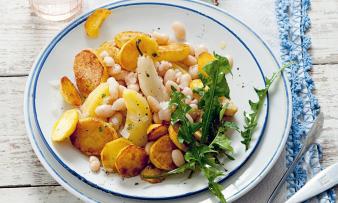
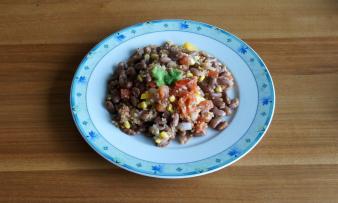
Hülsenfrüchte sowie Nüsse und Samen enthalten besonders viel Histidin.2
Neben den in der Tabelle aufgeführten Lebensmitteln liefern auch andere Hülsenfrüchte wie gekochte Kichererbsen (rund 250 mg/100g) und gekochte, weisse Bohnen (230 mg/100g) nennenswerte Mengen an Histidin. Ackerbohnen enthalten mit rund 660 mg Histidin pro 100 g mehr als rohes Hähnchenfleisch (526 mg) und etwa siebenmal so viel wie Vollmilch (95 mg).2
Auch Hafer (400 mg/100g), Haferflocken (280 mg/100g), Quinoa (410 mg/100g) und Amarant (390 mg/100g) enthalten Histidin. Gewürze und einige Algen können (bezogen auf 100 g) ebenfalls hohe Mengen dieser Aminosäure liefern, etwa getrocknete Spirulina mit rund 1100 mg/100g.2
Um einen Histidinmangel zu erleiden, bräuchte es bei einer veganen Ernährung eine extrem einseitige Lebensmittelauswahl. Da pflanzliche Proteinquellen wie Hülsenfrüchte, Nüsse, Samen und Vollkornprodukte von Natur aus Histidin enthalten, deckt eine abwechslungsreiche pflanzliche Kost den Bedarf in der Praxis problemlos ab.
Lager- und Zubereitungsverluste
Das Erhitzen der Speisen denaturiert Proteine und verändert damit deren Eigenschaften. Ein Beispiel ist das Spiegelei, das durch die Hitze in der Pfanne denaturiert. Beim Erhitzen erstarren das flüssige Eigelb und das Eiklar als Hauptproteinquelle. Die Proteine im Ei bilden feste Strukturen; Fachleute nennen diesen Prozess "Gerinnung" oder "Ausflocken". Das Eiklar gerinnt bei 60 °C, das Eigelb bei 65 °C, und die vollständige Gerinnung erfolgt bei 70 °C.3
Die Proteinoxidation einer Aminosäure durch reaktive Sauerstoffspezies kann dessen Funktion erheblich beeinflussen.
Bei unsachgemässer Lagerung von Fisch können bestimmte Bakterien Histidin mithilfe des Enzyms Histidin-Decarboxylase in Histamin umwandeln. Bei unzureichender Kühlung entsteht Histamin in hoher Konzentration und verursacht dadurch eine Histaminvergiftung (Scombroid-Syndrom). Da Erhitzen, Einfrieren oder Waschen Histamin nicht entfernen, erfordern Fisch und Fischereierzeugnisse eine schnelle Kühlung und eine lückenlose Einhaltung der Kühlkette.4
Ernährung - Gesundheit
Histidin gilt als essenzielle Aminosäure und dient dem Körper zum Aufbau eigener Proteine.
Es dient als Vorstufe von Histamin und ist an der Bildung von Carnosin beteiligt. Aufgrund seiner chemischen Eigenschaften kann Histidin Protonen puffern und Metallionen binden. Histidinreiche Proteine und Carnosin übernehmen dabei verschiedene Funktionen, unter anderem im Blut, in der Muskulatur und im Nervensystem.5
Studien untersuchen mögliche Zusammenhänge zwischen der Histidinversorgung und Stoffwechselparametern wie Körpergewicht, Insulinsensitivität und Entzündungsprozessen. Zudem scheinen moderate Mengen die Müdigkeit zu reduzieren, während exzessive Dosierungen nachweislich zu unerwünschten Störungen der Nahrungsaufnahme sowie zu Beeinträchtigungen von Gedächtnisleistungen und kognitiven Funktionen führen. Bisherige klinische Daten reichen jedoch nicht aus, um eine gezielte Supplementierung als medizinische Standardmassnahme zu begründen. Zukünftige Untersuchungen müssen erst klären, ob spezifische Risikogruppen von einer kontrollierten Erhöhung tatsächlich profitieren. Zudem fehlen verlässliche Langzeitdaten zu exakten Dosierungen.6
Mehr Informationen, wie der Proteinkonsum Ihre Gesundheit beeinflusst, finden Sie in folgendem Beitrag: Risiken proteinreicher Ernährung.
Spezielle Essgewohnheiten, wie bei Frutariern (Fructarier, Frutaner, Fruganer) oder der 80/10/10 (High-Carb-Diät) und noch extremeren Diäten, können im Laufe der Zeit zu Mangelerscheinungen führen. Dies geschieht oft über lange Zeit ohne direkt erkennbare Symptome.
Eine ausreichende Histidinversorgung ist für den menschlichen Körper notwendig. Die WHO gibt einen Tagesbedarf von 10 mg/kg Körpergewicht an. Für einen 70 kg schweren Erwachsenen entspricht dies rund 700 mg Histidin pro Tag.7
Grössere Histidinpools in Hämoglobin und Carnosin erschweren die Bestimmung des Histidinbedarfs. Carnosin bildet ein Dipeptid aus Beta-Alanin und Histidin, das in grösseren Mengen in der Skelettmuskulatur vorkommt. Bei einer länger anhaltenden unzureichenden Histidinversorgung setzt der Körper Histidin aus dem Abbau von Carnosin frei und sichert so vorübergehend die Versorgung.7
Mangelerscheinungen bzw. Mangelsymptome
Ein Histidinmangel bleibt bei längerfristig unzureichender Zufuhr theoretisch möglich, tritt jedoch bei einer abwechslungsreichen Ernährung kaum auf. Vorhandene Daten zu spezifischen Mangelsymptomen beim Menschen liefern dabei nur begrenzte Einblicke.
Eine ältere Untersuchung (1975) berichtete bei histidinarmer Ernährung unter anderem über eine negative Stickstoffbilanz, einen verminderten Serumalbuminspiegel und Hautveränderungen. Diese Veränderungen klangen nach einer erneuten Histidin-Zufuhr wieder ab. Die geringe Teilnehmerzahl und das Alter dieser Studien schränken jedoch die Aussagekraft ein.8
In einer kleinen Studie (2002) mit vier gesunden Erwachsenen führte eine histidinarme Ernährung über 48 Tage zu einer Abnahme der Hämoglobinkonzentration um etwa 11 %.9
Aufgrund seiner Bedeutung für die Proteinsynthese gilt Histidin heute als essenzielle Aminosäure für Erwachsene. Bei einer vielseitigen pflanzlichen Ernährung ist eine ausreichende Histidinversorgung in der Regel gewährleistet.
Überversorgung
Eine übermässige Histidinaufnahme spielt vor allem bei einer hoch dosierten Einnahme als Nahrungsergänzungsmittel eine Rolle. Bisher fehlen beim Menschen klare Belege für eine toxische Wirkung.5 Extrem hohe Dosen rufen jedoch unerwünschte Folgen wie Appetitlosigkeit sowie Veränderungen des Geschmacks- und Geruchssinns hervor.6
Eine hohe Histidinaufnahme gilt gelegentlich als möglicher Auslöser für allergische Reaktionen, da Histidin als Vorstufe von Histamin dient. Bisher fehlt beim Menschen jedoch jeglicher Beleg für diesen Zusammenhang. Studien zur Histidin-Supplementierung dokumentieren bislang keine allergischen Reaktionen.5
Bei bestehenden Lebererkrankungen ist eine isolierte hochdosierte Histidin-Supplementierung nicht empfehlenswert. Studien zeigen unter erhöhter Histidin-Zufuhr Veränderungen des Aminosäurestoffwechsels mit erhöhten Ammoniak- und Glutaminwerten sowie verminderten Konzentrationen der verzweigtkettigen Aminosäuren Valin, Leucin und Isoleucin.10
Funktionen im Körper
Histidin weist folgende Funktionen im Körper auf:
Das Vitamin-B6-abhängige Enzym Histidin-Decarboxylase wandelt Histidin in Histamin um. Histamin wirkt anschliessend als Neurotransmitter im Gehirn sowie als Botenstoff bei Immunreaktionen, bei der Magensäureproduktion und bei Entzündungsprozessen.1
Zusammen mit Beta-Alanin bildet Histidin das Dipeptid Carnosin, das in grossen Mengen in Skelettmuskulatur und Gehirn vorkommt. Dort puffert Carnosin den während einer Belastung entstehenden Säureüberschuss ab und fängt zusätzlich reaktive Sauerstoffspezies als Antioxidans ab.1
Im Hämoglobin ist das sogenannte proximale Histidin über eine direkte Bindung mit dem Eisenatom der Hämgruppe verbunden. Die Fe-His-Bindung spielt eine wichtige Rolle bei der Regulation der reversiblen Liganden- und damit auch der Sauerstoffbindung des Hämoglobins.11
Die Imidazolgruppe von Histidin kann sowohl Protonen als auch Metallionen wie Zink, Kupfer und Eisen binden. Deshalb wirken Histidinreste häufig an der Katalyse in aktiven Zentren von Enzymen mit, beispielsweise als Bestandteil der katalytischen Triade von Serinproteasen wie Trypsin.1,12
Dank seiner Fähigkeit, je nach pH-Wert Protonen aufzunehmen oder abzugeben, wirkt freies Histidin zusätzlich als Puffersubstanz und hilft, den Säure-Basen-Haushalt in Zellen und Geweben zu regulieren.5
Aufnahme und Stoffwechsel
Die Verdauung von Nahrungsproteinen beginnt im Magen durch das Enzym Pepsin. Im Dünndarm spalten verschiedene Peptidasen die Peptide weiter in die Aminosäuren. Spezifische Transportsysteme nehmen Histidin anschliessend sowohl als freie Aminosäure als auch in Form kleiner Peptide in die Darmzellen auf. Von dort gelangt der Nährstoff direkt in den Blutkreislauf.13
Der wichtigste Abbauweg von Histidin beginnt mit der Umwandlung zu Trans-Urocaninsäure durch das Enzym Histidase (Histidin-Ammoniak-Lyase), das vor allem in der Leber und Haut vorkommt. Trans-Urocaninsäure durchläuft in der Leber mehrere Zwischenstufen bis zur Bildung von Formiminoglutamat (FIGLU). Enzyme übertragen dessen Formiminogruppe auf Tetrahydrofolat (THF), was unter anderem Glutamat entstehen lässt. Bei einem Folsäuremangel gerät dieser Abbauweg ins Stocken, weshalb der Körper vermehrt FIGLU mit dem Urin ausscheidet.1
Ein weiterer Stoffwechselweg führt durch die Decarboxylierung von Histidin zu Histamin. Dabei katalysiert das Vitamin-B6-abhängige Enzym Histidin-Decarboxylase die Reaktion. Histidin-Decarboxylase kommt unter anderem in spezialisierten Zellen des Immunsystems (Mastzellen), in gewissen Zellen des Magens und in bestimmten Bereichen des zentralen Nervensystems vor, wo Histamin als Neurotransmitter wirken kann.1
Speicherung - Verbrauch - Verluste
Histidin bildet im Körper kein spezielles Speicherorgan. Ein Teil des Histidins zirkuliert als freie Aminosäure, während grössere Mengen in Proteinen und Histidin-haltigen Verbindungen auftreten. Eine besondere Bedeutung hat dabei Carnosin, ein Dipeptid aus β-Alanin und Histidin, das vor allem in der Skelettmuskulatur vorkommt. Bei einer Histidinunterversorgung kann der Abbau von Carnosin zur Freisetzung von Histidin beitragen.5
Der menschliche Muskel bildet Carnosin. Vor allem das β-Alanin bestimmt dabei die Syntheserate von Carnosin. Eine Supplementierung mit β-Alanin kann die Carnosinkonzentration in der Muskulatur deutlich erhöhen, während eine alleinige Histidinsupplementierung in einer Humanstudie keine Erhöhung der Muskelcarnosinkonzentration bewirkte.14
Der Körper verbraucht Histidin fortlaufend für die Proteinsynthese und die Bildung verschiedener histidinhaltiger Verbindungen. Überschüssiges Histidin baut er entweder über die Histidase zu Urocaninsäure ab oder wandelt es durch die Histidin-Decarboxylase in Histamin um.5
Mastzellen und basophile Granulozyten synthetisieren Histamin gezielt und speichern es grösstenteils in ihren Granula. Bei einer immunologischen Stimulation setzt die Zelle es durch Degranulation frei. Die Salzsäure produzierenden Belegzellen des Magens bilden und speichern ebenfalls Histamin. Gleiches gilt für bestimmte Neuronen im hinteren Hypothalamus des Gehirns, die unter anderem Appetit, Wachheit, Emotionen und kognitive Funktionen steuern.5
Auch über den Urin geht Histidin verloren. Untersuchungen an gesunden Erwachsenen zeigen, dass Histidin im Vergleich zu mehreren anderen Aminosäuren in relativ hohen Mengen im Urin vorkommt. Dabei bestehen deutliche individuelle Unterschiede in der renalen Aminosäureausscheidung.15
Strukturen
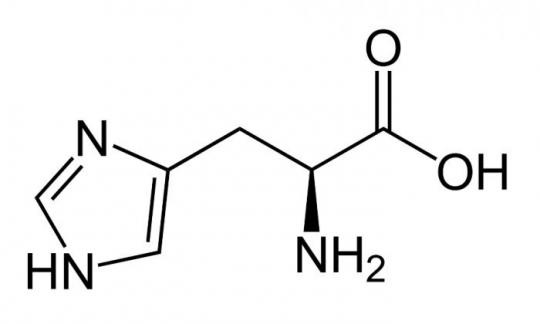
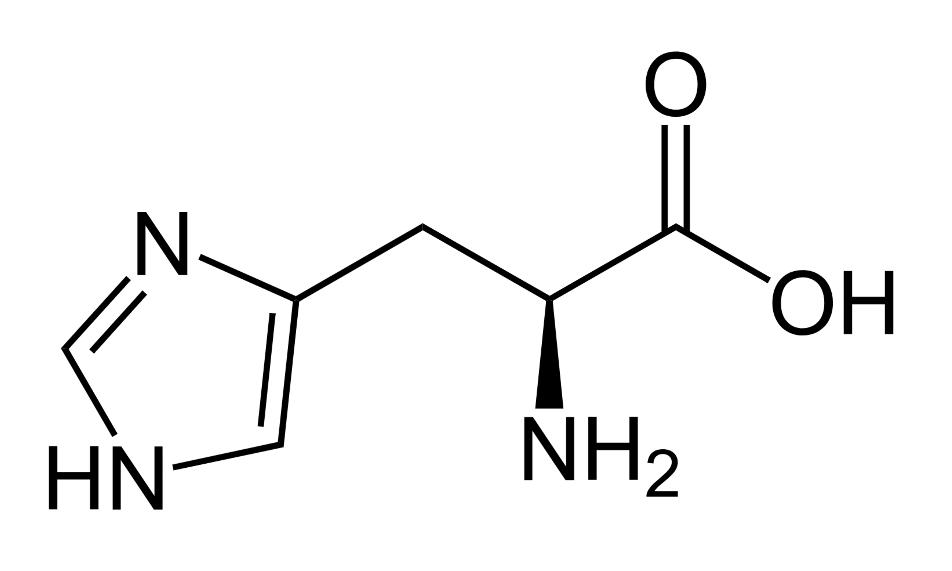
Histidin ist eine proteinogene α-Aminosäure mit einer basischen Imidazol-Seitenkette. Der Imidazolring kann je nach pH-Wert Protonen aufnehmen oder abgeben. Dadurch besitzt Histidin eine ausgeprägte Pufferfunktion im physiologischen pH-Bereich und spielt eine wichtige Rolle in den aktiven Zentren zahlreicher Enzyme.1,5
Wissenschaftliche Fachkreise bezeichnen Histidin auch als 2-Amino-3-(1H-imidazol-5-yl)propansäure und Imidazolalanin. Die Summenformel lautet C6H9N3O2. Abkürzungen: His, H (Einbuchstabencode).16
It is a basic amino acid with an imidazole side chain. The pK for the side chain of the free amino acid is 6.0 so that both the neutral and protonated forms are present at physiological pH. The imidazolium side chain of histidine provides functions which are unavailable to other amino acids, such as general base catalysis in the catalytic triad of serine proteases (2). The proximal and distal histidines of the β-globin chains of hemoglobin also play essential roles in the oxygenation, rather than oxidation, of hemoglobin under physiological conditions (3).
Histidine is a dietary essential amino acid because it cannot be synthesized in humans.
Histidine can be enzymatically decarboxylated to give histamine (Figure 4A). The enzyme involved is histidine decarboxylase (HDC) which requires pyridoxal phosphate as its essential cofactor.
FIGURE 4. Histidine can be decarboxylated to histamine which may be subsequently methylated to N1-methylhistidine. (A) Conversion of histidine to histamine by histidine decarboxylase. Pyridoxal phosphate is the cofactor. (B) Inactivation of histamine by histamine N-methyltransferase in brain. The methyl donor is SAM, which is converted to SAH. SAH, S-adenosylhomocysteine; SAM, S-adenosylmethionine.
In addition to the role of histamine in gastric acid secretion and the immune response, it also serves as a neurotransmitter in specific regions of the brain (53).
Histidine is required as a precursor of carnosine in human muscle and parts of the brain where carnosine appears to play an important role as a buffer and antioxidant. It is synthesized in the tissue by carnosine synthase from histidine and β-alanine, at the expense of ATP hydrolysis. Histidine can be decarboxylated to histamine by histidine decarboxylase. This reaction occurs in the enterochromaffin-like cells of the stomach, in the mast cells of the immune system, and in various regions of the brain where histamine may serve as a neurotransmitter.
It plays particularly important roles in the active site of enzymes, such as serine proteases (e.g., trypsin) where it is a member of the catalytic triad.
Figure 2 shows the metabolic pathway for histidine metabolism. Histidase (histidine ammonia lyase) is the first and principal regulatory enzyme in the pathway, producing ammonia and trans-urocanate. It is a cytosolic enzyme, principally found in skin and liver, with a Km for histidine in the 1–4 mM range (7). Liver and skin histidases are expressed from the same gene (8).
Trans-urocanate is hydrolyzed in the liver by urocanase to give 4-imidozolone-5-proprionate which, in turn, is converted to formiminoglutamate (FIGLU).
The next step involves one-carbon metabolism as the formimino group of FIGLU is transferred to tetrahydrofolate (THF) to produce 5',10'-methenyl-THF, glutamate, and ammonia.
The requirement of THF as a substrate for glutamate formiminotransferase implies that folate deficiency could limit histidine catabolism. Evidence for this idea is provided by the increased urinary FIGLU excretion that is found in folate-deficient individuals (17). Glutamate, the other product of glutamate formiminotransferase, is used for many functions, including gluconeogenesis.
Histidine can be decarboxylated to histamine by histidine decarboxylase. This reaction occurs in the enterochromaffin-like cells of the stomach, in the mast cells of the immune system, and in various regions of the brain where histamine may serve as a neurotransmitter.
Histidine can be enzymatically decarboxylated to give histamine (Figure 4A). The enzyme involved is histidine decarboxylase (HDC) which requires pyridoxal phosphate as its essential cofactor. HDC has long been known to be localized to mast cells (47) in various tissues and enterochromaffin-like (ECL) cells of the oxyntic mucosa of the stomach (48), but more recently it has also been discovered in the central nervous system (49) and in immune cells (50).
The imidazolium side chain of histidine provides functions which are unavailable to other amino acids, such as general base catalysis in the catalytic triad of serine proteases (2).
When it is heated the runny yolk and white (albumen – which is the major source of protein) turn solid. The proteins in the egg start to thicken, a process known as coagulation. Egg whites coagulate at 60°C, egg yolks 65°C, with full coagulation occurring at 70°C
The unique chemical properties and physiological functions are the basis of the theoretical rationale to suggest HIS supplementation in a wide range of conditions.
There are no reports of signs of toxicity or mutagenic activity in HIS-treated subjects, and researchers have reached a consensus that increased intake of HIS and/or CAR is safe [134].
Although HIS is a precursor of histamine, allergic reactions or peptic ulcers caused by increased gastric acid secretion have not been reported.
L-histidine (HIS) is an essential amino acid with unique roles in proton buffering, metal ion chelation, scavenging of reactive oxygen and nitrogen species, erythropoiesis, and the histaminergic system.
Of all the amino acid side chains in proteins, only the imidazole ring of HIS is suitable to function as a pH buffer [10], and either of the two nitrogens of the imidazole ring can bind or release a proton to form the acid or the base form.
Most histamine is synthesized and stored in granules in mast cells and basophils, from which it is released via degranulation induced by immunological stimulation (Figure 4), particularly interactions of allergens with IgE antibodies. Parietal cells in the stomach and histaminergic neurons in the brain are additional important sites of histamine synthesis and storage.
CAR is synthesized under hydrolysis of ATP from HIS and beta-alanine, which is obtained through the diet or uracil degradation in the liver [10]. CAR is abundantly present in skeletal muscle and olfactory bulb and in smaller quantities in the cardiac muscle, brain, and other tissues [11,16,79].
It has been shown that most of the CAR provided by food is rapidly hydrolysed by serum carnosinase to HIS and beta-alanine, which can then be taken up by muscles where CAR is synthesized [84].
There are several pathways of HIS metabolism (Figure 2). Quantitatively most significant are HIS turnover in synthesis and breakdown of proteins and HIS catabolism via urocanate to glutamate. I will overview the pathways of HIS catabolism and importance of HIS as a precursor of histamine, HIS-rich proteins, HIS-containing dipeptides (particularly CAR), and methyl- and sulphur-containing derivatives of HIS.
Synthesis and degradation of histamine: Histamine is formed by the decarboxylation of HIS by L-histidine decarboxylase (EC 4.1.1.22) found in many tissues.
The main pathway of HIS catabolism (Figure 3) begins with deamination catalysed by histidase (EC 4.3.1.3), leading to the production of trans-urocanate and ammonia.
Histidine structure: histidine (HIS) contains an α-amino group, a carboxylic acid group, and an imidazole side chain. Under physiological conditions, the amino group is protonated and the carboxylic group is deprotonated. The imidazole ring is responsible for the proton buffering, metal ion chelating, and antioxidant properties.
Dietary histidine may be associated with factors improving metabolic syndrome related to obesity.
Insulin resistance, which is an important feature of the metabolic syndrome, seems to be improved in overweight and obese individuals with histidine supplementation [50,51].
Obesity is also associated with a high level of pro-inflammatory cytokines and inflammation biomarkers [52]. In the study by Li et al., results show that dietary histidine is inversely associated with some pro-inflammatory cytokines such as TNF-α, IL-1, IL-6, and the inflammation biomarker CRP.
In addition to its role in protein metabolism, histidine, as a functional AA, has specific metabolic roles.
Henkin [36] demonstrated that within four to six days after different amounts of histidine supplementation in healthy, young college men, subjects spontaneously complained of anorexia onset.
With continued administration of larger quantities of histidine, 16 and 32 g daily, all subjects developed a decrease in taste acuity (hypogeusia), and then a decrease in smell acuity, (hyposmia). Further administration of larger doses of histidine was associated with the development of distortions of taste (dysgeusia) and smell perception (dyssomnia).
3.3. Histidine and Memory Disorders
Geliebter et al. studied the effect of daily histidine doses, from 24 to 64 g, mixed into orange juice, on healthy subjects for four weeks [40]. They reported ensuing headaches, weakness, drowsiness, and nausea in subjects. Two subjects who received 64 g per day reported painful sensations in their eyes and difficult focusing. One subject showed mental confusion after taking 64 g per day, poor memory, and depression with episodes of crying [40]. In contrast, Sasahara and colleagues [41] reported that daily histidine intake (1.65 g/day) actually decreased feelings of fatigue, increased efficiency while performing memory tasks, and promoted clear thinking and concentration in subjects with high fatigue and sleep disruption scores. The large difference in histidine doses likely explains the contradictory effects between studies by Geliebter et al. and Sasahara et al.
The requirement for dietary histidine was investigated in four normal and three chronically uremic men.
With ingestion of the histidine-deficient diet, nitrogen balance gradually became negative, and serum albumin decreased in six subjects. Plasma histidine fell by 82 plus or minus 6 per cent; muscle histidine decreased by 62 plus or minus 19 per cent; the hematocrit fell by 25 plus or minus 9 per cent; and serum iron rose. Subjects felt unwell, and in five cases a skin lesion consisting of fine scales, dry skin, and mild erythema developed. After administration of the histidine-repletion diet, nitrogen balance became positive in six subjects; serum albumin increased in five cases; plasma and muscle histidine rose; serum iron fell abruptly; a reticulocytosis ensued; and the hematocrit rose. The clinical symptoms and skin lesions disappeared.
To study the potential metabolic effects of a lack of exogenous histidine, four healthy adults consumed a histidine-free diet, with adequate energy and 1.0 g/(kg · d) of an l-amino acid mixture for 48 d.
Interventionsstudie: Stoffwechselstudie am Menschen
The data presented in the review show that HIS administration may increase ammonia and affect the level of several amino acids. The most common are increased levels of alanine, glutamine, and glutamate and decreased levels of glycine and branched-chain amino acids (BCAA, valine, leucine, and isoleucine).
Increased ammonia and glutamine and decreased BCAA levels in HIS-treated subjects indicate that HIS supplementation is inappropriate in patients with liver injury.
Time-resolved Raman studies have shown that communication between the heme oxygen binding sites and the surrounding globin occurs through the iron-proximal histidine linkage. By comparing the frequency of the Fe-His stretching mode in equilibrium deoxy- and photoinduced transient deoxyhemoglobins, we have found that ligand binding induces protein structural changes that strengthen the Fe-His linkage.
These results indicate that modulation of the Fe-His linkage could be a general mechanism for regulating ligand binding properties in hemoglobin.
In this study, using 1H NMR titration experiments, we show that histidine binds strongly to Zn(II), Cu(II), and Fe(III) ions at a biologically relevant pH (pH 7.4), with a stoichiometry of Zn(II): histidine binding of 1:2.
L-histidine is an essential amino acid whose dietary intake is indispensable in humans due to the absence of endogenous biosynthetic pathways. Intestinal absorption occurs via specific transporters, primarily PEPT1 and proton-coupled active transport systems. Once absorbed, histidine enters the portal circulation and is distributed to multiple tissues, with quantitatively significant metabolic processing taking place in the liver and skeletal muscle.
Carnosine is a dipeptide composed of β-alanine and L-histidine and is present in skeletal muscle. Chronic oral β-alanine supplementation can induce muscle carnosine loading and is therefore seen as the rate-limiting factor for carnosine synthesis.
Unlike the findings in some animals, histidine supplementation did not induce carnosine loading in human muscles, although it tended to increase muscle histidine content, suggesting that elevated tissue histidine in itself is not sufficient to raise carnosine.
Both BA and BA + HIS groups showed increased carnosine concentrations in all investigated muscles, with no difference between these groups. By contrast, carnosine levels in the HIS group remained unaltered. Histidine levels were significantly decreased in plasma (−30.6%) and muscle (−31.6%) of the BA group, and this was prevented when β-alanine and L-histidine were supplemented simultaneously.
The excretion of amino acids in urine represents an important avenue for the loss of key nutrients. Some amino acids such as glycine and histidine are lost in higher abundance than others.
Analyses of urinary amino acid profiles revealed that three groups could be objectively defined from the 151 participants using k-means clustering. The amino acid profiles were significantly different between each of the clusters (Wilks’ Lambda = 0.13, p < 0.0001). Cluster 1 had the highest loss of amino acids with histidine being the most abundant component. Cluster 2 had glycine present as the most abundant urinary amino acid and cluster 3 had equivalent abundances of glycine and histidine.
Querschnittstudie mit anschliessender Intervention
National Center for Biotechnology Information. PubChem Compound Summary: L-Histidine. PubChem CID 6274. Bethesda (MD): National Library of Medicine; [cited 2026 Sep 8].
Wir haben Studien und Bücher zu Ernährung und Gesundheit nach folgenden 3 Evidenz-Kategorien markiert: grün=starke Beweiskraft, gelb=mittlere, violett=schwache. Die restlichen Quellen sind grau markiert. Eine ausführliche Erklärung finden Sie in unserem Beitrag: Wissenschaft oder Glaube? So prüfen Sie Publikationen.


Kommentare