

Inhaltsverzeichnis
| Wir bieten wissenschaftlich fundierte Informationen zu Gesundheit, Ernährung und Nachhaltigkeit – unabhängig von Sponsoren, Lebensmittelindustrie oder Herstellern von Nahrungsergänzungsmitteln. Hier erfahren Sie mehr: unsere Mission. |
Bei Grüntee handelt es sich um die Blätter der Teepflanze Camellia sinensis, die im Gegensatz zum Schwarztee keiner Fermentation unterliegen. Dämpfung inaktiviert Oxidationsenzyme, wodurch die grüne Farbe der Blätter (nicht roh!) und zahlreiche gesundheitsfördernde Stoffe wie Catechine und Theanin erhalten bleiben.
Verwendung in der Küche
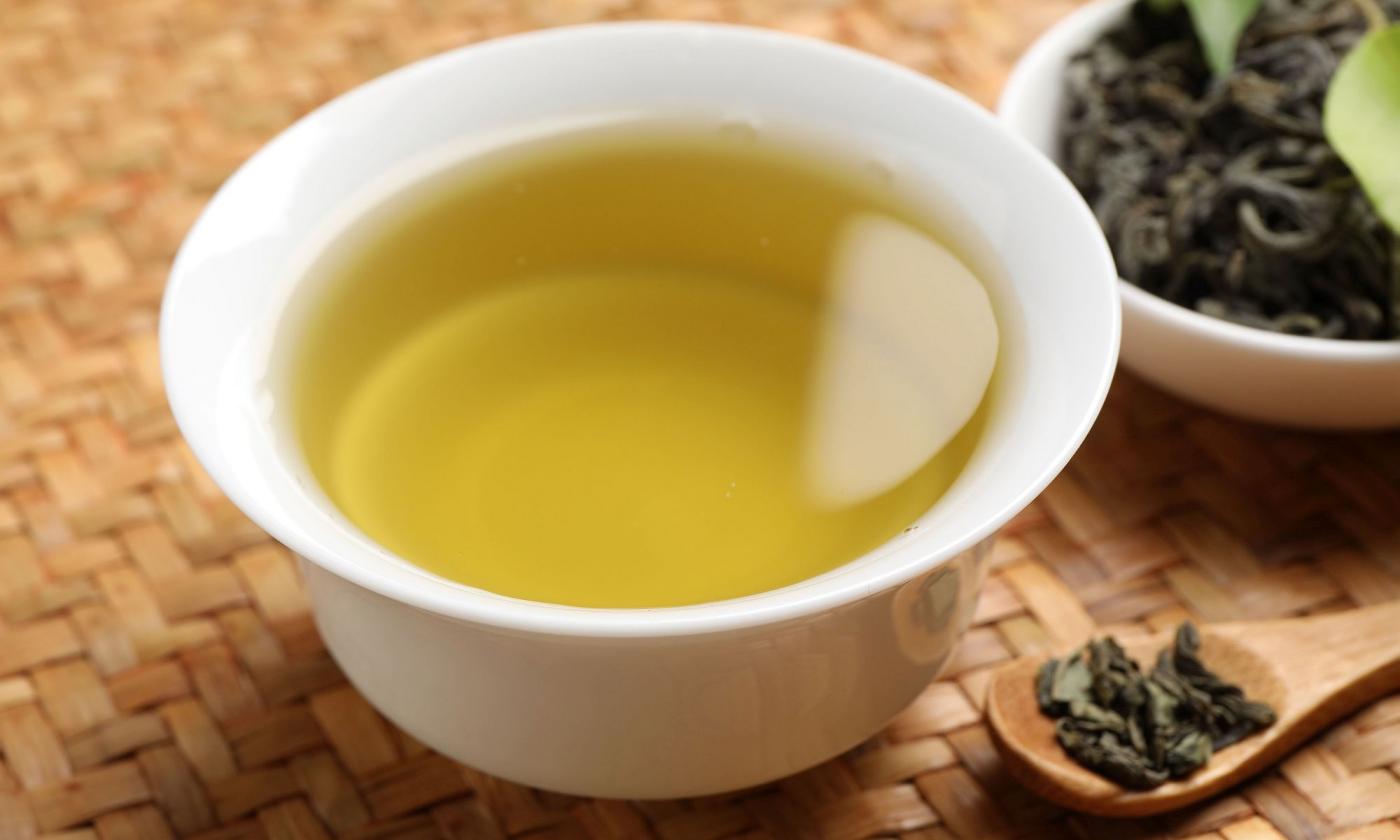
Grüntee besteht meist aus ganzen und getrockneten Blättern, die manchmal zu kleinen Rollen geformt sind. Die Farbe der Blätter reicht von hellgrün bis dunkelgrün, abhängig von der Art der Dämpfung oder Röstung.
Bei hochwertigem Grüntee erscheinen die Blätter glänzend und unbeschädigt, wobei bei bestimmten Sorten silbrige Blattspitzen sichtbar sein können. Ein grüner Aufguss mit leuchtender Farbe deutet auf hohe Qualität hin. Idealerweise weist Grüntee einen milden Geschmack mit einer frischen, kastanienähnlichen oder blumigen Duftnote auf.3
Aromagebende Stoffe des Grüntees rufen blumige, röstige, fruchtige, grasartige, nelkenartige und zitrusartige Geschmacksnoten hervor. Weitere Aromastoffe tragen mit rauchigen, schwefeligen, bittermandelartigen, malzartigen und honigartigen Eigenschaften bei.3
Neben der klassischen Verwendung als Teeaufguss kann der Grüntee auch beim Kochen und Brühen zum Einsatz kommen. Er eignet sich als Basis für Gemüse- und Reisgerichte oder etwa als farb- und aromagebende Zutat beim Reiskochen anstelle von Wasser. Sie können Matcha (zermahlene Grüntee-Blätter) oder aufgebrühten Grüntee in Salatdressings (Vinaigretten) oder in Marinaden einrühren. Der pulverisierte Grüntee ergänzt Gewürzmischungen. Weiters eignen sich die Grünteeblätter zum Räuchern von Tofu. Sie geben ein leicht rauchig-grasiges Aroma.
Vegane Desserts, darunter Puddings, Eiscreme, Mousse oder Crème brûlée, lassen sich mit Grüntee aromatisieren. Matcha-Pulver verleiht Kuchen, Muffins, Cookies oder Pancakes eine grüne Farbe und eine leicht herbe Note.
Grüntee kann Smoothies z.B. mit Früchten, veganem Joghurt und Pflanzenmilch oder auch Cocktails aufpeppen.
Zubereitung von Grüntee
Betrifft alle Teesorten: Wärmen Sie Teekanne und Tassen mit kochendem Wasser vor, damit der Tee sein Aroma optimal entfalten kann. Das heisse Wasser vor dem Aufguss wegschütten.6
Für einen aromatischen Sencha mit ausgewogener Süsse und feiner Bitterkeit empfiehlt sich Wasser mit etwa 70 °C. Pro Tasse 2–3 Gramm Teeblätter in ein Teesieb füllen und die Teekanne mit dem heissen Wasser füllen. Nach einer Ziehzeit von 1-2 Minuten den Tee gleichmässig auf die Tassen verteilen. Auch den letzten Tropfen servieren, da er das intensivste Aroma enthält. Für den zweiten Aufguss heisseres Wasser verwenden und die Ziehzeit leicht verkürzen.6
Gyokuro entfaltet seinen Umami-Geschmack bei einem Aufguss mit etwas mehr Teeblättern (3-4 g pro Person) und bei niedrigerer Temperatur (50 °C).6
Matcha (Usucha) soll vor der Zubereitung bereits abgesiebt (pulvrig) sein. Für eine Portion verwenden Sie zwei "Matcha-Messlöffel" des feinen Pulvers und geben es in eine Tasse. Giessen Sie mit 80 ml heissem Wasser (90 °C) und verrühren die Zutaten schnell mit einem Teebesen. Eine kräftige Hin- und Herbewegung löst Klumpen. Sobald sich Bläschen bilden und eine cremige Konsistenz vorliegt, den Teebesen langsam entnehmen und das Getränk geniessen.6
Das Servieren von Grüntee kann heiss oder kalt (Iced Green Tea) erfolgen.
Veganes Rezept für Grüntee-Pesto
Zutaten: 60 ml kaltgepresstes Rapsöl, 3 EL Teesatz (aus Frühpflückung), 1/2 Bund Basilikum, 30 g Pinienkerne, 1 Knoblauchzehe, je 1 TL frisch geriebene Zitronenschale, Kurkuma, Ingwerpulver, frisch gemahlener schwarzer Pfeffer und Salz.
Zubereitung: Die Zutaten mit einem Hochleistungsmixer oder Pürierstab zerkleinern. Servieren Sie das Pesto zu Pasta oder Salaten. Gewisse Grüntees lassen sich nach dem Aufbrühen bis zu einem Tag im Kühlschrank lagern, bevor die Verarbeitung zu Pesto oder anderen Gerichten erfolgt. Darunter Tenbu Fuka, Dan, Soshun, Shincha und Tenko.
Vegane Rezepte mit Grüntee finden Sie unter dem Hinweis: "Rezepte, die am meisten von dieser Zutat haben".
| Nicht nur Veganer oder Vegetarier sollten das lesen: Veganer essen oft ungesund. Vermeidbare Ernährungsfehler. |
Einkauf - Lagerung
Bei Grossverteilern wie Coop, Migros, Denner, Volg, Spar, Aldi, Lidl, Rewe, Edeka, Hofer, Billa etc. ist getrockneter Grüntee ganzjährig verfügbar. Der Tee ist meist in Beuteln oder lose abgepackt erhältlich. Softdrinks aus aufgebrühtem Grüntee sind meist mit Zuckerzusatz versehen. Grüntee ist auch in Energiedrinks und teilweise in Pflanzendrinks enthalten. Die steigende Beliebtheit von Matcha-Tee hat dazu geführt, dass einige Supermärkte nun auch das Grünteepulver im Sortiment führen. Drogerien und Bio-Supermärkte wie Denn's Biomarkt und Alnatura bieten meist ein grösseres Grüntee-Sortiment, darunter biologisch hergestellte und FairTrade zertifizierte Tees.
Spezialgeschäfte und Online-Shops vertreiben eine Bandbreite an Teesorten. Etwa stammen die Sencha, Bancha, Matcha, Gyokuro, Genmaicha, Hojicha und Kukicha aus Japan. Darjeeling- und Assam-Tee wachsen in Indien. Long Jing, Bi Luo Chun und Huangshan Maofeng sind beliebte chinesische Grüntee-Sorten.
Die Verfügbarkeit von Grüntee ist je nach Grösse des Ladens, Einzugsgebiet etc. unterschiedlich. Unsere erfassten Lebensmittelpreise für die D-A-CH-Länder finden Sie oben unter dem Zutatenbild - und mit Klick deren Entwicklung bei verschiedenen Anbietern.
Tipps zur Lagerung
Schützen Sie Tee vor Wärme, Feuchtigkeit, Licht und Gerüchen. Nach dem Öffnen der Packung sollten Sie den Tee innerhalb eines Monats verbrauchen. Idealerweise den Tee in kleinen, luftdichten und dunklen Gefässen (z.B. Gläser oder Dosen unter 100 g) aufbewahren. Den Tee bei grossen Verpackungen im Originalbeutel lassen und diesen zusätzlich in einem luftdichten Beutel oder Gefäss lagern. Bei Gefrierlagerung achten Sie darauf, dass der Tee fest verschlossen in einer Plastiktüte aufbewahrt ist. Erst die Packung öffnen, wenn der Tee Zimmertemperatur angenommen hat, um Feuchtigkeitsbildung zu vermeiden.6,21
Bei der Lagerung kommt es zu Verlusten von gesundheitsfördernden Stoffen (u.a. polyphenolische Catechine). Innerhalb von sechs Monaten nach der Herstellung verschwindet der Gehalt einiger Verbindungen um bis zu 50 %.21
Inhaltsstoffe - Nährwerte - Kalorien
Zusammensetzung und Menge der Inhaltsstoffe, inkl. sekundäre Pflanzenstoffe, variieren extrem je nach Sorte, Wachstumsbedingungen und Verarbeitungsmethoden etc.
100 g aufgebrühter Grüntee enthalten eine sehr geringe Energiedichte mit 1 kcal. Es sind 0,18 g Protein und 2,5 mg Salz pro 100 g Flüssigkeit enthalten. Grüntee liefert weder Kohlenhydrate noch Fette.7
Nennenswert ist der Mikronährstoff Mangan, der mit 0,22 mg pro 100 g Grüntee enthalten ist und damit 11 % des Tagesbedarfs abdeckt. Der Gehalt an Mangan ist mit jenem von Sojamilch und rohem Ingwer vergleichbar. Hervorragende Mangan-Lieferanten sind Weizenkeime (13 mg/100g, deckt 665 % des Tagesbedarfs), Pinienkerne (8,8 mg/100g) und geschälte Hanfsamen (7,6 mg/100g).7
Zink, Natrium und Kalium sind in Grüntee nur noch in Spuren zu finden.7
Die gesamten Inhaltsstoffe von Grüntee, die Abdeckung des Tagesbedarfs und Vergleichswerte mit anderen Zutaten finden Sie in unseren Nährstofftabellen. Im Artikel Nährstoffe umfassend erklärt bekommen Sie einen detaillierten Einblick in das Thema.
Wirkungen auf die Gesundheit
Grüntee enthält verschiedene Aminosäuren, wobei Theanin den Hauptanteil stellt. Diese Aminosäure prägt das Aroma massgeblich und trägt zur Bildung charakteristischer Duftnoten bei. Der Theanin-Gehalt dient zudem als Qualitäts- und Frischemarker für Tee. Zusätzlich gibt es Hinweise auf antioxidative, entzündungshemmende und neuroprotektive Effekte.9
Grüner Tee enthält zudem auch Polysaccharide, deren Gehalt mit zunehmender Blattreife steigt und deren Struktur stark von Verarbeitung, Extraktion und Teesorte abhängt.9 Zu weiteren bioaktiven Inhaltsstoffen zählen Vitamine des B-Komplexes, Vitamin C, Vitamin E, Fluorid sowie Mineralstoffe und Spurenelemente wie Kalium, Mangan und Zink.4 Studien weisen auf potenzielle antioxidative, immunmodulierende und antidiabetische Effekte hin.9
Sekundäre Pflanzenstoffe
Die gesundheitlichen Effekte von Grüntee sind auf die enthaltenen sekundären Pflanzenstoffe zurückzuführen. Unser Artikel über sekundäre Pflanzenstoffe bietet einen Überblick über die Klassifizierung der Stoffgruppen, das Vorkommen in Lebensmitteln und mögliche Wirkungen auf den Menschen.
Grüntee enthält u.a. folgende sekundäre Pflanzenstoffe:3,8,9
- Isoprenoide: Monoterpene (Geraniol, Linalool); Triterpene: Saponine (Floratheasaponin A, Theasaponin B1, Foliatheasaponin); Tetraterpene: Carotinoide: Carotine (Beta-Carotin), Xanthophylle (Lutein, Violaxanthin, Neoxanthin); Sesquiterpene (Cedrol); Norisoprenoide (Ionone, Damascenon)
- Alkaloide: Xanthine (Koffein, Theophyllin); Purin-Alkaloide (Theobromin)
- Polyphenole: Phenolsäuren: Hydroxybenzoesäuren (Gallussäure), Hydroxyzimtsäuren (Chlorogensäure, Kaffeesäure, p-Cumarsäure); Flavonoide: Flavonole (Kaempferol-Glycoside, Quercetin-Glycoside, Myricetin-Glycoside), Flavanole (Epicatechin, Catechin, Epigallocatechin, Epicatechin-Gallate, Epigallocatechin-Gallate), Anthocyane (Cyanidin, Delphinidin, Pelargonidin, Malvidin, Petunidin); Tannine (Ellagsäure)
- Organische schwefelhaltige Verbindungen: Sulfide (Dimethyl-Sulfide)
- Stickstoffhaltige Verbindungen: Indole
- Weitere organische Verbindungen: Cumarine (Cumarin), Hydroxycarbonsäuren (Chinasäure), Dicarbonsäuren (Oxalsäure, Fumarsäure, Bernsteinsäure); Carbonsäuren (Tartarsäure, Essigsäure, Ameisensäure); Aldehyde (Hexanal, Heptanal, Octanal, Phenylacetaldehyd, Propanal, Butanal, Benzaldehyd, Nonanal, Vanillin); Pyranzine; Alkohole (Cedrol, Hexenol)
Frische Teeblätter enthalten bittere und adstringierende Substanzen wie Koffein, Catechine und Flavonol-Glykoside, jedoch kaum Aromakomponenten. Erst durch die Verarbeitung entstehen zahlreiche flüchtige Aromastoffe, die wesentlich zur Qualitätsbewertung beitragen. Das Aroma von grünem Tee prägen insbesondere Monoterpenalkohole wie Linalool und Geraniol sowie weitere flüchtige Alkohole und Aldehyde.3
Catechine machen etwa 70 % des gesamten Polyphenolgehalts aus und bestimmen gemeinsam mit den flüchtigen Verbindungen Farbe, Geschmack und antioxidative Effekte.8,9 Epigallocatechin gilt dabei als das biologisch aktivste Catechin im grünen Tee.17,21 Grüner Tee enthält 2-5 % Koffein sowie geringe Mengen an Theobromin und Theophyllin, die zur stimulierenden Wirkung beitragen.4,9 Grüner Tee zeigt in präklinischen Studien neuroprotektive Eigenschaften, u.a. bei Alzheimer und Parkinson, die v.a. auf Polyphenole wie Epigallocatechin und auf Theanin zurückgehen.8
Experimentelle Zell- und Tiermodelle weisen auf mögliche antikanzerogene Wirkungen, u.a. bei Zervix-, Kolon-, Prostata-, Magen-, Lungen-, Haut-, Brust-, Eierstock- und Gebärmutterkrebs, hin. In diesen Modellen treten u.a. eine Verringerung der Tumorzellviabilität, eine Reduktion der Metastasierung, eine Hemmung des Tumorwachstums sowie eine Abnahme von Tumorzahl und Tumorvolumen auf.8 Die Auswertung von neun Kohortenstudien zeigt, dass hoher Grünteekonsum mit einem leicht verminderten Risiko für Leberkrebs verbunden ist, während ein niedriger Konsum (eine Tasse täglich) keinen klaren Effekt hat. Der mögliche Schutzeffekt tritt vor allem bei Frauen auf, bei Männern lässt sich kein eindeutiger Zusammenhang nachweisen.12,15,17
Antidiabetische Effekte treten v.a. in Tier- und Zellstudien auf, die Hinweise auf eine verbesserte Blutzuckerhormonsensitivität sowie eine regulierte Glukose- und Fettstoffwechselaktivität liefern. Beim Menschen fallen die Ergebnisse deutlich schwächer und heterogener aus und betreffen meist nur geringe Veränderungen einzelner Stoffwechselmarker wie Nüchternblutzucker.4,8,17 Eine Meta-Analyse randomisierter kontrollierter Studien deutet darauf hin, dass Grüntee den Gesamt- und LDL-Cholesterinspiegel bei übergewichtigen und adipösen Personen leicht senken kann. Für Gewichtsreduktion und metabolische Parameter zeigen Studien teils kleine, inkonsistente Effekte, insbesondere bei Personen mit metabolischem Syndrom. Metaanalysen von Kohortenstudien weisen auf einen Zusammenhang zwischen Grüntee-Konsum und einem geringeren Risiko für kardiovaskuläre Erkrankungen, koronare Herzkrankheit und Schlaganfall hin, wobei die Evidenz auf Beobachtungsdaten basiert. Insgesamt bleibt die Studienlage heterogen.9,11,13,14
Grüner Tee hat positive Effekte auf die Mundgesundheit, insbesondere durch antibakterielle Wirkungen gegen parodontale Keime. Grüntee-Extrakt hemmt das Wachstum von Porphyromonas gingivalis und verhindert die Anhaftung von Bakterien an Zähnen und Gewebe. Zahlreiche In-vitro-Studien weisen auf antibakterielle Wirkungen gegen verschiedene grampositive Bakterien (Staphylococcus aureus), gramnegative Keime (E. coli, Pseudomonas aeruginosa, Helicobacter pylori) und multiresistente Staphylokokken hin. Zudem zeigten Catechine synergistische Effekte in Kombination mit antibakteriellen Arzneimitteln. Neben diesen Effekten gibt es auch antivirale Wirkungen gegen lebensmittelbedingte Viren wie Norovirus und Hepatitis-A-Virus.8,16
In einer doppelblinden klinischen Studie mit Personen mit japanischer Zedernpollenallergie reduzierte der Konsum von Grüntee die typischen Symptome wie Niesen, juckende Augen und verstopfte Nase im Vergleich zu Placebo deutlich. Die Sorte "Benifuuki" enthält das antiallergische Catechin EGCG3, das, in Kombination mit Ingwerextrakt, die Freisetzung entzündlicher Zytokine in Mastzellen hemmt.20
Welche Stoffe lösen sich auch im Wasser? Ist es sinnvoller, das Grüntee-Pulver (Matcha) zu trinken? Die maximale Extraktion bioaktiver Verbindungen ergibt sich für 2 g Tee/Tasse bei einem Aufguss mit 200 ml 80 °C heissem Trinkwasser und einer Ziehzeit von 5 Minuten bei Pulver, 15 Minuten bei Teebeuteln und 30 Minuten bei losen Blättern.4 Die Bioverfügbarkeit von Grüntee-Catechinen ist sehr gering, obwohl ihre Konzentrationen im Aufguss hoch sind. Menschen haben nach dem Verzehr von Grüntee nur sehr niedrige Konzentrationen im Blutplasma (1–2 µmol/l), die innerhalb von 24 Stunden wieder auf den Ausgangswert absinken. Ursachen dafür sind ihre Instabilität (Oxidation, Abbau, pH- und temperaturempfindlich), geringe Aufnahme im Darm, sowie ein schneller Abbau und eine rasche Ausscheidung aus dem Körper. Die therapeutische Anwendung von Catechinen bleibt jedoch derzeit eingeschränkt, v.a. aufgrund ihrer geringen oralen Bioverfügbarkeit und Instabilität.9,18
Gefahren - Unverträglichkeiten - Nebenwirkungen
Grüntee hat bei Personen, die seit mehreren Jahren in verschiedenen Grüntee-Fabriken arbeiteten, allergische Reaktionen hervorgerufen. In Japan zeigten elf Fälle, dass sich die Asthmasymptome der Betroffenen verschlimmerten, nachdem sie Grüntee getrunken oder eingeatmet hatten.19
Der Konsum von grünem Tee kann möglicherweise die Wirkung bestimmter Medikamente beeinträchtigen. Offenbar verringern Inhaltsstoffe des Tees die Aufnahme von Wirkstoffen im Darm.2
Eine Überdosierung kann bei 5 Tassen Tee und einer verzehrten Menge von 300 mg Koffein auftreten und Unruhe, Zittern und erhöhte Reflexerregbarkeit hervorrufen. Erste Anzeichen einer Vergiftung sind Erbrechen und Bauchkrämpfe. Weitere mögliche Kontraindikationen von Grüntee sind Magen- und Zwölffingerdarmgeschwüre, Herz-Kreislauf-Erkrankungen wie Bluthochdruck und Herzrhythmusstörungen, sowie Schilddrüsenüberfunktion.22
Moderat bis hohe Mengen an täglich konsumiertem Grüntee stellen prinzipiell keine Gefahr dar, das haben zahlreiche Studien überprüft. Grüntee-Extrakt kommt oft in Getränken zur Gewichtsreduktion vor. Grundsätzlich gelten diese Getränke als sicher. Allerdings hat die United States Pharmacopeia Sicherheitsüberprüfungen durchgeführt und Fälle gemeldet, in denen hoch dosierte Grüntee-Extrakte zu Leberschäden geführt haben.8 Auch die europäische Behörde für Lebensmittelsicherheit (EFSA) hat die Sicherheit von Grüntee-Catechinen bewertet. Bei einer durchschnittlichen Aufnahme von 90 bis 300 mg Epigallocatechingallate (EGCG) pro Tag durch Aufgüsse bestehen keine Bedenken. Jedoch, ausgehend von Humanstudien, kamen die EFSA-Sachverständigen zum Schluss, dass EGCG-Dosen von 800 mg/Tag mit ersten Anzeichen für Leberschäden (erhöhte Serumtransamin-Werte) in Zusammenhang stehen.23
Andere Zellstudien weisen auf DNA-schädigende Wirkungen von hohen EGCG-Konzentrationen hin, die potenziell krebserregende Effekte mit sich bringen können. Forschende gaben Konzentrationen von 20–100 Mikromol direkt zu einer Zelllinie. Das entspricht aber nicht der Bioverfügbarkeit von EGCG. Nach dem Trinken von Grüntee liegt die Gesamtflavanol-Konzentration im Blut bei ≈1,2 μmol/l also wesentlich niedriger als die Dosen in den Zellstudien.8,9
Konzentrierte Extrakte aus Grüntee auf nüchternen Magen führen eher zu Nebenwirkungen als der Konsum von grünem Tee nach dem Essen. Das haben klinische Studien und Tierversuche gezeigt.17
Verwendung als anerkannte Heilpflanze
Laut europäischem Arzneibuch (herausgegeben von der European Medicines Agency) sind die jungen und unfermentierten Blätter des Grüntees für traditionelle Heilzwecke, darunter Müdigkeit und Schwäche, einsetzbar. Der lateinische Name der Droge lautet Camellia sinensis non fermentatum folium. Für die Anwendung als Aufguss rund 1,8–2,2 g ganze oder zerkleinerte Blätter mit 100–150 ml kochendem Wasser übergiessen. Bei Verwendung von Grünteepulver 390 mg pro Aufguss nehmen. Den Tee dreimal (bei Bedarf bis zu fünfmal) täglich trinken. Das Trinken von Grüntee direkt vor dem Schlafengehen ist nicht empfehlenswert, da es zu Schlafstörungen kommen kann. Da keine ausreichenden Daten vorliegen, gibt es keine Empfehlung für die Anwendung bei Kindern unter 18 Jahren sowie während der Schwangerschaft und Stillzeit.22
Ökologischer Fussabdruck - Tierwohl
Vom Anbau über die Verarbeitung bis zum Konsum entstehen Treibhausgasemissionen. Ein Kilogramm getrockneter Grüntee weist einen CO2-Fussabdruck von 32,9 kg CO2eq auf. Bei der Verwendung von 2 Gramm pro Aufguss mit 200 ml Wasser betragen die Emissionen pro Tasse 0,066 kg CO2eq. Die Kohlenstoffemissions-Intensitäten betrugen für den Verbrauch, die Verarbeitung und den Anbau jeweils 14,9, 7,9 und 7,0 kg CO2eq/kg. Die Verwendung von Kohle fürs Dämpfen und Trocknen, komplizierte Verarbeitungsverfahren und ältere Anlagen waren die Hauptgründe für die hohen Emissionen in der Verarbeitungsphase. Im Anbauprozess stammten die Emissionen hauptsächlich aus der Düngemittelproduktion und deren Ausbringung auf den Feldern. Der Energieverbrauch für das Kochen von Wasser führte zu hohen Kohlenstoffemissionen in der Verbrauchsphase.24
VerbraucherInnen können einen Umweltbeitrag leisten, indem sie grüne Strom- oder Energiequellen fürs Teekochen, sowie nur die für den Konsum benötigte Menge Wasser verwenden. Die Energiequelle für die Erhitzung des Teewassers Verwendung kann den Fussabdruck um bis zu 19 % verändern. Bei der Verwendung von einem Elektro-Gas-Mix, wie es international üblich ist, steigt das Erderwärmungspotenzial im Vergleich zu Erdgas, das in Taiwan eine gängige Energiequelle ist. Da viele Verbraucher mehr Wasser aufkochen als tatsächlich benötigt, kann das Aufkochen ohne überflüssige Wassermengen einen bedeutenden Beitrag zur Verringerung der Umweltauswirkungen von Tee leisten.26
Die benötigte Wassermenge zur Herstellung von 1 Tasse Tee beträgt 27 Liter bei der Verwendung von 3 Gramm Tee. Eine Tasse Kaffee ist im Vergleich dazu wesentlich ressourcenaufwendiger. Die Herstellung einer Tasse Kaffee mit 7 gerösteten Bohnen verursacht sogar einen Wasserverbrauch von 130 Liter. Der Wasserfussabdruck für getrockneten Grün- und Schwarztee beträgt 8856 l/kg. Ein grosser Anteil des Wassers (82 %) besteht aus Regenwasser, das in den Anbauländern fällt.25
Ausführliche Erläuterungen zu verschiedenen Nachhaltigkeitsindikatoren (wie z.B. ökologischer Fussabdruck, CO2-Fussabdruck, Wasser-Fussabdruck) lesen Sie in unserem Artikel: Was bedeutet der ökologische Fussabdruck?
Tierschutz - Artenschutz
Viele alte Teegärten in Yunnan (China) bestehen seit den Anfängen der dort praktizierten Teekultur vor 800 Jahren. Eine Studie zeigt, dass alte Teegarten-Ökosysteme eine hohe Biodiversität aufweisen, da sie im Vergleich zu normalen Teegärten ein immergrünes Walddach beherbergen. Die vertikale Struktur der Pflanzen besteht aus Kräutern, Bäumen, Sträuchern, Kletterpflanzen und Epiphyten und beherbergt zahlreiche Tier- und Pflanzenarten (darunter gefährdete Arten), während normale Teegärten überwiegend aus Kräutern bestehen. Die Haushalte in den alten Teegärten nutzen abgesehen von den Teepflanzen auch einen Grossteil der anderen dort vorkommenden Gewächse.27
Auf einer Teeplantage in Bangladesch haben Forscher durch Feldbeobachtung unter Einsatz verschiedener Insektenfallen insgesamt 71 verschiedene Insekten-, Milben- und Nematodenarten festgestellt. Unter den Nützlingen befanden sich rund 81 % Prädatoren, 17 % Parasitoide und 2 % Parasiten. Die Marienkäferart Micraspis discolor war am häufigsten vertreten. Von den 19 beobachteten Schmetterlingsarten war der Zitronenfalter (Catopsilia pomona) am häufigsten.5
Weltweites Vorkommen - Anbau
China ist der Ursprung und das Zentrum der Teeproduktion.21 Im Jahr 2020 lag die weltweite Produktion von Tee bei über 7 Millionen Tonnen - mit China (42 %) und Indien (20 %) als Hauptproduzenten. Mit 75 % des globalen Teekonsums ist Schwarztee das beliebteste Heissgetränk, das besonders in Europa und Nordamerika vertreten ist. Grüntee ist in Asien beliebt und macht 15 % des weltweiten Teekonsums aus. Oolong-Tee ist überwiegend in China und Südostasien bekannt.3
Das Zentrum der Gen-Vielfalt von Camellia sinensis liegt in der Provinz Yunnan im Südwesten Chinas.21
Die Teepflanze wächst natürlich im Unterholz von immergrünen Laubwäldern in Höhenlagen zwischen 100 und 2200 m. Das ursprüngliche Anbaugebiet für Tee, auch "Teegürtel" genannt, umfasst den Südwesten Chinas (Provinzen Yunnan, Sichuan, Guangxi und Guizhou), Nordlaos, Nordvietnam, Myanmar, Kambodscha und Nordostindien. Einige im Wald wachsende Teepflanzen kommen auch ausserhalb des Teegürtels im Osten Chinas, in Japan, Südkorea, Thailand und Taiwan vor. Heute sind Teepflanzen vor allem in Terrassenlandschaften im Teegürtel und in anderen tropischen, subtropischen und gemässigten Regionen zu finden. Der Teeanbau breitete sich auch nach Sri Lanka, Indonesien, Zentralafrika, der Türkei, Argentinien und Russland aus.21
Anbau - Ernte
Die Gewinnung von Grüntee erfolgt aus Camellia sinensis (L.) O. Kuntze, die zur Familie der Teestrauchgewächse zählt. Dieselbe Pflanzenart bringt auch weissen Tee, Oolong-Tee, schwarzen Tee und Pu-Erh-Tee hervor. Diese unterscheiden sich in Geschmack und Aroma, welche aufgrund unterschiedlicher Verarbeitung (Oxidations- und Fermentationsgrad) entstehen. Grüner Tee ist ein minimal oxidierter und nicht fermentierter Tee. Die Herstellung von kommerziellem Tee erfolgt hauptsächlich aus den beiden Sorten: Camellia sinensis var. sinensis, die kleinblättrige Teesorte (vielfach für Grüntee) und Camellia sinensis var. assamica, die Breitblättrige (häufig für Schwarztee). Die Varietäten eignen sich für tropische und subtropische Regionen, wohingegen vereinzelte Sorten auch in der gemässigten Zone wachsen.21
Camellia sinensis ist ein immergrüner Baum oder Strauch. Er hat gelb-weisse Blüten und lange, gezackte Blätter. Die Blüten stehen in den Blattachseln einzeln oder zu dritt in einer Gruppe. Sie haben einen Durchmesser von 2,5 bis 3,5 cm und sechs bis acht Blütenblätter. Die Blattspreiten sind elliptisch, länglich-elliptisch oder länglich.21 Die Blütezeit der Teepflanze ist von Oktober bis Februar und die Fruchtbildung erfolgt von August bis Oktober. Optimale Anbaubedingungen sind 250–300 cm jährlicher Niederschlag und Durchschnittstemperaturen von 18–20 °C. Die Pflanze toleriert Temperaturen zwischen 12 und 30 °C. Der Teeanbau verlangt viel Licht, mindestens fünf Stunden direkte oder elf Stunden indirekte Sonneneinstrahlung pro Tag. Die Böden müssen gut drainiert, sandig, gut durchlüftet, tief und nährstoffreich sein und eine gesunde Humusschicht sowie einen niedrigen pH-Wert aufweisen. Dürre, Staunässe, übermässige Hitze und Frost sind schädlich für das Wachstum von Teepflanzen und können zu einer geringeren Produktqualität führen.
Das Aufziehen junger Teepflanzen erfolgt in den ersten zwei bis vier Jahren unter geschützt-kontrollierten Umgebungen, etwa in Baumschulen. Erst mit der Reife der Blätter erfolgen die Pflanzung auf dem Feld und die erste Ernte. Teepflanzen sind fremdbestäubend und selbstinkompatibel.
Die Form der rechteckig und auf 1-1,2 Meter hoch beschnittenen Büsche ist als Erntetisch bekannt und hilft, die Ernte zu beschleunigen und den Ertrag zu erhöhen. Der Anbau erfolgt in engen Reihen.
Die wärme- und feuchtigkeitsliebenden Teebäume tolerieren Schatten. 80 % Lichtintensität sind ideal für die Produktion.27 Teepflanzen haben eine Reihe natürlicher Schädlinge, darunter den Kaffeebohrkäfer (Xyleborus fornicatus), die Rote Spinnmilbe (Oligonychus coffeae), Marienkäfer- und Kurzflügelkäferlarven, Florfliegenlarven sowie Raubmilben der Gattungen Typhlodromus und Phytoseius.21
Die Ernte erfolgt manuell oder mechanisch. Qualitativ hochwertige Tees erfordern oft Handarbeit. Die ist allerdings sehr zeit- und kostenaufwendig. Ein Erntearbeiter kann am Tag bis zu 30 Kilogramm frische Blätter ernten. Zu den geernteten Pflanzenteilen für Grüntee zählen einzelne junge Blätter oder auch die Internodien und ein bis drei Blätter unmittelbar unterhalb der Knospe. Nur zarte, junge Blätter gelten für Tee als ideal, ältere sind zu grob und haben einen adstringierenden Geschmack. Eine Teepflanze benötigt 4 bis 14 Tage, um nach der Ernte wieder erntereife Blätter zu tragen.21
Abhängig vom Breiten- und Längengrad des Anbaugebiets gibt es entweder drei oder vier Erntesaisonen. In Breitengraden über 16° N und niedriger als 16° S erhalten die Pflanzen weniger als 11 Stunden Tageslicht, weshalb die Pflanzen zu Herbstende in einen Winterschlaf fallen. Das soll die Qualität des Tees steigern, denn die ersten Austriebe im Frühling sollen besonders viele Aromastoffe ausbilden. In diesen Breitengraden, darunter Südwestchina, findet die Ernte im Frühling, Sommer und im Herbst statt. In Breitengraden näher zum Äquator erfolgt die Ernte ganzjährig.21
Anbau im eigenen Garten
Die Teepflanze (Camellia sinensis) halten Sie am besten in kühlen oder temperierten Wintergärten. Da die Pflanze kein direktes Sonnenlicht verträgt, benötigt sie ein schattiges Kronendach oder eine künstliche Schattierung. In Gewächshäusern können Sie die Teepflanze in den Boden pflanzen, als Kübelpflanze steht sie im Sommer gern draussen – jedoch immer im Schatten. Für Wohnräume sind die Pflanzen nicht gemacht. Als Substrat eignet sich am besten eine saure Erde, z.B. Rhododendrenerde. Regelmässiges Düngen und Giessen ist vor allem vom Neuaustrieb im Frühling bis zum Sommer notwendig. Im Winter darauf achten, dass die Wurzeln nicht zu faulen beginnen. Anstelle von Giessen die Pflanze regelmässig mit Wasser übersprühen. Die Überwinterung gelingt am besten an einem kühlen und hellen Standort (Temperaturen 2-8 °C) und einer hohen Luftfeuchtigkeit (mind. 60 %).10
Industrielle Herstellung
Manche Grüntee-Sorten involvieren nach der Ernte das Ausbreiten des Ernteguts auf einer Bambusmatte für ein bis drei Stunden und das gelegentliche Wenden der Blätter. Dabei verdunstet ein Teil des Wassergehalts, eine Vorbereitung für den nächsten Verarbeitungsschritt. Typisch für Grüntee ist die sogenannte Fixierung, bei der die Blätter für etwa 10 bis 15 Minuten Hitze ausgesetzt sind. Damit gelingt die Inaktivierung der Enzyme in den Blättern, was die Oxidation und Fermentation verhindert und die grüne Farbe erhält. Die Enzyme in den Blättern sind für biochemische Stoffwechselwege verantwortlich, die das Wachstum von Teepflanzen bewirken. Nach dem Pflücken der Blätter sind diese Enzyme sehr aktiv, weshalb die Fixierung zeitnah nach der Ernte erfolgen soll.21
Zwei Methoden der Fixierung sind bekannt: das Braten in der Pfanne und das Dämpfen. Heutzutage dominiert das Dämpfen, bei dem die Blätter auf perforierten Dampfgarern liegen und dem Dampf erhitzten Wassers ausgesetzt sind. Die richtigen Fixiertemperaturen sorgen für hochwertige Tee-Qualität und reichen von 100–200 °C für handwerklich verarbeitete Grüntees und 220–330 °C für maschinell fixierte Grüntees.21
Anschliessend erfolgt das Rollen der Blätter, um ihre Zellwände aufzubrechen, die Blattfeuchtigkeit freizusetzen und das Endprodukt zu formen. Innerhalb von maximal zehn Minuten passiert das Rollen. Maschinen bringen die gerollten Teeblätter in die gewünschte Form: gedreht, rund, flach, nadelförmig, flockig, gepresst und gemahlen. Qualitativ hochwertig sind jung geerntete und bei der Verarbeitung als Ganzes erhaltene Blätter. Zerbrochene Stücke und Staub sind meist in massenproduzierten Teebeuteln zu finden. Für die Trocknung der geformten Blätter kommen entweder die Pfannentrocknung, die Korbtrocknung, die Sonnentrocknung oder das Backen zum Einsatz. Je nach Methode dauert die Trocknung zwischen zwanzig Minuten und einer ganzen Nacht.21
Der Verarbeitungsprozess von Grüntee erhält die natürlichen Polyphenole und damit die gesundheitsfördernden Eigenschaften. Im Gegensatz dazu erfolgt bei der Herstellung von Schwarztee eine Fermentation. Die dabei stattfindende enzymatische Oxidation ist eine chemische Reaktion mit Sauerstoff, bei der u.a. die Polyphenolverbindungen (Catechine) zu verschiedenen Theaflavinen dimerisieren. Demnach entfalten Schwarztee und die Vorstufe (Oolong) andere biologische Wirkungen.1
Weiterführende Informationen
Die Teepflanze Camellia sinensis (L.) O. Kuntze gehört der botanischen Familie der Teestrauchgewächse (Theaceae) an.21
Historisch gesehen entstand grüner Tee als extrahierte Suppe aus gepresstem Teekuchen und Wasser. Salz verstärkte das Aroma. Die Teetrinker verzehrten die Teeblätter in der Suppe zusammen mit dem Aufguss.21
Heutzutage kann die Zubereitung einer Tasse Tee aus losen Blättern mit einem umfangreichen Ritual und einer Zeremonie verbunden sein, wie beispielsweise die chinesische Gong Fu Cha Dao-Methode ("Weg des Tees"), die auf mehreren Aufgüssen der eingeweichten Blätter basiert. Teetrinker sind überzeugt, dass diese Zubereitungsmethode das Aroma, den Geschmack, die Farbe und die physiologischen Eigenschaften des Tees optimal zur Geltung bringt und somit eine ausgewogene Komposition schafft, die seine nuancierten Essenzen hervorhebt.21 Das Matcha-Pulver verwendet man hingegen in japanischen Teezeremonien.
Alternative Namen
Grüntee oder Grüner Tee heisst auf Englisch green tea. Die Drogenbezeichnung von Grünteeblättern lautet Camellia sinensis non fermentatum folium.
Sonstige Anwendungen
Gebrauchte Teebeutel lassen sich vielseitig weiterverwenden: als Badezusatz, Gesichtsmaske oder Haarpflege. Grüntee ist etwa in Kosmetik- und Körperpflegeprodukten wie Anti-Aging-Cremes, Shampoos, Aromabädern, Räuchermischungen und Seifen zu finden.
Sie können die Teeblätter aus den Beuteln entfernen und trocknen, um mit dem Teesatz unangenehme Gerüche zu binden, z.B. im Kühlschrank oder in Schuhen. Auch über den Teppich gestreut und anschliessend mit dem Staubsauger eingesaugt, kann getrockneter Tee Gerüche neutralisieren. Grüntee lässt sich auch als Pflanzendünger verwenden.
Literaturverzeichnis - 27 Quellen (Link zur Evidenz)
| 1. | * The first green tea was exported from India to Japan during the 17th century. It is estimated that about 2.5 million tons of tea leaves are produced each year throughout the world, with 20% produced as green tea, which is mainly consumed in Asia, some parts of North Africa, the United States, and Europe To produce green tea, freshly harvested leaves are immediately steamed to prevent fermentation, yielding a dry, stable product. This steaming process destroys the enzymes responsible for breaking down the color pigments in the leaves and allows the tea to maintain its green color during the subsequent rolling and drying processes. These processes preserve natural polyphenols with respect to the health-promoting properties. As green tea is fermented to Oolong and then to black tea, polyphenol compounds (catechins) in green tea are dimerized to form a variety of theaflavins, such that these teas may have different biological activities. Narratives Review DOI: 10.1186/1749-8546-5-13 Study: weak evidence | Chacko SM, Thambi PT, et al. Beneficial effects of green tea: A literature review. Chin Med. 2010;5:13. |
| 2. | * Moreover, green tea significantly inhibited OATP1A2-mediated nadolol uptake (half-maximal inhibitory concentration, IC50 = 1.36%). These results suggest that green tea reduces plasma concentrations of nadolol possibly in part by inhibition of OATP1A2-mediated uptake of nadolol in the intestine. Randomisierte Crossover-Interventionsstudie DOI: 10.1038/clpt.2013.241 Study: strong evidence | Misaka S, Yatabe J, et al. Green Tea Ingestion Greatly Reduces Plasma Concentrations of Nadolol in Healthy Subjects. Clinical Pharmacology & Therapeutics. 2014;95(4):432–438. |
| 3. | * Tea is among the most consumed nonalcoholic beverages worldwide. Understanding tea flavor, in terms of both sensory aspects and chemical properties, is essential for manufacturers and consumers to maintain high quality of tea products and to correctly distinguish acceptable or unacceptable products. This article gives a comprehensive review on the aroma and off-flavor characteristics associated with 184 odorants. Although many efforts have been made toward the characterization of flavor compounds in different types of tea, modern flavor analytical techniques that affect the results of flavor analysis have not been compared and summarized systematically up to now. Thus, the overview mainly provides the instrumental flavor analytical techniques for both aroma and taste of tea (i.e., extraction and enrichment, qualitative, quantitative, and chemometric approaches) as well as descriptive sensory analytical methodologies for tea, which is helpful for tea flavor researchers. Flavor developments of tea evolved toward time-saving, portability, real-time monitoring, and visualization are also prospected to get a deeper insight into the influences of different processing techniques on the formation and changes of flavor compounds, especially desired flavor compounds and off-flavor substances present at (ultra)trace amounts in tea and tea products. Narrativer Review in wissenschaftlichem Journal DOI: 10.1111/1541-4337.12999 Study: weak evidence | Zhai X, Zhang L, et al. Flavor of tea (Camellia sinensis): A review on odorants and analytical techniques. Comp Rev Food Sci Food Safe. 2022;21(5):3867–3909. |
| 4. | * . Although green tea is a rich source of bioactive compounds (polyphenols and methyxanthines) the extraction efficiency of these compounds strongly depends on the extraction conditions. The findings of this investigation suggest that maximum extraction eficiency of studied bioactive compounds from green tea is achieved during aqueous extraction at 80 C, for 50 (powder), 150 (bagged) and 300 (loose leaf). tea samples (2.0 g) were extracted in 200 mL of distilled water (60, 80 and 100 C) and stirred with a glass rod for 3 min Analytische Studie in wissenschaftlichem Journal DOI: 10.1016/j.foodres.2009.09.022 Study: weak evidence | Komes D, Horžić D, et al. Green tea preparation and its influence on the content of bioactive compounds. Food Research International. 2010;43(1):167–176. |
| 5. | * The study was done through direct field observations, sweeping net, food trap, sticky trap, light trap and Baermann Funnel method. A total of 71 insect, mite and nematode species was recorded belonging to 45 families under 14 orders. Among these, 25.35% species were foliar insects and mites, 26.76% soil insects and nematodes, 21.13% beneficial insects and 26.76% butterflies. All the foliar and soil insects, mites and nematodes were found as recognized pests of tea. The highest number of individuals among foliar pest was the red spider mite (Oligonychus coffeae) and the lowest number was the coffee red borer (Zeuzera coffeae). Of the soil pests, 77.47% species were termites, 14.33% nematodes, 4.86% field cricket, 2.63% mole cricket and 0.72% cockchafer grub. Regarding the soil pests, live wood termite (Microtermes obesi) was the highest and dagger nematode (Xiphinema sp.) was the lowest in number. According to pest status, tea mosquito bug, red spider mite, thrips, looper caterpillar, live wood termites, root knot nematode and root lesion nematode were major In case of beneficial insects, 81.49% species were predators, 16.73% parasitoids and 1.78% parasites. Lady bird beetle (Micraspis discolor) was the highest in number and anthocorids (Anthocoris sp.) were the lowest. Nineteen species of butterflies were found. Of the observed butterflies, lemon emigrant (Catopsilia pomona) was the highest and large oakblue (Arhopala amantes) was the lowest in number. Beobachtungsstudie - ökolog. Feldstudie DOI: 10.3329/jbcbm.v3i1.36758 | Paul S, Ahmed M, et al. Diversity of insect, mite and nematode species in tea ecosystem of Bangladesh. J Biodivers Conserv Bioresour Manag. 2018;3(1):31–44. |
| 6. | ● To brew high grade Sencha that has a good balance of sweetness and astringency, use hot water at around 70° C. Prepare small size teapots and teacups, 2-3 grams of tea per-serving, hot water around 70° C; general brewing time is 1-2 minutes. A few points to remember are to warm the cups beforehand, pour brewed tea little-by-little into each cup so that the taste of each serving is even, down to the last drop of tea.Pour the hot water into both teapot and teacups to pre-warm. Discard the hot water from the teapot, put tea leaves, measured for the appropriate number of people, into the teapot. Wait for the boiling water to settle, pour into the teapot as if pulling a string. Wait for about 2 minutes. Discard the hot water from the cups, serve the tea. Make sure to pour the last drop from the teapot. From the second serving, raise the hot water temperature, shorten the brewing time. The technique to remember as to how to prepare delicious Gyokuro, is to use lukewarm water of 50° C and slightly more tea leaves. By pouring the warm water slowly, theanine, the key ingredient of gyokuro umami, is drawn out and the rich taste of gyokuro comes alive. The amount of tea leaves per person is 3-4 grams and the leaching time for the first serving is two-and-a-half minutes. Gyokuro should be poured slowly and carefully into a small cup. Usucha (Light Matcha) Although light tea requires an artistry of fine manners and various tools, you can enjoy casually even in everyday circumstances. A point to remember is that matcha must be strained in advance using a tea strainer. This helps to prevent the tea from lumping up. The per-person serving amount of matcha is 2 scoops, after placing in the cup, pour about 80ml of hot water and mix quickly with a tea whisk until fine bubbles appear. When tea leaves absorb the moisture, it can cause a deterioration. Also when tea leaves are placed in the environment of high temperature, deterioration will start right away. Once you open the package, try to use them up within 1 month. Keep the tea leaves in the small (less than 100g) jar or can. Keep tea away from the heat or steam and avoid direct sun. How about keeping them in the refrigerator or freezer? There are several things to be careful about when you keep the leaves in the refrigerator or freezer. First of all, since tea has its characteristic of absorbing other smell easily, it is important to keep them in the plastic bag and seal them tight. Secondly, when you take out the package out from the refrigerator, wait until the tea leaves are back to the room temperature before opening the plastic bag. Because of the sudden temperature change, the moisture may occur inside the bag. For you purchased a tea contains a lot of amount tea inside, do not remove them from the package, and cover the whole package with a big plastic bag. If the package is a transparent kind, remove the package, and transform them to the can or jar, and avoid direct sun or the lights. It is also recommended to ask the seller for the tips on the best way to store the leaves. And always remember to keep leaves a way from the heat, smell, light, and humidity. Website | World Green Tea Association: How to prepare Japanese tea. Sencha & Gyokuro & Usucha (Light Matcha) & How to store tea leaves. |
| 7. | ● Website | USDA United States Department of Agriculture. |
| 8. | * Table 1. Pharmacological effects of green tea. mainly in vitro und Rattenexperimente There are no reports of clinical toxicity on whether there is a health hazard in drinking a large amount of green tea every day. In 2008, Chengelis et al. first conducted safety studies on standardized green tea catechin (GTC) preparations, as well as heat-sterilized (GTC-H) and non-heat-sterilized (GTC-UH) preparations, and found that the level of no observed adverse effects of the three preparations (NOAEL) was 2000 mg/kg/day Green tea is often developed as a weight-loss beverage, and they are usually considered as safe. However, the United States Pharmacopoeia (USP) has conducted a safety review and counted adverse events (AEs) after the use of high-dose GTE preparations, most of which were liver injury reports. plasma alanine aminotransferase (ALT) in male CF-1 mice increased 138 times after treatment with high-dose EGCG (1500 mg/kg, i.g., for 7 days). Therefore, they came to the conclusion that high doses of EGCG had a hepatotoxic effect. 500 chemical components have been isolated from tea, including more than 400 organic compounds and more than 40 inorganic compounds. catechin (C), epicatechin (EC), epigallocatechin (EGC), epicatechin gallate (ECG), and epigallocatechin Gallate (EGCG).myricetin glycosides, quercetin glycosides, and behenyl glycosides. Green tea, as a non-fermented tea, retains the original chemical components of tea completely. sugar chain consists of monosaccharides, such as glucose, galactose, rhamnose, arabinose, etc., and disaccharides or trisaccharides. Figure 3. Chemical structures of anthocyanins. gallic acid, chlorogenic acid, caffeic acid, p-coumaric acid, ellagic acid, quinic acid, and tea gallate. Figure 5. caffeine, theophylline, theobromine. apoptosis in colon cancer cells by modulating Akt, ERK1/2 and p38 MAPK signaling pathways. It was found that at the highest dose (200 μg/mL), the apoptosis markers caspase-3 and p53 were increased in granulosa cells. 4.2. Anticancer Effects: Inhibiting migration and invasion of tumor cells. Inducing apoptosis. Inhibiting tumor cell angiogenesis. Inhibiting the proliferation of tumor cells. In particular, the IC50 values of cell viability of HeLa cells at concentrations of 50 μM and 100 μM were 57.2% and 29.3% at 48 h. target a variety of inflammatory pathways to induce tumor cell apoptosis As early as 1997, it was reported that green tea extract and its three main components, including tea polyphenols, theanine, and caffeine, have the ability to effectively inhibit copper-catalyzed low-density lipoprotein (LDL) lipid peroxidation. Moreover, Yokozawa T et al. found that the antioxidant activity of green tea extract was in a dose-dependent manner, and the antioxidant activity of the three components was tea polyphenols > theanine > caffeine. anti-free radical ability of antioxidant compounds contained in green tea was ranked as EGCG > ECG > EGC > In recent years, there is no doubt that the antioxidant effects of tea polyphenols and catechins in green tea have been extensively studied by scholars all over the world. However, little research has been performed on antioxidants in green tea polysaccharides. 4.4. Antibacterial Effects Narrativer Review in wissenschaftlichem Journal DOI: 10.3390/molecules27123909 Study: weak evidence | Zhao T, Li C, et al. Green tea (Camellia sinensis): A review of its phytochemistry, pharmacology, and toxicology. Molecules. 2022;27(12):3909. |
| 9. | * Green tea possesses antioxidant, anti-inflammatory, anticancer, and antimicrobial activities, reduces body weight, and slows down aging. These effects are primarily attributed to catechins contained in green tea leaves, particularly epigallocatechin-3-gallate. However, in humans, the realization of green tea’s beneficial effects is limited. In order to summarize and critically analyze the available scientific information about green tea’s health benefits and issues related to its use, we conducted an in-depth literature review in scientific databases. A number of in vitro studies reported that green tea catechins modulate various signaling pathways in cells, which is thought to underlie their beneficial effects. However, data on the effects of catechins in humans are scarce, which is partly due to their low stability and oral bioavailability. Furthermore, catechins may also participate in pharmacokinetic interactions when co-administered with certain drugs such as anticancer agents, drugs for cardiovascular diseases, immunosuppressors, etc. As a result, adverse drug reactions or therapy failure may occur. In conclusion, over the years, various approaches have been investigated to optimize catechin intake and to achieve beneficial effects in humans, but to date, the use of catechins for prophylaxis or disease treatment remains limited. Therefore, future studies regarding the possibilities of catechins administration are needed. Narrativer Review in wissenschaftlichem Journal DOI: 10.3390/foods14050745 Study: weak evidence | Radeva-Ilieva M, Stoeva S, Hvarchanova N, Georgiev KD. Green Tea: Current Knowledge and Issues. Foods. 2025;14(5):745. |
| 10. | ● Den Winterblüher hält man bei uns meist in kalten oder temperierten Wintergärten. Aber Vorsicht vor zu viel Licht. Schon als die Kamelienkultur aufkam, hat man spezielle Kamelienhäuser gebaut, bei denen die nach Süden ausgerichteten Wände gemauert sind, um die schattenliebenden Pflanzen vor zu viel Sonne zu schützen. In ihrer Heimat wächst Camellia sinensis in küstennahen Berg- oder Nebelwäldern. Wo ein schattiges Kronendach fehlt, stellt Schattierung die natürlichen Standortbedingungen nach. In Anbauten mit Bodenschluss kann man die Kamelienart auspflanzen. Wird sie als Kübelpflanze kultiviert, steht sie im Sommer gerne im Freien. Wählen Sie auch hier einen schattigeren Platz auf Balkon und Terrasse, in jedem Fall ohne direkte Sonneneinstrahlung. Für Wohnräume ist die Teepflanze ungeeignet. Camellia sinensis braucht wie alle Kamelien ein sauer wirkendes Substrat, etwa Rhododendronerde. In der Vegetationszeit vom Neuaustrieb bis zum Sommer giesst man regelmässig mit kalkfreiem Wasser und düngt alle zwei bis drei Wochen mit einem sauer wirkenden Kameliendünger. Suchen Sie einen hellen und kühlen Standort. Die optimalen Temperaturen liegen zwischen zwei und acht Grad Celsius. Die Luftfeuchte sollte mindestens 60 Prozent betragen. Website | Mein schoener Garten de: Teepflanze. Camellia sinensis. Hofmeister, K. 2021. |
| 11. | * Over 11 years of follow-up (follow-up rate, 86.1%), 4209 participants died, and over 7 years of follow-up (follow-up rate, 89.6%), 892 participants died of cardiovascular disease and 1134 participants died of cancer. Green tea consumption was inversely associated with mortality due to all causes and due to cardiovascular disease. The inverse association with all-cause mortality was stronger in women (P = .03 for interaction with sex). In men, the multivariate hazard ratios of mortality due to all causes associated with different green tea consumption frequencies were 1.00 (reference) for less than 1 cup/d, 0.93 (95% confidence interval [CI], 0.83-1.05) for 1 to 2 cups/d, 0.95 (95% CI, 0.85-1.06) for 3 to 4 cups/d, and 0.88 (95% CI, 0.79-0.98) for 5 or more cups/d, respectively (P = .03 for trend). The corresponding data for women were 1.00, 0.98 (95% CI, 0.84-1.15), 0.82 (95% CI, 0.70-0.95), and 0.77 (95% CI, 0.67-0.89), respectively (P<.001 for trend). The inverse association with cardiovascular disease mortality was stronger than that with all-cause mortality. This inverse association was also stronger in women (P = .08 for interaction with sex). In women, the multivariate hazard ratios of cardiovascular disease mortality across increasing green tea consumption categories were 1.00, 0.84 (95% CI, 0.63-1.12), 0.69 (95% CI, 0.52-0.93), and 0.69 (95% CI, 0.53-0.90), respectively (P = .004 for trend). Among the types of cardiovascular disease mortality, the strongest inverse association was observed for stroke mortality. In contrast, the hazard ratios of cancer mortality were not significantly different from 1.00 in all green tea categories compared with the lowest-consumption category. Kohortenstudie DOI: 10.1001/jama.296.10.1255 Study: moderate evidence | Kuriyama S, Shimazu T, et al. Green Tea Consumption and Mortality Due to Cardiovascular Disease, Cancer, and All Causes in Japan: The Ohsaki Study. JAMA. 2006;296(10):1255. |
| 12. | * Nine prospective cohort articles involving 465,274 participants and 3694 cases of liver cancer from China, Japan, and Singapore were included. The summary relative risk (RR) indicated a significant association between the highest green tea consumption and reduced risk for liver cancer (summary RR, 0.88; 95% confidence interval [CI], 0.81–0.97). However, no statistically significant association was observed when analyzing daily consumption of one cup (summary RR, 0.97; 95% CI, 0.95–1.00). When stratified by sex, the protective effect of green tea consumption on risk for liver cancer was observed only in the group of women (summary RR, 0.78; 95% CI, 0.64–0.96), but not in men (summary RR, 0.89; 95% CI, 0.79–1.00). Prospektive Kohortenstudie DOI: 10.1016/j.nut.2015.05.021 Study: moderate evidence | Huang YQ, Lu X, et al. Green tea and liver cancer risk: A meta-analysis of prospective cohort studies in Asian populations. Nutrition. 2016;32(1):3–8. |
| 13. | * Compared with non-habitual consumers, participants who consumed > 5 g/day of green tea leaves reduced the risk of CVD by 29% (95%CI: 0.55–0.92), stroke by 30% (95%CI: 0.51–0.95) and coronary heart disease (CHD) by 40% (95%CI: 0.40–0.89). Similarly, participants who consumed green tea for ≥ 40 years reduced the risk of CVD by 31% (95%CI: 0.54–0.88), stroke by 33% (95%CI: 0.50–0.90) and CHD by 39% (95%CI: 0.42–0.88). Among participants with < 5-year history of T2D, > 5 g/day of tea leaves and > 40 years of tea consumption were associated with 59% (95%CI: 0.23–0.72) and 57% (95%CI: 0.26–0.74) reduced risk of stroke, respectively. However, among participants with ≥ 5-year history of T2D, > 5 g/day of tea leaves and > 40 years of tea consumption were associated with a 50% (95%CI: 0.30–0.82) and 46% (95%CI: 0.35–0.85) reduced risk of CHD, respectively. Conclusions Green tea consumption is associated with reduced risk of CVD, stroke, and CHD in overweight/obese T2D patients. Beobachtungsstudie: Kohortenstudie, keine Randomisierung DOI: 10.1186/s13690-024-01242-3 Study: moderate evidence | Liu B, Gu S, Zhang J, Zhou H, Su J, Wang S et al. Green tea consumption and incidence of cardiovascular disease in type 2 diabetic patients with overweight/obesity: a community-based cohort study. Arch Public Health. 2024;82(1):18. |
| 14. | * Green tea consumption is inversely associated with the risk of stroke.. Moderate green tea drinking (500-1000 ml/d) was associated with a 21% to 24% lower risk of stroke. Systematische Review + Meta-Analyse, peer-reviewed DOI: 10.1016/j.nut.2022.111936 Study: strong evidence | Wang ZM, Chen B, et al. Green tea consumption and the risk of stroke: A systematic review and meta-analysis of cohort studies. Nutrition. 2023;107:111936. |
| 15. | * The reduction in risk was most evident among those who consistently reported to drink tea regularly at both the baseline and follow-up surveys (relative risk, 0.43; 95% confidence interval, 0.24-0.77). The inverse association with regular tea drinking was observed for both colon and rectal cancers. Prospektive Kohortenstudie DOI: 10.1158/1055-9965.epi-07-0097 Study: moderate evidence | Yang G, Shu XO, et al. Prospective cohort study of green tea consumption and colorectal cancer risk in women. Cancer Epidemiology, Biomarkers & Prevention. 2007;16(6):1219–1223. |
| 16. | * The aim of this study is to assess the protective properties of green tea on periodontal health and also to know whether any side effect of green tea prevails in terms of staining of teeth. Materials and Methods: This is a prospective randomized clinical intervention study. Three dependent variables: probing depth (PD), clinical attachment loss (CAL), and bleeding on probing (BOP) were measured to reflect periodontal diseases. Results: The three dependent variables, namely, PD, CAL, and BOP showed statistically significant reductions following introduction of green tea as a conjunct oral hygiene measure in study group as compared to control group. Conclusion: Green tea has shown the antioxidant, antimicrobial, and anticollagenase activities on periodontal health. Klinische prospektive Studie DOI: 10.4103/jioh.jioh_37_17 Study: moderate evidence | Sharma S, Bhuyan L, et al. Effects of green tea on periodontal health: A prospective clinical study. J Int Oral Health. 2017;9(2):39. |
| 17. | * Tea leaves contain polyphenols of which the majority are catechins with smaller quantities of caffeine, theanine, theobromine, theophylline and phenolic acids. The major catechin in green tea is (−)-epigallocatechin gallate, with lesser amounts of catechin, epicatechin, gallocatechin, gallocatechin gallate and epicatechin gallate [1]. Many of the health benefits of green tea are attributed to the antioxidant capacity of these compounds. Pharmacokinetic studies suggest a daily dosage of 800 mg/day of epigallocatechin gallate capsules for up to four weeks to be safe and well tolerated. A daily intake of 3–5 cups per day (720–1200 ml) of green tea will provide at least 250 mg/day of catechins. Clinical and animal studies indicated that green tea concentrated extracts on an empty stomach is more likely to lead to adverse effects than green tea consumption after eating The evidence for green tea and cancer risk is inadequate and inconclusive. However there is some positive evidence for risk reduction of breast, prostate, ovarian and endometrial cancers with green tea. RCTs of green tea and cardiovascular risk factors suggest that green tea may reduce low-density lipoproteins and total cholesterol, although studies are of short duration. There is no robust evidence to support a reduction in coronary artery disease risk in green tea drinkers. There are a considerable number of RCTs to suggest that green tea does reduce body weight in the short term, but this not likely to be of clinical relevance. Narrativer Review DOI: 10.1016/j.maturitas.2012.08.008 Study: weak evidence | Johnson R, Bryant S, Huntley AL. Green tea and green tea catechin extracts: An overview of the clinical evidence. Maturitas. 2012;73(4):280–287. |
| 18. | * EGCg is considered one of the natural pan-assay interference compounds (PAINS), due to its catechol motif. PAINS can interfere with numerous bioassays via different mechanisms, rather than the specified target [74]. EGCg has shown promiscuous behaviors in broad bioassays, leading to extensive scientific and medical applications being granted to EGCg along with confusing and conflicting experimental results [74]. While the reactivity of EGCg may generate a protective barrier by readily attacking harmful bacteria and their virulence factors, the pro-oxidant effect of high doses can cause collapse in the mitochondrial membrane potential. Mitochondrial membrane potential is essential for energy storage during oxidative phosphorylation [75]. High doses of EGCg can therefore act as a mitochondrial toxin and lead to severe liver injury [76]. Popularly advertised as dietary supplement, there are increasing numbers of reported adverse events involving the intake of EGCg and concentrated GTE, which contribute to the growing concern of dietary safety and advocacy for FDA regulation. Lambert et al. reported on the dose-dependent hepatotoxic effect of EGCg in mice [77]. A high daily dose of EGCg, administered orally, resulted in cumulative liver damage [76,77]. Acute and chronic hepatitis over time can lead to fulminant liver failure, which ultimately increases mortality [78]. 5.1.3. Bioavailability The potential therapeutic use of catechins is also limited by the poor reported bioavailability of these molecules. In humans, the maximum catechin concentrations in plasma were measured to range from 1 to 2 µmol/L several hours after consumption; this concentration rapidly decreases to baseline levels within 24 hr [79–81]. This low bioavailability was proposed to arise from several factors, including low stability of the catechins within the intestines [82–84], limited transport of catechins across the intestine wall [85,86], and rapid metabolism and clearance Narratives Review DOI: 10.3390/pathogens10050546 Study: weak evidence | Wu M, Brown AC. Applications of catechins in the treatment of bacterial infections. Pathogens. 2021;10(5):546. |
| 19. | * However, we have reported on 11 patients with green tea–induced asthma, an occupational asthma caused by inhalation of green tea dust, and demonstrated that EGCg is the causative agent.2–4 Five of the 11 patients also developed food allergy to green tea—ie, their asthmatic symptoms worsened after drinking, as well as after inhaling, green tea. In this communication, we compare the clinical characteristics of these 5 patients with those of the 6 patients whose asthmatic symptoms worsened after the inhalation of, but not after the ingestion of, green tea. The clinical characteristics of our 11 patients are summarized in Table I. These patients had worked for several years at different green tea factories in Shizuoka Prefecture, the major tea-producing area of Japan, and they had developed nasal and asthmatic symptoms suggestive of an occupational allergy. Expertenbericht DOI: 10.1016/S0091-6749(03)01885-2 Study: weak evidence | Shirai T, Hayakawa H, et al. Food allergy to green tea. Journal of Allergy and Clinical Immunology. 2003;112(4):805–806. |
| 20. | * ‘Benifuuki’, a tea (Camellia Sinensis L.) cultivar in Japan, is rich in anti-allergic epigallocatechin-3-O-(3-O-methyl) gallate (EGCG3″Me). ‘Benifuuki’ green tea and simultaneous addition of ginger extract remarkably suppressed cytokine (TNF-α and MIP-1α) secretion from mouse bone marrow-derived mast cells after antigen stimulation and, as expected, suppressed delay-type allergy. After drinking ‘benifuuki’ green tea containing 43.5 mg of EGCG and 8.5 mg of EGCG3″Me, the AUC (area under the drug concentration time curve; min μg/ml) of EGCG was 6.72 ± 2.87 and EGCG3″Me was 8.48 ± 2.54 in healthy human volunteers. Though the dose of EGCG was 5.1 times the dose of EGCG3″Me, the AUC of EGCG3″Me was higher than that of EGCG. A double blind clinical study on subjects with Japanese cedar pollinosis was carried out. At the 11th week after starting the study, in the most severe cedar pollen scattering period, symptoms, i.e., blowing the nose and itching eyes, were significantly relieved in the ‘benifuuki’ intake group compared with the placebo group, and blowing the nose, itching eyes and nasal symptom score, and at the 11th and 13th weeks, stuffy nose, throat pain and the nasal symptom medication score were significantly relieved in the ‘benifuuki’ containing ginger extract group compared with the placebo group. These results suggested that over one consecutive month, drinking ‘benifuuki’ green tea was useful to reduce some of the symptoms from Japanese cedar pollinosis, and did not affect any normal immune response in subjects with seasonal rhinitis, and the ginger extract enhanced the effect of ‘benifuuki’ green tea. Kombination aus In-vitro-Labor- und Humanstudie mit doppelblindem Studiendesign DOI: 10.1007/s10616-007-9112-1 Study: moderate evidence | Maeda-Yamamoto M, Ema K, Shibuichi I. In vitro and in vivo anti-allergic effects of ‘benifuuki’ green tea containing O-methylated catechin and ginger extract enhancement. Cytotechnology. 2007;55(2–3):135–142. |
| Wir haben Studien und Bücher zu Ernährung und Gesundheit nach folgenden 3 Evidenz-Kategorien markiert: grün=starke Beweiskraft, gelb=mittlere, violett=schwache. Die restlichen Quellen sind grau markiert. Eine ausführliche Erklärung finden Sie in unserem Beitrag: Wissenschaft oder Glaube? So prüfen Sie Publikationen. | ||



Kommentare