This page was translated through Google Translator
Valin (Val, V)
Valine supports muscle growth, promotes energy production, and acts as a precursor for neurotransmitters. Learn more about your daily requirements, potential deficiency symptoms, and which foods contain this essential amino acid.
We provide science-based information on health, nutrition, and sustainability — independent of sponsors, the food industry, and dietary supplement manufacturers. Find out more: our mission.
A balanced, plant-based diet with few to no industrially processed foods generally provides sufficient macro- and micronutrients, with the exception of vitamin B12. However,phytochemicalsare particularly relevant for maintaining health and healing, even though they are not considered essential nutrients – apart from vitamins.
---
Definition
Valine (Val, V) is one of eight (ten in children, including histidine and arginine) amino acids considered essential (non-dispensable) for the human body. Humans use 21 proteinogenic amino acids. These are the building blocks of proteins. With the exception of two (lysine and threonine), the body can adapt protein production to its needs, even though eight are traditionally considered essential.
Occurrence
Legumes, nuts and seeds (kernels) are particularly rich in valine.
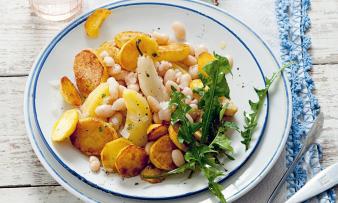
Mung beans (1240 mg/100 g), kidney beans (1230), lentils (1220) or white beans (1200) are further examples of pulses.
Other examples of seeds and nuts containing this amino acid include raw pistachios (1200 mg/100 g), cashews (1090 mg), sesame seeds (990 mg), almonds (855 mg), and walnuts (750 mg). Significant amounts of this amino acid are also found in certain pseudocereals such as amaranth (680 mg), quinoa (590 mg), and millet (580 mg).1
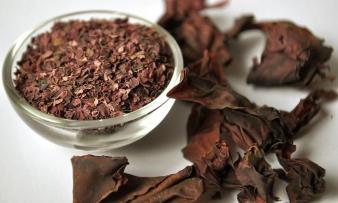
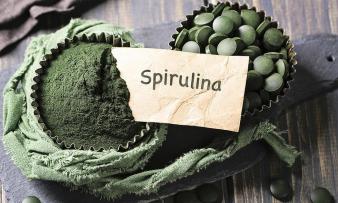
Some major sources of valine, such as dried dulse (3900 mg), spirulina (3512 mg), dried parsley (2021 mg, fresh 170 mg), mustard powder (1500 mg), or black mustard (1400 mg), as well as many spices, are consumed in quantities too small to be considered adequate for human consumption, which is why we have not included them in the table.
Soybeans and hemp seeds contain about twice the amount of valine found in meat or fish, while pumpkin seeds and lupin flour have about one and a half times as much. Other good vegan sources, such as beans, lentils, sunflower seeds, pistachios, and flaxseeds, contain roughly the same amount of valine. Eggs contain less, and cow's milk only 200 mg of valine (cow's milk from Alto Casertano contains 210 mg).1,16
Storage and Preparation Losses
Heating food denatures proteins, thus altering their properties. A fried egg is one example; it denatures due to the heat in the pan. When an egg is heated, the liquid yolk and the egg white, the main protein source, solidify. The proteins in the egg thicken, a process known as "coagulation" or "flocculation". The egg white coagulates at 60 °C, the yolk at 65 °C, and complete coagulation occurs at 70 °C.
The oxidation of an amino acid by reactive oxygen species can significantly affect its function.
Nutrition - Health
Branched-chain amino acids (BCAAs), consisting of valine, leucine, and isoleucine, are essential amino acids that perform various functions in the body. They serve as building blocks for protein synthesis and energy production, can exert various signaling functions via the mTOR signaling pathway, and are an important nitrogen source for the synthesis of other amino acids such as glutamate, glutamine, alanine, and aspartate.
Our bodies cannot produce (synthesize) BCAAs themselves, but require them in certain amounts to maintain growth and nitrogen balance. Approximately 35% of essential muscle proteins and 40 % of all amino acids required by mammals consist of these BCAAs.7,12
It is now known that the body irreversibly transaminates only lysine and threonine, and that only these two are truly essential. Vegans tend to have slightly above-average levels of valine. Specific dietary habits, such as those of fruitarians (fruitarians, fructans, frugans) or the 80/10/10 (high-carb) diet, and even more extreme diets, can lead to deficiencies over time. This often occurs over a long period without any immediately noticeable symptoms.
The WHO specifies an average daily requirement of 26 mg/kg body weight.6
However, the minimum requirement for valine, including a 30 % surcharge for individual fluctuations, is as follows:Scientific tables Geigy, Vol. 2, p. 232 state only 14 mg/kg body weight. For a person weighing 75 kg, this would be 1,05 g/day.
The German Federal Institute for Risk Assessment (BfR) states that adults can tolerate up to 2.0 g of isolated valine (alone or in combination) per day in addition to normal food intake.10
Deficiency symptoms
A valine deficiency is possible with insufficient dietary intake over a prolonged period. A natural vegan diet more than adequately covers valine requirements, and increased physical activity naturally leads to increased food intake. Infants are particularly at risk if they are weaned from breast milk too early and receive inappropriate nutrition.
However, valine deficiency can also affect groups of people who have one or more risk factors, such as prolonged physical and mental stress, liver diseases, chronic inflammatory bowel diseases, or extreme sports.
A deficiency first manifests itself as a general decline in physical and mental performance, hormonal fluctuations, and susceptibility to illness. The diseases kwashiorkor and marasmus, which arise from very prolonged protein and general energy deficiency, are now rarely found in the Western world.7
Valinemia can also be genetic. It is a rare metabolic disorder characterized by high levels of the amino acid valine in the blood and urine. Infants with valinemia often experience loss of appetite, vomiting, and growth problems. The condition can be life-threatening and may also cause low muscle tone, excessive sleepiness, hyperactivity, and developmental delay. Valinemia results from a deficiency of the enzyme valine transaminase, which breaks down valine. It is inherited in an autosomal recessive manner, and the gene responsible for the disorder is not yet known.
Overdose
BCAAs are normally ingested along with other amino acids through food. An overdose through diet alone is hardly possible. However, they can be extracted from this natural combination and consumed individually or in combination, for example, through specific dietary supplements. Higher amounts of isolated BCAAs are associated with potential health risks, such as elevated blood ammonia levels. Valine is often found in energy drinks.10
In cases of impaired kidney function, a low-protein diet is recommended to avoid increased production and accumulation of urea in the kidneys due to amino acid breakdown.
The book * The China Study* impressively demonstrates, with strong evidence, that we normally suffer from an excess rather than a deficiency of protein (see detailed book review):Only in recent years have scientists discovered that animal protein, which was considered the best protein quality (biological value), does not produce the best health, but the opposite.
Functions in the body
Valine has the following functions in the body:5,9,10,14
Like all amino acids, valine has an important function in protein biosynthesis.
By stimulating insulin release, valine not only regulates blood sugar but also ensures rapid absorption of all amino acids into the muscles and liver.
Valine can be used to generate energy when consuming a protein-rich diet or when mobilizing the body's own protein reserves.
Valine, like the other two branched-chain amino acids, leucine and isoleucine, serves to nourish muscles. This is important during prolonged exertion or periods of starvation, when the body needs to draw on its own reserves. The breakdown of valine yields propionyl-CoA, which, after conversion to succinyl-CoA, contributes to replenishing the citric acid cycle.
In the central nervous system, valine also acts as an important precursor to neurotransmitters.
Valine can promote the release of the growth hormone somatotropin (STH). This, in turn, is not only important for linear growth during puberty, but also promotes amino acid utilization in muscles, liver, and bones. At the same time, somatotropin stimulates fat breakdown.
Valine regulates metabolism, intestinal health, immunity, and diseases in humans.
Absorption and Metabolism
The metabolism of BCAAs occurs in two main steps, which differ in intensity between muscle and liver. In the first step, BCAAs undergo reversible transamination to their corresponding α-keto acids in muscle. For complete breakdown of the BCAAs, the α-keto acids must reach the liver, where they undergo further oxidation.
In the second step, irreversible oxidative decarboxylation occurs via the branched-chain keto-dehydrogenase complex. Enzyme activity is high in the liver, kidneys, and brain in humans, and low in skeletal muscle, intestines, and adipose tissue. Further degradation results in the formation of succinyl-coenzyme A from valine. In this process, valine acts as a gluconeogenic amino acid.9,10,11
Endurance training has various effects on energy consumption and the breakdown of proteins and amino acids in the body. After a protein-rich meal, BCAAs are the first amino acids to enter the bloodstream and muscles. The body can utilize them directly in the skeletal muscles.13
Storage - Consumption - Losses
Proteins are subject to constant synthesis and breakdown. 70-80 % of free amino acids are found in skeletal muscle, a smaller proportion in blood plasma. Although valine is present only in small amounts, it is contained in almost every protein. The valine content is particularly high in muscle tissue.5
Structure
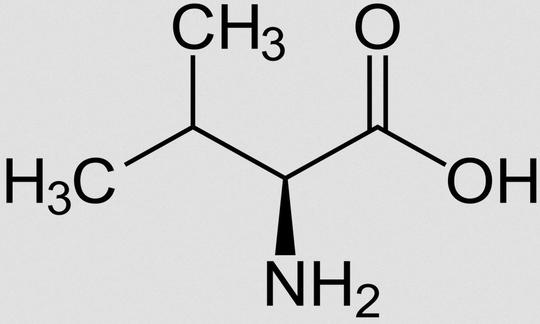
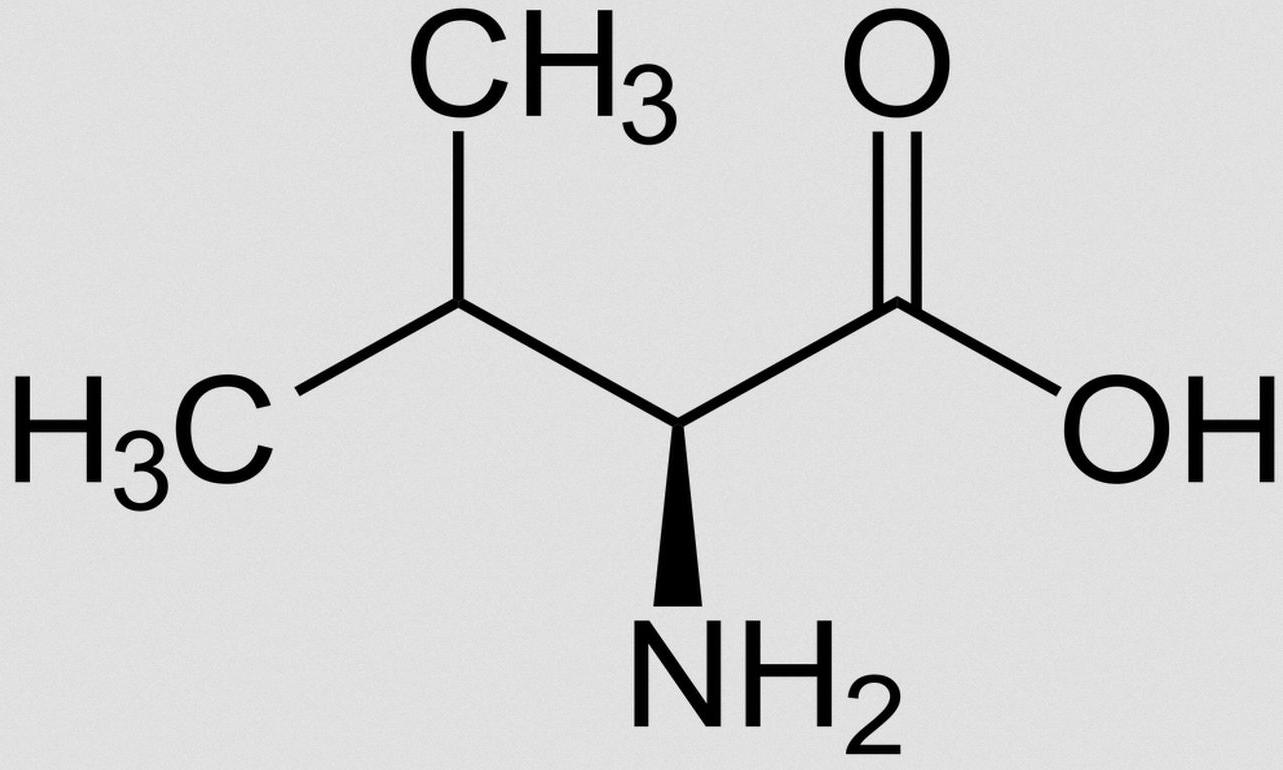
Valine is derived from isovaleric acid by substitution of the α-hydrogen atom with an amino group (–NH2). Along with leucine and isoleucine, valine belongs to the branched-chain and hydrophobic amino acids due to its structure. They are important components of muscle proteins.
Other names for valine are 2-amino-3-methylbutanoic acid and 2-aminoisovaleric acid. Its molecular formula is C5H11NO2, and its abbreviations are Val and V (one-letter code).


Comments