This page was translated through Google Translator
Threonine (Thr, T, irreversibly transaminated)
Threonine is not only important for building proteins like collagen, but also contributes to fat burning and a healthy metabolism. Curious how else this essential amino acid can support your health? Read on to find out more.
We provide science-based information on health, nutrition, and sustainability — independent of sponsors, the food industry, and dietary supplement manufacturers. Find out more: our mission.
A balanced, plant-based diet with few to no industrially processed foods generally provides sufficient macro- and micronutrients, with the exception of vitamin B12. However,phytochemicalsare particularly relevant for maintaining health and healing, even though they are not considered essential nutrients – apart from vitamins.
---
Definition
Threonine (Thr, T) is one of eight (ten in children, including histidine and arginine) amino acids considered essential (non-dispensable) for the human body. Humans use 21 proteinogenic amino acids, which are the building blocks of proteins. Except for two (lysine and threonine), the body can adapt protein production to its needs, even though eight are traditionally considered essential.
Occurrence
Threonine is particularly abundant in legumes, nuts and seeds (kernels).
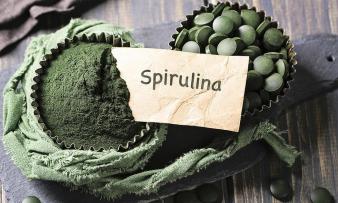
Some important sources of threonine, such as spirulina (3000 mg/100 g), dried parsley (1193, fresh 122), mustard seeds (1077), black mustard (960) or mustard powder (838), as well as many spices, are eaten in quantities that are too small, which is why we do not include them in the table.
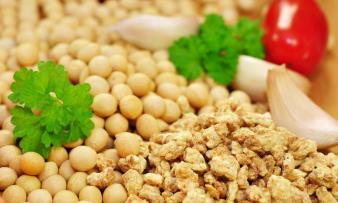
Soybeans contain about twice the amount of threonine as meat (raw beef 884 mg) or fish (raw salmon 860 mg), while virtually all beans, as well as many seeds and nuts, provide about the same amount or more threonine. Eggs (556 mg) contain almost half the threonine of meat, while cow's milk contains only 134 mg of threonine.1
Many grains have a low content of an essential amino acid. Nevertheless, a vegan would have to follow a very unbalanced diet to suffer a persistent protein deficiency that could lead to marasmus or kwashiorkor (starvation belly).
Storage and Preparation Losses
Heating food denatures proteins, thus altering their properties. A fried egg is one example; it denatures due to the heat in the pan. When an egg is heated, the liquid yolk and the egg white, the main protein source, solidify. The proteins in the egg thicken, a process known as "coagulation" or "flocculation". The egg white coagulates at 60 °C, the yolk at 65 °C, and complete coagulation occurs at 70 °C.
The oxidation of an amino acid by reactive oxygen species can significantly affect its function.
Nutrition - Health
L-Threonine serves as a precursor for the amino acids glycine and serine. It controls fat accumulation in the liver and acts as a lipotropic agent. It protects against neurological dysfunction and helps with digestive disorders and intestinal discomfort. Threonine also prevents excessive liver fat and generally improves nutrient absorption.10
Threonine is one of the essential amino acids. Essential amino acids are those that our body either cannot synthesize or cannot synthesize in sufficient quantities to maintain growth and nitrogen balance.7
It is now known that the body irreversibly transaminates only lysine and threonine, and that only these two are truly essential. Vegans obtain approximately twice the required amount of threonine.
Specific eating habits, such as those of fruitarians (fruitarians, fructarians, fruganians) or the 80/10/10 (high-carb diet) and even more extreme diets, can lead to deficiencies over time. This often occurs over a long period without directly noticeable symptoms.
The WHO specifies an average daily requirement of 15 mg/kg body weight.6
However, according to scientific tables Geigy, Vol. 2, p. 232, the minimum requirement for threonine, including a 30 % allowance for individual variations, is only 8 mg/kg body weight. For a person weighing 75 kg, this would be 0,6 g/day.
Deficiency symptoms
A threonine deficiency is possible with insufficient dietary intake over a prolonged period. A natural vegan diet more than adequately covers threonine needs, and increased muscle activity naturally leads to increased food intake. Infants are particularly at risk if they are weaned from breast milk too early and receive inappropriate nutrition.
Prolonged threonine deficiency can lead to fatigue and lethargy. During childhood, a threonine deficiency can also result in delayed bone growth. The diseases kwashiorkor and marasmus, which arise from very prolonged protein and general energy deficiency, are now rarely seen in the Western world. Milder deficiencies can lead to a loss of lean body mass in adults.
Oversupply
Threonine oversupply only occurs when the amino acid is ingested in large quantities. This is hardly possible through diet alone. Therefore, it essentially only affects people who ingest threonine in isolation via supplements or who overdose on it.
If dietary supplements lead to a significant excess of threonine, the body produces too much uric acid. In extreme cases, high uric acid levels in the blood, especially when combined with insufficient fluid intake, can cause gout.
An increase in blood threonine concentration could also lead to an accumulation of threonine and glycine in the brain. This accumulation disrupts the balance of neurotransmitters and can affect brain development in babies. Therefore, excessive threonine intake should be avoided in infant nutrition.10
In cases of impaired kidney function, a low-protein diet is recommended to avoid increased production and accumulation of urea in the kidneys due to amino acid breakdown.
The book * The China Study * impressively demonstrates, with good evidence, that we normally suffer from too much protein, not a lack of it (see detailed book review):Only in the last few years have scientists discovered that animal protein, which was considered to be the best protein quality (biological value), does not produce the best health, but the opposite.
Functions in the body
Threonine has the following functions in the body:2,5,10
Threonine is an important component of many proteins, such as tooth enamel, collagen, and elastin. Mucins are also rich in threonine. These glycoproteins are important components of all mucous membranes.
Threonine is also an important building block of antibodies. Here, it is glycosylated with sugar residues, which is particularly crucial for the correct function of the antibodies.
Threonine is a polar amino acid that, due to its hydroxyl group, is capable of phosphorylation in enzymes. Therefore, it is frequently a component of enzymes.
Threonine also plays an important role in the formation of the amino acid and neurotransmitter glycine. Glycine is a breakdown product of threonine.
Threonine is crucial for the growth and metabolism of uric acid.
It is an important amino acid for the nervous system. Threonine also plays a vital role in porphyrin and fat metabolism and prevents fat deposits in the liver.
Threonine is useful for intestinal problems and digestive disorders, and also serves to relieve anxiety and mild depression.
Absorption and Metabolism
The digestion of ingested proteins begins in the stomach with the action of pepsin. Pepsins break down the proteins into peptides. Further breakdown into individual amino acids occurs in the small intestine through the action of peptidases. Cellular uptake is facilitated by various carrier proteins, each specific to a particular amino acid group.5
In mammals, there are two main pathways for the degradation of L-threonine. Either, threonine dehydratase (TDH) breaks down threonine into NH₄⁺ and 2-ketobutyrate, which is rapidly and irreversibly converted to CO₂. Or threonine dehydrogenase (TDG) breaks down threonine to 2-amino-3-ketobutyrate, which is mainly cleaved into glycine and acetyl-CoA by 2-amino-ketobutyrate-CoA ligase.
For threonine to work optimally in the body, magnesium, niacin and vitamin B6 must also be present in sufficient quantities.
Storage - Consumption - Losses
Proteins are subject to constant synthesis and breakdown. 70-80 % of free amino acids are found in skeletal muscle, a smaller proportion in blood plasma. The liver is the central organ for amino acid regulation.5
Structure
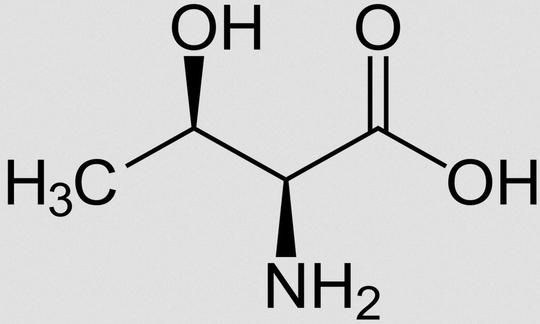
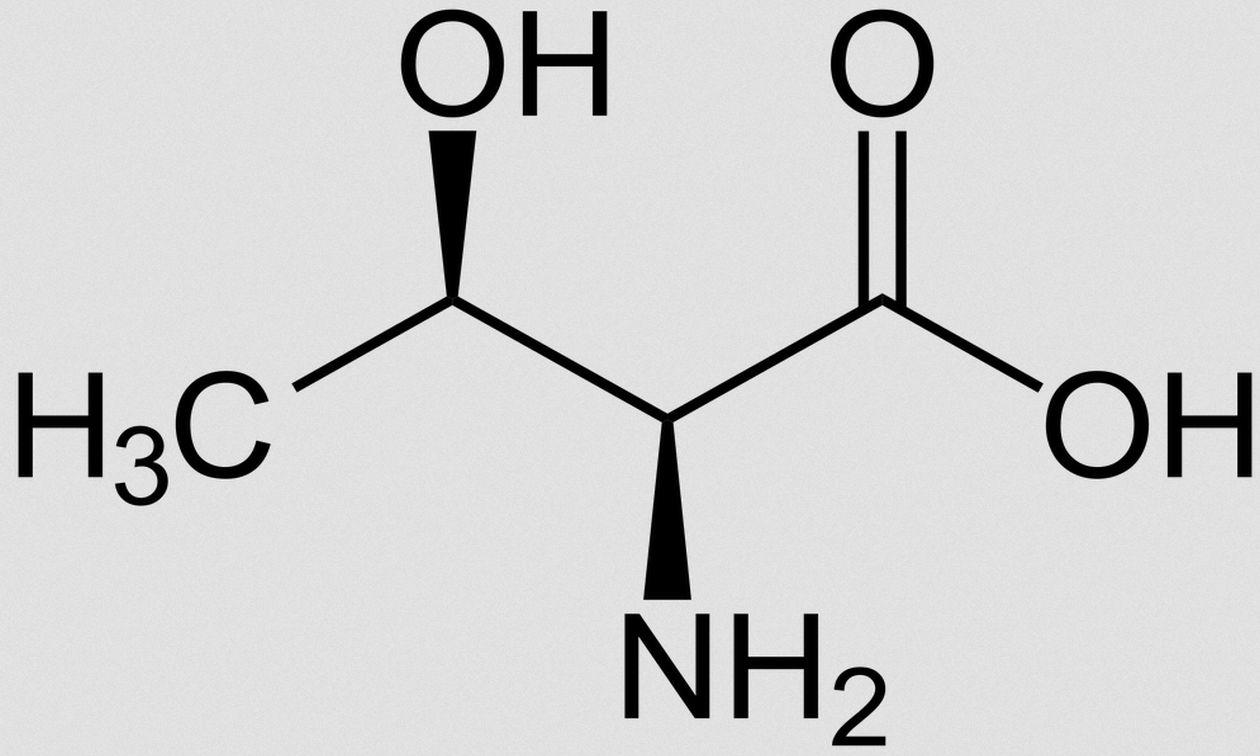
According to the new standard, L-threonine is classified as a polar amino acid. Its hydroxyl group can be phosphorylated and thus plays a role in enzyme regulation. In fish, antifreeze proteins consist almost exclusively of L-alanine and L-threonine. Threonine has a hydroxyl group. Therefore, it is more reactive than valine.
Other names for threonine are (2S,3R)-2-amino-3-hydroxybutanoic acid and the molecular formula C4H9NO3.The abbreviations for threonine are Thr and T (one-letter code).10



Comments