This page was translated through Google Translator
Leucine (Leu, L)
Leucine promotes muscle growth and regulates energy metabolism. Learn about the other functions of leucine and why walnuts are among the best natural sources of this essential amino acid.
We provide science-based information on health, nutrition, and sustainability — independent of sponsors, the food industry, and dietary supplement manufacturers. Find out more: our mission.
A balanced, plant-based diet with few to no industrially processed foods generally provides sufficient macro- and micronutrients, with the exception of vitamin B12. However,phytochemicalsare particularly relevant for maintaining health and healing, even though they are not considered essential nutrients – apart from vitamins.
---
Definition
Leucine (Leu, L) is one of eight (ten in children, including histidine and arginine) amino acids considered essential (non-dispensable) for the human body. Humans use 21 proteinogenic amino acids. These are the building blocks of proteins. With the exception of two (lysine and threonine), the body can adapt protein production to its needs, even though eight are traditionally considered essential.
Occurrence
Legumes, nuts and whole grains are particularly rich in leucine.
Whole-grain cornmeal (850 mg/100 g) and rice (590 mg/100 g) are also high in leucine. Vegetables such as spinach (200 mg/100 g), Brussels sprouts (150 mg/100 g), and broccoli (130 mg/100 g), as well as fruits, also contain leucine. Kidney beans and lentils surpass meat and fish in their leucine content, while cow's milk, with 3,25 % fat, contains only 333 mg/100 g of leucine.1
It would be wrong to consider only ONE criterion when it comes to food, which is why we are providing these two recommendations:
Walnuts are an excellent source of leucine. Their optimal 4:1 ratio of omega-6 to omega-3 fatty acids makes them particularly healthy, as a balanced fatty acid ratio improves nutrient absorption and reduces inflammation.
Millet not only provides all eight essential amino acids, but is also rich in manganese and phosphorus and an excellent source of fiber. Therefore, millet is one of the best natural sources of leucine.
A vegan would have to eat a very unbalanced diet to suffer from a persistent protein deficiency.
Storage and Preparation Losses
Heating food denatures proteins, thus altering their properties. A fried egg is one example; it denatures due to the heat in the pan. When an egg is heated, the liquid yolk and the egg white, the main protein source, solidify. The proteins in the egg thicken, a process known as "coagulation" or "flocculation." The egg white coagulates at 60 °C, the yolk at 65 °C, and complete coagulation occurs at 70 °C.
The oxidation of an amino acid by reactive oxygen species can significantly affect its function.
Nutrition - Health
Branched-chain amino acids (BCAAs), consisting of leucine, isoleucine, and valine, are essential amino acids. They play an important role in various bodily processes, such as regulating energy metabolism, gut health, immunity, and disease in both humans and animals.6
Our bodies cannot produce (synthesize) BCAAs themselves, but require them in certain amounts to maintain growth and nitrogen balance. Approximately 35% of essential muscle proteins and 40% of all amino acids required by mammals consist of these BCAAs. Leucine activates the mTOR signaling pathway, thereby promoting protein synthesis in skeletal muscle, adipose tissue, and placental cells. Simultaneously, it inhibits protein breakdown.7,8
It is now known that the body irreversibly transaminates only lysine and threonine, and that only these two are truly essential. Specific dietary habits, such as those of fruitarians (fruitarians, fructans, frugans) or the 80/10/10 (high-carb) diet, and even more extreme diets, can lead to deficiencies over time. This often occurs over a long period without any directly noticeable symptoms.
According to the WHO, the average daily requirement for healthy adults is 39 mg of leucine per kilogram of body weight.4 However, the minimum requirement, including a 30 % allowance for individual variations, is only 16 mg/kg of body weight according to scientific tables (Geigy, Vol. 2, p. 232). For a person weighing 75 kg, this would be 1,2 g/day.
The German Federal Institute for Risk Assessment (BfR) states that adults can tolerate up to 4,0 g of isolated leucine (alone or in combination) per day in addition to normal food intake. Current study results also suggest that branched-chain amino acids should not be taken individually, but rather in combination. Furthermore, the BfR recommends that children, adolescents, pregnant women, and breastfeeding mothers avoid isolated intakes of branched-chain amino acids from dietary supplements or sports nutrition products.
Deficiency symptoms
A deficiency is possible with insufficient dietary intake over a long period or with an inadequate supply of vitamin B6 (pyridoxine) and is accompanied by lethargy and fatigue. A natural vegan diet more than adequately covers leucine requirements, and increased muscle activity also leads to increased food intake. Other deficiencies can lead to stunted growth in children and a loss of lean body mass in adults.7
Infants are particularly at risk if they are weaned from breast milk too early and receive inappropriate nutrition. The diseases kwashiorkor and marasmus, which arise from very prolonged protein and general energy deficiency, are now rarely seen in the Western world.7
Oversupply
Elevated leucine levels do not occur with a balanced diet. Because leucine supports muscle growth and regulates fat burning, athletes also take this amino acid as a supplement. High doses of leucine from additional supplement intake can hinder the transport of important amino acids to the brain and lead to impaired protein synthesis. Nausea, vomiting, diarrhea, and abdominal pain may occur.
In cases of impaired kidney function, a low-protein diet is recommended to prevent increased production and accumulation of urea in the kidneys due to amino acid breakdown. The book * The China Study* vividly illustrates, with strong evidence, that we typically suffer from an excess, not a deficiency, of protein (see detailed book review):Only in recent years have scientists discovered that animal protein, previously considered the highest quality protein (biological value), does not promote optimal health, but rather the opposite.
Functions in the body
Leucine has the following functions in the body:2,3
Leucine is an important component of muscle proteins and is involved in the building of new tissues.
Leucine stimulates the release of insulin from the pancreas. In this way, leucine also regulates blood sugar levels and accelerates the uptake of amino acids into muscle cells. This also has positive effects on muscle growth and additionally reduces the release of the stress hormone cortisol.
Leucine also promotes the healing of liver, joint, and muscle tissue diseases. In children and adolescents, the amino acid has a positive effect on the release of the growth hormone somatotropin.
In times of increased need, such as during fasting or extreme physical exertion, free leucine is quickly available for energy production. This provision of energy reserves prevents an excessive drop in glucose levels. As a result, the brain and muscles continue to have sufficient glucose available for emergencies.
Absorption and Metabolism
The metabolism of BCAAs occurs in two main steps, which differ in intensity between muscle and liver. In the first step, BCAAs undergo reversible transamination to their corresponding α-keto acids in muscle. For complete breakdown of the BCAAs, the α-keto acids must reach the liver, where they undergo further oxidation.
In the second step, irreversible oxidative decarboxylation occurs via the branched-chain keto-dehydrogenase complex. Enzyme activity is high in the liver, kidneys, and brain in humans, and low in skeletal muscle, intestines, and adipose tissue. Further breakdown of leucine yields acetyl-CoA and acetoacetate. In this process, leucine acts as a ketogenic amino acid.9,11
During initial transamination, glutamic acid is formed by the transfer of the nitrogen group to α-ketoglutarate. Besides protein synthesis and serving as an energy substrate, BCAAs act as nitrogen donors in the brain and peripheral tissues. Thus, BCAAs, especially leucine, are important nitrogen sources for the synthesis of the neurotransmitters glutamate and γ-aminobutyric acid in the brain.9,11
The absorption of leucine depends on a sufficient vitamin B6 level.
Storage - Consumption - Losses:
The main source of BCAAs is the diet, while synthesis by the gut microbiota accounts for only a small portion. BCAAs from food or protein breakdown enter the bloodstream and from there reach the tissues. There, they oxidize or are incorporated into new proteins.
BCAAs are lost primarily through oxidative degradation, while very little is lost via urine.13
Structure
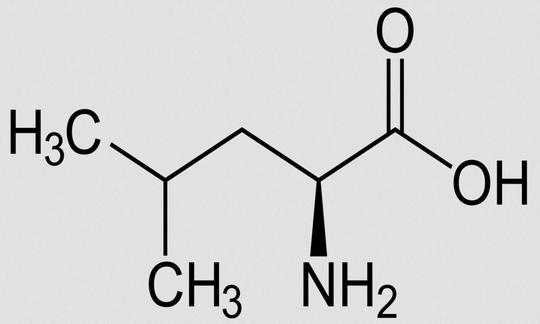
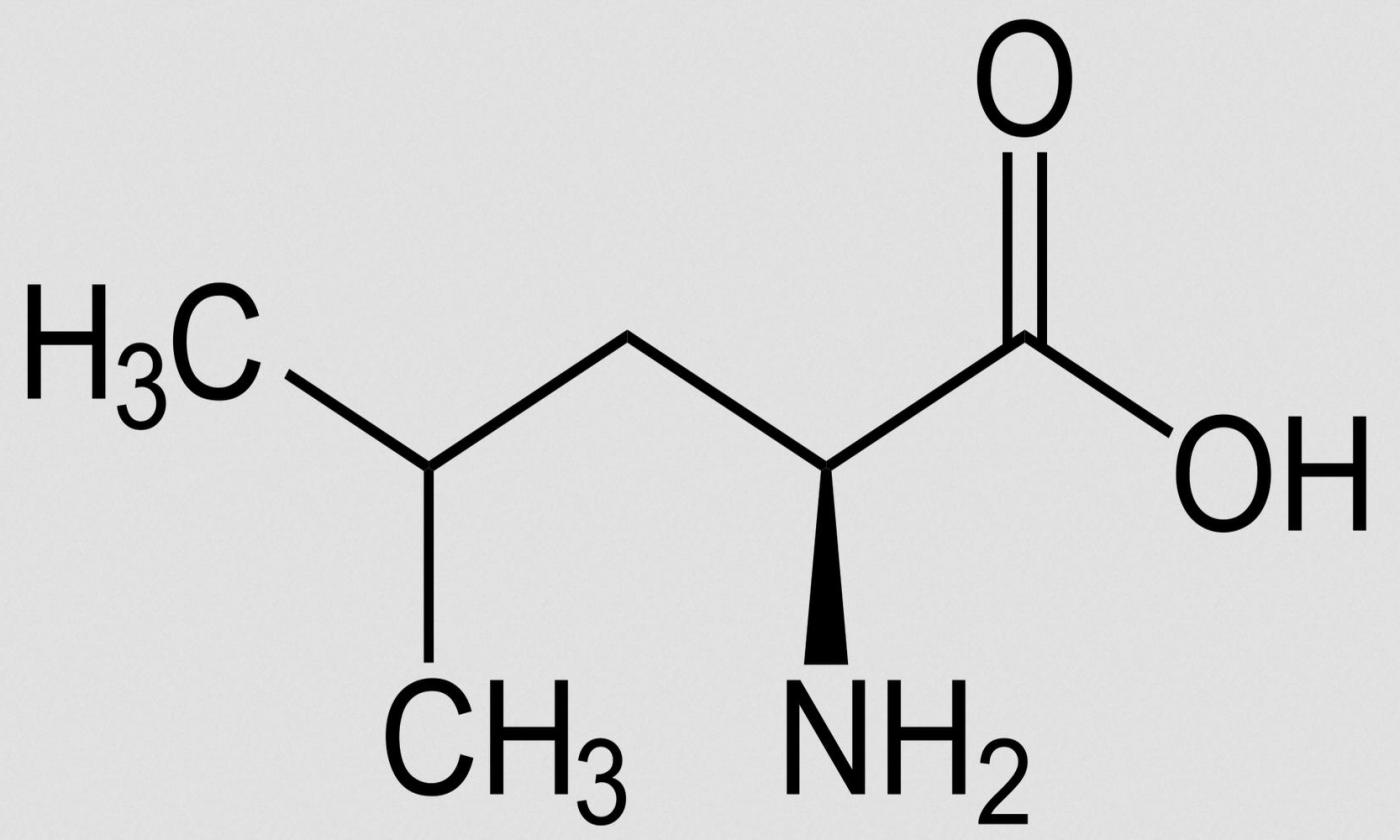
Leucine, abbreviated Leu or L, is a proteinogenic α-amino acid with a hydrophobic side chain. The term leucine refers to the group of four isomeric amino acids: leucine, isoleucine, tert-leucine, and norleucine. See also non-proteinogenic amino acids.
Other names for leucine: 2-Amino-4-methylpentanoicacid. Molecular formula: C6H13NO2. Abbreviations: Leu, L (one-letter code).12





Comments