This page was translated through Google Translator
Magnesium, Mg
Magnesium is crucial for functions such as muscle contraction, blood pressure regulation, and energy production. Which foods provide sufficient magnesium, and which preparation methods are optimal? Learn about the risks of a deficiency and how to reliably meet your magnesium needs.
We provide science-based information on health, nutrition, and sustainability — independent of sponsors, the food industry, and dietary supplement manufacturers. Find out more: our mission.
A balanced, plant-based diet with few to no industrially processed foods generally provides sufficient macro- and micronutrients, with the exception of vitamin B12. However,phytochemicalsare particularly relevant for maintaining health and healing, even though they are not considered essential nutrients – apart from vitamins.
---
Definition
Magnesium (Mg) is an essential electrolyte for living organisms and the fourth most abundant mineral in the human body and the eighth most abundant element in the Earth's crust.7
Occurrences
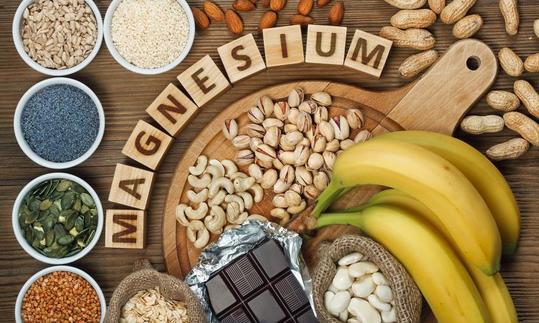
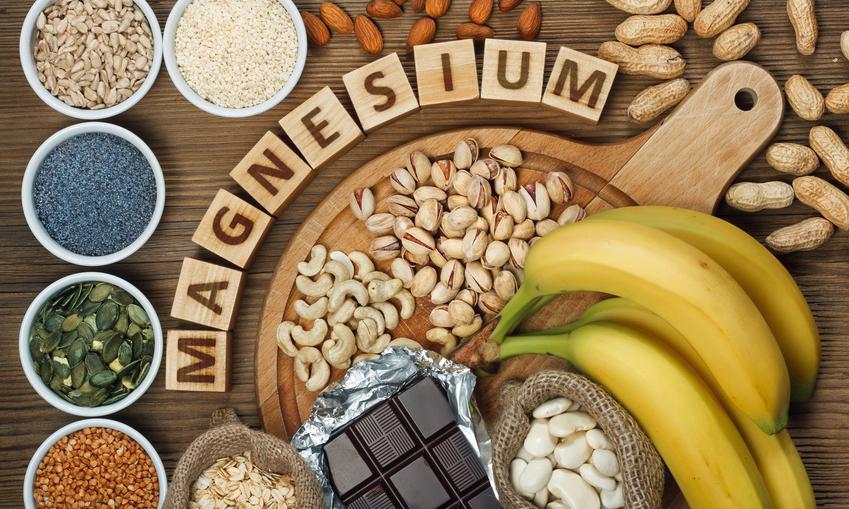
Sources of magnesium: Good sources of magnesium include seeds and nuts such as hemp seeds (700 mg/100 g), flax seeds (392 mg), sesameseeds (351 mg), sunflower seeds (325 mg), cashews (292 mg), almonds (270 mg), and hazelnuts (163 mg). Whole grains, legumes, and green vegetables such as buckwheat (231 mg), quinoa (197 mg), mung beans (189 mg), Swiss chard (81 mg), and spinach (79 mg) also contain significant amounts of magnesium.
Water accounts for about 10 % of daily magnesium intake. Chlorophyll, and therefore green vegetables, are the main sources of magnesium.7
Storage and preparation losses
Processing techniques such as bleaching grains and boiling vegetables can lead to a loss of up to 80 % of the magnesium content. Magnesium is also lost to the cooking water during boiling. Therefore, steaming should be done for the shortest possible time, and the cooking water should not be discarded.
Nutrition - Health
Magnesium is required for DNA and RNA synthesis, reproduction, and protein synthesis. Furthermore, magnesium is essential for regulating muscle contraction, blood pressure, insulin metabolism, cardiac excitability, vasomotor tone, nerve transmission, and neuromuscular conduction.7
The recommended intake (DA-CH reference values) for a healthy adult is 300–350 mg/day. For males between 15 and 25 years of age, it is between 350 and 400 mg/day. During breastfeeding, the body loses some magnesium through breast milk. However, the requirement does not increase during pregnancy.2,8
Deficiency symptoms
Severe deficiencies occur in cases of impaired kidney function, prolonged diarrhea, chronic inflammatory bowel disease, poorly controlled diabetes mellitus, corticosteroids, certain diuretics (water pills), or alcoholism with malnutrition.9,10,11
Due to their high bioavailability, organically bound magnesium salts such as magnesium citrate, gluconate, orotate, or aspartate are recommended for the treatment of magnesium deficiency.7
Oversupply
An excess of magnesium from food does not usually pose a health risk, as the body excretes the excess amount in urine. However, high doses from supplements or medications can cause diarrhea, nausea, and abdominal cramps. Magnesium carbonate, chloride, gluconate, and oxide are particularly common in causing diarrhea. Toxic hypermagnesemia occurs only with oral doses exceeding 2500 mg/day, which is more than ten times the UL (Tolerable Upper Intake Level).12
Functions in the body
Magnesium is an essential cofactor for over 300 enzymatic reactions of intermediary metabolism, especially for ATP- and nucleic acid-binding enzymes.
Magnesium is involved in the following intra- and extracellular processes:1,2,4
Neuromuscular excitation conduction and propagation as well as muscle contraction (physiological calcium antagonist)
Stabilization of biological membranes and influencing cell adhesion
platelet aggregation
Modulation of ion pumps or channels (e.g. potassium channels in heart muscle cells)
Energy generation and supply
Storage and release of hormones and neurotransmitters. Magnesium inhibits both the function of parathyroid hormone and the release of adrenaline and noradrenaline. With decreasing serum magnesium levels, stress sensitivity increases due to the increased release of the stress hormones adrenaline and noradrenaline.
Mineralization and growth of bones.
Absorption and Metabolism
Magnesium absorption takes place in the upper small intestine, but also in the rest of the digestive tract. Under normal conditions, the absorption rate is between 35 and 55 %. Absorption occurs through both passive diffusion and a carrier-mediated process. When magnesium is abundant, this transport mechanism becomes saturated, and the percentage of magnesium absorbed decreases. Conversely, low magnesium intake or a magnesium deficiency results in increased intestinal absorption.1
Absorption or bioavailability of the mineral depends on numerous factors, such as the composition of the food, interaction with other elements, fluid intake and age.
Storage - Consumption - Losses
The total amount of magnesium in the body varies between 20 and 28 g. Approximately 99 % of total body magnesium is located in the intracellular space, primarily in bones (50-65 %) and in muscles, soft tissues, and organs (34-39 %). Less than 1-2 % of magnesium is found in the blood and extracellular fluids. Only ionized, or free, magnesium is biologically active.
The body maintains a very narrow range of free extracellular magnesium concentration by adjusting absorption, excretion, and exchange with skeletal stores through a complex hormonal regulatory system. Parathyroid hormone and calcitriol (the metabolically active form of vitamin D) stimulate magnesium reabsorption and inhibit renal (via the kidneys) magnesium excretion.
Excess magnesium causes the thyroid gland to synthesize and release increased amounts of calcitonin. Calcitonin, a peptide hormone, stimulates renal magnesium excretion, thereby lowering the extracellular magnesium concentration. Calcitonin is a direct antagonist of parathyroid hormone. In addition to calcitonin, other hormones and a high calcium intake can reduce the renal reabsorption of magnesium.1,2,4,5,12
The kidneys reabsorb approximately 95 % of the filtered magnesium, making it available to the body again.13
Structures
Because magnesium exhibits high chemical reactivity, it does not occur in nature in its elemental form, but exclusively in cationic compounds – for example as magnesite (MgCO₃), dolomite (MgCO₃ *Ca- CO₃), or magnesium chloride (MgCl₂).7







Comments