This page was translated through Google Translator
Vitamin C (ascorbic acid)
Vitamin C plays a key role in brain function and strengthens the immune system, especially against viral infections like the flu. How much vitamin C do you really need, and where can you find it in your diet? Find out in our article.
We provide science-based information on health, nutrition, and sustainability — independent of sponsors, the food industry, and dietary supplement manufacturers. Find out more: our mission.
A balanced, plant-based diet with few to no industrially processed foods generally provides sufficient macro- and micronutrients, with the exception of vitamin B12. However,phytochemicalsare particularly relevant for maintaining health and healing, even though they are not considered essential nutrients – apart from vitamins.
---
Definition
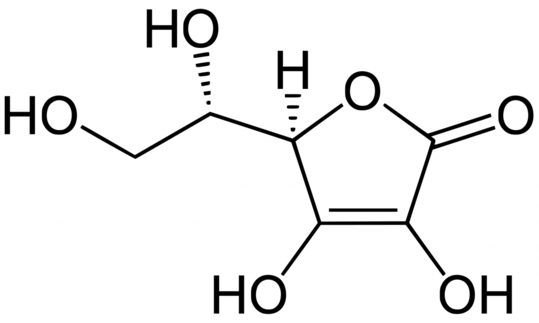
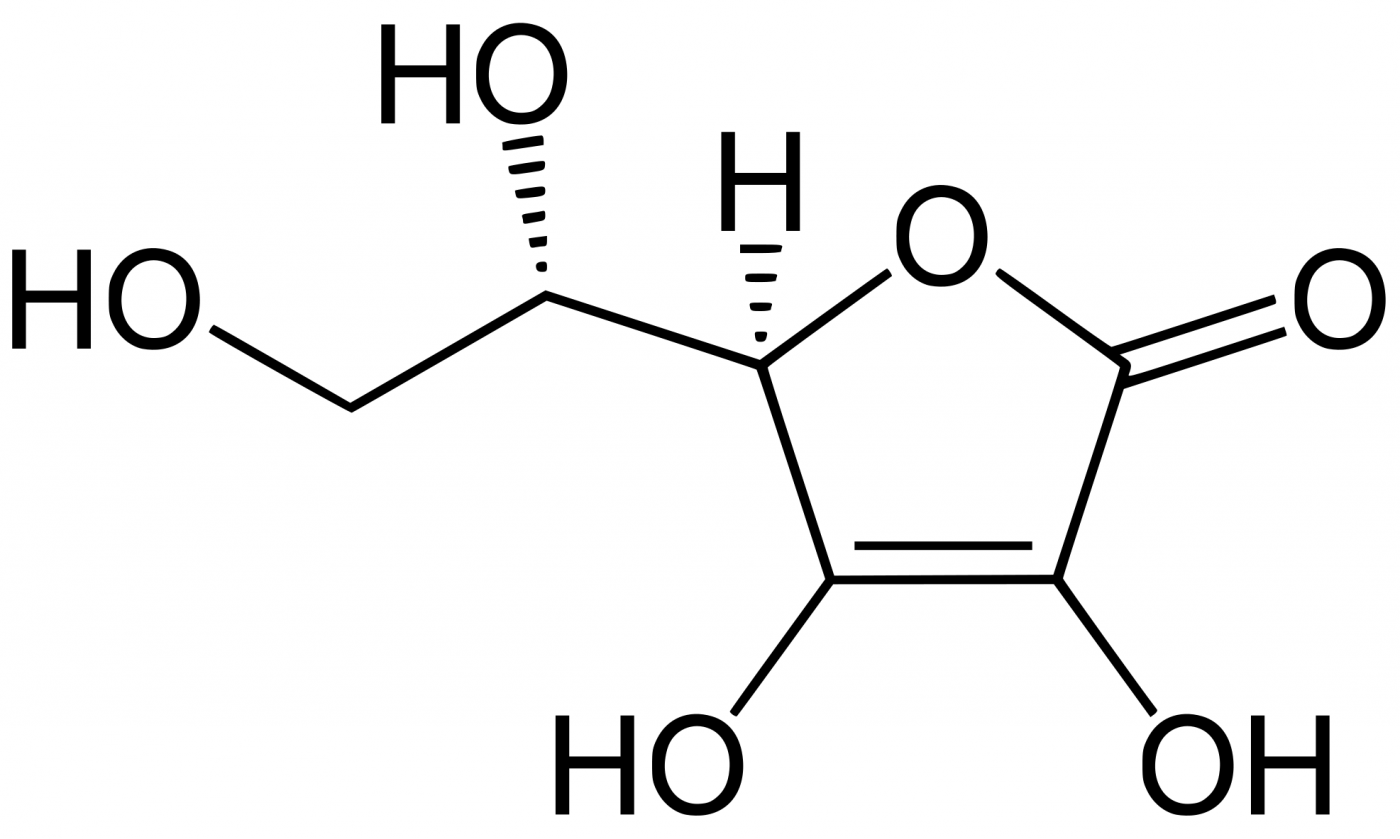
Vitamin C, also known as ascorbic acid, is a water-soluble vitamin that acts as an antioxidant and enzyme cofactor.9
Occurrence
Ascorbic acid is widespread in nature. The most important sources are vegetables and fruits:1,2
How much people cling to common misconceptions rather than facts is demonstrated by this list, where lemons are actually quite low on the list of vitamin C-rich foods. Scurvy was first discovered as a treatment using lemons. That's where the misconception comes from.
Even non-fiction books can be wrong: on the same page, raw cauliflower is listed as containing 69 mg, cooked cauliflower as 90 mg, and frozen cauliflower as 92 mg. Generally speaking, vitamin values for natural products are only guidelines and can vary considerably.
Meat, eggs, grains, milk and dairy products, as well as oils and fats, contain little to no vitamin C, with the exception of liver (42-53 mg).1,2,7 For example, milk contains 1.6 mg/100 g.6 Exceptions are products where vitamin C is added as a preservative, such as salami. However, some fruits and vegetables contain only around 3 to 5 mg, such as apples, pears, beets, figs, grapes, onions, beans, lentils, celery, seaweed, etc. Nuts do not provide much more, as vitamin C is water-soluble.
Storage and Preparation Losses
Vitamin C is stable in acidic foods, such as certain fruits, but sensitive to heat and oxygen. Overheating causes increased amounts of the vitamin to leach into the cooking water. Many vegetables contain ascorbic acid oxidase, which comes into contact with the vitamin, particularly when the vegetables are chopped, and oxidizes it. This leads to significant vitamin C losses, for example, in raw vegetables that are not eaten immediately.3,7
Rapid and thorough blanching (inactivating the vitamin C-degrading enzymes in the outermost layer) and rapid freezing keep losses relatively low. The more inactive, compact, and acidic the food, and the colder and more humid the environment, the less loss occurs.3
For example, frying potatoes results in losses of more than 50 % (46-58 %), baking/grilling 33-48 %, and boiling 13-38 %. Mushrooms lose 92 % of their weight when boiled, broccoli 52-59 %, and cauliflower 41-60 %, to name just a few examples.7
Nutrition - Health
Vitamin C is found in high concentrations in the brain and is an important micronutrient for brain function. Due to its high oxidizability, it acts as a reducing agent and antioxidant (free radical scavenger). Furthermore, this vitamin also accelerates the body's recovery from viral infections, such as malaria, influenza, and COVID-19. A weakened immune system, which can lead to serious illnesses, is thought to be associated with a vitamin C deficiency.3,9,10
The recommended daily intake of vitamin C is 100 mg for a healthy adult, 110 mg for pregnant women, and 150 mg for breastfeeding women and smokers. Other factors that increase the requirement include stress (physical and mental), excessive alcohol consumption, hemodialysis, medications (antibiotics), diabetes, and infections. The scurvy protection threshold is 15 mg per day, but when losses are (generously) factored in, this figure rises to 100 mg. Vegans who eat a natural diet cannot suffer from a vitamin C deficiency because even small amounts of such foods provide sufficient vitamin C.3,7
Deficiency symptoms
A suboptimal supply of vitamin C manifests itself in reduced performance, fatigue, lack of energy, delayed wound healing, bleeding gums, small red spots under the skin's surface, and increased susceptibility to infections.4
A complete lack of vitamin C leads to the disease scurvy. Scurvy was a common problem on long sea voyages in past centuries. Early signs include bleeding of the mucous membranes and muscle pain. Such deficiencies are extremely rare in developed countries. Milder deficiencies can occur in older people due to a poor diet or certain medications.
Oversupply
Ingesting 2 to 3 g of vitamin C per day can lead to diarrhea, as some of the non-absorbable vitamin remains in the intestines. Even 1 g of vitamin C can cause gastrointestinal disturbances. Excessive vitamin C intake can lead to elevated oxalate levels in the urine and increase the risk of kidney stone formation, particularly in individuals with high urinary calcium levels.7
Functions in the body
Two fundamental functions are known: ascorbic acid as a free radical scavenger and dehydroascorbic acid (DHA) as a cofactor in redox reactions.2,3,5
Ascorbic acid protects folic acid, vitamin E and LDL particles in the blood from oxidation and converts copper into usable forms for enzymes (e.g. the body's own antioxidant superoxide dismutase).
Vitamin C promotes the absorption of iron from plant-based foods by converting ferrous iron (Fe3+) into ferrous iron (Fe2+) in the stomach.
It inhibits the formation of carcinogenic nitrosamines from nitrite and amines in the stomach.
Furthermore, it inhibits the glycosylation of proteins, which may be important for the long-term prognosis of diabetes mellitus.
Furthermore, vitamin C is involved in the biosynthesis of collagen, the synthesis of carnitine (fat breakdown), bile acids (cholesterol breakdown) and cytochrome P450 (detoxification in the liver).
Vitamin C also plays a role in the production and regulation of stress hormones (adrenaline, noradrenaline, cortisol).
Absorption and Metabolism
Vitamin C absorption begins in the oral mucosa and takes place primarily in the upper small intestine. The body absorbs vitamin C in a dose-dependent manner. The absorption rate decreases with increasing individual doses. At a daily dose of 180 mg, the body absorbs 80 to 90 %. At a daily dose of 3000 mg , the absorption rate is still around 40 %.
While most vertebrates are able to synthesize vitamin C themselves, bony fish and anthropoid primates such as humans, great apes, and guinea pigs have lost this ability due to genetic mutation. They depend on an exogenous supply of the vitamin. In evolution, the loss of a function always occurs when animals, through their lifestyle, obtain the substance from nature in large quantities for many hundreds of thousands of years.
Most carnivores (predators, scavengers) must produce their own vitamin C. The inability to synthesize vitamin C is due to mutations in the L-gulono-γ-lactone oxidase (GLO) gene, which codes for the enzyme that catalyzes the final step of vitamin C biosynthesis.8
Storage - Consumption - Losses
In plasma, ascorbic acid is mostly free, but about a quarter is bound to proteins. The body cannot store large amounts at once and excretes excess ascorbic acid via the kidneys.3
Additional information for particularly interested readers
The name ascorbic acid is derived from the Latin name for the disease scurvy (scorbutus), with the negative prefix a- (away-, un-), thus the antiscorbutic acid. In the Age of Discovery, scurvy was often the leading cause of death among sailors. In 1754, the British naval surgeon James Lind was able to demonstrate that citrus fruits helped against scurvy. Besides lemon or lime juice, sailors also took sauerkraut and potatoes on board.
Vitamin C exists as ascorbic acid and its oxidized form, dehydroascorbic acid. The body can convert the oxidized form back into ascorbic acid with the help of glutathione. Ascorbic acid is an organic acid. Its salts are called ascorbates. The term vitamin C encompasses L- (+)-ascorbic acid and its derivatives with identical biological activity.





Comments