This page was translated through Google Translator
Vitamin B9, B11 (Folate, as the active form of folic acid)
Folic acid, also known as vitamin B9, is an essential vitamin that supports cell growth and the formation of red blood cells. Discover in our article why folic acid is important during pregnancy and where you can find it in your diet.
We provide science-based information on health, nutrition, and sustainability — independent of sponsors, the food industry, and dietary supplement manufacturers. Find out more: our mission.
A balanced, plant-based diet with few to no industrially processed foods generally provides sufficient macro- and micronutrients, with the exception of vitamin B12. However,phytochemicalsare particularly relevant for maintaining health and healing, even though they are not considered essential nutrients – apart from vitamins.
---
Definition
Folic acid, also known as vitamin B9, is a water-soluble B vitamin. It is an essential compound involved in many important biochemical processes in the human body, primarily in its ionic form. The term "folic acid" is derived (since 1941) from the Latin word "folium," meaning "leaf," because folic acid is abundant in green leaves, including grass.8,10
Occurrence
Important plant sources of folic acid include legumes, cruciferous vegetables, green leafy vegetables, and cereal products. Important animal sources include liver, kidney, and eggs. High values (µg folate/100g) are found in: 1,2
Folates are sensitive to oxygen, light, water, and heat. Storage (oxygen, light) causes changes that reduce their bioavailability. Further losses (10-70%) occur during cooking (heat, solubility). Considering that folate-rich foods are often consumed raw, preparation losses average 35%. Polyglutamate forms are more stable than monoglutamate. Among the derivatives, THF and methyl-THF are the least stable. 1,3
Nutrition - Health
Folic acid is involved in cell proliferation, the regulation of gene activity, the production of red and white blood cells, the renewal of skin and intestinal mucosa, and the synthesis of chemicals that influence brain function. It is available in both natural and synthetic forms. Folate is the anionic form of folic acid. 8
To address the differences in the utilization of natural folate and pure folic acid, folate equivalents were introduced. One µg folate equivalent corresponds to either 1 µg dietary folate or 0.5 µg synthetic folic acid.<sup> 4 </sup> To prevent megaloplastic anemia, a daily intake of at least 50 µg folic acid (pteroylmonoglutamate), equivalent to 100 µg dietary folate (pteroylpolyglutamate) or folate equivalents, is necessary. To maintain homocysteine levels below 12 µmol/L, a daily intake of 200 µg folate equivalents is required. After adding safety margins, the recommended daily intake for adults is 300 µg. 1
Risk groups
Due to the increased folate requirement during pregnancy (accelerated cell proliferation due to enlargement/development of the uterus, placenta, breast tissue, blood volume, and fetus), pregnant women are recommended to consume 550 µg/day. For breastfeeding mothers, the recommendation is 450 µg/day. Breast milk contains approximately 8 µg of folate per 100 ml. Therefore, breastfeeding mothers excrete about 60 µg of folate daily with a milk volume of 750 ml. 1
Deficiency symptoms
are classified into four stages: 6,7,9,10
Serum folate levels decline despite normal body storage
Decrease in folate levels in erythrocytes (<362 nmol/l): A level of at least 340 nmol/l is considered desirable to keep homocysteine levels below 12 µmol/l.
Impairment of erythropoiesis
Clinical folate deficiency (hyperchromic macrocytic anemia, megaloblastic anemia): Anemia develops after four months of a folic acid-free diet. Blood cell production is slowed and the number of red blood cells is reduced. However, these red blood cells are now larger than average (macrocytic). They are referred to as megaloblasts. These changes occur regardless of whether there is a folic acid or vitamin B12 deficiency. Symptoms include:
Tongue inflammation
Inflammation of the lip mucosa
Malabsorption
Sterility in both sexes
Neuropsychiatric damage, especially in older people (depression, spinal cord degeneration, polyneuropathy)
Fetal malformation (e.g., neural tube defect) or abortion in pregnant women
Folic acid deficiency is a far more common cause of megaloblastic anemia than vitamin B12 deficiency. The causes are varied:
Nutritional deficiency: A one-sided diet with little vegetables, little whole grain and a high proportion of industrially processed products.
Rapid tissue growth: During pregnancy (frequent consecutive pregnancies, pregnancies in or just after puberty), in childhood and in adolescents, the need for folic acid increases considerably.
Medications: Cytostatic drugs (such as methotrexate, which inhibit dihydrofolate reductase) and antibiotics (such as sulfonamides) can negatively affect folic acid status.
Smoke
High alcohol consumption
Chronic diseases such as psoriasis, inflammation, cancer.
Oversupply
No toxic effects are known from dietary intake. Caution is advised when supplementing: 1
Supplementing with folic acid in cases of vitamin B12 deficiency can worsen the neurological symptoms of the deficiency. Folic acid supports cell regeneration and promotes protein synthesis, which requires methionine. However, in cases of vitamin B12 deficiency, methionine is scarce. Therefore, the body diverts methionine from the brain (where it is necessary for myelin methylation) and uses it for protein synthesis in new cells.
In supplements, folic acid is predominantly present in its non-metabolic (unhydrogenated or oxidized) monoglutamate form (PteGlu 1). While this form is almost completely absorbable, enzymes (dihydrofolate reductase) still need to metabolize it (hydrogenate or reduce it). This can push the enzymes (dihydrofolate reductase) to their capacity limits. The consequences can include inhibition of natural killer cell activity.
High doses of folic acid could lead to a progression of tumor cells if administered after their initiation.
No acute side effects were observed with prolonged intake of 4 mg of folic acid per day. Higher doses can cause gastrointestinal and sleep disturbances.
Functions in the body
Folic acid has the following functions in the body: 1, 3, 7, 11
Cell growth: Folic acid-containing coenzymes play a central role in DNA production during cell growth throughout the body. Therefore, cells that rapidly break down and regenerate, such as intestinal wall, lung, and blood cells, are particularly dependent on an ample supply of folic acid. Folic acid primarily acts as a carrier of so-called C1 groups (C1 building blocks). These include, for example, methyl, formyl, methylene, and other groups. Important C1 sources are serine, glycine, histidine, and formate.
Protein metabolism: Folic acid-containing coenzymes play a central role in the conversion of amino acids and in the synthesis of structural and functional proteins. Folic acid is involved in this process in the form of C1 carriers.
Fetal development: Folic acid plays a crucial role in the normal development of the fetus, especially in the formation of the central nervous system.
Homocysteine detoxification and methionine production: Homocysteine is produced during the breakdown of the amino acid methionine and is toxic to the brain (neurological damage) and blood vessels (heart attack, stroke). Folic acid and vitamin B12 convert homocysteine back into methionine (important for myelin synthesis). This occurs as follows: Vitamin B12 transfers the methyl group (-CH3) from methyl THF to homocysteine. This produces THF and methionine. In this unmethylated form, folic acid (THF) can enter cells (e.g., bone marrow cells) and exert its effects (DNA synthesis).
Choline: Methyl-THF transfers its methyl group to ethanolamine and converts it into choline. Choline is a component of lecithin, among other things, and is necessary for acetylcholine synthesis.
Antioxidant: Folic acid protects cells from damage caused by free radicals.
Absorption and Metabolism
Absorption takes place in the duodenum or small intestine. In our food, folic acid is present in both monoglutamate and polyglutamate forms. The bioavailability of the monoglutamate forms is over 90%, while that of the polyglutamate forms is only about 20-50%. In our diet, a total bioavailability of 40-50% is assumed.
Enzymes (conjugas) in the small intestine cleave the glutamate residues from the polyglutamate forms. The monoglutamate form then enters the intestinal mucosal cells via active transport mechanisms. Passive diffusion is possible at high doses. Transport in the blood occurs primarily through loose binding to plasma proteins (albumin, transferrin, etc.).
The folic acid activity found in feces is 5 to 15 times higher than in ingested food. This is due to microbial biosynthesis in the lower intestinal tract. The body appears to utilize some of this folic acid. However, prolonged therapy with sulfonamides (an analogue of p-aminobenzoic acid) can suppress folic acid production by intestinal bacteria, potentially leading to folate deficiency. Synthetically produced folic acid in monoglutamate form, used in dietary supplements and fortified foods, is absorbed by the body at a rate of nearly 90%.
Storage - Consumption - Losses
After absorption via the small intestine, folate is transported (in oxidized form) to the liver and then, after conversion (to the methylated form), into the bloodstream. Circulating folates in serum are monoglutamate forms (in the methylated form, primarily 5-methyl-H4Pte-Glu1). Before uptake into cells, demethylation occurs (vitamin B12 -dependent). After uptake into cells, polyglutamate forms are formed. In this form, the cell retains the folic acid. Transport back out of the cell requires prior hydrolysis to the monoglutamate form.
Enzymes responsible for the synthesis and hydrolysis of polyglutamate forms play a significant role in controlling folate stores. The total body storage (liver, peripheral tissues) is 5 to 10 mg in the form of non-methylated polyglutamates. 50% of this is located in the liver. 1 Enterohepatic circulation is an important factor in the short-term regulation of folate homeostasis.
Since the folate concentration in bile is 10 times higher than in serum, the body can compensate for fluctuations between meals using this circulating folate. The main excretory organ is the kidney, where, however, only a small amount of folate is lost due to effective reabsorption when folate levels are low. 6
Structures
Folic acid occurs in various forms: 1
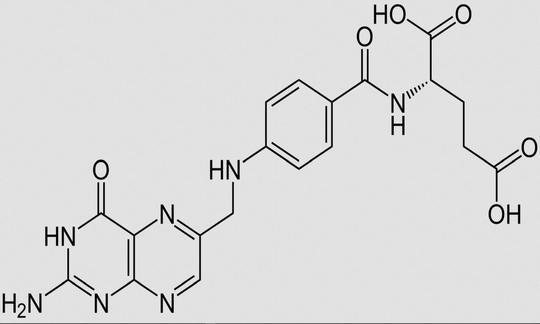
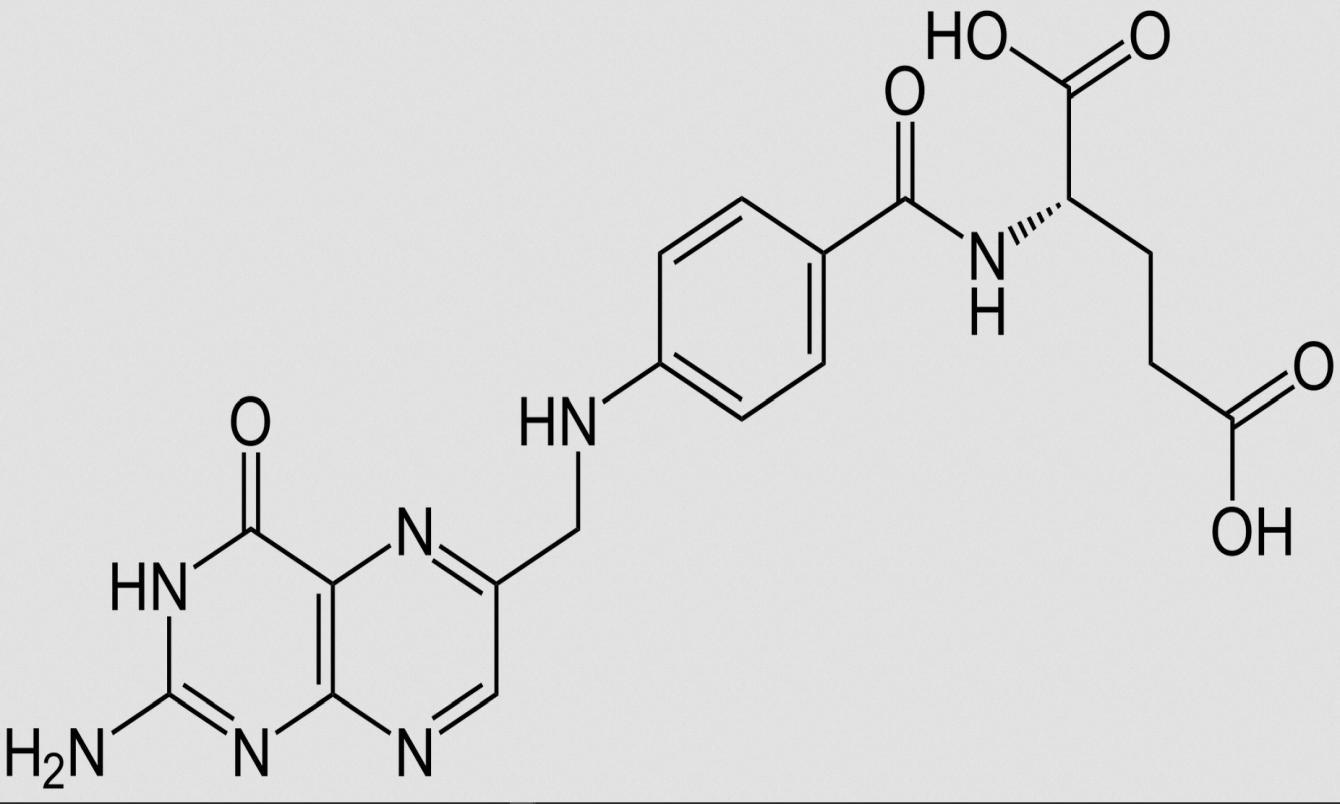
Mono- and polyglutamate forms: A distinction is made between the folic acid form (pteroylmonoglutamate, PteGlu 1), which contains one glutamate group, and the folic acid forms (pteroylpolyglutamates, PteGlu 2-8), which contain between two and eight glutamates. The two variants occur in foods in approximately a 1:1 ratio. The monoglutamate form is used in dietary supplements because it is more stable and bioavailable. In the body, the transport form is predominantly PteGlu 1, while the storage form is predominantly PteGlu 2-8.
Reduced and oxidized forms : The reduced and biologically active form of folic acid is tetrahydrofolic acid (THF or H4PteGlun). The oxidized form of H4PteGlun is dihydrofolic acid (H2PteGlun). The oxidized form of H2PteGlun is folic acid (PteGlun). This form does not occur in significant quantities in the body or in foods. However, pteroylmonoglutamate (PteGlu1) is used for the vitamin fortification of foods and dietary supplements.
Various substituted forms: THF, formyl-THF, methyl-THF, etc. Formyl-THF and methyl-THF are the most common forms found in fresh foods. The ratio varies depending on the food.
Fruits and vegetables: THF (10%), Formyl-THF (25%), Methyl-THF (65%)
Pulses and cereals: THF (3-8%), Formyl-THF (38-48%), Methyl-THF (14-20%)








Comments