This page was translated through Google Translator
Saturated fatty acids (SFA)
Did you know that saturated fatty acids (SFAs), which are mainly found in animal products, can have negative effects on your health? In this article, we'll show you how to reduce your consumption of these fats and protect your health in the long term.
We provide science-based information on health, nutrition, and sustainability — independent of sponsors, the food industry, and dietary supplement manufacturers. Find out more: our mission.
A balanced, plant-based diet with few to no industrially processed foods generally provides sufficient macro- and micronutrients, with the exception of vitamin B12. However,phytochemicalsare particularly relevant for maintaining health and healing, even though they are not considered essential nutrients – apart from vitamins.
---
Definition
Saturatedfatty acids (SFAs) are a heterogeneous group of fatty acids that contain only carbon-carbon single bonds.1 SFAs are more stable and have a longer shelf life than unsaturated fatty acids because they are chemically less reactive. The melting point of individual SFAs increases with increasing chain length, and SFAs with ≥10 carbon atoms are solid at room temperature.2
Occurrence
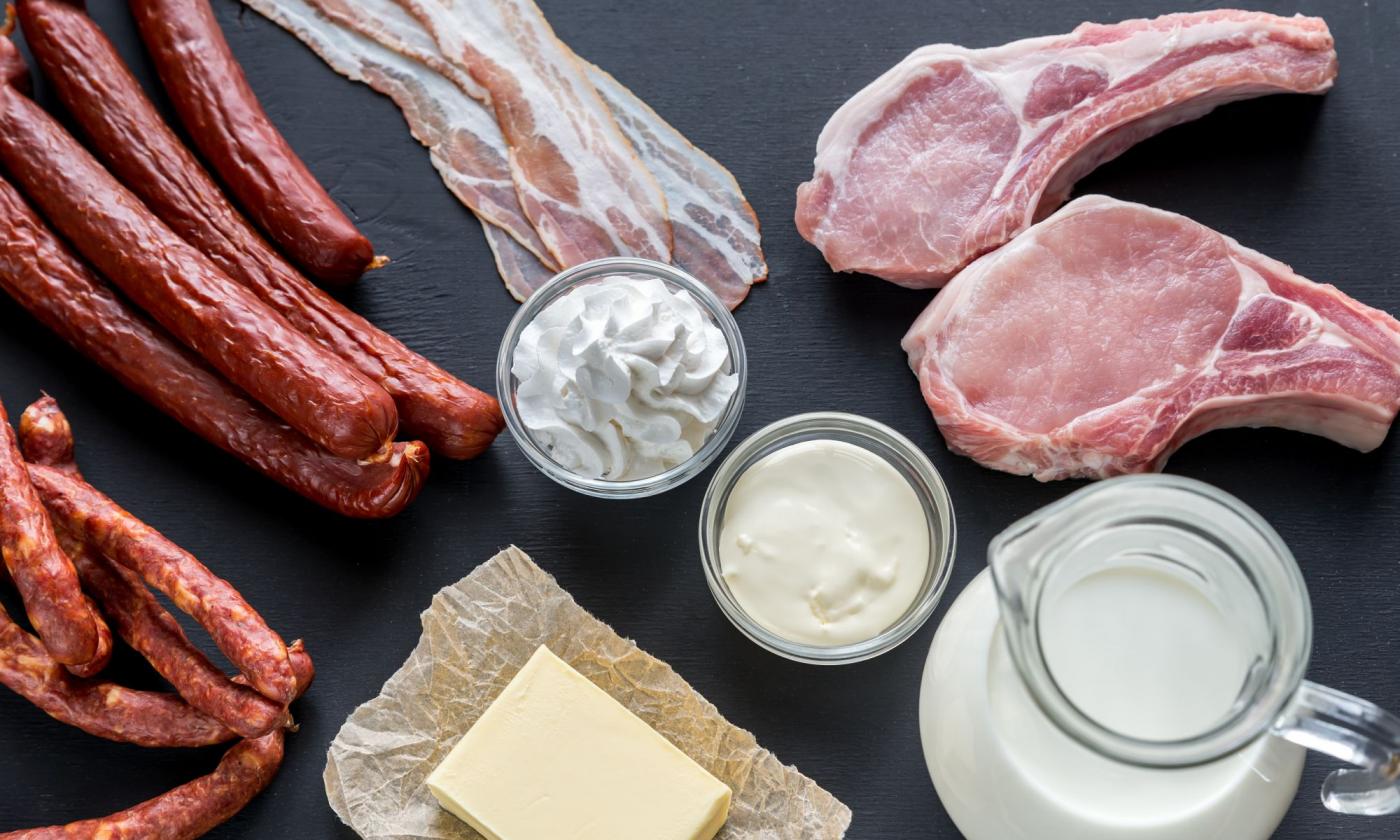
SFAs are primarily found in foods of animal origin (meat, dairy products, etc.). They occur in plant-based foods only in minimal quantities – with the exception of coconut oil, cocoa butter, or palm oil.
Overview of the different length fatty acids:2
Short-chain fatty acids(between 3 and 7 carbon atoms):
They are found primarily in milk fats and not usually in vegetable oils. The most important representatives are butyric acid (4:0*) and caproic acid (6:0).
Medium-chain fatty acids (between 8 and 12 carbon atoms):
The majority of medium-chain fatty acids are found in milk fats and in coconut and palm kernel oils. Well-known members of this group are caproic acid (8:0), capric acid (10:0), and lauric acid (12:0). Caproic acid and capric acid occur primarily in milk fats, while lauric acid is found in large quantities in coconut and palm kernel oils.
Long-chain fatty acids(between 13 and 21 carbon atoms):
These are found in larger quantities in cocoa butter and shea butter. Palmitic acid (16:0, hexadecanoic acid) and stearic acid (18:0) are the most important fatty acids in this group. Palmitic acid is the most widespread SFA, occurring in virtually all fats examined. It is found in marine oils, milk and storage fats of land animals, and vegetable fats. Stearic acid is less common than palmitic acid but is present in most vegetable fats.
Very long-chain fatty acids (over 21 carbon atoms):
They are present in most dietary fats, but in minimal amounts (usually less than 0.1 % of total fatty acids). Exceptions include peanuts (including peanut oil and peanut butter) and high-oleic sunflower or safflower oils. Behenic acid (22:0) and lignoceric acid (24:0) are the most common representatives of this group.
* Explanation ("X:Y"): X = number of carbon compounds (4 in butyric acid = 4 C atoms) and Y = number of double bonds (saturated fatty acids always have a 0 here, as they do not have any).
Storage and Preparation Losses
While unsaturated fatty acids are susceptible to lipid oxidation, which involves a radical chain reaction between unsaturated fats and oxygen, saturated fatty acids are largely stable against oxidation due to their lack of double bonds. This makes SFAs more resistant to oxidative damage, increasing their shelf life and stability in food.19
Nutrition - Health
Naturally occurring solid fats play an important role in the structure and texture of various foods. They are essential for the creaminess of yogurt, milk, and ice cream, and for the sensation of solid fat melting into liquid oil in the mouth, as is the case with chocolate. Solid fats also contribute to the formation of solid crystal networks, which are important for the texture of frozen desserts, chocolate, and butter. They also allow air to be incorporated into baked goods such as cookies to create a fluffy texture, minimize oil migration from foods such as crackers and biscuits, and prevent the formation of gluten networks to create a flaky texture in pastries.19
Fats have more than twice the energy density (9.3 kcal per gram of pure fat) compared to other macronutrients such as carbohydrates and proteins (4.1 kcal per gram each). Therefore, they are the most important energy reserve for humans and animals.
The WHO recommends that adults limit their total fat intake to no more than 30 % of their total energy intake. Saturated fat should make up no more than 10 % of total energy intake.21 According to the French agency ANSES, saturated fat should be below 12 % of total energy intake.10
Deficiency symptoms or deficiency symptoms
Deficiency symptoms due to a low proportion of saturated fatty acids are rare because the body can produce these fatty acids itself.
Overconsumption
The consumption of saturated fatty acids (SFAs) is too high in many dietary patterns; in Germany, they make up about 45 % of dietary fats, instead of the recommended maximum of 30 %. This can lead to an increased risk of weight gain, as the body reduces its own SFA production and stores more fat when there is an excess.17
An oversupply of saturated fatty acids can lead to metabolic disorders and impaired heart muscle function (myocardial dysfunction).22
Functions in the body
Saturated fatty acids are important components of cell structures and cell signaling molecules (enabling the exchange of information between cells) and influence gene expression (the reading of genetic material, i.e., our DNA, and the resulting production of metabolic products).11
SFAs increase total and LDL (low-density lipoprotein) cholesterol more than other fatty acids and have only a small positive effect on HDL (high-density lipoprotein) cholesterol.12 This can increase the risk of atherosclerosis (hardening of the arteries).13 However, SFAs can also have positive effects, as a study from Japan shows, which found an association between higher SFA intake and a reduced risk of age-related macular degeneration.14,15,16 Some SFAs should be replaced with polyunsaturated fatty acids.13
Saturated fatty acids – how bad are they really?
Older studies show a link between high intake of saturated fatty acids and elevated LDL cholesterol, which increases the risk of heart disease and atherosclerosis.3,4,5
More recent publications, including large-scale meta-analyses, do not view this relationship as strongly or even reach the opposite conclusion.6,7 A 2020 study of American Heart Association (AHA) data regarding saturated fat restriction also points to shortcomings and calls for a readjustment.8
The main argument is not a rejection of the harmful effects of excessive SFA. Rather, it is a contemporary demand that SFAs should no longer be considered a single group with regard to structure, metabolism, cellular functions, and physiological effects.8
Short- and medium-chain SFAs have properties regarding their breakdown and metabolism in the body that differ from those of long-chain SFAs. This includes faster utilization with low tissue storage, particularly in adipose tissue.9
The French agency ANSES has updated its guidelines and recommends that saturated fats should make up less than 12 % of total energy intake, with lauric, myristic, and palmitic acids together accounting for less than 8 %.
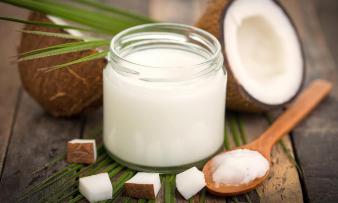
Interestingly, coconut fat, or coconut oil, which is often highly praised, consists of approximately 42 % lauric acid, 17 % myristic acid, and 9 % palmitic acid, among other fatty acids. This means that 100 g of coconut fat contains about 68 g of these three fatty acids, which ANSESconsiders particularly unhealthy (out of a total of 82 g of fatty acids in 100 g of coconut oil). One tablespoon of coconut oil (approximately 14 g) provides 9.5 g of these three fatty acids – and according to ANSES guidelines, this corresponds to a good 80 % of the maximum recommended daily intake. The supposedly healthy medium-chain triglycerides (MCTs) in coconut oil should also be viewed with some skepticism. More information can be found in the following CLICK-FOR:
Myth of "healthy" coconut oil
Medium-chain triglycerides (MCTs) are dietary fats whose glycerol component is linked to three medium-chain fatty acids, meaning they have a chain length of between 8 and 12 carbon atoms. This chain length also influences their processing in the body. They enter the portal vein (venous blood circulation from the stomach, intestines, spleen, and pancreas) directly, where they are transported as free fatty acids along with albumin to the liver, where they are metabolized (broken down) via beta-oxidation (the breakdown mechanism of fatty acids).
Nutritionist Marie-Pierre St-Onge demonstrated in studies that MCTs can aid weight loss in adults. However, these studies involved the production of a special coconut oil composed entirely of these fatty acids. Commercially available coconut oil contains only 13-14 % of these medium-chain triglycerides. More recent studies have found no effect on thermogenesis (heat production through metabolic activity) or fat burning.
Even today, many coconut oil suppliers promote MCTs. Unlike most other lipid molecules, medium-chain triglycerides, due to their chain length, do not require a complex digestive process and are more easily absorbed from the gastrointestinal tract into the bloodstream. Therefore, they are primarily used for patients with digestive and absorption disorders who suffer from energy deficiency and impaired fat absorption. Examples include classic celiac disease, short bowel syndrome or the post-transplant period, Crohn's disease, or the feeding of premature infants with an immature digestive tract and high-energy requirements. However, apart from these conditions, the disadvantages clearly outweigh the advantages, especially considering that specially enriched MCTs are often used for the aforementioned conditions, rather than pure coconut oil. Experts also recommend the use of MCTs only for strictly specified medical indications.
The main component of dietary fats we consume are triglycerides (triacylglycerols). These are building blocks of the glycerol molecule, each linked to three fatty acids. During digestion, our body breaks down these triglycerides into free fatty acids with the help of lipase.
Glycerol reaches the liver via the bloodstream and is primarily used for gluconeogenesis. Short-chain free fatty acids dissolve in the plasma, while longer-chain free fatty acids bind to albumin. All tissues except the brain and erythrocytes utilize these free fatty acids for energy production.24
Storage - Consumption - Losses
SFAs typically make up 30-40 % of the total fatty acids in animal tissues and are distributed among palmitic acid (15-25 %), stearic acid (10-20 %), myristic acid (0.5-1 %), and lauric acid (less than 0.5 %).23
Fatty acid breakdown is particularly intensive in the liver when free fatty acid levels in the plasma are elevated. After entering the cell, enzymes activate the fatty acids to acyl-CoA using ATP and transport them into the mitochondria with the help of carnitine. There, beta-oxidation cleaves off two carbon atoms at a time in several cycles, forming acetyl-CoA. During increased lipolysis (the breakdown of triglycerides) in starvation metabolism or in diabetes mellitus, two acetyl-CoA molecules condense to form acetoacetyl-CoA. This produces ketone bodies, which the tissues use for energy.24
Structures
Saturated fatty acids are simple linear chains of singly bonded carbon atoms that differ only in their chain length. Linear saturated fatty acids are generally divided into the following groups:2,20
Short-chain fatty acids(between 3 and 7 carbon atoms).
Medium-chain fatty acids (between 8 and 12 carbon atoms).
Long-chain fatty acids(between 13 and 21 carbon atoms).
Very long-chain fatty acids (over 21 carbon atoms).
The general formula is CnH2n+1COOH.
Conclusion
Certain saturated fatty acids most likely play an important role in hormone production, cardiovascular health, gene transcription, lipogenesis, apoptosis (programmed cell death, which cells often trigger as a self-protective mechanism), cell membrane structure, and protein signaling. However, they can be produced by the body itself, and some are harmful when consumed in excess. They should only constitute a small part of the diet.
Vegetarians and vegans typically consume less saturated fat, except through coconut or palm oil. Guidelines recommend limiting saturated fat consumption to a maximum of 10 % of daily energy intake.
Practical tips: Unlike oils, unprocessed and plant-based foods don't provide dietary fats in isolated form, but rather along with a package of micronutrients and other components. It's worthwhile to prevent a potentially harmful excess of saturated fats by reducing or even avoiding certain oils (coconut oil, palm oil). The same applies to processed foods, including meat substitutes, whose composition is often no less unfavorable.
The tables below show a selection of seeds and nuts that naturally provide dietary fats, including SFA (highlighted in bold), in ascending order. For comparison of the SFA content of oils and other fatty acid components, the last table provides an overview of the oils. Clicking on the linked foods will give you more information.
It's also worthwhile to replace foods or products high in SFA with those containing more monounsaturated or polyunsaturated fatty acids. Healthy everyday examples include tree nuts, hemp seeds, flax seeds, and chia seeds. If you use oils, we recommend rapeseed or flaxseed oil instead of sunflower or olive oil due to their favorable ratio of omega fatty acids.An optimal ratio of omega-6 to omega-3 fatty acids would be 2:1, as was common in Japan in the past. According to other experts, such as Dr. Greger, even a ratio of 1:1 is ideal; however, it should not exceed 5:1.
Additional information: Fatty acid profile of various nuts, seeds, and oils
Fat composition of some nuts, source USDA.18
Order: Amount of saturated fatty acids (SFA) in ascending order, % = proportion of total fat.
Explanation: Why not strictly speaking "100 g" of total fat? This is because oils often contain other components, including trace amounts of vitamins, and primarily lipids (lipids with polar residues – they are similar to fats, but different, as they are not nonpolar like typical fats). Depending on the oil, these lipids can make up to 5 % of the total fat content. Here we provide you with the raw USDA figures, which do not show all nutrients in their entirety.






Comments