

Alpha-Linolenic acid; ALA; 18:3 omega-3
Alpha-linolenic acid (ALA), an essential omega-3 fatty acid, supports healthy blood vessels and reduces the risk of cardiovascular disease. Discover the best food sources with us and learn how to optimize your fatty acid balance.
| We provide science-based information on health, nutrition, and sustainability — independent of sponsors, the food industry, and dietary supplement manufacturers. Find out more: our mission. |
A balanced, plant-based diet with few to no industrially processed foods generally provides sufficient macro- and micronutrients, with the exception of vitamin B12. However, phytochemicals are particularly relevant for maintaining health and healing, even though they are not considered essential nutrients – apart from vitamins.
---
Definition
Alpha-linolenic acid (ALA) is a triple-unsaturated essential fatty acid belonging to the omega-3 fatty acids and found in plant-based foods.9 The human body can synthesize polyunsaturated fatty acids (PUFAs), except linoleic acid (LA), the precursor of omega-6 fatty acids, and alpha-linolenic acid. Because we must obtain these substances through our diet, we call them essential fatty acids (EFAs).14
Occurrence
The most important sources for α-Linolenic acid Seeds and nuts such as flaxseeds (23 g/100 g), chia seeds (18 g), and walnuts (9,1 g), as well as their oils, e.g., flaxseed oil (53 g), walnut oil (10 g), and rapeseed oil (9.1 g), are good sources of ALA. Small amounts of ALA are also found in green herbs and vegetables, such as dried oregano (0.6 g) and avocado (0.1 g). Berries also contain ALA, albeit in small amounts (0.1–2 g), but in an optimal ratio of linoleic acid (LA) to ALA, such as cranberries with a ratio of 1:1. Plants provide almost exclusively α-linolenic acid as an omega-3 fatty acid, while fatty fish such as eel, carp, and sardines, as well as algae, primarily contain docosahexaenoic acid (DHA) and eicosapentaenoic acid (EPA).1
Among the lipids, or fats and fatty acids, ALA and LA are considered the only two essential fatty acids that the body absolutely needs – or so the conventional wisdom goes. These are also known as short-chain polyunsaturated fatty acids (SC-PUFAs). However, we believe that not everybody can optimally metabolize these fatty acids. Especially in old age, it can be beneficial to ensure an adequate intake of EPA and DHA, the long-chain polyunsaturated fatty acids (LC-PUFAs).
Storage and Preparation Losses
Linolenic acid is very sensitive to oxidation by molecular oxygen (O2) present in the air. Oils with a high alpha-linolenic acid content, such as linseed oil, should be stored protected from light, water, and oxygen, not heated, and consumed within a short time. To optimally utilize the nutrients in oilseeds, one should use seeds that have already been processed or ground into meal. However, after grinding, the seeds are very sensitive to oxidation, which is why it is advisable not to store them further but to consume them immediately.
See the recipe for Erb-Muesli. It is designed to compensate for a day with too many omega-6 fatty acids in relation to omega-3 fatty acids.
Nutrition - Health
When consumed, ALA serves as a precursor for the synthesis of EPA and DHA, which play a central role in the nervous system. They have anti-atherogenic (against the development of atherosclerosis) properties, lower blood pressure, improve the function of the cardiovascular system, and have anti-inflammatory effects.9
Cardiovascular diseases are the leading cause of death worldwide, claiming 1.7 million lives annually. Alpha-linolenic acid, known for its cholesterol-lowering properties, is an alternative to drug therapy.14
| This is not just for vegans or vegetarians: Vegans often eat unhealthily. Avoidable nutritional mistakes. |
Long-term daily requirement
The recommended intake for adults is 0,5 % of daily energy intake for alpha-linolenic acid, approximately 1,5 g. Due to its importance for brain development, infants and young children have a higher requirement for polyunsaturated fatty acids. If the mother has a good supply of both essential fatty acids, this requirement is usually well met through breast milk.
The intake of omega-3 fatty acids is related to the omega-6 to omega-3 fatty acid ratio. This should be a maximum of 5:1, and not 10:1 or more, as in a typical Western diet.2,3,4 An optimal ratio is 2:1, as was common in Japan in the past. Dr. Greger even recommends a 1:1 ratio as ideal, which is almost impossible to achieve in modern society.7
Deficiency symptoms
A low intake of omega-3 fatty acids is associated with an increased risk of cardiovascular diseases and inflammatory diseases such as rheumatism (pain and inflammation in the musculoskeletal system).
There is evidence that a deficiency in long-chain omega-3 fatty acids such as EPA and DHA plays a role in the pathophysiology and possibly in the development of various psychiatric disorders. Studies show that patients with major depression, bipolar disorder, schizophrenia, and ADHD (attention deficit hyperactivity disorder) often have lower levels of these fatty acids in their red blood cells.10
Risk factors for poor absorption and impaired metabolism include lack of exercise, smoking, high alcohol consumption, diabetes, and chronic inflammatory bowel diseases.3,4,5
Oversupply
An oversupply of omega-3 fatty acids is hardly possible with a balanced diet. Studies indicate that excessive intake of omega-3 fatty acids through supplements can impair immune function due to changes in the inflammatory response and can cause bleeding problems.
Methylmercury (MeHg), a toxic organometallic cation, is found in fish. Those particularly at risk are people who rely on fish as their primary source of omega-3 fatty acids, as well as pregnant and breastfeeding women.11
Functions in the body
Alpha-linolenic acid, like other polyunsaturated fatty acids, is an essential component of cell membranes in the human body. They are present in particularly high concentrations in the brain and nerve cells and play a significant role as components of the retina of the eye. They are also important for the brain and eye development of infants and young children.
Alpha-linolenic acid also plays an important role in inflammatory processes. Of particular importance is its conversion by the body into the long-chain omega-3 fatty acids eicosapentaenoic acid (EPA) and docosahexaenoic acid (DHA).
This conversion involves the same enzymes that produce dihomo-gamma-linolenic acid (DGLA) and arachidonic acid (AA) from linoleic acid, LA (omega-6 fatty acid).
While the body uses EPA and DGLA to produce anti-inflammatory eicosanoids (immunomodulators), it forms pro-inflammatory eicosanoids from arachidonic acid.
This leads to competition: if an enzyme is busy converting the omega-6 fatty acid into specific eicosanoids, it cannot simultaneously absorb an omega-3 fatty acid. Therefore, the ratio of the two fatty acids ALA and LA to each other is crucial.
In contrast to LA, ALA has the highest affinity for these enzymes. Sufficient intake of alpha-linolenic acid-rich foods therefore leads to an increase in EPA synthesis, while arachidonic acid synthesis decreases. To maintain enzyme activity, adequate intake of magnesium, calcium, vitamin B6, biotin, and zinc is also necessary.2,3,4,5
ALA has a vasodilatory effect, thus preventing arteriosclerosis and counteracting thrombosis. DHA and EPA are also said to prevent osteoporosis, Parkinson's disease, autoimmune diseases, and rheumatic diseases. They inhibit the development of type 2 diabetes, obesity, and kidney disease.
Absorption and Metabolism
Alpha-linolenic acid undergoes mechanical and enzymatic breakdown in the gastrointestinal tract (mouth, stomach, and small intestine) as part of fat digestion. The broken-down fatty acids are transported via micelles into the intestinal cells and from there, bound as lipoproteins, via the blood and lymph to the liver. The liver metabolizes and oxidizes omega-3 fatty acids, leading to the synthesis of VLDL (very low-density lipoprotein). This transports the fatty acids in the plasma to various tissues such as the brain, heart, and skin.2,11
Storage - Consumption - Losses
The acyl-CoA-binding protein serves, among other things, as an intracellular pool and transporter of activated long-chain fatty acids and enables the resynthesis of triglycerides and phospholipids in the smooth endoplasmic reticulum. Fatty acid degradation occurs in all body cells and takes place in the mitochondria via β-oxidation.
The excretion pathway of omega-3 fatty acids is unknown. Studies have shown that the approximate half-lives of ALA, DHA, and EPA are around 1 hour, 20 hours, and 39 to 67 hours, respectively.11
Additional information for particularly interested readers
If EPA and DHA are not supplied directly via fish, fish oil or algae extracts, but rather their precursor α-linolenic acid (ALA), e.g. with flaxseed or flaxseed oil etc., then a reduction of omega-6 fatty acids is recommended so that more enzymes are available for the conversion of ALA into EPA and DHA.
In humans, ALA raises certain blood lipids (triglycerides), while EPA and DHA lower them. ALA does not lower blood pressure, but docosahexaenoic acid (DHA) does. This suggests that some effects of omega-3 fatty acids from fish, fish oil, or algae supplements cannot be achieved with plant-based ALA. This also means that the health benefits of plant-based ALA in this respect would need to be demonstrated separately. However, studies also indicate that ALA has a bone-protective effect, for example against osteoporosis, and positive effects on bone strength. Less is known about other omega-3 fatty acids, such as C18:4ω-3 or C22:5ω-3. They appear to be of lesser importance.
According to a 2007 article, some US health and government organizations recommend regular intake of the omega-3 fatty acids EPA and DHA. They typically suggest a daily dose between 100 mg and 600 mg. The European Food Safety Authority (EFSA) also published nutritional recommendations in March 2010, recommending a daily intake of 250 mg of EPA and/or DHA. Pregnant and breastfeeding women are specifically advised to consume 200 mg of DHA daily to support healthy brain development in the fetus and newborn.
Studies indicate that the body converts approximately 5–10 % of ingested α-linolenic acid into EPA and 0,5–5 % into DHA. In women, the conversion to DHA is significantly higher (approximately 9 %), which is related to its importance in meeting the needs of the fetus and infant during pregnancy and lactation.3,4
Unfortunately, the abbreviation ALA is also used for other terms, especially α-lipoic acid or alpha lipoic acid, which in German is called α-Liposäure, more precisely (R)-Liposäure or Alpha-Liposäure (LA from the English lipoic acid or ALA from the English alpha lipoic acid). This ALA is also a fatty acid. It occurs as a coenzyme and component of the pyruvate dehydrogenase complex in the mitochondria of almost all eukaryotes. These are all "higher" organisms with cell nuclei, such as plants or animals. Only prokaryotic bacteria and archaea with procytic cells are excluded.
Structure
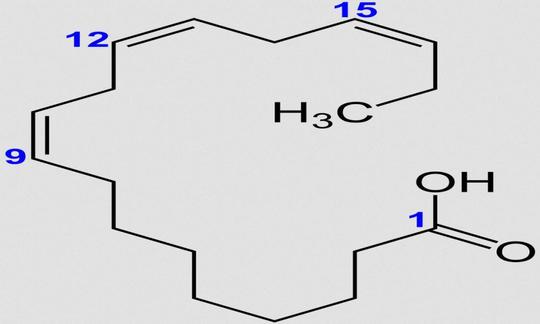
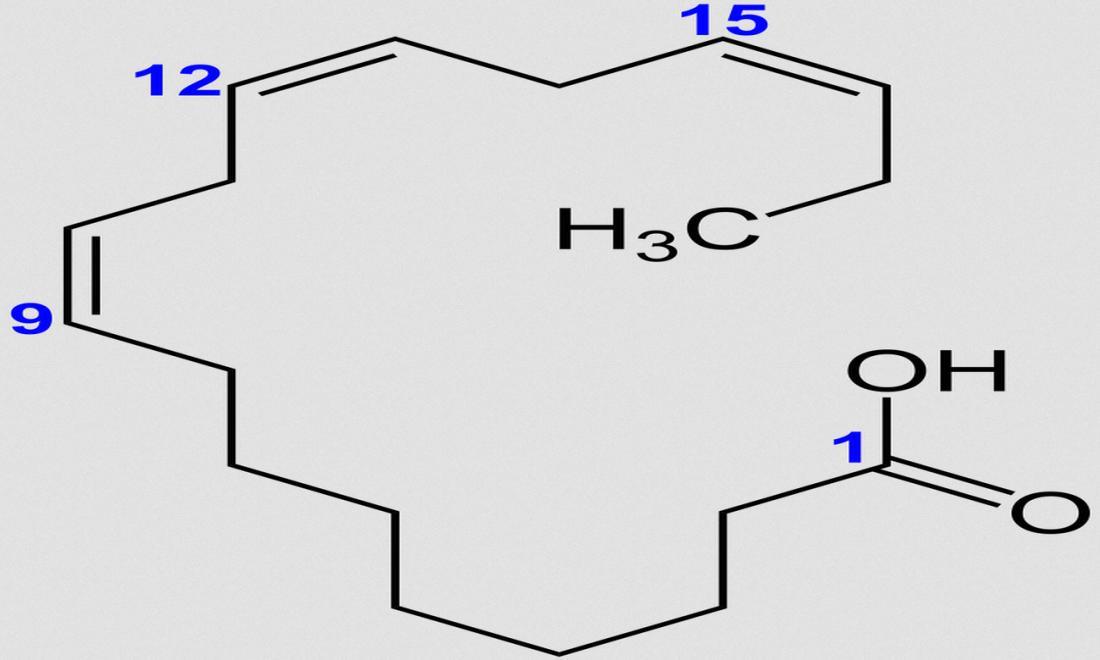
α-Linolenic acid is a triply unsaturated fatty acid with 18 carbon atoms. In English, the fatty acid is called α-linolenic acid (ALA). The lipid name is 18:3 (n−3) and the chemical name is octadeca-9,12,15-trienoic acid. The lipid name can also be expressed as: C18:3(9c,12c,15c). The molecular formula is: C18H30O2. Other names are: (9Z,12Z,15Z)-octadeca-9,12,15-trienoic acid (IUPAC); (all-cis)-octadeca-9,12,15-trienoic acid; 9c,12c,15c-octadecatrienoic acid; Δ9,12,15-octadecatrienoic acid.13
In addition, there are five other non-essential omega-3 fatty acids:
- Stearidonic acid, 18:4 (n−3), octadeca-6,9,12,15-tetraenoic acid
- Eicosatetraenoic acid, 20:4 (n−3), eicosa-8,11,14,17-tetraenoic acid
- Eicosapentaenoic acid (EPA), 20:5 (n−3), eicosa-5,8,11,14,17-pentaenoic acid
- Docosapentaenoic acid, 22:5 (n−3), docosa-7,10,13,16,19-pentaenoic acid
- Docosahexaenoic acid (DHA), 22:6 (n−3), docosa-4,7,10,13,16,19-hexaenoic acid
Bibliography - 14 Sources (Link to the evidence)
| 1. | US-Amerikanische Nährwertdatenbank USDA. |
| 2. | Biesalski HK, Grimm P. Taschenatlas der Ernährung. 6. Auflage. Georg Thieme Verlag: Stuttgart und New York. 2015. |
| 3. | Zimmermann M, Schurgast H et al. Burgersteins Handbuch Nährstoffe. 9. Auflage. Karl F. Haug Verlag: Heidelberg. 2000. |
| 4. | Pietrzik K, Golly I et al. Handbuch Vitamine. Für Prophylaxe, Beratung und Therapie. Urban & Fischer Verlag: München. 2008. |
| 5. | Letzmann C, Keller M. Vegetarische Ernährung. 3. Auflage. Eugen Ulmer Verlag: Stuttgart. 2013. |
| 6. | Simopoulos AP. The importance of the ratio of omega-6/omega-3 essential fatty acids. Biomed Pharmacother. 2002 Oct;56(8):365-379. |
| 7. | Greger M. How Not to Die: Discover the Foods Scientifically Proven to Prevent and Reverse Disease. Macmillan: New York. 2015. |
| 8. | Bannenberg G, Mallon C et al. Omega-3 Long-Chain Polyunsaturated Fatty Acid Content and Oxidation State of Fish Oil Supplements in New Zealand. Sci Rep. 2017 May 3;7(1):1488. |
| 9. | Punia S, Sandhu KS et al. Omega 3-metabolism, absorption, bioavailability and health benefits–A review. PharmaNutrition. 2019 Dec;(10):100162. |
| 10. | Messamore E, McNamara RK. Detection and treatment of omega-3 fatty acid deficiency in psychiatric practice: Rationale and implementation. Lipids Health Dis. 2016 Feb 10;15:25. |
| 11. | Krupa KN, Fritz K et al. Omega-3 fatty acids. In: StatPearls. Treasure Island (FL): StatPearls Publishing. [zitiert 15. August 2024]. |
| 12. | Simopoulos AP. Omega-3 fatty acids in inflammation and autoimmune diseases. J Am Coll Nutr. 2002 Dec;21(6):495-505. |
| 13. | PubChem. Linolenic acid. [zitiert 15. August 2024]. |
| 14. | Bertoni C, Abodi M et al. Alpha-Linolenic Acid and Cardiovascular Events: A Narrative Review. Int J Mol Sci. 2023 Sep 20;24(18):14319. |
- Ranin Huemer, BSc in Nutritional Science (Lead Author)
- Karin Rustmeier, Dipl. Food Engineer ETH (Author)
- Michael Weber, Federal diploma Pharmacist, MSc Infection Biology (Validator)
- Amanda Gabriel, MA (Validator)
Stuffed Eggplant with Nut and Pomegranate Filling is a delicious and hearty Iranian dish.

The linseed wholemeal crêpes with raw vegetable salad impress with their particularly high content of omega-3 fatty acids.

For the raw vegan Zuccoti Park burgers with sweet potatoes, you can wonderfully use the almond pomace left over from almond milk production.

Cold-pressed linseed oil (linseed oil, flax oil) is rich in healthy omega-3 fatty acids. Tip: Use fresh and store in the refrigerator. Raw? Organic?
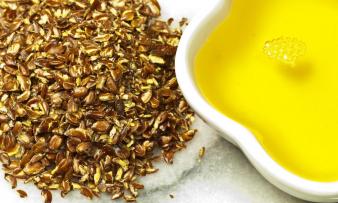
Raw linseed (golden linseed, flax) has the highest concentration of the polyunsaturated omega-3 fatty acid alpha-linolenic acid (ALA). Organic?

Hemp oil has different colors depending on how it is produced and has a nutty taste. It contains a high proportion of unsaturated fatty acids, including gamma-l

Comments