

Calcium, Ca
Calcium is essential for strong bones, teeth, and muscle contraction. But did you know that excessive milk consumption can do more harm than good? Discover better and healthier sources of calcium in our article.
| We provide science-based information on health, nutrition, and sustainability — independent of sponsors, the food industry, and dietary supplement manufacturers. Find out more: our mission. |
A balanced, plant-based diet with few to no industrially processed foods generally provides sufficient macro- and micronutrients, with the exception of vitamin B12. However, phytochemicals are particularly relevant for maintaining health and healing, even though they are not considered essential nutrients – apart from vitamins.
---
Definition
Calcium (Ca) is an essential mineral and the fifth most abundant element on Earth. Essential means that our body cannot produce (synthesize) the substance itself, but requires it in certain amounts.2
Occurrence
Calcium is found in dark green vegetables and herbs such as nettle leaves (481 mg/100 g), basil (177 mg), arugula (160 mg), kale (150 mg), and spinach (99 mg), as well as in nuts and seeds like sesame seeds (975 mg) and almonds (269 mg), and dried fruits like dates (64 mg). Calcium-rich water and mineral water also contribute to calcium intake.
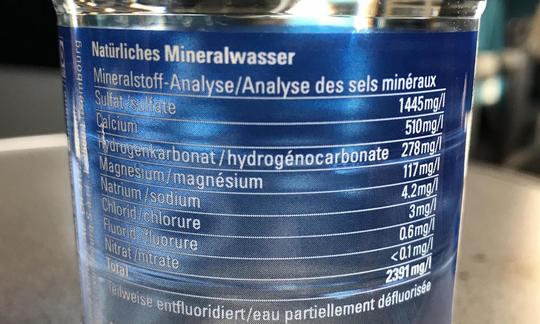
However, when it comes to mineral waters, you have to pay attention to the type and brand. Only a few contain as much or more calcium than Valser Classic/Naturelle with 418 mg/l or Eptinger with 510 mg/l.
Storage and preparation losses
Calcium is lost into the cooking water during boiling, therefore steaming should be done for the shortest possible time and the cooking water should not be discarded. The body absorbs calcium from plant-based foods less efficiently than from animal-based foods. This is due to certain food components that, together with calcium, form a poorly soluble, non-absorbable complex, thus reducing its bioavailability. These components include phytates (from whole grains and legumes), oxalates (e.g., from beetroot, parsley, rhubarb, spinach, chard, or nuts), phosphates, long-chain saturated fatty acids, and tannins.1,2,4
Nutrition - Health
The majority of calcium, 99 %, is found in bones and teeth, ensuring their structure and strength. Calcium is also essential for muscle contraction, blood clotting, and nerve impulse transmission.2
| This is not just for vegans or vegetarians: Vegans often eat unhealthily. Avoidable nutritional mistakes. |
Long-term daily requirements
Adequate calcium intake is essential for normal skeletal development. There is an increased need, particularly during growth phases in infancy and adolescence. The recommended intake (DA-CH reference values) for a healthy adult is 1000 mg/day, and for adolescents aged 13 to 18 years, it is 1200 mg/day. The US National Institutes of Health (NIH) recommends a calcium intake of up to 1500 mg/day during growth and for postmenopausal women.2
Risk groups
Bone loss and thus a negative calcium balance are associated with the aging process (especially with the loss of muscle mass that begins with age) and occur earlier and more suddenly in women than in men due to menopause.7
Deficiency symptoms
A worldwide study on calcium intake shows that in 2011, people consumed an average of about 684 mg of calcium per day through their diet. Between 1992 and 2011, the global risk of calcium deficiency decreased significantly, from 76 % to 51 %. A particularly high number of countries with a high risk of calcium deficiency were located in Africa and parts of Asia.8,10 In contrast, the countries of Northern Europe achieve a significantly higher average value of over 1000 mg of calcium per day.
Furthermore, it was shown that countries with very low calcium intake, such as many countries in the Asia-Pacific region, often also have low vitamin D levels. This combination can increase the risk of osteoporosis, as calcium and vitamin D together make a crucial contribution to bone health.9
Hypocalcemia (calcium deficiency) can be accompanied by the following symptoms: osteomalacia, osteoporosis, cataracts, trophic skin disorders, hyperreflexia, tetany (cramps), and seizures. Persistent cramps lead to the so-called "carpopedal spasm" of the hands, which is typical of calcium deficiency.
A low serum calcium level can indicate abnormal parathyroid function (parathyroid hormone deficiency). This is rarely due to insufficient calcium intake, as the skeleton acts as a large calcium reserve and thus helps to maintain normal serum calcium levels. Other causes of low serum calcium levels include chronic kidney disease, vitamin D deficiency, magnesium deficiency, breastfeeding, and a high intake of foods that can reduce calcium absorption.1,2,4
Excess calcium (hypercalcemia):
Mild hypercalcemia (blood calcium levels below 12 mg/dL) often causes no symptoms. However, some affected individuals (approximately 20 %) report fatigue and constipation. In severe hypercalcemia (calcium levels above 14 mg/dL), more serious symptoms such as nausea, vomiting, dehydration, confusion, severe drowsiness, or even coma can occur.11 Normally, the body regulates high calcium intake by absorbing less calcium in the intestines and excreting more in the urine.
Known causes
-
Excessive calcium intake: Occasionally, patients with peptic ulcers develop a calcium overload if they drink a lot of milk and take calcium-containing antacids to relieve pain. This is called milk-alkali syndrome.
-
Excessive vitamin D intake: When people take high doses of vitamin D daily for several months, the amount of calcium absorbed through the digestive tract increases significantly.
-
Inactivity: Sometimes patients who are unable to move, such as paralyzed people or those who are bedridden for a very long time, develop hypercalcemia because the bones, which are not subjected to any stress for a long time, release calcium into the blood.
-
Hyperthyroidism: In hyperparathyroidism, at least one of the four parathyroid glands releases too much parathyroid hormone, disrupting regulation. Furthermore, severe hyperthyroidism can cause a potassium surplus due to bone loss.6
-
Bone diseases: When a bone is broken down (resorbed) or destroyed, calcium is released into the blood, sometimes leading to an excess of calcium (hypercalcemia). This can occur, for example, in Paget's disease due to dehydration or prolonged sitting or lying down.
-
Special cases: Granulomatous diseases such as sarcoidosis, tuberculosis, and leprosy, certain medications, endocrine disorders, and some other conditions can also lead to hypercalcemia. This can also cause kidney stones and problems with zinc and iron absorption.6
Calcium is crucial for bone health, and many consider milk the best source. However, high milk consumption can prove otherwise and be associated with serious health risks. A Swedish study investigates the link between milk consumption, mortality, and the risk of fractures (broken bones). It suggests that high milk consumption is associated with increased mortality in both women and men, as well as a higher risk of fractures in women.
Women who drink three or more glasses of milk a day have a 93% higher risk of premature death compared to those who consume less than one glass. Many believe that milk is good for bone health. However, there is no evidence that it protects against fractures. On the contrary, the risk actually increases with higher milk consumption in women. These findings challenge the traditional view of milk as a healthy food. It might be worthwhile to reconsider milk consumption and look for healthier alternatives that better fit one's diet.
Further information can be found in the full study: Milk consumption and mortality and fracture risk in women and men.
Functions in the body
Functions of calcium for the skeletal system and teeth:1,2,4,5,6
- Stability of the skeletal system: in addition to the collagen matrix, calcium salts represent the stabilizing factor of the skeletal system; calcium, together with phosphate in the form of hydroxyapatite, exerts supporting functions in bones and teeth and gives the bone strength to maintain the body shape.
- Storage function in the form of calcium phosphate.
Calcium is a component of many intra- and extracellular processes:
- Release of neurotransmitters, hormones and enzymes
- Muscle contraction, nerve and muscle excitability
- Ensuring cell and glycogen metabolism
- Stabilization of cell membranes
- Ensuring gap junctions (channel-like connections between adjacent cells for signal and nutrient exchange)
- Activation of blood coagulation
Absorption and Metabolism
Digestive juices in the gastrointestinal tract release calcium from food. The body then absorbs this calcium via an active mechanism; with high intake, absorption also occurs passively in the small intestine. Parathyroid hormone and calcitriol (vitamin D3) regulate active absorption.
Individual calcium absorption in the body depends on the composition of the diet as well as many physiological factors, such as age, calcium and vitamin D levels, and individual needs. When calcium requirements are increased (e.g., during pregnancy and breastfeeding), the efficiency of calcium absorption from food also increases.
The body sometimes absorbs calcium from plant-based foods less efficiently than from animal-based foods. This is due to substances contained in plants (phytates, oxalic acid, and various dietary fibers) that inhibit absorption. However, with animal-based foods, calcium is often leached from the bones due to the acid-base balance. See "Book review: Better to avoid milk!" Osteoporosis can result.
The body requires vitamin D to ensure an adequate supply of calcium. Vitamin D increases calcium absorption in the intestines and reduces excretion via the kidneys. Various hormones maintain constant blood calcium levels by drawing on stores in the bones or, when levels are sufficient, inhibiting calcium release from the bones.1,4,5,6
Storage - Consumption - Loss
The calcium content of the human body in adulthood is approximately 1000 g. The bones are the main storage organ for calcium. The body excretes calcium primarily through urine and feces. The kidneys reabsorb calcium under the control of parathyroid hormone, vitamin D3, and calcitonin.
Calcium phosphate serves as a reservoir for the skeletal system, maintaining a constant serum calcium concentration of 2,5 mmol/L. The skeleton acts as a large calcium reserve, thus helping to keep serum calcium levels within the normal range.
In cases of insufficient dietary intake or significant renal (via the kidneys) losses of calcium and phosphate, the stored minerals are released from the bones. This prevents a drop in serum calcium concentration, but it compromises bone stability. Increased urinary calcium excretion occurs with increased caffeine consumption, high protein intake, and high sodium intake.1,4,5
Structures
Calcium is one the alkaline earth metals and occurs in the organism exclusively as a divalent cation (Ca 2+).
Bibliography - 11 Sources (Link to the evidence)
| 1. | Biesalski HK, Fürst P et al. Ernährungsmedizin. 125-126, 167-169. Georg Thieme Verlag: Stuttgart. 1999. |
| 2. | Biesalski HK, Grimm P. Taschenatlas der Ernährung. 6. Auflage. Georg Thieme Verlag: Stuttgart und New York. 2015. |
| 3. | US-Amerikanische Nährwertdatenbank USDA. |
| 4. | Elmadfa I, Meyer A. Ernährungslehre. 3. Auflage. Verlag Eugen Ulmer: Stuttgart. 2015. |
| 5. | De Groot H, Farhadi J. Ernährungswissenschaft. 6. Auflage. Verlag Europa-Lehrmittel: Haan-Gruiten. 2015. |
| 6. | Domke A, Grossklaus R et al. (Hrsg.) Verwendung von Mineralstoffen in Lebensmitteln: Toxikologische und ernährungsphysiologische Aspekte, Teil 2. BfR-Hausdruckerei Dahlem. 2004. |
| 7. | Ahlborg HG, Johnell O et al. Bone loss and bone size after menopause. N Engl J Med. 2003 Jul 24;349(4):327-334. |
| 8. | Cormick G, Belizán JM. Calcium Intake and Health. Nutrients. 2019 Jul 11(7):1606. |
| 9. | Balk EM, Adam GP et al. Global dietary calcium intake among adults: a systematic review. Osteoporos Int. 2017 Dec;28(12):3315-3324. |
| 10. | Bourassa MW, Abrams SA et al. Interventions to improve calcium intake through foods in populations with low intake. Ann N Y Acad Sci. 2022 May;1511(1):40-58. |
| 11. | Walker MD, Shane E. Hypercalcemia: A Review. JAMA. 2022 Oct 25;328(16):1624-1636. |
- Karin Rustmeier, Dipl. Food Engineer ETH (Lead Author)
- Ernst Erb (Author)
- Michael Weber, Federal diploma Pharmacist, MSc Infection Biology (Validator)
- Ranin Huemer, BSc in Nutritional Science (Validator)
The satay salad with soba noodles and sugar snap peas is rich in protein and contains many vitamins, but depending on the type of noodle, too much salt!

Poppyseed-lemon porridge with oat flakes, almond milk and vanilla tastes like a poppy seed-lemon cake and goes well with fresh berries.

This health-optimized satay salad with soba noodles has a good fatty acid ratio, but contains too much salt, depending on the type of noodle.

Dried basil (organic) is an important spice in Mediterranean cuisine and goes well with raw vegetables, salads, tomatoes, marinades, etc. Also available raw.
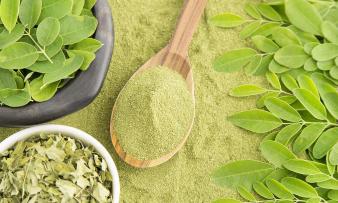
Moringa powder (organic?) consists of dried leaves (raw?) of the horseradish tree. Fresh leaves are valuable in the countries of origin to combat malnutrition.
Dried marjoram (raw?) is a seasoning that contains many essential oils. It is used primarily in potato dishes and sauces. Organic?
Comments