This page was translated through Google Translator
Histidine (His, H)
A histidine deficiency impairs blood cell production and leads, among other things, to a decrease in hemoglobin levels. Histidine is also a precursor to histamine and carnosine. Learn more about the diverse functions of histidine and its importance to the human body.
We provide science-based information on health, nutrition, and sustainability — independent of sponsors, the food industry, and dietary supplement manufacturers. Find out more: our mission.
A balanced, plant-based diet with few to no industrially processed foods generally provides sufficient macro- and micronutrients, with the exception of vitamin B12. However, it is primarilysecondary plant compounds that are importantare relevant for maintaining health and curing diseases, although they are not considered essential nutrients - except for vitamins.
---
Definition
Histidine (His, H) is one of nine (ten in children, including arginine) amino acids considered essential (non-dispensable) for the human body. Humans use 20 proteinogenic amino acids as building blocks for proteins. Selenocysteine serves as the 21st amino acid for specialized proteins.
Biochemically, histidine possesses an imidazole side chain that can accept or donate protons depending on the pH. This allows histidine to function as an important buffer substance, and it is frequently found in the active site of enzymes.1
Histidine was long considered semi-essential because it was previously thought that while infants and toddlers could not produce sufficient amounts of this amino acid themselves, the bodies of healthy adults could synthesize it independently. More recent research has refuted this. Histidine is essential for humans because the body cannot synthesize this amino acid.1,5,6
In addition to the foods listed in the table, other legumes such as cooked chickpeas (around 250 mg/100 g) and cooked white beans (230 mg/100 g) also provide significant amounts of histidine. Broad beans contain around 660 mg of histidine per 100 g, more than raw chicken (526 mg) and about seven times as much as whole milk (95 mg).
Oats (400 mg/100g), rolled oats (280 mg/100g), quinoa (410 mg/100g), and amaranth (390 mg/100g) also contain histidine. Spices and some algae can also provide high amounts of this amino acid (per 100g), for example, dried spirulina with around 1100 mg/100g.
To suffer from a histidine deficiency on a vegan diet would require an extremely limited food selection. Since plant-based protein sources such as legumes, nuts, seeds, and whole grains naturally contain histidine, a varied plant-based diet easily meets the need in practice.
Storage and Preparation Losses
Heating food denatures proteins and thus alters their properties. A fried egg is one example; it denatures due to the heat in the pan. When heated, the liquid yolk and the egg white, the main protein source, solidify. The proteins in the egg form solid structures; experts call this process "coagulation" or "flocculation." The egg white coagulates at 60 °C, the yolk at 65 °C, and complete coagulation occurs at 70 °C.
The oxidation of an amino acid by reactive oxygen species can significantly affect its function.
Improper storage of fish can cause certain bacteria to convert histidine into histamine using the enzyme histidine decarboxylase. Insufficient refrigeration leads to the formation of high histamine concentrations, causing histamine poisoning (scombroid syndrome). Since heating, freezing, or washing does not remove histamine, fish and fishery products require rapid cooling and uninterrupted adherence to the cold chain.
Nutrition - Health
Histidine is considered an essential amino acid and serves the body to build its own proteins.
It serves as a precursor to histamine and is involved in the formation of carnosine. Due to its chemical properties, histidine can buffer protons and bind metal ions. Histidine-rich proteins and carnosine perform various functions, including in the blood, muscles, and nervous system.5
Studies are investigating possible links between histidine levels and metabolic parameters such as body weight, insulin sensitivity, and inflammatory processes. Furthermore, moderate amounts appear to reduce fatigue, while excessive doses have been shown to lead to undesirable disturbances in food intake as well as impairments in memory and cognitive function. However, current clinical data are insufficient to justify targeted supplementation as a standard medical practice. Future studies must first clarify whether specific risk groups actually benefit from a controlled increase in histidine levels. Moreover, reliable long-term data on precise dosages are lacking.6
For more information on how protein consumption affects your health, see the following article: Risks of a high-protein diet.
Specific eating habits, such as those of fruitarians (fructarians) or the 80/10/10 (high-carb diet) and even more extreme diets, can lead to deficiencies over time. This often occurs over a long period without directly noticeable symptoms.
An adequate supply of histidine is necessary for the human body. The WHO specifies a daily requirement of 10 mg/kg body weight. For a 70 kg adult, this corresponds to approximately 700 mg of histidine per day.7
Larger histidine pools in hemoglobin and carnosine complicate the determination of histidine requirements. Carnosine forms a dipeptide from beta-alanine and histidine, which is found in larger quantities in skeletal muscle. In the case of a prolonged insufficient histidine supply, the body releases histidine from the breakdown of carnosine, thus temporarily ensuring an adequate supply.7
Deficiency symptoms
A histidine deficiency remains theoretically possible with long-term insufficient intake but rarely occurs with a varied diet. Existing data on specific deficiency symptoms in humans provide only limited insights.
An older study (1975) reported, among other things, a negative nitrogen balance, reduced serum albumin levels, and skin changes in participants on a low-histamine diet. These changes subsided after histidine was reintroduced. However, the small number of participants and the age of these studies limit their significance.8
In a small study (2002) with four healthy adults, a low-histamine diet over 48 days led to a decrease in hemoglobin concentration of approximately 11 %.9
Due to its importance for protein synthesis, histidine is now considered an essential amino acid for adults. A varied plant-based diet generally ensures an adequate histidine supply.
Oversupply
Excessive histidine intake is primarily a concern when taken in high doses as a dietary supplement. To date, there is no clear evidence of toxic effects in humans.5 However, extremely high doses can cause undesirable effects such as loss of appetite and changes in the sense of taste and smell.6
High histidine intake is sometimes considered a possible trigger for allergic reactions, as histidine serves as a precursor to histamine. However, there is currently no evidence for this connection in humans. Studies on histidine supplementation have not documented any allergic reactions to date.5
Isolated high-dose histidine supplementation is not recommended in patients with existing liver disease. Studies show that increased histidine intake leads to changes in amino acid metabolism, with elevated ammonia and glutamine levels and decreased concentrations of the branched-chain amino acids valine, leucine, and isoleucine.10
Functions in the body
Histidine has the following functions in the body:
The vitamin B6-dependent enzyme histidine decarboxylase converts histidine into histamine. Histamine then acts as a neurotransmitter in the brain and as a messenger substance in immune responses, gastric acid production, and inflammatory processes.1
Together with beta-alanine, histidine forms the dipeptide carnosine, which is found in large quantities in skeletal muscle and the brain. There, carnosine buffers the excess acid that arises during exercise and also scavenges reactive oxygen species as an antioxidant.1
In hemoglobin, the so-called proximal histidine is linked to the iron atom of the heme group via a direct bond. The Fe-His bond plays an important role in regulating the reversible ligand binding and thus also the oxygen binding of hemoglobin.11
The imidazole group of histidine can bind both protons and metal ions such as zinc, copper, and iron. Therefore, histidine residues frequently participate in catalysis at the active sites of enzymes, for example, as part of the catalytic triad of serine proteases such as trypsin.1,12
Thanks to its ability to accept or donate protons depending on the pH value, free histidine also acts as a buffer substance and helps to regulate the acid-base balance in cells and tissues.5
Absorption and Metabolism
The digestion of dietary proteins begins in the stomach with the enzyme pepsin. In the small intestine, various peptidases further break down the peptides into amino acids. Specific transport systems then absorb histidine into the intestinal cells, both as a free amino acid and in the form of small peptides. From there, the nutrient enters the bloodstream directly.13
The most important metabolic pathway for histidine begins with its conversion to trans-urocanic acid by the enzyme histidine ammonia-lyase, which is found primarily in the liver and skin. In the liver, trans-urocanic acid undergoes several intermediate steps until it is formed into formiminoglutamate (FIGLU). Enzymes transfer its formimino group to tetrahydrofolate (THF), which, among other things, produces glutamate. In the case of folic acid deficiency, this metabolic pathway is disrupted, which is why the body excretes increased amounts of FIGLU in the urine.1
Another metabolic pathway leads to histamine through the decarboxylation of histidine. This reaction is catalyzed by the vitamin B6 -dependent enzyme histidine decarboxylase. Histidine decarboxylase is found, among other places, in specialized cells of the immune system (mast cells), in certain cells of the stomach, and in specific areas of the central nervous system, where histamine can act as a neurotransmitter.1
Storage - Consumption - Losses
Histidine does not form a specific storage organ in the body. Some histidine circulates as a free amino acid, while larger amounts occur in proteins and histidine-containing compounds. Carnosine, a dipeptide of β-alanine and histidine, which is found primarily in skeletal muscle, is of particular importance in this regard. In cases of histidine deficiency, the breakdown of carnosine can contribute to the release of histidine.5
Human muscle produces carnosine. β-Alanine, in particular, determines the rate of carnosine synthesis. Supplementation with β-alanine can significantly increase carnosine concentration in muscles, whereas histidine supplementation alone did not increase muscle carnosine concentration in a human study.4
The body continuously consumes histidine for protein synthesis and the formation of various histidine-containing compounds. Excess histidine is either broken down to urocanic acid by histidine decarboxylase or converted to histamine by histidine decarboxylase.5
Mast cells and basophils synthesize histamine and store most of it in their granules. Upon immunological stimulation, the cell releases it through degranulation. The hydrochloric acid-producing parietal cells of the stomach also produce and store histamine. The same applies to certain neurons in the posterior hypothalamus of the brain, which, among other things, control appetite, alertness, emotions, and cognitive functions.5
Histidine is also lost via urine. Studies in healthy adults show that histidine is present in relatively high amounts in urine compared to several other amino acids. There are significant individual differences in renal amino acid excretion.15
Structures
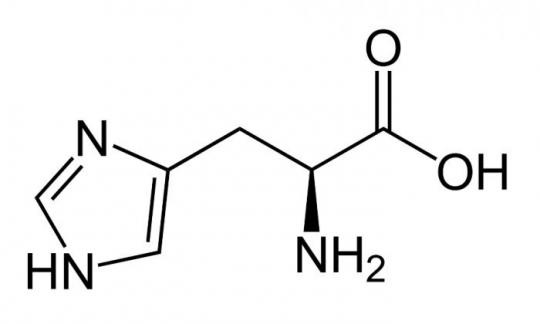
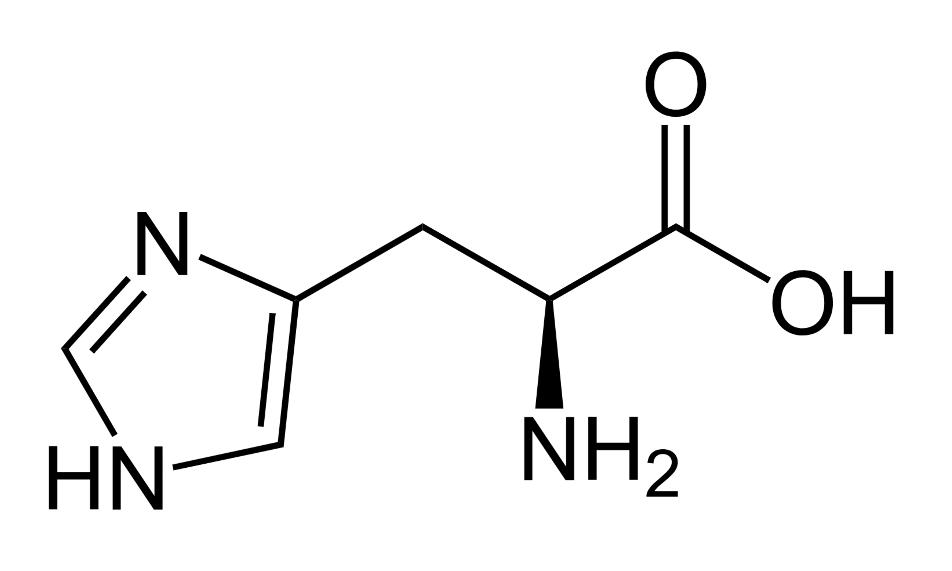
Histidine is a proteinogenic α-amino acid with a basic imidazole side chain. Depending on the pH, the imidazole ring can accept or donate protons. This gives histidine a pronounced buffering function in the physiological pH range and makes it an important component of the active sites of numerous enzymes.1,5
Scientific circles also refer to histidine as 2-amino-3-(1H-imidazol-5-yl)propanoic acid and imidazolalanine. Its molecular formula is C6H9N3O2. Abbreviations: His, H (one-letter code).16
It is a basic amino acid with an imidazole side chain. The pK for the side chain of the free amino acid is 6.0 so that both the neutral and protonated forms are present at physiological pH. The imidazolium side chain of histidine provides functions which are unavailable to other amino acids, such as general base catalysis in the catalytic triad of serine proteases (2). The proximal and distal histidines of the β-globin chains of hemoglobin also play essential roles in the oxygenation, rather than oxidation, of hemoglobin under physiological conditions (3).
Histidine is a dietary essential amino acid because it cannot be synthesized in humans.
Histidine can be enzymatically decarboxylated to give histamine (Figure 4A). The enzyme involved is histidine decarboxylase (HDC) which requires pyridoxal phosphate as its essential cofactor.
FIGURE 4. Histidine can be decarboxylated to histamine which may be subsequently methylated to N1-methylhistidine. (A) Conversion of histidine to histamine by histidine decarboxylase. Pyridoxal phosphate is the cofactor. (B) Inactivation of histamine by histamine N-methyltransferase in brain. The methyl donor is SAM, which is converted to SAH. SAH, S-adenosylhomocysteine; SAM, S-adenosylmethionine.
In addition to the role of histamine in gastric acid secretion and the immune response, it also serves as a neurotransmitter in specific regions of the brain (53).
Histidine is required as a precursor of carnosine in human muscle and parts of the brain where carnosine appears to play an important role as a buffer and antioxidant. It is synthesized in the tissue by carnosine synthase from histidine and β-alanine, at the expense of ATP hydrolysis. Histidine can be decarboxylated to histamine by histidine decarboxylase. This reaction occurs in the enterochromaffin-like cells of the stomach, in the mast cells of the immune system, and in various regions of the brain where histamine may serve as a neurotransmitter.
It plays particularly important roles in the active site of enzymes, such as serine proteases (e.g., trypsin) where it is a member of the catalytic triad.
Figure 2 shows the metabolic pathway for histidine metabolism. Histidase (histidine ammonia lyase) is the first and principal regulatory enzyme in the pathway, producing ammonia and trans-urocanate. It is a cytosolic enzyme, principally found in skin and liver, with a Km for histidine in the 1–4 mM range (7). Liver and skin histidases are expressed from the same gene (8).
Trans-urocanate is hydrolyzed in the liver by urocanase to give 4-imidozolone-5-proprionate which, in turn, is converted to formiminoglutamate (FIGLU).
The next step involves one-carbon metabolism as the formimino group of FIGLU is transferred to tetrahydrofolate (THF) to produce 5',10'-methenyl-THF, glutamate, and ammonia.
The requirement of THF as a substrate for glutamate formiminotransferase implies that folate deficiency could limit histidine catabolism. Evidence for this idea is provided by the increased urinary FIGLU excretion that is found in folate-deficient individuals (17). Glutamate, the other product of glutamate formiminotransferase, is used for many functions, including gluconeogenesis.
Histidine can be decarboxylated to histamine by histidine decarboxylase. This reaction occurs in the enterochromaffin-like cells of the stomach, in the mast cells of the immune system, and in various regions of the brain where histamine may serve as a neurotransmitter.
Histidine can be enzymatically decarboxylated to give histamine (Figure 4A). The enzyme involved is histidine decarboxylase (HDC) which requires pyridoxal phosphate as its essential cofactor. HDC has long been known to be localized to mast cells (47) in various tissues and enterochromaffin-like (ECL) cells of the oxyntic mucosa of the stomach (48), but more recently it has also been discovered in the central nervous system (49) and in immune cells (50).
The imidazolium side chain of histidine provides functions which are unavailable to other amino acids, such as general base catalysis in the catalytic triad of serine proteases (2).
When it is heated the runny yolk and white (albumen – which is the major source of protein) turn solid. The proteins in the egg start to thicken, a process known as coagulation. Egg whites coagulate at 60°C, egg yolks 65°C, with full coagulation occurring at 70°C
The unique chemical properties and physiological functions are the basis of the theoretical rationale to suggest HIS supplementation in a wide range of conditions.
There are no reports of signs of toxicity or mutagenic activity in HIS-treated subjects, and researchers have reached a consensus that increased intake of HIS and/or CAR is safe [134].
Although HIS is a precursor of histamine, allergic reactions or peptic ulcers caused by increased gastric acid secretion have not been reported.
L-histidine (HIS) is an essential amino acid with unique roles in proton buffering, metal ion chelation, scavenging of reactive oxygen and nitrogen species, erythropoiesis, and the histaminergic system.
Of all the amino acid side chains in proteins, only the imidazole ring of HIS is suitable to function as a pH buffer [10], and either of the two nitrogens of the imidazole ring can bind or release a proton to form the acid or the base form.
Most histamine is synthesized and stored in granules in mast cells and basophils, from which it is released via degranulation induced by immunological stimulation (Figure 4), particularly interactions of allergens with IgE antibodies. Parietal cells in the stomach and histaminergic neurons in the brain are additional important sites of histamine synthesis and storage.
CAR is synthesized under hydrolysis of ATP from HIS and beta-alanine, which is obtained through the diet or uracil degradation in the liver [10]. CAR is abundantly present in skeletal muscle and olfactory bulb and in smaller quantities in the cardiac muscle, brain, and other tissues [11,16,79].
It has been shown that most of the CAR provided by food is rapidly hydrolysed by serum carnosinase to HIS and beta-alanine, which can then be taken up by muscles where CAR is synthesized [84].
There are several pathways of HIS metabolism (Figure 2). Quantitatively most significant are HIS turnover in synthesis and breakdown of proteins and HIS catabolism via urocanate to glutamate. I will overview the pathways of HIS catabolism and importance of HIS as a precursor of histamine, HIS-rich proteins, HIS-containing dipeptides (particularly CAR), and methyl- and sulphur-containing derivatives of HIS.
Synthesis and degradation of histamine: Histamine is formed by the decarboxylation of HIS by L-histidine decarboxylase (EC 4.1.1.22) found in many tissues.
The main pathway of HIS catabolism (Figure 3) begins with deamination catalysed by histidase (EC 4.3.1.3), leading to the production of trans-urocanate and ammonia.
Histidine structure: histidine (HIS) contains an α-amino group, a carboxylic acid group, and an imidazole side chain. Under physiological conditions, the amino group is protonated and the carboxylic group is deprotonated. The imidazole ring is responsible for the proton buffering, metal ion chelating, and antioxidant properties.
Dietary histidine may be associated with factors improving metabolic syndrome related to obesity.
Insulin resistance, which is an important feature of the metabolic syndrome, seems to be improved in overweight and obese individuals with histidine supplementation [50,51].
Obesity is also associated with a high level of pro-inflammatory cytokines and inflammation biomarkers [52]. In the study by Li et al., results show that dietary histidine is inversely associated with some pro-inflammatory cytokines such as TNF-α, IL-1, IL-6, and the inflammation biomarker CRP.
In addition to its role in protein metabolism, histidine, as a functional AA, has specific metabolic roles.
Henkin [36] demonstrated that within four to six days after different amounts of histidine supplementation in healthy, young college men, subjects spontaneously complained of anorexia onset.
With continued administration of larger quantities of histidine, 16 and 32 g daily, all subjects developed a decrease in taste acuity (hypogeusia), and then a decrease in smell acuity, (hyposmia). Further administration of larger doses of histidine was associated with the development of distortions of taste (dysgeusia) and smell perception (dyssomnia).
3.3. Histidine and Memory Disorders
Geliebter et al. studied the effect of daily histidine doses, from 24 to 64 g, mixed into orange juice, on healthy subjects for four weeks [40]. They reported ensuing headaches, weakness, drowsiness, and nausea in subjects. Two subjects who received 64 g per day reported painful sensations in their eyes and difficult focusing. One subject showed mental confusion after taking 64 g per day, poor memory, and depression with episodes of crying [40]. In contrast, Sasahara and colleagues [41] reported that daily histidine intake (1.65 g/day) actually decreased feelings of fatigue, increased efficiency while performing memory tasks, and promoted clear thinking and concentration in subjects with high fatigue and sleep disruption scores. The large difference in histidine doses likely explains the contradictory effects between studies by Geliebter et al. and Sasahara et al.
The requirement for dietary histidine was investigated in four normal and three chronically uremic men.
With ingestion of the histidine-deficient diet, nitrogen balance gradually became negative, and serum albumin decreased in six subjects. Plasma histidine fell by 82 plus or minus 6 per cent; muscle histidine decreased by 62 plus or minus 19 per cent; the hematocrit fell by 25 plus or minus 9 per cent; and serum iron rose. Subjects felt unwell, and in five cases a skin lesion consisting of fine scales, dry skin, and mild erythema developed. After administration of the histidine-repletion diet, nitrogen balance became positive in six subjects; serum albumin increased in five cases; plasma and muscle histidine rose; serum iron fell abruptly; a reticulocytosis ensued; and the hematocrit rose. The clinical symptoms and skin lesions disappeared.
To study the potential metabolic effects of a lack of exogenous histidine, four healthy adults consumed a histidine-free diet, with adequate energy and 1.0 g/(kg · d) of an l-amino acid mixture for 48 d.
Interventionsstudie: Stoffwechselstudie am Menschen
The data presented in the review show that HIS administration may increase ammonia and affect the level of several amino acids. The most common are increased levels of alanine, glutamine, and glutamate and decreased levels of glycine and branched-chain amino acids (BCAA, valine, leucine, and isoleucine).
Increased ammonia and glutamine and decreased BCAA levels in HIS-treated subjects indicate that HIS supplementation is inappropriate in patients with liver injury.
Time-resolved Raman studies have shown that communication between the heme oxygen binding sites and the surrounding globin occurs through the iron-proximal histidine linkage. By comparing the frequency of the Fe-His stretching mode in equilibrium deoxy- and photoinduced transient deoxyhemoglobins, we have found that ligand binding induces protein structural changes that strengthen the Fe-His linkage.
These results indicate that modulation of the Fe-His linkage could be a general mechanism for regulating ligand binding properties in hemoglobin.
In this study, using 1H NMR titration experiments, we show that histidine binds strongly to Zn(II), Cu(II), and Fe(III) ions at a biologically relevant pH (pH 7.4), with a stoichiometry of Zn(II): histidine binding of 1:2.
L-histidine is an essential amino acid whose dietary intake is indispensable in humans due to the absence of endogenous biosynthetic pathways. Intestinal absorption occurs via specific transporters, primarily PEPT1 and proton-coupled active transport systems. Once absorbed, histidine enters the portal circulation and is distributed to multiple tissues, with quantitatively significant metabolic processing taking place in the liver and skeletal muscle.
Carnosine is a dipeptide composed of β-alanine and L-histidine and is present in skeletal muscle. Chronic oral β-alanine supplementation can induce muscle carnosine loading and is therefore seen as the rate-limiting factor for carnosine synthesis.
Unlike the findings in some animals, histidine supplementation did not induce carnosine loading in human muscles, although it tended to increase muscle histidine content, suggesting that elevated tissue histidine in itself is not sufficient to raise carnosine.
Both BA and BA + HIS groups showed increased carnosine concentrations in all investigated muscles, with no difference between these groups. By contrast, carnosine levels in the HIS group remained unaltered. Histidine levels were significantly decreased in plasma (−30.6%) and muscle (−31.6%) of the BA group, and this was prevented when β-alanine and L-histidine were supplemented simultaneously.
The excretion of amino acids in urine represents an important avenue for the loss of key nutrients. Some amino acids such as glycine and histidine are lost in higher abundance than others.
Analyses of urinary amino acid profiles revealed that three groups could be objectively defined from the 151 participants using k-means clustering. The amino acid profiles were significantly different between each of the clusters (Wilks’ Lambda = 0.13, p < 0.0001). Cluster 1 had the highest loss of amino acids with histidine being the most abundant component. Cluster 2 had glycine present as the most abundant urinary amino acid and cluster 3 had equivalent abundances of glycine and histidine.
Querschnittstudie mit anschliessender Intervention
National Center for Biotechnology Information. PubChem Compound Summary: L-Histidine. PubChem CID 6274. Bethesda (MD): National Library of Medicine; [cited 2026 Sep 8].
We have categorized studies and books on nutrition and health according to the following 3 evidence categories: green = strong evidence, yellow = medium evidence, purple = weak evidence. The remaining sources are marked ingray . You can find a detailed explanation in our article: Science or Belief? How to evaluate publications..


Comments