This page was translated through Google Translator
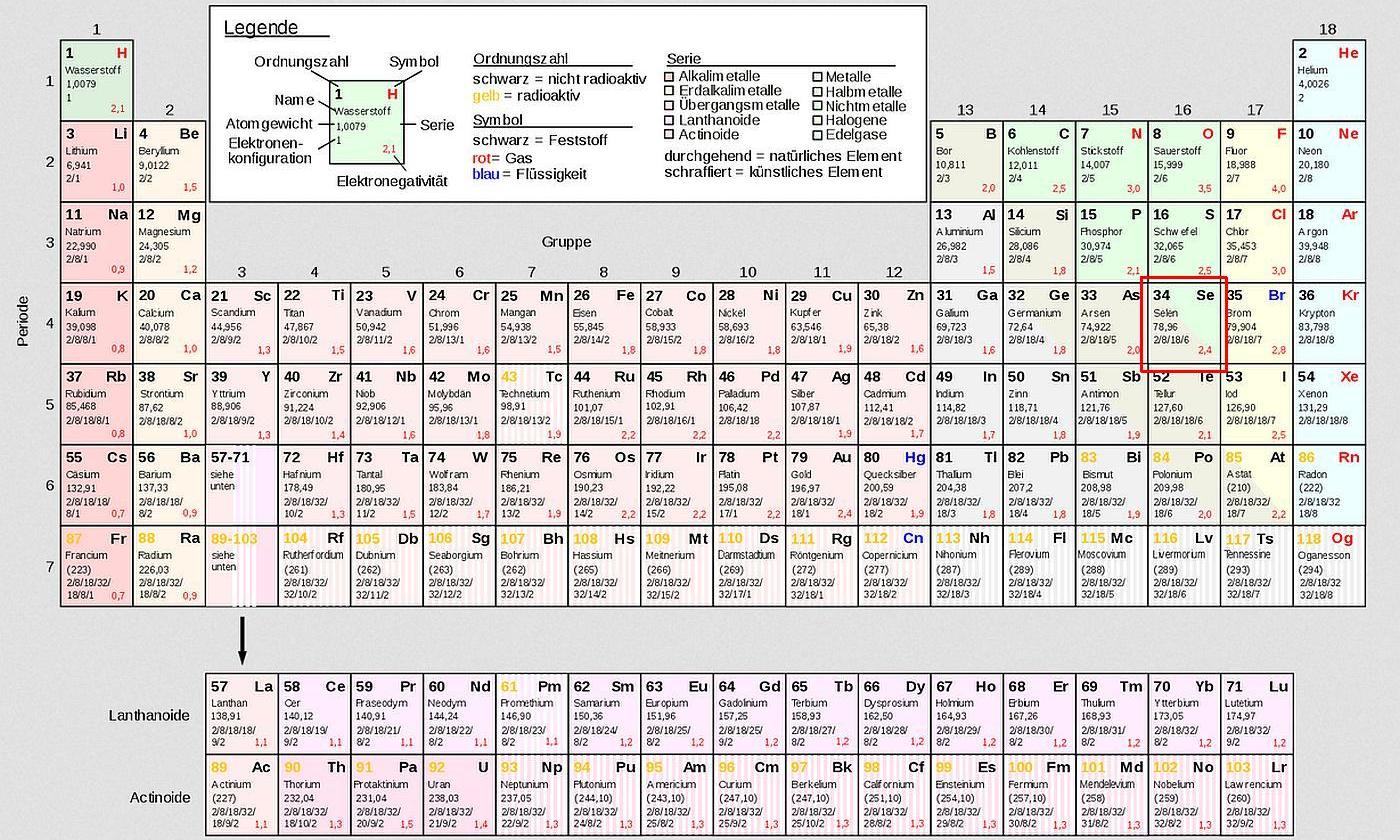
Selenium, Se (selenium, semimetal)
Selenium protects your cells and strengthens your immune system. Brazil nuts are an excellent source, but be careful: too much selenium can damage the liver. Learn how you can benefit from selenium without overdoing it.
We provide science-based information on health, nutrition, and sustainability — independent of sponsors, the food industry, and dietary supplement manufacturers. Find out more: our mission.
A balanced, plant-based diet with few to no industrially processed foods generally provides sufficient macro- and micronutrients, with the exception of vitamin B12. However,phytochemicalsare particularly relevant for maintaining health and healing, even though they are not considered essential nutrients – apart from vitamins.
---
Definition
Selenium (Se) is an essential trace element that is vital for maintaining human health. Selenium occurs primarily in the form of selenoproteins, which play a crucial role in the body's physiological processes and metabolism.7
Occurrence
Selenium occurs naturally in foods, primarily in the form of selenium-containing amino acids. In plant-based foods, it is mainly found as selenomethionine, and in animal-based foods, as selenocysteine.16
There are plants that can accumulate selenium to a high degree. One Brazil nut (selenium content: 1917 µg/100 g) theoretically covers the average daily requirement if it comes from Bolivia. However, even there, the selenium content varies considerably. See the text about Brazil nuts for more details.
In contrast, Brazil nuts from some regions of Brazil contain between 3 µg/100 g (Chang 1995) and 25,300 µg/100 g (Secor 1989). These are isolated exceptions, but even the average varies between 280 µg/100 g (Secor 1989) and 4,390 µg/100 g (for Autazes in Patcheco 2007). Silva Junior et al. state: The mean selenium concentration in Brazil nuts ranged from 2.07 mg/kg (Mato Grosso) to 68.15 mg/kg (Amazonas). Depending on its origin, a single Brazil nut could therefore cover between 11% (in the state of Mato Grosso) and 288% (in the state of Amazonas) of the daily selenium requirement of an adult man (70 µg).14
Eating four nuts a day (10 g net weight) from Brazil would regularly exceed the maximum tolerable intake of 300 µg set by the European Food Safety Authority (EFSA) and also the 400 µg set by the Institute of Medicine (IoM, now the National Academy of Medicine, NAM), thus harming us. For young children, this Tolerable Upper Intake Level (UL) is 60 µg per day!
Porcini mushrooms also have a very high selenium content. Depending on the region, the selenium content can vary considerably. Wild mushrooms can still be contaminated with radioactive cesium due to the Chernobyl reactor accident. Furthermore, wild mushrooms, like fish and other marine animals, sometimes contain high levels of heavy metals such as mercury.
Seeds, especially young barley seedlings, green vegetables, shiitake mushrooms, and button mushrooms are excellent organic sources of selenium in regions with sufficient selenium levels in the soil.7
The Brazilian almond mushroom, also known as almond mushroom, sun mushroom, or life mushroom (Agaricus subrufescens Peck, ex Agaricus blazei Murrill (ABM), ex Agaricus brasiliensis), would have a selenium content several times higher than our porcini mushroom, at least if grown in Brazil. It is a close relative of the button mushroom. However, enterprising dealers sell it as a vital mushroom, a mushroom of the gods, or by its Asian name, Himematsutake – the crucial factor here, too, is its origin.
Processing interventions can significantly reduce the selenium content of foods. For example, whole grain rice contains 15 times more selenium than polished rice, and whole grain flour contains, on average, twice as much as white flour.6
Unlike certain vitamins, selenium does not lose any selenium through storage or preparation.
Nutrition - Health
As an essential trace element, selenium is a component of the 21st proteinogenic amino acid, selenocysteine. Selenocysteine is a variant of cysteine that contains a selenium atom in place of a sulfur atom. Due to its high reactivity with oxygen, selenium plays an important role in protecting cell membranes from oxidative damage (free radical scavenger). Selenocysteine is also involved in the catalytic mechanism of other enzymes and is contained in many proteins.
This is not just for vegans or vegetarians: Vegans often eat unhealthily. Avoidable nutritional mistakes.
Long-term daily requirement
An exact requirement cannot currently be determined. In German-speaking countries, a daily intake of 30 to 70 µg is recommended for adults. The actual intake is approximately 40 µg per day.8,16 In the USA, the recommended daily intake of selenium for men and women is 55 µg.19 A significant portion of the population does not reach this value.10
Deficiency symptoms
The risk of selenium deficiency arises from a one-sided diet, chronic diarrhea, chronic inflammatory bowel diseases, and blood loss.10 The first symptoms of severe deficiency are diseases of the muscles, liver, and heart and changes in the nails and hair.11 Selenium deficiency is associated with cardiovascular diseases, infertility, myodegenerative diseases (muscle diseases), and cognitive decline.7
Chronic selenium deficiency impairs the synthesis of selenoproteins and thus the metabolism of thyroid hormones, which can lead to thyroid disorders.17
Severe selenium deficiency has previously been observed in areas of China where daily selenium intakes below 11 µg led to heart disease (Keshan disease) and death.9
Overdose
Selenium, also called "selenosis," can occur when selenium intake exceeds the threshold of 400 μg/day. At even higher levels, selenium can have a pro-oxidative effect, leading to oxidative stress and damage to cell components. Signs of selenium poisoning include liver cirrhosis, hair loss, heart failure, and polyneuropathy. The breath takes on a garlic-like odor (dimethyl selenide). Inorganic forms are more toxic than organic forms.
Functions in the body
The importance of selenium lies in specific selenium-containing proteins, of which over 20 are known today, but not all of their functions are known. Some of their functions include:9,11,17,19
Antioxidant protection system: The best-known enzyme is the selenium-containing glutathione peroxidase (G-Px). This enzyme neutralizes peroxides such as hydrogen peroxide (H₂O₂) and lipid peroxides and, together with other compounds (superoxide dismutase, catalase, GSH transferase, vitamins C and E), represents an important protective factor in the body. Glutathione peroxidase is particularly active in the liver, red blood cells, and platelets.
Thyroid metabolism: Selenium is a component of enzymes (deiodinases) that activate or inactivate thyroid hormones.
Heavy metal detoxification: Selenium reduces the toxicity of cadmium, mercury, thallium, and silver by forming stable heavy metal selenides. These prevent the heavy metals from binding to important proteins.
Immune system: Antioxidant vitamins and selenium effectively promote humoral and cellular immunity.
Diverse biological processes: signal transduction, cell growth, cell aging, and the regulation of ferroptosis (a form of programmed cell death).
The importance of selenium for human metabolic processes was only recognized in the second half of the 20th century, and even then only partially. Examples of processes in the body: 7,17
Iodothyronine deiodinases, which convert inactive thyroxine (T4) into the active thyroid hormone triiodothyronine (T3), are selenium-dependent. Hypothyroidism, primarily caused by a deficiency of the thyroid hormones T4 and T3, only becomes apparent over time, usually beginning with weight gain and lethargy.
Selenium plays a role in the functioning of the immune system and in the progression of HIV to AIDS. Additionally, selenium protects individuals with hepatitis B or C and prevents the development of malignant diseases. The role of selenium in cancer treatment is still insufficiently understood.
Absorption and Metabolism
Selenium enters the human or animal body via the following chain: soil – plant – food. Therefore, the selenium concentration in human blood and tissues depends on the selenium content in food, drinking water, plants, and soil.19
The intestine absorbs selenium ingested with food and transports it to the liver, where it is primarily metabolized to selenocysteine. The selenocysteine is incorporated into selenoproteins, including selenoprotein P (SELENOP), which then enters the plasma and serves as a selenium source for other tissues in the body.18
Absorption ranges from 50 % to >90 %, depending on concentration and accompanying substances. It occurs independently of selenium status.11
Storage - Consumption - Losses
The body stores selenium as selenomethionine. Of the total body amount of 13 to 20 mg, most selenium is found in the muscles. Approximately 80 % of selenium is contained in selenoproteins.19 However, the highest concentrations are found in the liver, kidneys, and spleen.9
The body excretes selenium via exhaled air as dimethyl selenide, which is formed by selenium methylation, and via urine as the soluble trimethylselenonium ion. Excessive selenium intake significantly increases selenium excretion.19
Additional information for particularly interested readers
The selenium content in plant-based foods varies greatly depending on the growing region, as it is directly dependent on the selenium content of the soil.Plants do not need selenium, while it is an essential element for us. An excess can also cause significant problems and is reached relatively quickly. Humans have 25 genes that code for selenium proteins. However, the functions of only 15 of these proteins are known. The three enzymes DIO1, DIO2, and DIO3 represent a direct link between iodine and selenium.1
Several meta-analyses show a significantly lower incidence of cancer and cardiovascular diseases when people have sufficient selenium intake. In the case of cancer, this applies particularly to lung and prostate cancer. Eight studies from 2009, available through the Cochrane Library and involving up to 152,538 participants, demonstrated that simply increasing serum selenium levels was highly effective in preventing cancer.2
Why is this particularly important in certain regions? In North America, soils are almost universally rich in selenium. A reasonably natural and varied diet there almost always covers the body's needs. In certain parts of Asia and Central Europe, this metalloid does not meet our requirements. Generally, acidic or volcanic soils are low in selenium. Geographically, particularly low levels of selenium in the soil are found in parts of Scandinavia, China, and New Zealand.
This is evident, for example, in the decline in daily selenium intake in Great Britain, because North American wheat, which contains ten times more selenium than British wheat, is no longer used for bread production.3
Finland solved the problem from 1984 onwards by supplementing multi-mineral fertilizers with sodium selenate: 16 mg/kg of fertilizer for cereal production and 6 mg/kg for forage production. This increased the selenium concentration in the soil and, subsequently, in human serum by 70 % by 1989. The amount introduced into the soil through multi-mineral fertilizers could be reduced after a few years. Slovenia appears to be examining such and other measures.
Structures
The body utilizes both inorganic selenium (selenate SeO₄²⁻ and selenite SeO₃²⁻) and organic selenium (selenomethionine, selenocysteine). The sulfur atom in the amino acids methionine and cysteine is replaced by a selenium atom. Today, selenium is no longer called a metalloid but rather a semiconductor and more accurately classified as a nonmetal within the chalcogen group.






Comments