This page was translated through Google Translator
Methionine (Met, M)
Long-term high methionine intake can increase calcium excretion in the body and raise the risk of osteoporosis. Methionine promotes protein synthesis, but learn more about its other functions and how to optimize your intake in this article.
We provide science-based information on health, nutrition, and sustainability — independent of sponsors, the food industry, and dietary supplement manufacturers. Find out more: our mission.
A balanced, plant-based diet with few to no industrially processed foods generally provides sufficient macro- and micronutrients, with the exception of vitamin B12. However,phytochemicalsare particularly relevant for maintaining health and healing, even though they are not considered essential nutrients – apart from vitamins.
---
Definition
Methionine (Met, M) is one of eight (ten in children, including histidine and arginine) amino acids considered essential (non-dispensable) for the human body. Humans use 21 proteinogenic amino acids, which are the building blocks of proteins. With the exception of two (lysine and threonine), the body can adapt protein production to its needs, even though eight are traditionally considered essential. Besides cysteine, methionine is the only sulfur-containing proteinogenic amino acid.
Occurrence
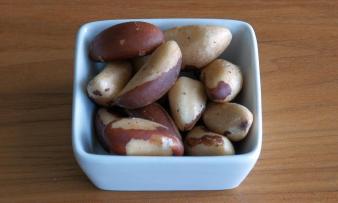
Nuts and seeds are particularly rich in methionine.
Pumpkin seeds (600 mg/100 g), legumes, and certain grains also provide good amounts of the amino acid methionine. In contrast, vegetables contain low amounts of sulfur-containing amino acids, for example, spinach (55 mg/100 g) and broccoli (44 mg/100 g).
This means that Brazil nuts (or spirulina with 1100 mg/100 g) contain almost twice as much methionine as meat (raw beef 554 mg) and fish, and about three times as much as eggs (380 mg) or twelve times as much as cow's milk (82 mg).1
A vegan diet would have to be extremely unbalanced to suffer from a persistent protein deficiency, leading to marasmus or kwashiorkor (starvation belly). On the other hand, the examples above show that vegetables, fruits, nuts, and seeds should all be included in one's diet.
Storage and Preparation Losses
Heating food denatures proteins, thus altering their properties. A fried egg is one example; it denatures due to the heat in the pan. When an egg is heated, the liquid yolk and the egg white, the main protein source, solidify. The proteins in the egg thicken, a process known as "coagulation" or "flocculation". The egg white coagulates at 60 °C, the yolk at 65 °C, and complete coagulation occurs at 70 °C.
The oxidation of an amino acid by reactive oxygen species can significantly affect its function. Prolonged cooking or soaking of methionine-containing foods can lead to the leaching out of substantial amounts of the amino acid.
Nutrition - Health
Methionine plays a well-known role as an initiator of protein synthesis in prokaryotes and eukaryotes, stabilizes protein structure, acts as an endogenous antioxidant on the surface of proteins, and is one of the four most abundant sulfur-containing amino acids (methionine, cysteine, homocysteine, and taurine).9,12
It is one of the essential amino acids. Essential amino acids are those that our bodies either cannot synthesize or cannot synthesize in sufficient quantities to maintain growth and nitrogen balance. Humans can obtain methionine from food or from gastrointestinal microbes.8,12
It is now known that the body only irreversibly transaminates lysine and threonine, and that only these two are truly essential. Vegans tend to get slightly below-average amounts of methionine, but the body can produce it from cystine, which it receives in sufficient quantities. This has only been known for a few years.
Specific eating habits, such as those of fruitarians (fruitarians, fructarians, fruganians) or the 80/10/10 (high-carb diet) and even more extreme diets, can lead to deficiencies over time. This often occurs over a long period without directly noticeable symptoms.
At least for adults, it is considered certain that the body can synthesize its entire requirement for the amino acid cysteine from methionine, provided that the diet contains enough methionine.5
Healthy adults have an average methionine requirement of 13 mg/kg body weight per day. Adequate cysteine intake minimizes the methionine requirement. The WHO recommends a daily intake of 13 mg/kg body weight of sulfur-containing amino acids (cysteine and methionine).6,10
However, according to scientific tables (Geigy, Vol. 2, p. 232), the minimum requirement for methionine, including a 30 % allowance for individual variations, is only 10 mg/kg body weight. This includes cystine (not cysteine). For a person weighing 75 kg, this would equate to 750 mg/day. More recent scientific sources even suggest a lower requirement.
Deficiency symptoms
A deficiency is possible with insufficient dietary intake over a prolonged period. A balanced, natural vegan diet provides good methionine levels, and increased muscle activity naturally leads to increased food intake. Infants are particularly at risk if they are weaned from breast milk too early and receive inappropriate nutrition.
A prolonged deficiency can lead to metabolic disorders, increased fatigue, and depressive moods. The diseases kwashiorkor and marasmus, which arise from very long-term protein and general energy deficiency, are now rarely seen in the Western world. Milder deficiencies can lead to stunted growth in children and a loss of lean body mass in adults.
Oversupply
Methionine is considered the most toxic amino acid. Excessive intake leads to the formation of homocysteine, a vascular-damaging substance, as an intermediate product in the breakdown of methionine. A consistently high consumption of methionine-rich foods increases calcium excretion and thus promotes the development of osteoporosis. Simultaneous adequate intake of folic acid, vitamin B6 (pyridoxine), vitamin B12 (cobalamin), and vitamin C helps to break down homocysteine more quickly and convert it back into methionine.11
In infants, methionine intake at two to five times the normal value leads to growth disorders.11
During the metabolism of excess methionine, the sulfur it contains oxidizes to sulfuric acid and is excreted via the kidneys,resulting in acidified urine.
Functions in the body
Methionine has various functions in the body:2,3,4,5,14
In protein biosynthesis, methionine serves as a starter amino acid during translation.
Methionine helps prevent excessive fat deposits in the liver.
During the metabolism of excess methionine, the sulfur contained in the substance oxidizes to sulfuric acid. The kidneys excrete this, which leads to acidification of the urine and thus to the inhibition of bacterial growth in urinary tract infections.
Methionine is responsible for various biosynthesis processes in metabolism, including the synthesis of choline, creatine, adrenaline, carnitine, nucleic acids, histidine, taurine, and glutathione (transmethylation). The metabolically active form of methionine is S-adenosylmethionine.
Methionine has an antioxidant effect and can eliminate heavy metals.
Furthermore, it can lower histamine levels and thus plays a role in allergic reactions.
Methionine is required to absorb selenium from food and transport it in the body.
Methionine can have a positive effect on depressive moods.
Absorption and Metabolism
The digestion of ingested proteins begins in the stomach with the action of pepsin. Pepsins break down the proteins into peptides. Further breakdown into individual amino acids occurs in the small intestine through the action of peptidases. Cellular uptake is facilitated by various carrier proteins, each specific to a particular amino acid group.
The first step in the metabolism of methionine is its conversion to homocysteine via the intermediate S-adenosylmethionine (SAM). SAM acts as an important methyl donor and is involved in various methylation reactions.
Homocysteine remethylates to methionine and remains in the methylation cycle, or it is degraded via the transsulfuration pathway in combination with serine to cystathionine. This then further cleaves into α-ketobutyrate and cysteine.5,11,12
Storage - Consumption - Losses
Proteins are subject to constant synthesis and breakdown. 70-80% of free amino acids are found in skeletal muscle, a smaller proportion in blood plasma. The liver is the central organ for amino acid regulation. In case of excess, methionine is broken down into the non-essential amino acid cysteine or further into sulfate and taurine.5
Structure
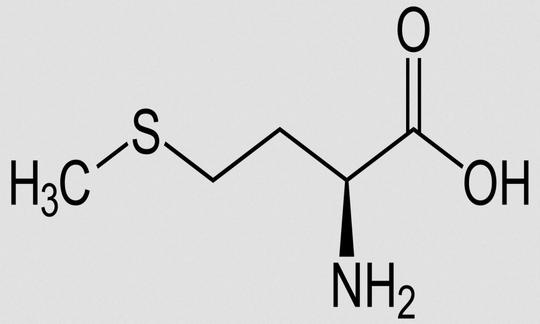
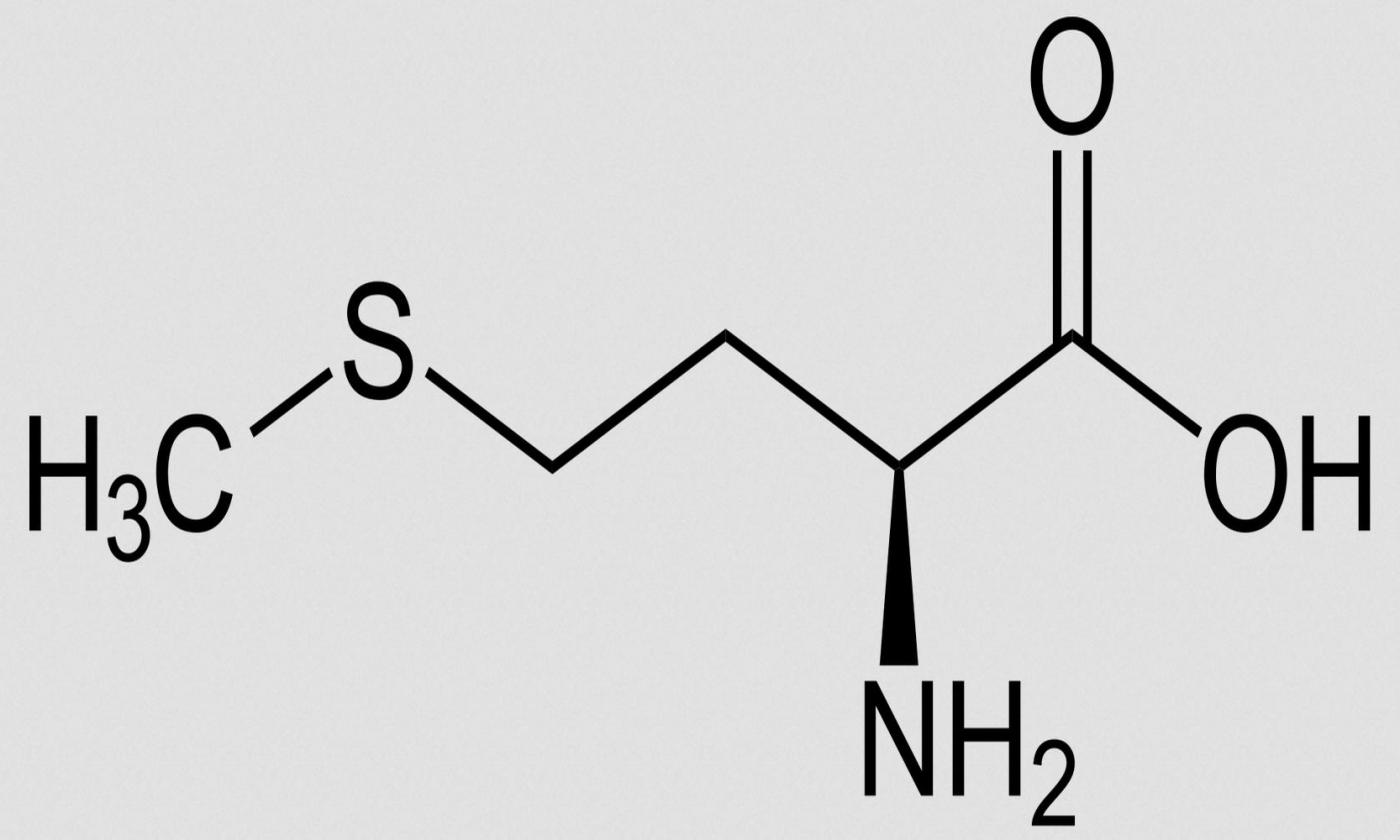
Methionine has a sulfur atom organically bonded in its side chain. The CH3-S-CH2-R bond is called a thioether, where R represents the organic residue of the methionine molecule.
Other names for methionine: 2-Amino-4-methylmercaptobutyric acid; α-Amino-γ-methylmercaptobutyric acid; Acimetion. IUPAC name: 2-Amino-4-(methylsulfanyl)butanoic acid (without stereochemistry). Molecular formula: C5H11NO2S. Abbreviations: Met, M (one-letter code).13





Comments