This page was translated through Google Translator
Iodine, I (Iodine, J)
Iodine is essential for thyroid hormones. In countries with iodine-deficient soil, iodized salt or sea salt with algae can provide sufficient iodine. However, caution is advised: too much salt and iodine can also be harmful. So, how much is enough? Find out more in our article.
We provide science-based information on health, nutrition, and sustainability — independent of sponsors, the food industry, and dietary supplement manufacturers. Find out more: our mission.
A balanced, plant-based diet with few to no industrially processed foods generally provides sufficient macro- and micronutrients, with the exception of vitamin B12 . However,phytochemicalsare particularly relevant for maintaining health and healing, even though they are not considered essential nutrients – apart from vitamins.
---
Definition:
Iodine (I), colloquially and formerly iodine (J), is an essential trace element and a component of the thyroid hormones thyroxine (tetraiodothyronine, T4) and triiodothyronine (T3), which regulate metabolism, growth, and development. Baumann described iodine in 1895 as an essential component of thyroid tissue. Marine demonstrated the effectiveness of iodine in preventing goiter in the northern United States in 1916–1920.17,21
Occurrence
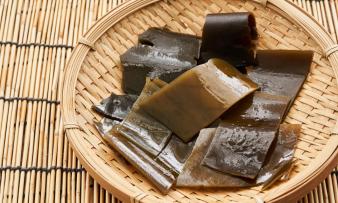
Iodine occurs in soil and seawater. Larger quantities are found in seawater-derived products such as algae, seaweed, and marine fish. However, one gram of bladderwrack contains 2700 µg, or 2,7 mg, which is ten times the daily requirement. Values can be even higher in kombu or kelp (approx. 38,000 µg).19 Consuming these algae can easily lead to excessive iodine intake. The iodine content can be reduced by over 95 % by soaking the algae for several hours with water changes and/or cooking.6,8,9,13
The German Federal Institute for Risk Assessment (BfR) considers dried algae products with an iodine content of 2000 µg/100 g and higher to be unfit for sale, as they can be harmful to health.The German Federal Institute for Risk Assessment (BfR) also strongly advises against using dietary supplements made from seaweed. Due to the highly variable iodine content of the seaweed itself and the lack of a legal definition of permissible amounts, these products exist in a gray area, meaning consumers often suffer more harm than benefit.10
It should be noted that the iodine content of algae varies considerably depending on the season, environmental conditions, water depth, and temperature. The iodine content can also vary significantly between different algae species. Even with precise knowledge of the strain or species, it is difficult to assign seaweed and marine algae products to a specific region based solely on their iodine content. Crucially, not only the natural iodine content but also the method of preparation (cold or hot extraction, or pasteurization) is important.
Depending on the iodine content of the soil, trace amounts of iodine are also found in other foods, such as carrots (3.1 µg/100 g), strawberries (2.8), bananas (2), and lemons (1.6), but one would have to eat several kilograms of these per day. Broccoli (15), peanuts (13), and spinach (12) would still amount to one kilogram. Dried porcini mushrooms contain 27 µg/100 g. However, the values vary considerably.
Foods such as cruciferous vegetables, soybeans, and sweet potatoes contain substances that bind iodine from food, thus reducing its bioavailability. Excessive consumption of these foods can promote the development of a goiter. More on this below.
Most countries have implemented various measures to ensure that their populations receive sufficient iodine through typical eating habits. Iodine is usually added to table salt and thus enters many food products through the food industry. Iodine-fortified table salt contains 1500-2500 µg/100 g, sea salt enriched with algae contains 2000 µg/100 g, and regular sea salt contains only 10-200 µg/100 g.
Those who eat a natural diet should pay attention to their iodine intake. Without sufficient knowledge about algae, it's easy to consume too much iodine. Some edible algae, such as kombu or the brown algae arame, have a very high iodine content. The popular sushi seaweed "nori", on the other hand, has only a moderate iodine content. Unfortunately, there is no legal requirement to label iodine content, so most products lack precise information about it or only state "contains <20 g/kg." For people with hypothyroidism, a gradual introduction to algae is important to avoid a sudden adverse reaction.
Algae can also be contaminated with heavy metals or toxins. Therefore, it is important to pay attention to the origin of the algae and a detailed declaration. Algae from Asia often have very high iodine levels due to longer growth periods. Organically certified algae are preferable.13
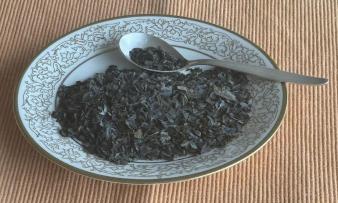
Seaweed can be bought in health food stores, organic shops, Asian markets, and online. Arame seaweed tastes of the sea (not fish), but at 0,25 g per day, this is barely noticeable. This seaweed can be added to soups and stews and cooked along with the other ingredients, or sprinkled on muesli. The vegan gelling agent agar-agar (E 406) also comes from seaweed, but contains very little iodine. The food additive carrageenan (E 407) is also produced from red algae.
The following table shows the iodine content of various algae and salts. However, the natural iodine content can vary considerably. Other vegetables are not included here due to their low iodine content.
Sources: a) USDA, b) biothemen.de, c) Leitzmann and Keller 2013, d) Bundeslebensmittelschlüssel 3.02, e) Bouga and Combet 2015, f) Blikra MJ et al.
Storage and preparation losses
Some foods contain so-called goitrogens (goiter-inducing substances) that interfere with iodine absorption. These substances are found in millet and cruciferous vegetables such as cabbage varieties. Most of these goitrogens are only clinically significant in large quantities or in the presence of a simultaneous iodine deficiency.
The isoflavones genistein and daidzein from soybeans can also inhibit the synthesis of thyroid hormones. At the same time, these substances, as phytoestrogens, also have positive effects on the body.3,4,5
Nutrition - Health
Iodine is crucial for the synthesis of thyroid hormones and fetal neurodevelopment and is closely functionally related to selenium.16
The recommended intake (DA-CH reference values) for individuals between 13 and 50 years of age is 200 µg of iodine per day. After this period, the requirement decreases to 180 µg. During pregnancy, the requirement increases to 230 µg, and during breastfeeding to 260 µg. Iodized table salt alone often cannot meet this requirement: With a daily consumption of 5 g of table salt, iodized table salt provides 75-125 µg of iodine.
A safe upper intake level (UL) for iodine is 500 µg (0.5 mg). Doubling this amount can be toxic over time. However, this upper limit is significantly lower in iodine-deficient populations, as sensitivity to high iodine intake depends on past iodine levels. A similar principle applies to individuals with autoimmune thyroid diseases.11
Deficiency Symptoms
The WHO considers iodine deficiency one of the world's most significant health problems. Thyroid enlargement (also known as goiter or diffuse struma) is one of the earliest signs of iodine deficiency. The thyroid gland enlarges due to continuous stimulation by TSH to produce thyroid hormones, which is not possible because iodine is lacking. A goiter can lead to the following symptoms: increased neck circumference, a feeling of a "lump" in the throat, difficulty breathing, difficulty swallowing, and distension of the visible neck veins.3,4,5
In cases of severe iodine deficiency, the body cannot produce enough hormones, leading to an underactive thyroid and the classic symptoms of hypothyroidism. Depending on the severity of the deficiency, symptoms such as fatigue, slowed reaction time, difficulty concentrating, lack of energy, sensitivity to cold, loss of appetite, weight gain, dry and cool skin, a hoarse and deep voice, bradycardia (slow heart rate), and elevated serum cholesterol levels may occur.3,4,5
In children, thyroid problems can lead to a decline in academic performance and slowed physical and mental development. Iodine deficiency has the most adverse effects during early childhood, when brain development takes place.
Older people often mistake weakness as the sole symptom for general age-related changes, although it can also happen that a lack of thyroid hormones in older people causes dementia that is reversible by iodine supplementation, unlike age-related dementia.
Iodine deficiency during pregnancy can have serious effects on the mental development of the unborn child. In the most severe cases, congenital hypothyroidism (cretinism) can develop.3,4,5
Only a few countries (Switzerland, some of the Scandinavian countries, Australia, the USA, and Canada) were considered to have adequate iodine levels before 1990. Since then, over 70 % of households worldwide use iodized salt, which has drastically reduced iodine deficiency. According to the WHO, iodine deficiency is not just a problem in developing countries; Europe has the highest prevalence at 52%. There, only about 25 % of households use iodized salt.23
Southeast Asia has the highest number and most severe cases of iodine deficiency diseases worldwide. These problems extend across the Himalayan belt and adjacent areas, especially where flooding regularly leaches iodine from the soil. Countries such as Bangladesh, Bhutan, Myanmar, India, Indonesia, Nepal, Sri Lanka, and Thailand are particularly affected.22
Oversupply
A daily iodine intake of more than 1000 µg can lead to various medical conditions, including hyperthyroidism (overactive thyroid), autoimmune thyroiditis (Graves' disease, an autoimmune disease that leads to overactive thyroid), Hashimoto's thyroiditis (an autoimmune disease that leads to chronic thyroid inflammation), acute blockage of iodine uptake in the thyroid gland, and in rare cases, hypersensitivity reactions.
The worldwide prevalence of hyperthyroidism is approximately 0,2–2,5 % in countries with adequate iodine intake. The most common cause of hyperthyroidism is Graves' disease, which affects about 2 % of women and 0,5 % of men worldwide. Other causes of hyperthyroidism and thyrotoxicosis include toxic nodules and the thyrotoxic phase of thyroiditis. Untreated hyperthyroidism can lead to serious health problems, including:24,25
Cardiac arrhythmia: irregular heartbeat.
Congestive heart failure: The heart does not pump enough blood.
Osteoporosis: Bone loss.
Adverse birth outcomes: complications during childbirth.
Metabolic disorders: Increased energy consumption and sugar production in the body.
In recent years, the number of patients with autoimmune thyroid diseases has increased. For these individuals, excessive iodine intake is harmful. It is estimated that 10 % of the population in Germany already suffers from Hashimoto's thyroiditis. Further information on this specific iodine oversupply can be found under the section "Additional Information for Particularly Interested Readers".10,20
A recent study from Hunan, China, investigated the association between daily iodized salt intake and the risk of thyroid nodules and thyroid cancer. The analysis included over 51,000 individuals. The results show that a daily intake of more than 5 grams of iodized salt significantly increases the risk of developing thyroid nodules. Those over 60 years of age are particularly affected. Independent risk factors associated with a daily iodized salt intake of more than 5 grams include age, triglyceride levels, family history of cancer, physical activity, and marital status. At the same time, increased physical activity reduces the risk of thyroid nodules and thyroid cancer resulting from iodized salt intake.26
These results demonstrate the importance of a balanced diet and a healthy lifestyle for thyroid health. Particularly in older adults, reducing iodized salt intake and engaging in regular physical activity can lower the risk of thyroid nodules and cancer.
Functions in the body
Iodine is responsible for the synthesis of the thyroid hormones T4 and T3. The hormones T4 and T3 regulate numerous important metabolic processes such as:1,2,3,4,5
Thermogenesis – Heat balance
Basal metabolic rate – hyperthyroidism leads to an increase in basal metabolic rate and hypothyroidism to a decrease.
Protein, carbohydrate and lipid metabolism – T4 and T3 stimulate, among other things, gluconeogenesis (sugar formation), glycolysis (sugar breakdown) and liponeogenesis, and influence various enzymes.
Differentiation processes, for example the brain development of newborns through the promotion of dendrite formation and myelination (encasing of nerves by myelin sheath formation).
RNA and protein biosynthesis – for cell differentiation and cell division
Body growth
Organ development
Bone formation
Absorption and Metabolism
The body absorbs iodine almost completely in the small intestine. A specific, sodium-dependent iodide transporter carries iodide via the bloodstream to the thyroid gland and other tissues such as the salivary glands, mammary glands, and stomach. Excessive nitrate intake through food—for example, from spinach and chard —and drinking water (> 50 ml/l) inhibits active iodide transport in the thyroid gland and the gastrointestinal tract.
Thyroid-stimulating hormone (TSH), produced in the pituitary gland, promotes the transport of iodide into the thyrocytes of the thyroid gland. Following the oxidation of iodide by thyroperoxidase, it binds to T4. Thyroperoxidase is a heme enzyme whose activity—and thus the synthesis of T4 — can be impaired in cases of iron deficiency.
Thyroid peroxidase catalyzes the reaction to form L-thyroxine (T4) and T3. The body requires the amino acid tyrosine for this biosynthesis. In plasma, over 99 % of the thyroid hormones T4 and T3 are bound to transport proteins. Only a small fraction of these hormones exists in free, unbound form. Only the free hormones, i.e., free T3 and free T4, are metabolically active. The conversion of T4 to the biologically active T3 occurs, among other processes, in the liver and kidneys via the selenium-containing thyroxine 5-deiodinases.1,2,3,4,5
The amount of iodine the body absorbs can differ from the amount we consume. Studies show that with a meal containing 1000 µg of iodine (/100 g) in seaweed, the body likely absorbs less than 900 µg. How much iodine the body absorbs depends on how often and how much iodine we consume, for example, through regular consumption of seaweed. Japanese people have a genetically higher tolerance for iodine.6,14
Storage - Consumption - Losses
In healthy adults, iodine absorption from food is over 90 %. In areas with adequate iodine intake, the thyroid gland takes up about 60 μg of iodine per day to compensate for losses and maintain the production of thyroid hormones. The iodine stores of a healthy adult are 10 to 20 mg, of which 70 to 80 % is stored in the thyroid gland. Iodine is required for the formation of thyroid hormones.18 The thyroid follicles store thyroid hormones as colloid for several months and can supply the body for up to three months.27 However, according to Biesalski (2015), the thyroid hormone stores thus formed in the colloid are sufficient for about two months without iodine intake.28
The thyroid gland releases hormones into the bloodstream, and the breakdown of these hormones in the body releases iodine, which is either reabsorbed by the thyroid gland or excreted via the kidneys. The body excretes approximately 90 % of this trace element through urine.18
Individual iodine status is determined indirectly by measuring urinary iodine excretion. Iodine excretion is measured in a 24-hour urine collection or a random urine sample. An excretion level of 100–200 µg/L is considered optimal. Values below 50 µg/L indicate a deficiency. Values above 200 µg/L indicate a moderately high, but no longer adequate, iodine status. An iodine excretion level above 300 µg/L is considered a sign of excess; in pregnant women, this value is above 500 µg/L.
Additional information for particularly interested readers
Hashimoto's thyroiditis is an autoimmune inflammation of the thyroid gland. This means that the immune system mistakenly produces antibodies against the body's own thyroid gland, as it perceives its tissue as foreign. This leads to chronic inflammation of the organ and, in the course of the disease, to hypothyroidism.
Possible causes of Hashimoto's thyroiditis include genetic predisposition, selenium deficiency, viral infections, environmental factors, excessive gluten consumption, and stress, as well as increased iodine intake. It is suspected that high doses of iodine activate the immune system, potentially triggering autoimmune diseases, particularly affecting the thyroid, in certain groups of people. It is striking that the incidence of Hashimoto's disease has increased significantly in all countries where food iodization has been introduced. Similarly, higher rates of autoimmune thyroid diseases are observed in all countries where drinking water is iodized.
A large portion of the population now uses iodized salt, most bakeries use iodized table salt, and it's included in many processed foods. As a result, the number of people consuming excessive amounts of iodine in their diets is steadily increasing. Since the early 1990s, animal feed has also been fortified with iodine. Iodine is still not listed on all food products, and packaged products often only list "iodized table salt" in the ingredients; the exact amount is not required to be declared. Iodine can therefore be hidden in many foods. This makes it increasingly difficult for patients with autoimmune thyroid diseases such as Graves' disease or Hashimoto's thyroiditis to limit or avoid iodine in their diets.
In countries with adequate iodine intake, such as the USA and Asian countries, the risk of adverse health effects from iodine is very low or only present at high doses (over 1000 µg) from seaweed. A study in China showed that the prevalence of subclinical hyperthyroidism in iodine-deficient regions is higher at 3,9% than in regions with iodine excess (1,9 %). The risk of iodine-induced hyperthyroidism depends on the iodine dose and the geographic region. In iodine-deficient areas like Germany, the incidence of iodine-induced hyperthyroidism is ten times higher than in regions without iodine deficiency, such as the Netherlands or the USA.
The iodine tablets for nuclear accidents contain 50 mg of iodine. Two tablets must be taken per day (breastfeeding women may only take them for a maximum of two days). Nuclear fission produces, among other things, radioactive iodine, which can be released into the air in the event of an accident. If we ingest too much of this radioactive iodine, the likelihood of developing thyroid cancer increases. The non-radioactive iodine in the tablets "saturates" the thyroid gland and prevents it from absorbing any more radioactive iodine; this is called "iodine blockade."
Structures
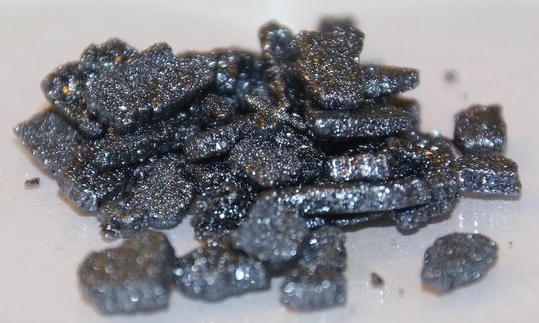
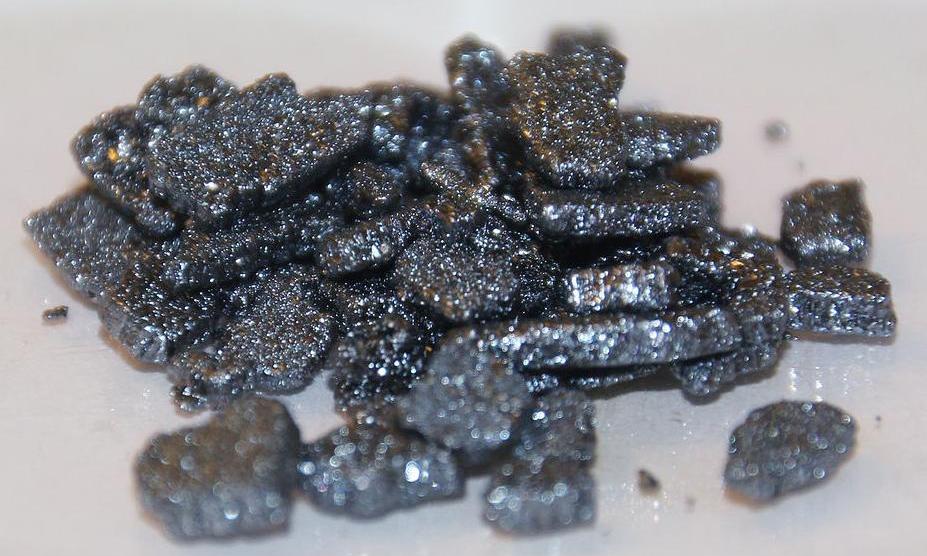
Iodine belongs to the haloalkanes. It occurs in seawater in the form of iodide (I⁻) and iodate (IO₃⁻). Due to its high reactivity, iodine does not occur in nature in its free form, but rather in cationic compounds. Thus, it enters the body as iodide, iodate, or organically bound via food. As a gas, iodine is dark violet; in its solid state, it is gray and shiny.






Comments