

Vitamin A, as RAE
Vitamin A is also crucial for the growth and health of skin and mucous membranes. Learn how to ensure your body gets enough vitamin A through targeted nutrition.
| We provide science-based information on health, nutrition, and sustainability — independent of sponsors, the food industry, and dietary supplement manufacturers. Find out more: our mission. |
A balanced, plant-based diet with few to no industrially processed foods generally provides sufficient macro- and micronutrients, with the exception of vitamin B12. However, phytochemicals are particularly relevant for maintaining health and healing, even though they are not considered essential nutrients – apart from vitamins.
---
Definition
The body absorbs vitamin A either as provitamin A in the form of carotenoids from plants or in the form of its fatty acid esters – mostly retinyl palmitate (retinyl esters) – from animal products. Vitamin A content is uniformly expressed as retinol equivalent (RAE).5
Occurrence
Among the carotenoids, beta-carotene has the highest vitamin A activity. Carotenoids are found predominantly in yellow, orange, and green vegetables.1 In green vegetables, the green chlorophyll masks the yellow-orange color of the carotenoids.2 Carotenoids are also found in yellow-orange fruits such as apricots (96 µg/100 g), mango (54), papaya (47), and peaches (16).1
| ingredient | Vitamin A in µg /100g 1 | ingredient | Vitamin A in µg /100g 1 |
| Fenugreek leaves | 2104 | Frozen, chopped spinach | 586 |
| Dried goji berries | 1341 | Winter butternut squash, raw * | 532 |
| Dried chili peppers | 1324 | Kale, raw | 500 |
| Carrot juice, fresh | 956 | Spinach, raw | 469 |
| raw carrot | 835 | Romaine lettuce, raw | 436 |
| Vegetable margarine, without trans fats | 819 | Pumpkin, raw * | 426 |
| Sweet potato, raw | 709 | fresh parsley | 421 |
| Baby carrot, raw | 690 | Dill herb, fresh | 386 |
* Summer squashes (e.g. butternut squash) have much less vitamin A.
These foods also contain large amounts of vitamin A, but because only tiny amounts are eaten, we do not include them in the list (values in µg/100 g): Vine leaf, raw (1376), Chili flakes (1324), Sheep's sorrel (1250), Lemon balm, raw (1000), Wild chervil (900), Lovage (667), Turnip leaf, raw (579), Spearmint, dried (529), Dandelion leaf, raw (508).
Meat, fish, eggs, milk, and dairy products contain very little vitamin A. For example, cooked pork contains 0 to 10 µg/100 g, while low-fat buttermilk contains 14 µg/100 g. However, a whole egg contains 140 µg/100 g, and liver contains too much. Beef liver, for example, contains 7740 µg/100 g as a reference intake, and pork liver 5400 µg/100 g. The livers of polar bears and seals contain so much vitamin A that they are toxic and therefore not suitable for human consumption.
In general, vitamin content information for natural products is a guideline value that can vary considerably.
Storage and Preparation Losses
Prolonged cooking, oxygen, and light damage vitamin A. Therefore, foods containing provitamin A (beta-carotene) should always be stored unpeeled, wrapped, and in the dark – ideally in the refrigerator. Cooking losses of 10 to 30 % (up to 40 % according to De Groot 4) can occur. Dried products are particularly susceptible.3,4
Oxygen triggers oxidation, parallel to fat oxidation. Shortly before eating, chopping (ideally pureeing) and chewing thoroughly improves the absorption of carotenoids. Gentle heating and the addition of fat can slightly increase absorption even further.6 New studies show that even the smallest amounts of fat are sufficient. However, the influence of preparation (cooked, uncooked, chopped, fat) on absorption is a matter of debate.4
Nutrition - Health
Vitamin A is important for growth, cellular differentiation, the function and structure of skin and mucous membranes, metabolism, and vision. In industrialized countries, 75 % of vitamin A comes from animal-based foods. In developing countries, 70 to 90 % comes from plant-based foods.2
| This is not just for vegans or vegetarians: Vegans often eat unhealthily. Avoidable nutritional mistakes. |
Long-term daily requirements
Vitamin A requirements are particularly increased during breastfeeding, in the second and third trimesters of pregnancy, and in growing adolescents. The daily requirement for children is between 0,6 and 0,8 mg retinol equivalents, and for adults, it is 1 mg per day.5 The requirement is 1,5 mg/day for breastfeeding women, 1,1 mg/day for pregnant women, and 1,0 to 1,1 mg/day for growing adolescents.2,5
| One retinol equivalent is equal to 1 mg of retinol, 6 mg of beta-carotene, or 12 mg of other provitamin A. In the USA and Canada, ratios of 12:1 for beta-carotene to retinol and 24:1 for other provitamin A to retinol are assumed.1 mg of retinol is equivalent to 1,83 mg of retinyl palmitate. |
The body only converts the precursors into vitamin A when needed. 100 to 150 g of carrots or broccoli cover the daily requirement of vitamin A in the form of precursors (5 to 6 mg of beta-carotene). A diet rich in vegetables ensures adequate intake for almost everyone, especially when prepared with herbs and spices. These precursors from plant-based foods are not toxic, even in high doses, unlike those found in animal products.
Deficiency symptoms
Deficiency symptoms can occur due to long-term malnutrition, malabsorption in the intestines, environmental toxins, or impaired fat absorption. Diabetics and people with hyperthyroidism have difficulty converting plant carotenoids into vitamin A. Typical symptoms include impaired vision (night blindness), dry eyes, reduced visual acuity, and increased light sensitivity. Furthermore, vitamin A deficiency increases the risk of cancer, susceptibility to infections, and bone growth disorders in childhood.
Vitamin A deficiency is a widespread problem in developing countries. Approximately one-third of the world's preschool population and 15 % of pregnant women have a biochemical deficiency, particularly in Africa and Southeast Asia.13
There is a proportion of people who, for genetic reasons, are unable to efficiently convert ingested beta-carotene. This is caused by variations in the BCMO1 gene, and in extreme cases, this can lead to an inability to meet vitamin A requirements through plant-based diets, as Georg Lietz noted in the FASEB Journal, June 2009.7,8 However, a paper (with him) appeared in the same journal in April 2014 stating: Better methods are needed to assess vitamin A (VA) status and the efficiency of bioconversion of β-carotene (BC) to retinol (ROH). 9 In other words, this is not entirely clear, as better methods need to be found to investigate this.
Oversupply
The body can hardly break down excess vitamin A, so it can easily accumulate in the body, especially in the liver. The definition of a "Tolerable Upper Intake Level" (UL), i.e., a maximum permissible intake per day, is 3 mg retinol equivalents of vitamin A, but this does not apply to the precursors, which come from plant-based foods.15
Vitamin A overdose is rare and usually only occurs when taking medications containing retinoic acid. People with impaired liver function due to medication, viral hepatitis, or malnutrition are particularly at risk.
During the first trimester of pregnancy, high vitamin A intake (e.g., through fish oil) can lead to birth defects and miscarriages. In contrast to vitamin A, provitamin A cannot cause hypervitaminosis due to its high storage capacity and concentration-dependent absorption processes.2
Animal products such as liver can be toxic in excessive quantities, with 4 to 25 g of animal liver containing this maximum amount. In contrast, plants do not contain direct vitamin A, but rather the non-toxic provitamin A (beta-carotene).
Functions in the body
Vitamin A plays an important role in the visual process, particularly in the rod-shaped photoreceptor cells of the retina . These cells are responsible for black-and-white vision. Vitamin A also plays a central role in the structure and health of tissues, as it ensures normal cell growth not only in the skin but also in the walls of the respiratory, digestive, and urinary tracts.
Other features include:2,3,5
- Involvement in protein synthesis (gene expression) and in fat metabolism in the liver.
- Increased resistance to infections through participation in the immune system.
- Retinol significantly promotes the formation of new erythrocytes and facilitates the incorporation of iron.
- Retinol maintains healthy nerve cells and is important for nerve cells during embryonic development.
- Involvement in the synthesis of sex hormones as well as in spermatogenesis and oogenesis (oogenia are primordial egg cells).
- Required for bone formation and maintenance.3
- Acts as an antioxidant.
Absorption and Metabolism
Absorption of retinyl esters: The absorption rate of vitamin A is over 80 %, while that of carotenoids is between 2 and 50 %.2,3
In the small intestine, pancreatic lipase hydrolyzes retinyl esters to retinol during fat digestion. In the cytosol, cellular retinol-binding proteins (CRBPs) take up the resulting retinol. After re-esterification, the retinyl esters are transported to the liver via chylomicrons. Release from the liver occurs through binding of retinol to retinol-binding protein (RBP) via the plasma to target cells. Uptake at the target cell is facilitated by the RBP receptor.5
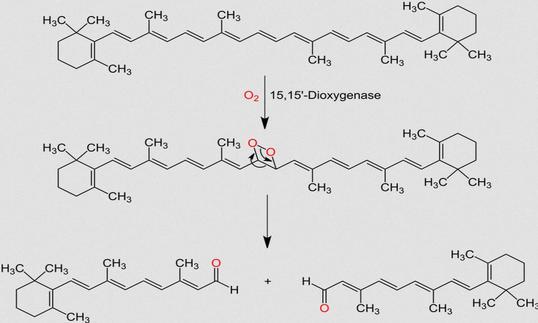
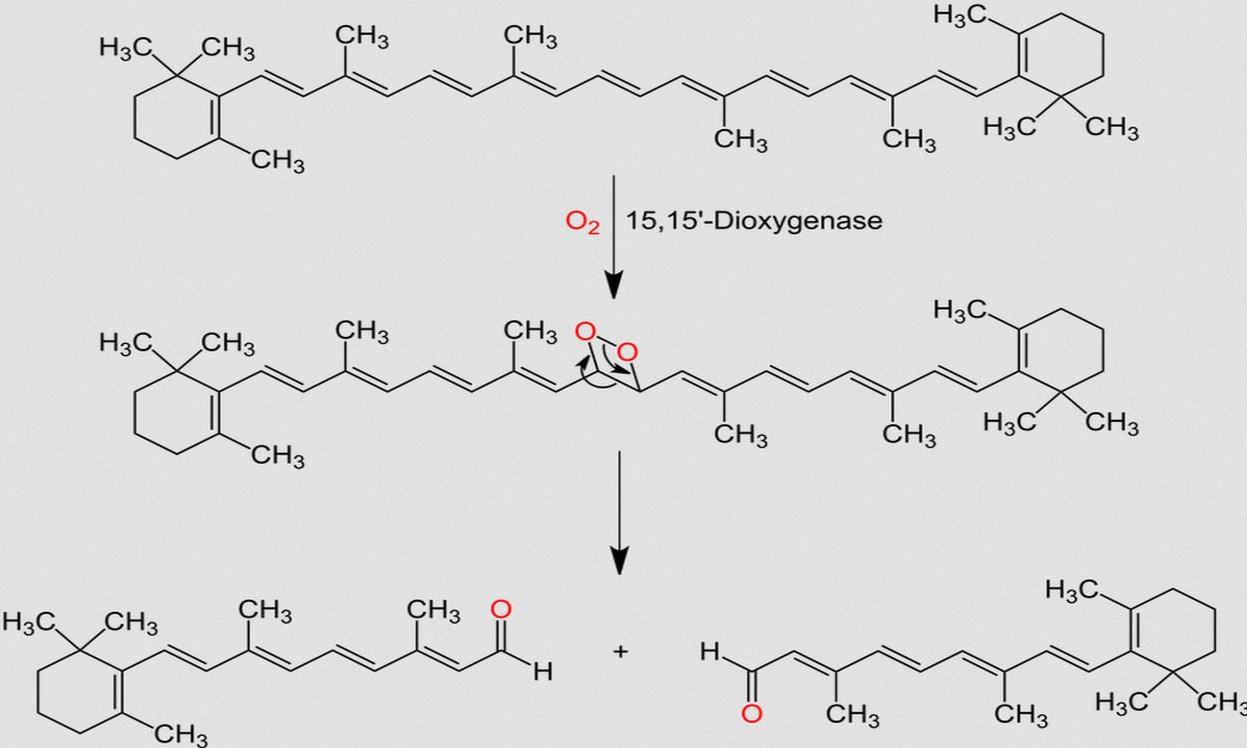
Absorption of provitamin A: After absorption in the small intestine, some of the beta-carotene is enzymatically converted into two molecules of retinal. The conversion rate depends on the body's vitamin A requirements; the better the vitamin A status, the lower the enzyme activity. The body compensates for this.
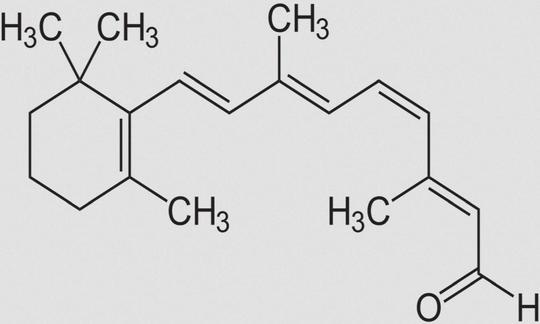
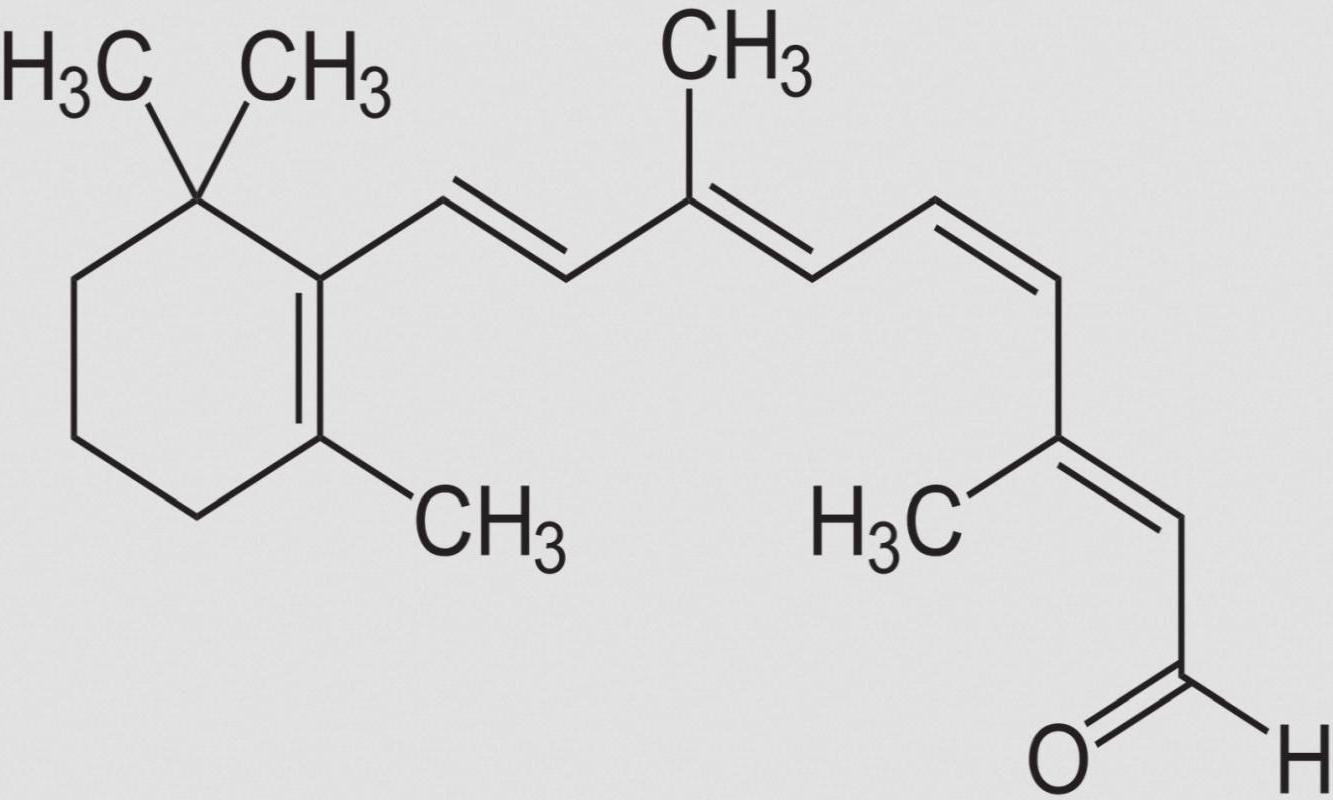
A further step reduces retinal to the biologically active retinol. Retinol is a transport form and intermediate in metabolism. The body can break down ("esterify") retinol and fatty acids back into retinyl esters. When retinol is oxidized, retinal is formed. Retinal is an essential component of the visual process. The body can break down or reduce retinal back into retinol. When retinal is oxidized, retinoic acid is formed.
Retinoic acid plays an important role in the regulation of gene expression. The body cannot further convert retinoic acid to retinal because it lacks the necessary enzymes. Therefore, it is referred to as a vitamin A derivative. This is also the excretion product retinyl glucuronide.4
Storage - Consumption - Losses
Retinyl palmitate is the storage form in which most vitamin A is found in the liver (vitamin A pool 50-80 %). Other functionally dependent storage organs are the retina, testes , and lungs. The reserves in healthy adults are sufficient for about one year.
Beta-carotene is stored primarily in adipose tissue, and to a lesser extent in the liver. An excess of beta-carotene manifests as a harmless yellowing of the skin, especially on the palms of the hands. The two most important carotenoids in the skin are beta-carotene and lycopene.14
Additional information for particularly interested readers:
Around 1500 BC, the Chinese used a mixture of liver and honey to successfully cure night blindness. In the West, at the beginning of the 20th century, researchers began to study the growth of mammals such as rats and mice using different diets.
In 1913, Elmer McCollum and Marguerite Davis, as well as independently Thomas Osborne and Lafayette Mendel, showed that butter and egg yolks were not equivalent to lard and olive oil in promoting the growth and survival of rats. Thus, the notion that all fats have the same nutritional value was incorrect. The growth-promoting "accessory factor" was termed "fat-soluble A" in 1918 and "vitamin A" from 1920 onwards.
Paul Karrer first described the chemical structure of vitamin A in 1932. Harry Holmes and Ruth Corbet isolated and crystallized vitamin A in 1937. Methods for synthesizing vitamin A were developed by David Adriaan van Dorp and Jozef Ferdinand Arens in 1946 and by Otto Isler and colleagues in 1947. Further research on the role of vitamin A in immunity and child survival continued into the 1990s.
Structural
A feature of vitamin A is its polyunsaturated polyene structure, consisting of four isoprenoid units with conjugated double bonds. The isoprenoid side chain is bound to a beta-ion ring.12
Bibliography - 15 Sources (Link to the evidence)
| 1. | US-Amerikanische Nährwertdatenbank USDA. |
| 2. | Kasper H, Burghardt W. Ernährungsmedizin und Diätetik. 11. Auflage. Elsevier GmbH, Urban & Fischer Verlag: München. 2009. |
| 3. | Elmadfa I, Leitzmann C. Ernährung des Menschen. 5. Auflage. Verlag Eugen Ulmer: Stuttgart. 2015. |
| 4. | De Groot H, Farhadi J. Ernährungswissenschaft. 6. Auflage. Verlag Europa-Lehrmittel: Haan-Gruiten. 2015. |
| 5. | Biesalski HK, Grimm P. Taschenatlas der Ernährung. 6. Auflage. Georg Thieme Verlag: Stuttgart und New York. 2015. |
| 6. | Livny O, Reifen R et al. Beta-carotene bioavailability from differently processed carrot meals in human ileostomy volunteers. Eur J Nutr. 2003 Dec;42(6):338-345. |
| 7. | Van Helden YG, Heil SG et al. Knockout of the Bcmo1 gene results in an inflammatory response in female lung, which is suppressed by dietary beta-carotene. Cell Mol Life Sci. 2010 Jun;67(12):2039-2056. |
| 8. | Lietz G. Vitamin A – Tolerance Extends Longevity. FASEB J. 2009. |
| 9. | Park H, Lietz G et al. Simplified approaches for estimating vitamin A stores and β-carotene bioconversion in humans. FASEB J. 2014 Apr;28(S1). |
| 10. | Semba RD. On the 'discovery' of vitamin A. Ann Nutr Metab. 2012;61(3):192-198. |
| 11. | Hathcock JN, Hattan DG et al. Evaluation of vitamin A toxicity. Am J Clin Nutr. 1990 Aug;52(2):183-202. |
| 12. | Menzeres MSS, Almeida CMM. Vitamin C and Antitumor Activity: A Review of Basic and Clinical Applications. J Adv Res. 2024;39:109-122 |
| 13. | Grilo EC, Lima MS et al. Effect of maternal vitamin A supplementation on retinol concentration in colostrum. J Pediatr (Rio J). 2015 Jan-Feb;91(1):81-86. |
| 14. | Coetzee V, Perrett DI. Effect of beta-carotene supplementation on African skin. J Biomed Opt. 2014 Feb;19(2):025004. |
| 15. | National Academy of Sciences. Dietary Reference Intakes for Vitamin A, Vitamin K, Arsenic, Boron, Chromium, Copper, Iodine, Iron, Manganese, Molybdenum, Nickel, Silicon, Vanadium, and Zinc. Washington, DC: National Academies Press. 2001. |
- Karin Rustmeier, Dipl. Food Engineer ETH (Lead Author)
- Ernst Erb (Author)
- Michael Weber, Federal diploma Pharmacist, MSc Infection Biology (Validator)
- Ranin Huemer, BSc in Nutritional Science (Validator)
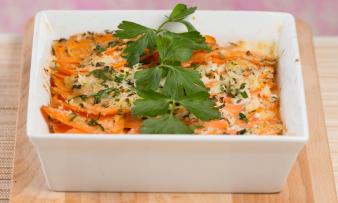
In addition to being delicious, carrot gratin provides many important nutrients
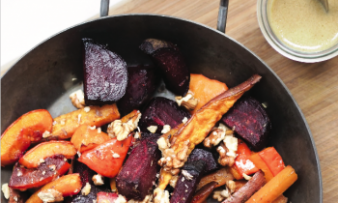
Roasted Vegetables with Red Beet, Pumpkin, and Mustard Sauce is not just bright and colorful; it also contains many healthy ingredients.
The vegetable juice with carrots, celery, miso and pepper is a very tasty way to drink vegetables. The miso gives it a nice flavor.

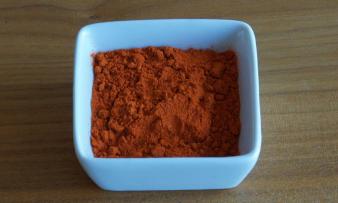
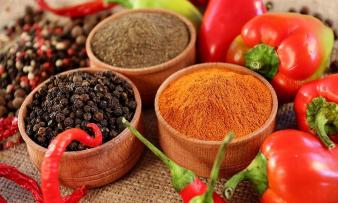
Paprika powder, sweet, has a light, spicy spiciness. The reddish powder is ground and is usually made from dried peppers (raw?). Organic?
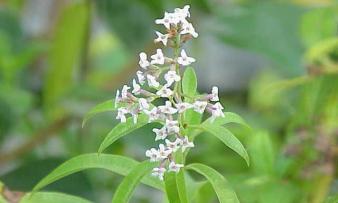
The leaves of the lemon verbena (organic?) have a fresh scent when raw, reminiscent of lemon. The aromatic tea is called lemon verbena or verbena.
The choice of paprika varieties and the ingredients used determine the spiciness and aroma of the paprika powder. Organic, but rarely available raw.
Comments