

TFA – The Forever Chemical in Bread, Simply Explained
How does TFA get into our food and bread? Is this overlooked forever chemical regulated, and what can you do about it? Get the facts, simply explained.
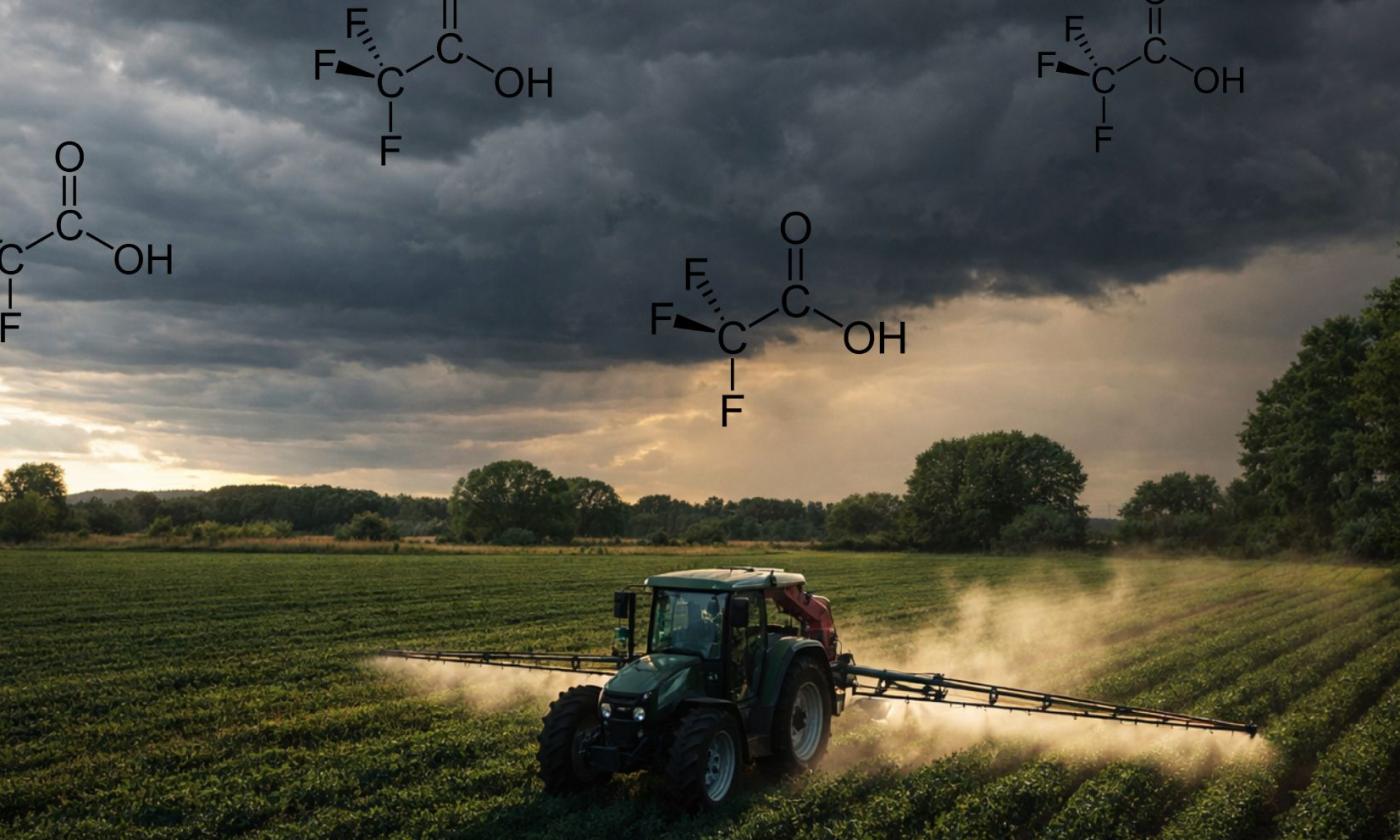
Table of contents
This article summarizes the key points from the detailed article "TFA: The Smallest Forever Chemical - Problem Unsolved". The 66 sources cited therein, mostly scientific studies, apply to both articles.
Introduction
Trifluoroacetic acid (TFA) is a so-called forever chemical. This means that it is very robust and does not degrade in the environment.
TFA is tiny and highly mobile. Filters and sewage treatment plants cannot remove it. Rain distributes it worldwide.
It enters crops via soil and water, and thus foods such as bread, cookies, wine, and orange juice. Humans ingest TFA daily through food and drinking water. Animal studies have demonstrated harmful effects on health – however, reliable studies on the effects on humans are still lacking.
The smallest PFAS in the family
Trifluoroacetic acid (TFA) belongs to the chemical group of PFAS (per- and polyfluoroalkyl substances). TFA is an ultra-short-chain compound. It consists of only two carbon atoms, completely coated with fluorine. Long-chain variants contain more than six carbon atoms, such as PFOA or PFOS. These adhere to sediments, build up high concentrations in the human body, and remain there for decades.
In contrast, TFA is completely water-soluble and is carried everywhere by rain and air. Arctic ice, snow on Svalbard, samples from the central Pacific: researchers are finding TFA worldwide, even far from the source of the emissions.
TFA is found in almost all bodies of water – lakes, the sea, and rivers, and sometimes even in groundwater. It reaches fields and thus the food chain via irrigation, pesticides, and rain. Plants accumulate it in their above-ground parts (fruits, seeds, grains, leaves). Therefore, TFA is also found in foods such as cookies, bread, orange juice, and wine – in far higher concentrations than in drinking water.
Where does TFA come from?
The chemical industry (fluorochemical and agrochemical companies) has been producing substances for decades from which TFA is released as a degradation product. Additionally, TFA from pharmaceutical processes enters the environment directly.
Refrigerant:
Air conditioners and heat pumps contain fluorinated refrigerants. These break down in the atmosphere into TFA. Rain then distributes TFA worldwide.
The problem is this: The refrigerant HFO-1234yf (HFO = hydrofluoroolefins) replaced its predecessor HFC-134a as a climate protection measure due to its low global warming potential. However, the TFA formation rate is higher than with the old refrigerant. A political irony: The climate protection measure is exacerbating a chemicals problem.
Pesticides:
Certain pesticides also contain fluorinated active ingredients or adjuvants. Agriculture uses them as fungicides, herbicides, and insecticides. These pesticides break down in the soil into TFAs, thus contaminating soils and rivers.
Pharmaceutical industry:
TFA is also used in the production of medical products. Production wastewater carries TFA directly into sewage treatment plants. Removal by normal sewage treatment plants is not possible.
An important note regarding the origin:
TFA is produced exclusively by human activity. The argument that it also occurs naturally has been scientifically refuted. Pre-industrial ice core samples and groundwater archives contain no detectable TFA.
How TFA gets from the field to the bread
Plants absorb TFA from the soil water. The water evaporates through small openings in the leaves. TFA remains in the plant – the substance accumulates increasingly in leaves, fruits, and grains. Leaves also absorb TFA from the air. Therefore, many foods contain TFA – sometimes in large quantities.
For comparison: European tap water contains an average of 740 ng/L. The levels in food are many times higher:
Examples of TFA in food
- Butter biscuits 420,000 ng/kg
- Swiss Ruchbrot 360,000 ng/kg
- Breakfast cereals 200,000 ng/kg
- Wine (2021–24) up to 300,000 ng/L
- Kiwi (Italy) 90,000 ng/kg
- Orange juice up to 84,000 ng/L
- Organic fruit puree 30,000 ng/L
- Tap water (EU) Ø 740 ng/L
A 2025 study of 48 samples of organic and conventional food products showed that conventional products contain more than three times as much TFA as organic products. Atmospheric precipitation reaches every field. Therefore, organic fields without the use of pesticides also contain TFA.
PAN Europe calculated that adults who consume an average amount of cereal products daily exceed the suggested tolerable daily intake by 1,5 times. Children exceed it by 1,8 times – based on the guideline value of 1800 ng/kg body weight per day used by PAN Europe. Using the stricter safety value of 320 ng/kg, which PAN Europe derived from the Dutch drinking water limit, the exceedance for children is four times higher.
This guideline value does not originate from an EU authority. European law does not currently recognize an EU limit value for TFA in food (as of March 2026).
Is TFA harmful to health?
TFA is chemically stable but not biologically inert – meaning it is not ineffective in the body. It circulates in the blood, lymph, and tissue fluid.
While the plasma half-life of TFA is "only" one to two days, long-chain PFAS remain in the human body for five to eight years. Nevertheless, one to two days should not seem harmless, as comparable substances like acetic acid are broken down by the body within minutes.
Food and water keep TFA levels in the body constant as long as environmental pollution doesn't decrease. Since this pollution is currently steadily increasing, so too is the body's exposure. Fluorinated drugs also contribute to internal TFA levels: the body metabolizes anesthetic gases like isoflurane, as well as drugs like nirmatrelvir (paxlovide) and fluoxetine, into TFA.
Biomonitoring studies have documented TFA throughout the body, including the placenta and umbilical cord blood. Researchers detected TFA in 55 % of the 66 mother-child pairs examined.
TFA affects receptors that control key metabolic processes, such as fat and energy metabolism. Animal studies have proved that TFA has harmful effects on health: eye abnormalities, reduced body weight in offspring, skeletal malformations, and impaired liver and kidney function. The EU agency ECHA is therefore investigating whether TFA is harmful to reproduction (reproductive toxicity).
While the doses used in animal studies were significantly higher than today's average daily human intake, this does not justify a general all-clear. No one currently knows the health consequences of exposure to low concentrations over decades. Epidemiological studies in humans are still lacking, meaning that findings from animal experiments remain the only available starting point.
Regulation: Limitless
TFA falls into a regulatory gray area. EFSA did not include TFA in its 2020 PFAS risk assessment due to insufficient data. Therefore, the drinking water and food limits only apply to conventional PFAS – not to TFA.
Subsequently, national authorities developed their own assessment approaches. The German Federal Environment Agency (UBA) set a maximum guideline value of 60,000 ng/L for TFA in drinking water. The precautionary safety limit is 10,000 ng/L. Previously, the Dutch National Institute for Public Health and the Environment (RIVM) had proposed a significantly lower indicative guideline value of 2,200 ng/L.
The Swiss Federal Office for the Environment (FOEN) records TFA in its national water monitoring program. At approximately 60 % of the monitoring stations, groundwater levels range between 1000 and 5000 ng/L. Individual sites exceed 10,000 ng/L. The Swiss Drinking Water Ordinance does not specify a limit value for TFA (as of 2026).
A positive counter-example: Denmark revoked the approvals for 23 pesticides in 2025 because they form TFA – a concrete step that other countries have not yet taken.
What now?
The history of pollutants teaches us that political measures come too late, cost too much, and affect the wrong people. With TFA, the knowledge is available earlier than with PFOA and PFOS. This offers a rare opportunity to break the pattern.
Long-term studies on chronic exposure in humans are largely lacking – which is the rule, not the exception, for environmental chemicals. Just because data is missing doesn't rule out a risk. Whether authorities, manufacturers, and the public will act more quickly this time remains to be seen.
Politically, three areas deserve urgent attention: the switch to TFA-free refrigerants and pesticides, binding limits in drinking water and food, and the remediation of emission sources according to the polluter pays principle.
Comments