

TFA: The smallest forever chemical - problem unsolved
What effects does TFA have on us and how can we defend ourselves against it? It's fascinating what we as individuals can do – if we know the facts.
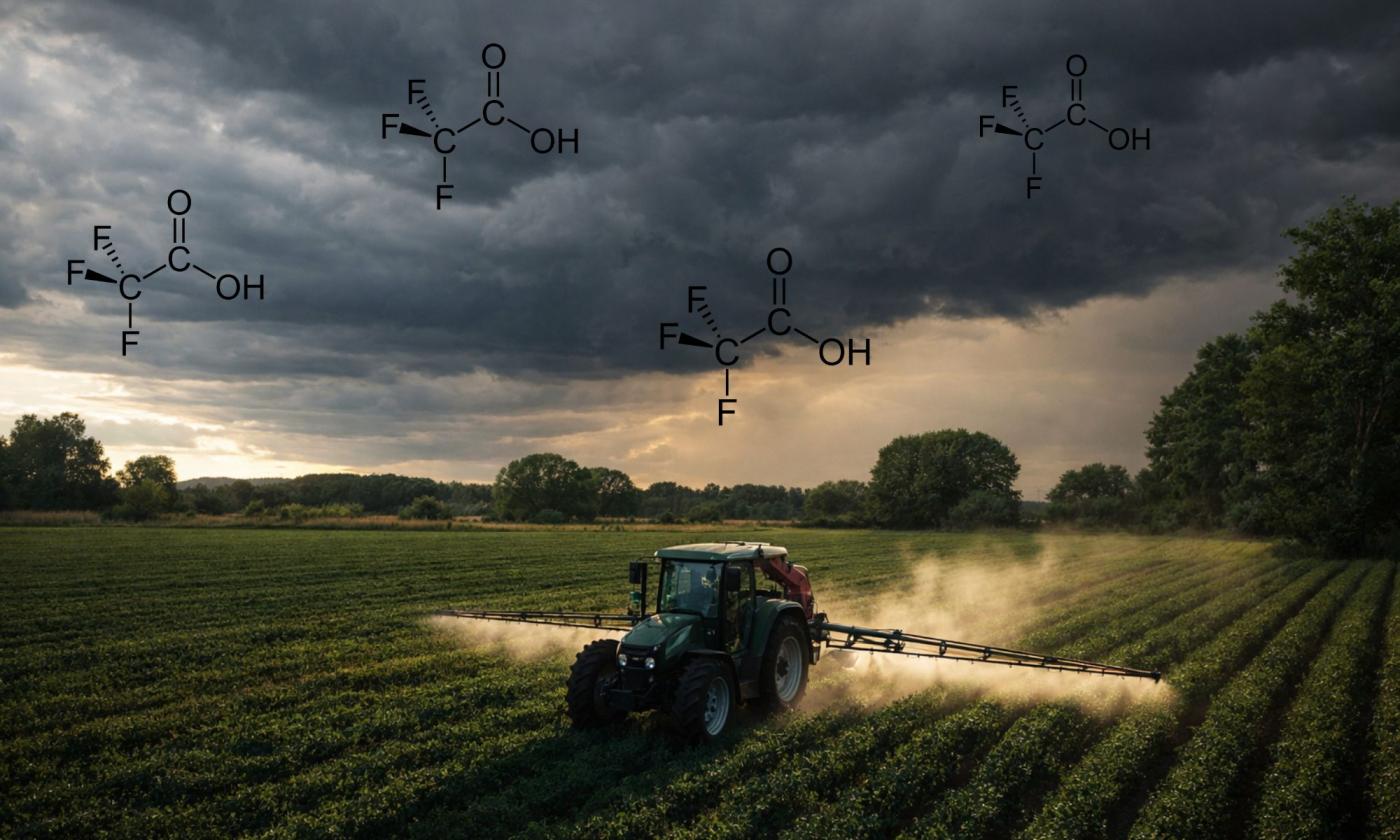
Table of contents
| We provide science-based information on health, nutrition, and sustainability — independent of sponsors, the food industry, and dietary supplement manufacturers. Find out more: our mission. |
This complete version, including study details and treatment recommendations, is intended for professionals. Here is a reader-friendly summary as an alternative. The 66 sources, mostly scientific studies, apply to both articles.
Introduction
Trifluoroacetic acid (TFA) is an ultra-short-chain PFAS substance (per- and polyfluorinated alkyl compounds). The molecule consists of only two carbon atoms, completely coated with fluorine. This minuscule structure overwhelms all common filters and wastewater treatment plants.
TFA is present in almost all surface waters today – extremely mobile, extremely stable. Contamination is irreversible: neither biological degradation processes nor standard water treatment methods remove this so-called "forever chemical." This poses a growing risk to drinking water resources worldwide. In 2016, industrial point sources in a German river produced concentrations of over 100,000 ng/L; researchers measured up to 20,000 ng/L (nanograms per liter) in the affected drinking water.1,43,59
A chemical whose name hardly anyone knows has reached the entire hydrosphere of the planet. Because its sources are growing, not shrinking, the pollution continues to increase.
Besides water bodies, TFA also enters the food chain. Plants accumulate it in their above-ground parts (fruits, seeds, grains, leaves). Consequently, scientists have found concentrations of up to 84,000 ng/L in orange juice. Grain products even show values of 200,000 to 420,000 ng/kg.5,24 For comparison, European drinking water contains an average of 740 ng/L.27 These findings underscore the importance of limit values for food – not just drinking water. Some environmental authorities and organizations therefore recommend that people consume no more than 1,800 ng per kilogram of body weight per day.39
1 TFA compared to long-chain PFAS
PFAS comprise thousands of compounds, all of which share one common property: the carbon-fluorine bond, one of the strongest in organic chemistry. TFA shares this persistence – but differs in almost everything else.
Maerten et al. (2025) classify TFA, along with three other compounds, as ultrashort-chain PFAS. Unfortunately, no official limit value exists for this subgroup of PFAS, which is gaining regulatory attention.
Long-chain PFAS such as PFOA or PFOS adhere to sediments, build up high concentrations in the human body, and remain there for decades. TFA, on the other hand, follows water. It dissolves completely, travels with precipitation, does not bind to particles, and does not evaporate from bodies of water. This extreme water solubility explains its global distribution.
Unlike its long-chain relatives, TFA does not accumulate in protein-rich tissues such as the liver and kidneys. It circulates primarily in body fluids and blood before being excreted by the body. Nevertheless, experts suspect long-term effects from chronic exposure.2,3 We discuss the facts further below in the section "TFA in humans – what biomonitoring can achieve".
Differences between TFA and long-chain PFAS
2 Origin and distribution of TFA
Total carbon dioxide emissions (TFA) don't occur by chance. They follow the emission pathways of a highly networked industrial society and end up as global background noise. To this day, industry prefers to attribute its origins and consequences to nature. And politicians use it as a pretext for avoiding action.
Important sources of TFA
The chemical industry (fluorochemical and agrochemical companies) has been producing substances for decades from which TFA is released as a degradation product. Additionally, TFA from pharmaceutical processes enters the environment directly.
Refrigerants: the dominant source
Air conditioners and heat pumps contain fluorinated refrigerants:
- HFC-134a (HFC = Hydrofluorocarbons, also known as R-134a)
- HFO-1234yf (HFO = Hydrofluoroolefins)
The atmospheric decay of both compounds produces TFA, which is distributed by global precipitation.7
HFO-1234yf is officially considered a climate protection solution due to its low global warming potential – with a higher TFA formation rate than its predecessor. A political irony: The climate protection measure aggravates a chemical problem.
These refrigerants are also used in air conditioning systems in cars and homes. There are no indoor studies on TFA concentrations in air conditioning systems. It is considered plausible that HFO degradation products form in enclosed indoor spaces – however, systematic measurements are lacking.
Pesticides: the more direct route into groundwater
Certain pesticides contain fluorinated active ingredients or excipients. Agriculture uses them as fungicides, herbicides, and insecticides. Biological and chemical degradation processes in the soil produce TFA from these compounds. Nine factors are involved: microorganisms and abiotic processes such as hydrolysis, photolysis, and chemical oxidation. The Pesticide Action Network PAN Europe documented in 2024 that PFAS pesticides represent the main source of TFA contamination measured in groundwater and surface water in rural areas. The causal link necessitates bans.
Pharmaceutical industry: the underestimated source of points
Peptide synthesis and pharmaceutical production use large quantities of TFA industrially. TFA serves as a counterion in the production of peptide drugs – a standard procedure in modern drug development. Production wastewater carries TFA directly into wastewater treatment plants, which do not remove it. Pharmaceutical companies located near bodies of water generate local concentration peaks, which Scheurer et al. (2017) documented as industrial point sources. This pathway of entry remains largely unaddressed in regulatory discussions.1
TFA in consumer goods
Fluoropolymers such as PTFE in non-stick coatings, as well as fluorinated cosmetic ingredients, are considered further TFA precursors. In 2025, the study by Moscato et al. confirmed that fluoropolymers such as PTFE and certain cosmetic ingredients represent significant sources of trifluoroacetic acid. A key conclusion of the study: Precise quantitative assessment of TFA exposure in the home environment is lacking.2
Planetary Reach
TFA has been detected globally. Levels are particularly high in the Atlantic. Furthermore, water and ice samples from the Arctic, Antarctic, and the central Pacific confirm the presence of TFA in regions without industrial emission sources. For example, TFA is found in the snow in Svalbard. Antarctic snow ice and Arctic sea ice also contain TFA in measurable concentrations.
Atmospheric transport explains the distribution: Hydroxyl radicals in the troposphere cleave HFC, HCFC, and HFO compounds to form TFA. Precipitation and snow then transport the resulting TFA to all ecosystems.1,11,12,13,14,15,16
Atmospheric modeling predicts sharply rising TFA concentrations in precipitation and surface waters by the year 2100. The driving force: a global expansion of fluorinated refrigerants (including HCFCs, HFCs, and HFOs). These are replacing ozone-depleting chlorofluorocarbons (CFCs). Freshwater systems without natural outflows, such as salt lakes, further promote TFA accumulation.18
- Hanson et al. (2024) estimate TFA production from atmospheric decomposition between 2020 and 2100 at 31.5 to 51.9 million tonnes (given in Tg = teragram).17
- Simplified ocean models suggest a concentration increase from 200 ng/L to 736–1058 ng/L by the end of the century.17
A trend reversal requires the complete elimination of PFAS and fluorine-containing precursors of TFA – a goal that is not subject to a regulatory deadline.
Human or natural origin?
The global spread of TFA demanded an explanation. For years, research offered one: TFA arises naturally – keywords being deep-sea volcanoes, inexplicably high TFA levels in the oceans, and biogenic sources such as marine algae or soil bacteria.
Joudan et al. (2021) systematically investigated all postulated natural formation mechanisms and found none plausible. Observations of CF4 production from continental fluorite do not provide a sound basis for TFA formation in oxygen-depleted hydrothermal vents. Crucially, water samples taken directly at deep-sea volcanoes do not show elevated TFA concentrations—even though this would be expected in the case of an active vent. Deep-sea evidence and an incompletely explained TFA mass balance in the oceans are therefore insufficient as evidence for a natural origin.19
Pre-industrial groundwater samples and ice core archives contain no detectable TFA. Von Sydow et al. (2000) provide the only exception with their field study – however, their glacier samples also contained insecticides and flame retardants in addition to TFA. The most likely explanation is that modern meltwater contaminated the material.19,20
Industry is instrumentalizing the natural source argument.
In 2020, the factsheet of the European Fluorocarbons Technical Committee (EFCTC) – the industry association of fluorocarbon manufacturers – cites solid scientific literature. However, biased interests influence the selection and interpretation of these sources. In particular, methodological weaknesses of the natural source hypothesis remain unmentioned. For good reason, more recent, critically oriented research completely ignores the factsheet. Goorden's publication goes so far as to accuse leading fluorocarbon manufacturers of systematic concealment and research manipulation. The concealment is based on long-term strategies to downplay industrial emissions, such as targeted research funding, selective source identification, and the persistent promotion of the natural source hypothesis.60
We conclude: The natural source argument serves to downplay the issue – not to advance science.
3. Enrichment in the environment and food
Plants absorb TFA from soil water. Transpiration drives this transport: water evaporates from the leaf pores and draws in new water – TFA follows this water in the transpiration stream but cannot escape as vapor. Thus, TFA accumulates in leaf tissue, but also in fruits and grains. Leaves also absorb TFA directly from the air. Sixty-three field studies at a heavily polluted industrial site found concentrations of up to 3800 mg/kg dry weight (=3.8 billion ng/kg!) in aboveground plant parts. Compared to the TFA concentration in soil water, this results in a bioaccumulation factor of up to 13,000.22
Ecotoxicology
Scientists warn of a global threat from irreversible accumulation in freshwater systems.23 This is because TFA is ubiquitous in air, water, food, and consumer goods. Due to its high chemical stability, TFA undergoes only minor metabolic changes in organisms. This is the reason for its persistence in the environment.2
Particularly problematic: In salt lakes, the TFA concentration rises continuously. Evaporation removes the water, leaving behind TFA – a self-reinforcing mechanism, independent of local emissions.18
All aquatic and terrestrial organisms suffer from chronic TFA toxicity. The EU classifies the chemical as harmful to aquatic organisms with long-lasting effects. Algae are more sensitive to TFA than other aquatic organisms on both short and long timescales, resulting in acute poisoning as well as chronic damage. Previous studies have covered assessment windows of 21 to 90 days—too short for a valid evaluation of long-term effects. Because TFA is neither biodegradable nor removable, aquatic organisms remain exposed to continuous contamination.
In terrestrial ecosystems, TFA inhibits shoot growth in certain crops – documented in maize, poplar, and black locust. Plant roots absorb TFA significantly more readily than other short-chain PFAS. Additionally, TFA alters soil pH, weakens microbial activity, and slows the decomposition of organic matter.2
Pathways into the human body
A study published in 2025 by the Pesticide Action Network (PAN Europe) and Global 2000, based on 48 samples, detected TFA in organic and conventional foods. Conventional products contain more than three times as much TFA as organic products. However, atmospheric precipitation reaches all fields – including organic fields without their own pesticide application. Measurements in grain products have shown that the total contamination tripled within ten years.61
Tap water contains TFA – now throughout Europe. The environmental organization Global 2000 (Austria) found TFA in mineral waters from sources declared as "pristine": evidence of the extent of atmospheric distribution.28 As addressed in the introduction: Compared to food, drinking water is significantly less contaminated.
TFA concentrations in food and drinking water (selection)
Grain products, orange juice, fruit, and wine contribute significantly to overall exposure. Various organizations have defined daily guidelines for TFA intake and calculated the burden from food.39 The following data demonstrate how much the daily consumption of common foods exceeds these guidelines. Particularly in children, daily TFA intake from food is above the recommended daily levels.
According to PAN Europe, a child weighing 23 kg exceeds their defined acceptable daily intake (ADI: 1800 ng/kg bw/day) by 1.8 times simply through daily consumption of cereal products. The calculation was based on: 30 g of breakfast cereal, 2 slices of bread, 60 g of pasta, 1 bread roll, and 50 g of pasta. Adults with a standard consumption also reach 70 % of the ADI.39
PAN Europe also emphasizes that TFA is an endocrine disruptor and has harmful effects even at very low doses. Consequently, a reasonable safety value should be set lower than previously. This calculation was based on figures from the Dutch National Institute for Public Health and the Environment (RIVM). The RIVM used the relative potency factor of TFA to calculate a safe drinking water limit of 2200 µg/L. From this, PAN Europe derived a safety value of 320 ng per kg of body weight – this therefore does not represent an official ADI.
Global 2000, using this safety value (320 ng/kg39), arrives at the following levels of exposure in their study: Adults reach 1.5 times the tolerable daily intake with average consumption of conventional grain products – children exceed it fourfold.61,25
Note: The PAN Europe guidelines are not from an EU authority. There is currently no officially established EU limit for TFA in food (as of February 2026). Further information on this topic can be found in Section 5, Regulatory Gaps and Political Inaction.
4. Health dimension of the TFA burden
Since the 1990s, several measurement methods have been available for the determination of TFA and other short-chain PFAS.29
After an initial research boom in the late 1990s and early 2000s, TFA lost scientific attention.62 This is revealed, among other things, by TFA measurements of precipitation. In Germany, the first measurement took place in 1994 – another in 1996. After that, there was a large gap: further measurements were not carried out until 2018–2019.11
The focus was on longer-chain PFAS such as PFOS and PFOA, which cause well-documented health problems.
Since the 2020s, TFA has once again gained greater public attention. Furthermore, more sensitive analytical methods have enabled its detection at increasingly lower concentrations. Around 2023, the German standards institute DIN developed a draft standard for the standardized measurement of TFA in drinking water, surface water, and groundwater using LC-MS/MS (liquid chromatography with tandem mass spectrometry). The working range validated in 2024 is 0.1–3 µg/L (100–3000 ng/L).30
This explains the data gap: not less TFA in the environment, but a lack of focus on TFA in many standard measurement programs. Current studies with high concentrations reflect improved analytical methods – and real increases at the same time.
TFA in humans – what biomonitoring can do
The earlier assumption that short-chain PFAS are less dangerous does not withstand closer scrutiny. TFA circulates in the blood and extracellular fluids. While its plasma half-life is "only" one to two days and significantly shorter than that of long-chain PFAS (PFOS 5.4 years; PFOA 3.8; PFHxS 8.5), one to two days should not be considered harmless, as comparable substances such as acetic acid are broken down by the body within minutes.31,33,36
Humans excrete TFA almost unchanged, primarily via urine. In cases of impaired kidney function, the TFA level in the blood increases. However, TFA also enters the intestines via the bile. The potential for reabsorption into the bloodstream keeps TFA in the enterohepatic circulation. This prolongs the excretion period.2,31
A deceptive impression: While the short residence time in the body sounds reassuring, food and water only keep the body level constant as long as environmental pollution doesn't increase. And that pollution is increasing.
Biomonitoring studies document TFA throughout the body, including the placenta.3,22 Even umbilical cord blood contains TFA: Researchers detected TFA in 55 % of the 66 mother-child pairs examined.3
A serum test of 252 adults yielded a detection rate of 97 percent. Muir et al. (2025) analyzed pooled urine samples from 6040 Australians: TFA was found in all 70 pools. The median was 24 µg/L (24,000 ng/L), and the maximum was 300 µg/L (300,000 ng/L). Older individuals carry significantly higher body loads than younger individuals— an indication of lifetime cumulative exposure. The accumulation in older individuals may be due to C-CF3-containing drugs (see below).
Blood, placenta, umbilical cord – TFA permeates the human body, reaching even the unborn child. Research is no longer solely focused on the exposure itself, but also on its long-term consequences from continuous exposure.
Occupational exposure
Occupationally exposed groups – pharmaceutical personnel, laboratory chemists, and fluorochemistry workers – are not included in the biomonitoring. The research field is specifically ignoring those who handle TFA daily as a solvent and catalyst.
The review by Wipplinger et al. (2025) identifies several occupational sources of exposure to trifluoroacetic acid (TFA). Operating room personnel inhale anesthetic gases throughout their working hours. While the cumulative weekly dose is significantly lower than that of anesthetized patients, the health risks of long-term exposure remain unexplored. Laboratory personnel, for example, suffer typical acid burns in accidents involving pure substances. Prolonged airborne exposure triggers allergic contact dermatitis. Industrial workers with chronic hydrochlorofluorocarbon inhalation developed hepatocellular necrosis. Furthermore, their serum contained autoantibodies that can trigger autoimmune diseases.
An indication of the urgency is provided by a finding from the general population: In US citizens without occupational exposure, TFA serum levels reach the same order of magnitude as long-chain PFAS in occupationally exposed workers.22
TFA from drugs in the body
TFA is a component of certain medications and, after manufacturing, adheres as a residue to countless synthetic peptides. Those who take such medications unknowingly also ingest TFA – in quantities that, depending on the preparation and dosage, exceed those obtained through mere environmental exposure.
Isoflurane, desflurane, and halothane—common anesthetic gases—as well as newer antiviral drugs such as nirmatrelvir (paxlovid) and antidepressants such as fluoxetine contain C-CF₃ groups, which the body metabolizes to TFA. Older individuals with long-term medication use accumulate measurably higher TFA body loads.3,32,58
Toxicological findings from animal experiments
Although TFA is chemically stable, it is not biologically inert. The biological activity of TFA went unnoticed for a long time.
Previous studies indicate that TFA interacts directly with receptors in the millimolar concentration range – including the lactate receptor HCA1, the fatty acid receptor FFA2, and ATP-sensitive potassium channels. All of these receptors control key metabolic processes. An effect on the glycine receptor, which co-regulates pain perception, muscle tone, and reflexes, has been demonstrated. TFA makes this receptor more sensitive and amplifies existing signals.64
Results from a preprint by Tang et al. (2025) show that TFA measurably alters liver fat and cholesterol metabolism in mice. At first glance, the effect appears positive – cholesterol and triglycerides decrease. However, the underlying mechanism is concerning: TFA activates a central switch in fat metabolism, the so-called PPAR-alpha receptor. This triggers the proliferation of certain cell organelles. Uncontrolled and persistent activation of this receptor is not a therapeutic effect, but rather an unplanned intervention in a sensitive regulatory circuit. Whether this mechanism functions similarly in humans remains unclear – human liver cells have been shown to be less sensitive than rodent cells.
The CLH procedure at the ECHA (European Chemicals Agency) for the hazard classification of TFA is underway (details below). The ECHA is considering reproductive toxicity studies in rats and rabbits. Studies have identified developmental toxicity in animal studies as the most sensitive endpoint. Eye abnormalities, reduced body weight in offspring, skeletal malformations, and impaired liver and kidney function are considered important documented adverse effects. Investigations indicate higher levels of TFA in fetuses than in the mothers.33,34,35 Studies in rats have observed liver enlargement at some high doses.36
Industrial toxicity studies uncovered by PAN Europe 2025 through file review document effects on liver enzymes, immune parameters, and sperm quality. These findings were not fully incorporated into regulatory risk assessments. Whether this reflects methodological weaknesses or deliberate downplaying is currently being examined by the ECHA as part of the harmonized classification process.
Although the doses used in animal studies are significantly higher than the current human daily intake, premature complacency is not warranted. It should be noted that measured TFA concentrations in certain tissues, such as the eyes and placenta, were higher than in the blood – and continuous exposure has a different effect than a single dose.
Animal experiments provide initial answers, but definitive statements regarding human health remain open. Nevertheless, they constitute the only available starting point, as epidemiological studies on humans concerning TFA are still pending.33
As an extremely persistent compound, TFA accumulates in environmental compartments and enters drinking water and food chains over decades. The crucial uncertainty therefore lies less in the daily dose than in lifetime exposure: we currently do not know what health effects will occur when low concentrations accumulate over many decades. It is precisely this long-term perspective that gives the toxicological findings from animal studies their relevance.
5 regulatory gaps and political inaction
TFA falls into a regulatory gray area. EFSA did not include TFA in its 2020 PFAS risk assessment – the data were considered insufficient at the time.42 Therefore, the drinking water and food limits only apply to conventional PFAS.
Subsequently, national authorities developed their own assessment approaches. The German Federal Environment Agency (UBA) set a maximum guideline value of 60,000 ng/L for TFA in drinking water. The precautionary safety limit is 10,000 ng/L.43 Previously, the Dutch National Institute for Public Health and the Environment (RIVM) had proposed a significantly lower indicative guideline value of 2,200 ng/L.39 No other European counterparts followed suit.
International limits for PFAS in drinking water (not TFA)
The limit values set by different countries are based on different assessment approaches – for example, single-substance versus sum limits. Due to the large number of unknown PFAS compounds, single-substance analysis can, in certain cases, lead to an underestimation of the risk potential. Sum parameters provide valuable additional information on the level of PFAS contamination in water.
- USA: PFOA, PFOS: max. 4 ng/L each; PFHxS, GenX: max. 10 ng/L each.44
- EU: Total of 20 PFAS: max. 100 ng/L (mandatory monitoring from Jan. 2026)41
- Sweden: Total of PFOA, PFOS, PFNA, PFHxS: max. 4 ng/L; Total of 21 PFAS: max. 100 ng/L.45
- Denmark: Total of PFOA, PFOS, PFNA, PFHxS: max. 2 ng/L; Total of 22 PFAS: max. 100 ng/L.46
- Switzerland: PFOA: max. 500 ng/L; PFOS: max. 300 ng/L; PFHxS: max. 300 ng/L.47
While Sweden, for example, sets a total limit of 4 ng/L for several PFAS, Switzerland sets significantly higher limits for individual substances such as PFOA. These methodological differences make direct comparisons difficult. Nevertheless, in practice they lead to variations in the permissible maximum concentrations in drinking water, meaning that the level of protection also differs between countries.
Consequences for Switzerland: TFA in groundwater - without a limit value
The Federal Office for the Environment (FOEN) records TFA in its national water monitoring program. It is striking that TFA occurs across the board in groundwater. At approximately 60 % of the monitoring stations, the values are between 1000 and 5000 ng/L. Individual sites show peak values exceeding 10,000 ng/L.48
Cantonal laboratories, such as the Zurich Cantonal Laboratory, detected TFA in drinking water samples (<400 ng/L to 2500 ng/L). The canton is one of the first to publish TFA values on publicly accessible maps.49
The Swiss Drinking Water Ordinance does not specify a legal limit for TFA in drinking water (as of 2026). The reason is that the Swiss Food Safety Authority (FSVO) bases its food standards on EU law. Therefore, no legally binding food standard exists.
The ECHA procedure and the role of EFSA
Two EU authorities are driving forward the TFA regulation in parallel – with clearly separated tasks.
The ECHA assesses the hazard property
Does TFA harm health – yes or no? In 2025, German authorities applied for a harmonized classification (CLH).33 Proposal: Classification of TFA as reproductively toxic, category 1B – due to liver toxicity and developmental damage observed in animal studies.
Note: CLH procedures (Harmonised Classification and Labelling) define the hazard properties of chemical substances in a legally binding manner throughout the EU – based on the CLP Regulation (Classification, Labelling, Packaging).
Category 1B means: Animal experiments on rats and rabbits have demonstrated reproductive and developmental damage; transmission to humans is considered plausible. Two findings are central:
- Liver toxicity: Increased liver weight and cell changes (hypertrophy) in laboratory animals.
- Developmental defects: Skeletal variations and malformations in animal fetuses.
There are no human studies on the reproductive toxicity. The EU system compensates for this gap using the precautionary principle: Clear animal studies justify a preventive generalization to humans – until evidence to the contrary is available.
ECHA forwards its classification recommendation to the EU Commission.
EFSA uses this to calculate the acceptable daily intake.
How much TFA can a person tolerate daily throughout their life? Until now, there has been no EU-wide harmonized ADI (Acceptable Daily Intake) for TFA. Informal guidelines from previous years were around 0.05 mg/kg (50,000 ng/kg) of body weight per day. More recent recommendations from experts are significantly lower; see above under "Routes into the human body".
The EFSA working group is currently developing (as of the end of 2024/2025) the first official health-based guideline value (HBV) for TFA. Ongoing drafts indicate a value of 0.03 mg/kg (30,000 ng/kg) – or even lower – to take into account recent toxicity findings. Official final reports will not be available in March 2026.
Both processes – hazard classification and ADI determination – run in parallel and are mutually reinforcing. An update to the legal framework is expected to take until 2027. In the case of PFOA and PFOS, decades elapsed between internal industry knowledge and regulatory response. In contrast, with TFA, knowledge precedes documented damage. Whether this leads to earlier regulation will be decided jointly by authorities, manufacturers, and an informed public.
Problem: Pesticides and refrigerants
The German Federal Environment Agency identifies fluorinated refrigerants and propellants (propellants) as well as pesticides as the main sources of TFA.50 More information can be found under 2 Origin and distribution of TFA.
While scientific assessments increasingly confirm these pathways of entry, the attribution of political responsibility remains controversial.
Agricultural associations blame industrial producers of refrigerants and propellants. Nevertheless, parts of the industry downplay the problem. The European Fluorocarbons Technical Committee (EFCTC) actively engages in communication aimed at minimizing the TFA problem. Economic interests worth billions explain the resistance to regulation more accurately than scientific uncertainty.
Fluorinated refrigerants represent a significant emissions sector. Manufacturers Chemours and Honeywell positioned HFO-1234yf as a climate protection solution and received regulatory backing. HFO-1234yf replaced HFC-134a (R-134a) following international pressure to reduce its global warming potential. The market value of both companies in the refrigerant segment exceeds several billion USD.8 Manufacturers and authorities alike ignored the aforementioned higher TFA formation rate of HFO-1234yf compared to its predecessor. Climate policy and chemicals regulation are not aligned in this respect. Political coordination between these areas is completely lacking.
Even in the pesticide sector, political authorities observe but take little action. At least: in 2025, the European Commission revoked the approval of the pesticide active ingredient flufenacet. Nevertheless, despite their known environmental hazards, numerous TFA-forming pesticides remained authorized. In contrast, Denmark revoked the authorizations for 23 pesticides in 2025 due to their TFA formation.51
The consequences of stricter regulation affect several levels. In 2021, the TZW (Technology Center for Water, Karlsruhe) warned that a limit of 0.1 µg TFA per liter (100 ng/L) would have dramatic consequences for Germany's water supply. This is especially true because reverse osmosis, as the only effective technology, clearly exceeds the capacity of municipal waterworks (see below). Setting the limit without addressing the sources of emissions externalizes the costs to the general public.
Water management associations such as the DVGW (German Technical and Scientific Association for Gas and Water) and the AWE (Working Group of Waterworks on the Elbe) addressed this issue. This can also be viewed at the German Federal Environment Agency (UBA) under "Creating the basis for effective minimization - Spatial analysis of pathways of pollution into the water cycle".
6. Is TFA removable from water?
TFAs overwhelm all common filter technologies more than their long-chain counterparts. This is primarily due to their small molecular size and extreme water solubility.
Commercially available activated carbon readily adsorbs large, hydrophobic molecules (e.g., PFAS such as PFOS and PFOA). TFA—small, polar, and water-soluble—adheres poorly to carbon surfaces. Newer technologies using surface-modified activated carbon and electro-assisted desorption achieve more promising results under laboratory conditions. However, even with these technologies, 100 % filtration is not possible. In a pilot study, Tisler et al. (2025) also documented a worrying phenomenon: Saturated filters can release TFA again, so that the concentration in the filtered water is temporarily higher than that in the raw water.
Standard ion exchangers also bind TFA insufficiently. Specially developed anion exchange resins achieved better results than activated carbon filters for both long-chain and short-chain PFAS in laboratory tests. Researchers documented removal rates of 80 to over 95 percent for related short-chain PFAS such as PFBA and PFPeA over 14 cycles. However, anion exchange resins carry the risk of introducing new pollutants.
Reverse osmosis: a broad protection?
Reverse osmosis forces water through membranes with nanopores. This technology removes long- and short-chain PFAS compounds at high rates.55
Pilot studies in hydroelectric power plants show good efficacy for TFA.1 However, older studies such as Li SJ et al. (2010) demonstrated that even reverse osmosis membranes do not completely retain TFA – the small molecules pass through with varying degrees of efficiency depending on pH, membrane type, pressure, and ionic strength.56
Furthermore, the disposal of the resulting concentrates poses a major challenge. Their combustion can lead to byproducts such as fluoroform, which has a global warming potential 14,800 times that of CO2.22
For household use, an additional caveat applies: All available data originates from laboratory tests or waterworks pilot projects under controlled conditions. No independent, TFA-specific proof of effectiveness exists for commercially available home devices – neither for reverse osmosis systems nor for other filter systems on the market. Manufacturer information is not a substitute for scientific testing.
Electrochemical hybrid process: the solution of the future?
The University of Illinois developed an electrochemical process that removes ultrashort-chain to long-chain PFAS – including TFA – from water in a single process.57
The system is based on redox polymer electrodialysis, an electrical filtration system. When a voltage is applied, charged PFAS particles migrate through a nanofiltration membrane into a collection channel. An auxiliary molecule drives this process – like a molecular pump. The major advantage: thanks to the electrical attraction, the nanofiltration membrane does not clog. This is a key problem with conventional filtration methods.
Two mechanisms work simultaneously:
- Short- and ultra-short-chain PFAS (up to C4, e.g., TFA) follow the electric field and migrate through the membrane. A collecting channel gathers them.
- Long-chain PFAS (from C6 onwards, e.g. PFOA) stick to electrically charged carbon electrodes.
The concentrated PFAS solution can then be destroyed. Depending on the concentration, this system eliminated 70–89 % of the TFA from the water.57
The technology performs well in the laboratory. However, significant hurdles remain for its use in water treatment plants: material resistance, plant size, regeneration cycles, and the disposal of the highly concentrated PFAS solution.
7. What can be done about TFA?
Research on TFA remains more recent and limited than on long-chain PFAS. Long-term studies on chronic human exposure are largely lacking – which is the rule, not the exception, for environmental chemicals. The absence of data does not rule out a risk. Global distribution, extreme persistence, accumulation in ecosystems, and the lack of knowledge about lifelong exposure demand attention – not inaction.40
TFA is now ubiquitous – and exposure is constantly increasing. Individual protective measures reduce personal exposure, but they don't solve the underlying problem. Furthermore, drinking water filtration only addresses a small fraction of TFA exposure. Food poses a significantly greater risk. Therefore, anyone who truly wants to reduce TFA exposure should start with their diet, not with water filters.
We recommend choosing organic grain products: these have a three times lower contamination level compared to conventional products. Buying organic products generally reduces the use of pesticides, which are a cause of TFA. It is also beneficial to reduce orange juice consumption – especially for children – and to limit processed grain products and wine. Instead, opt for locally sourced and seasonal foods.
Here, knowledge about short-term animal experiments contrasts with a population that is exposed daily and throughout their lives – a situation that does not allow for any all-clear.
Author's assessment
The history of pollutants generally teaches us that political measures come too late. Their implementation is costly. In the specific case of TFA, the knowledge is available earlier than with PFOA and PFOS. This offers a rare opportunity to break the pattern.
Three areas urgently deserve political attention:
- Switch to TFA-free alternatives. Replace fluorinated refrigerants and propellants – starting with the most abundant TFA precursors. Limit PFAS use. Replace pesticides and pharmaceuticals containing TFA precursors with safer alternatives.
- Classify and label TFA as PFAS. Establish legally binding limits in drinking water and food. Include the TFA footprint of HFO refrigerants in climate policy.
- Remediate emission sources according to the polluter pays principle. Whoever releases TFA into the environment bears the costs of its removal.
The conflict of objectives between HFO refrigerants and TFA prevention deserves special attention – because it is managed by two completely separate policy areas that do not communicate with each other. Climate protection and chemicals regulation need to come together to address this issue.
Whether existing knowledge leads to earlier regulation is a decision made equally by authorities, manufacturers, and an informed public. Forecasts predict that, without a reversal of the trend at the source, TFA concentrations in freshwater systems will increase fivefold by the year 2100, according to models.
Bibliography - 66 Sources (Link to the evidence)
| 1. | * Narratives Review DOI: 10.1016/j.watres.2017.09.045 | Scheurer M, Nödler K, et al. Small, mobile, persistent: Trifluoroacetate in the water cycle - Overlooked sources, pathways, and consequences for drinking water supply. Water Res. 2017;126:460-471. |
| 2. | * Once absorbed, it is distributed in plasma and extracellular fluids, with a tendency to remain ionized due to its strongly acidic nature (pKa ≈ 0.5). Studies on patients undergoing halothane anesthesia have found significant levels of TFA in plasma and urine, peaking 24–48 h after exposure. TFA concentrations up to 8.46 ng/mL have been detected in blood samples from Chinese men. It is not lipophilic and therefore does not significantly accumulate in adipose tissue. TFA is excreted almost exclusively via the kidneys in its unchanged form. Elimination is slow, with a plasma half-life of approximately 1–2 days in humans, though this may vary. Renal function affects clearance: in patients with kidney dysfunction, TFA may accumulate in the blood. Narratives Review DOI: 10.3390/environments12080277 Study: weak evidence | Moscato, A, Longo MV, et al. Trifluoroacetic Acid: A Narrative Review on Physico‑Chemical Properties, Exposure Pathways, and Toxicological Concerns. Environments. 2024;12(8):277. |
| 3. | * Narratives Review DOI: 10.3390/life15121825 Study: weak evidence | Wipplinger J, Meusburger L, et al. The Effects of Trifluoroacetic Acid (TFA) in Humans: A Rapid Review. Life. 2025;15(12):1825. |
| 4. | ● Website | Eurofins: Van Hees P, Karlsson P, et al. Trifluoroacetic acid (TFA) and trifluoromethane sulphonic acid (TFMS) in juice and fruit/vegetable purees. |
| 5. | ● Contamination all over Europe:
Website | Pesticide Action Network Europe (PAN Europe): High levels of 'forever chemical' TFA in everyday cereal products all across Europe. 2025. |
| 6. | * Narratives Review DOI: 10.1007/s00204-025-04126-9 | Maerten A, Sanz-Serrano J, et al. Tiny molecules, big concerns: ultrashort-chain PFAS on the regulatory radar. Arch Toxicol. 2025;99(8):3449-3451. |
| 7. | * Atmosphärenwissenschaftliche empirisch‑modellbasierte Forschungsstudie DOI: 10.1002/2014JD022058Digital Object Identifier (DOI) | Kazil J, McKeen S, et al. Deposition and rainwater concentrations of trifluoroacetic acid in the United States from the use of HFO‐1234yf. JGR Atmospheres. 2014;119(24). |
| 8. | * Experimentell‑modellbasierte Atmosphärenchemie‑Studie DOI: 10.1021/acsearthspacechem.0c00355 | Holland R, Khan MAH, et al. Investigation of the Production of Trifluoroacetic Acid from Two Halocarbons, HFC-134a and HFO-1234yf and Its Fates Using a Global Three-Dimensional Chemical Transport Model. ACS Earth Space Chem. 2021;5(4):849–857. |
| 9. | * Modellierungsbasierte Umwelt‑Risikobewertung DOI: 10.1186/s12302-025-01215-5 | Diehle M, Schneider F, et al. Trifluoroacetate leaching potential from fluorinated pesticides: an emission estimation and FOCUS modelling approach. Environmental Sciences Europe. 2025;37:161. |
| 10. | ● Website | Pesticide Action Network Europe (PAN Europe): TFA in the Water: Dirty PFAS Legacy Under the Radar. 2024. |
| 11. | * Studie mit Messdaten, Emissionsabschätzungen und atmosphärischer Modellierung DOI: 10.1021/acs.est.0c02910 | Freeling F, Behringer D, et al. Trifluoroacetate in precipitation: deriving a benchmark data set. Environ Sci Technol. 2020;54(17):11210–11219. |
| 12. | * Feldmessstudie zur globalen Verteilung von Trifluoracetat im Ozean DOI: 10.1021/es047975u | Scott BF, Macdonald RW, et al. Trifluoroacetate profiles in the Arctic, Atlantic, and Pacific Oceans. Environ Sci Technol. 2005;39(17):6555-6560. |
| 13. | * Feldmessstudie Trifluoracetat im Schnee DOI: 10.1021/acs.est.1c04776 | Björnsdotter MK, Hartz WF, et al. Levels and Seasonal Trends of C1-C4 Perfluoroalkyl Acids and the Discovery of Trifluoromethane Sulfonic Acid in Surface Snow in the Arctic. Environ Sci Technol. 2021;55(23):15853-15861. |
| 14. | * Feldmessungsstudie TFA in Eisbohrkernen DOI: 10.1016/j.scitotenv.2025.179837 | Sanz Rodriguez E, Lai M, et al. Seasonal variation of trifluoroacetic acid (TFA) in Antarctic ice cores analysed by direct injection non-suppressed ion chromatography-mass spectrometry (nsIC-MS). Sci Total Environ. 2025;988:179837. |
| 15. | * Feldmessstudie Trifluoracetat im Schnee DOI: 10.1021/acs.est.4c08854 | Hartz WF, Björnsdotter MK, et al. Sources and Seasonal Variations of Per- and Polyfluoroalkyl Substances (PFAS) in Surface Snow in the Arctic. Environ Sci Technol. 2024;58(49):21817-21828. |
| 16. | * Modellierungsstudie DOI: 10.1029/97JD02988 | Kotmarthi VR, Rodriguez JM, et al. Trifluoroacetic acid from degradation of HCFCs and HFCs: A three-dimensional modeling study. JGR: Atmospheres. 1998;103(D5):5747-5758. |
| 17. | * Narratives Review DOI: 10.1002/etc.5963 | Hanson ML, Madronich S, et al. Trifluoroacetic Acid in the Environment: Consensus, Gaps, and Next Steps. Environmental Toxicology and Chemistry. 2024;43(10):2091-2093. |
| 18. | * Feldstudie DOI: 10.1021/acs.est.3c08822 | Cahill TM. Assessment of potential accumulation of trifluoroacetate in terminal lakes. Environ Sci Technol. 2024;58(6):2966‑2972. |
| 19. | * Critical Review DOI: 10.1039/D1EM00306B | Joudan S, De Silva AO, et al. Insufficient evidence for the existence of natural trifluoroacetic acid. Environmental Science: Processes & Impacts. 2021;23:1641-1649. |
| 20. | * Feldstudie Regen und Schnee DOI: 10.1021/es9913683 | Von Sydow LM, Grimvall AB, et al. Natural background levels of trifluoroacetate in rain and snow. Environ Sci Technol. 2000;34(15):3115‑3118. |
| We have categorized studies and books on nutrition and health according to the following 3 evidence categories: green = strong evidence, yellow = medium evidence, purple = weak evidence. The remaining sources are marked ingray . You can find a detailed explanation in our article: Science or Belief? How to evaluate publications.. | ||
Comments