Wir bieten wissenschaftlich fundierte Informationen zu Gesundheit, Ernährung und Nachhaltigkeit – unabhängig von Sponsoren, Lebensmittelindustrie oder Herstellern von Nahrungsergänzungsmitteln. Hier erfahren Sie mehr:unsere Mission.
Einleitung
Ethik, Ökologie und Gesundheit prägen die Diskussion über tierische versus pflanzliche Proteine. PFAS stellen einen weniger bekannten, schwerwiegenden Faktor dar. Diese "Ewigkeitschemikalien" kumulieren in der Nahrungskette. Sie landen überproportional auf den Tellern von Konsumenten tierischer Produkte. Hier finden Sie die Gründe für die Entstehung von PFAS und deren Verbreitung. Zudem, wie sie in unsere Körper gelangen und was sie mit uns anstellen.
Allerdings bedeutet dieser Text Knochenarbeit – nicht nur für den Autor. Ziel ist eine solide und möglichst vollständige Wissensbasis zu PFAS. Ein breites Grundverständnis ist dafür unerlässlich. Nur so verstehen LeserInnen die Zusammenhänge und Folgen wirklich. Der Text bietet Orientierung und Grundlagen für Menschen, die selbst über PFAS schreiben. Er erlaubt nun, wichtigste Fakten in einfacher Form und gut belegt zu vermitteln. Teilverwendung durch Dritte ist bei Link zu diesem Beitrag als Quelle ausdrücklich erlaubt.
Dieser Beitrag behandelt PFAS aus sechs Perspektiven. Entstehung, Verteilung in der Umwelt, menschliche Aufnahme durch Ernährung und Alltag (Eintrag), Gesundheit, Industrie sowie Vermeidung bilden je einen Hauptabschnitt. Manche Themen berühren mehrere Abschnitte gleichzeitig. Beispiel: Biomagnifikation taucht bei der Nahrungskette und beim Ernährungsvergleich auf – je mit anderem Fokus. Ganz bewusst. Wer einzelne Abschnitte isoliert liest, erhält den nötigen Kontext. Wer den Beitrag vollständig liest, erkennt die Vertiefung.
Was bedeutet das Kürzel PFAS? Moleküle, besitzen Kohlenstoffketten mit vollständiger oder teilweiser Fluorbesetzung. Kohlenstoff-Fluor-Ketten bilden das chemische Rückgrat. Die C-F-Bindung zählt zu den stärksten der organischen Chemie. PFAS bauen in der Umwelt nicht ab. Daher: Ewigkeitschemikalien. Die bekanntesten: PFOS und PFOA (langkettig, bioakkumulativ). Neuere Substanzen wie PFBA (kurzkettig) persistieren ebenso, akkumulieren weniger. Bei Müllverbrennung: Temperaturen > 1000 °C während zwei Sekunden zerstören sie.
Die Problematik der ultrakurzkettigen PFAS‑Variante TFA behandeln wir in einem separaten Beitrag.
Kurzdefinition von PFAS
PFAS steht für Per- und Polyfluoralkylsubstanzen. Das Präfix per kennzeichnet vollständigen Wasserstoffersatz durch Fluor, poly mindestens eine perfluorierte Alkylgruppe — also eine C-C-Kette. Diese Kohlenstoff-Fluor-Ketten (C-F-C-F…) bilden eine annähernd unzerstörbare Resistenz — daher der Name Ewigkeitschemikalien. Nicht alle organischen Fluorverbindungen zählen dazu: Fluoracetat, Fluorpharmazeutika und FCKWs wie CF2Cl2 fallen heraus.
Fluor als Element (F2) ist ein extrem reaktives, hochgiftiges Gas. Es ätzt nahezu alle Materialien, selbst Gold und Platin. Nur wenige Stoffe wie Nickel (durch Schutzschicht) oder fluorierte Polymere widerstehen. Darum kommt es in der Natur nicht elementar vor.
Fluorid (F-) liegt in anorganischen Verbindungen als Anion vor, gebunden an ein Kation. So hatFluor nicht nur negative Eigenschaften. Zu den typischen wasserlöslichen Fluoridquellen zählen Natriumfluorid (NaF), Zinnfluorid (SnF2) oder Natriummonofluorphosphat (Na2PO3F, MFP bei Zahnpasta-Listen). Diese setzen in wässriger Lösung Fluoridionen frei. Sie bewirken keine Bioakkumulation, bauen ab und wirken lokal. Die Verbindungen weichen fundamental von PFAS ab.
Beispiel: Die Schweiz setzt seit 1955 fluoriertes Speisesalz ein. Kombiniert mit Jod: 250 mg Fluorid + 20 mg Jod pro Kilogramm Salz. Fluorid in der Zahnpasta hemmt Kariesbakterien und remineralisiert Zahnschmelz. Jod fehlt in einigen Gebieten im Boden. Vor allem unsere Schilddrüse benötigt Jod. Wer jodiertes Salz in jodarmen Gegenden vermeidet, sollte Jod über Algen, Seefisch oder Nahrungsergänzung aufnehmen.
1 Entstehung von PFAS und warum benutzen wir sie?
Die Geschichte von PFAS begann 1938 mit der zufälligen Entdeckung von PTFE (Teflon). Die erste industrielle Anwendung fand 1942 im Manhattan-Kriegsprojekt statt (u.a. bei Plutonium-Anreicherung).1 Danach trieben Industrieunternehmen wie DuPont und 3M die kommerzielle Nutzung voran. Sie entwickelten neue Verbindungen für die Massenproduktion. Die einzigartigen Eigenschaften führten zum Einsatz in unzähligen Alltagsprodukten.
Entdeckung und erste Verwendungen
Vor der Entstehung synthetischer PFAS, gab es verschiedene anorganische Vorläuferverbindungen. Henri Moissan isolierte 1886 erstmals elementares Fluor durch Elektrolyse.2Frédéric Swarts entwickelte ab 1892 die erste praktische Methode zur Synthese organischer Fluorverbindungen. Er ersetzte Halogenatome durch Fluor mittels Antimon(III)-fluorid. Diese "Swarts-Reaktion" legte den Grundstein für die Fluorchemie.3
1930 nutzte Thomas Midgley diese Methode für General Motors. Er synthetisierte Dichlordifluormethan (CF2Cl2) als Kältemittel.4DuPont produzierte diese Freons im grossen Massstab. In den 1930er Jahren eroberten Fluorchlorkohlenwasserstoffe (FCKWs) den Kühlmittelmarkt.3,5
Die erste PFAS-Verbindung entdeckte Roy Plunkett 1938 per Zufall bei der Arbeit an Kühlmitteln. Die neue Substanz erhielt den Namen Polytetrafluorethylen (PTFE) und den Markennamen Teflon. Plunkett arbeitete für das Unternehmen DuPont, das etwa gleichzeitig Nylon patentierte.6
DuPont begann 1802 als Sprengstoffhersteller. Schwarzpulver dominierte bis Ende des 19. Jahrhunderts. Um 1900 kontrollierte DuPont 75 % des amerikanischen Sprengstoffmarkts.5 Ab 1904 diversifizierte die Firma: Nitrozellulose-Lacke, Farben, Chemikalien. Mit intensiver Grundlagenforschung und Marktmacht galt DuPont als globaler Marktführer.7
Ersteinsatz von PFAS
In den 1940er Jahren benötigte das Manhattan-Projekt Teflon für korrosionsbeständige Rohrleitungen.1,6
PTFE (Teflon) ist ein Polymer. Es hat keine definierte Kettenlänge und besteht immer aus demselben Baustein (CF2-CF2)n, der vielfach wiederholt vorkommt. Viele Definitionen schliessen solche Polymere aus PFAS aus.8 Diese Quelle argumentiert dagegen.9
Das Problem: Die Produktionshilfsstoffe (PFOA, PFOS) kontaminieren Umwelt und Produkte.
PFOA (Perfluoroctansäure) ist definiert durch diese 8 Kohlenstoffatome: CF3(CF2)6COOH. Ab 1947 produzierte 3M PFOA (C8) als Emulgator für Teflon.11
PFOS (Perfluoroctansulfonsäure) trägt ebenfalls 8 Kohlenstoffatome: CF3(CF2)7SO3H.10 1953 entdeckte 3M per Zufall, dass PFOS schmutz- und wasserabweisend ist. Sie erforschten die Eigenschaften von Fluorchemikalien weiter, was zu Scotchgard führte (u.a. Textil-Imprägnierungen).12
Nach dem europäischen Verbot der Verwendung von PFOS/PFOA (ca. 2010 bzw. 2020) entwickelte die Industrie eine verkürzte Form mit 6 statt 8 Kohlenstoffatomen als PFHxS. Dies mit der Annahme, dass der Stoff weniger Bioakkumulation verursache. Seit 2023 existiert in der EU ein Herstellungs- und Verwendungsverbot dieser PFHxS (inkl. verwandter Verbindungen und Salze). Grundlage ist die EU-Verordnung 2019/1021 über persistente organische Schadstoffe (POP-Verordnung). Die Schweiz verbietet PFHxS seit 2022 und reguliert PFHxA seit 2025.
In den 1960er Jahren entwickelten 3M und die US Navy gemeinsam AFFF-Löschschaum. AFFF bezeichnet keinen einzelnen Stoff, sondern eine Produktkategorie. Wässrige, filmbildende Löschschäume enthalten Dutzende bis Hunderte verschiedener PFAS-Verbindungen: PFOS, PFOA, PFHxS, Fluortelomere und weitere Tenside.13
Vorteile der PFAS: Warum wir sie fabrizieren
Die Kohlenstoff-Fluor-Bindung zählt zur stärksten kovalenten Bindung der organischen Chemie.Fluor trägt die höchste Elektronegativität aller Elemente. Es zieht Elektronen vom Kohlenstoff an. Diese elektrostatische Anziehung erzeugt eine Bindung, die etwa 6 % stärker (nach Standardwerten, bzw. bis zu ~17 % nach bestimmten Messungen) mehr Energie zum Brechen benötigt als eine gewöhnliche C-H-Bindung.14,15 Daher der Name "Ewigkeitschemikalien".
Glüge et al. (2020) dokumentierten über 200 Anwendungskategorien für mehr als 1400 einzelne PFAS-Verbindungen.16 Wasser perlt ab. Fett haftet nicht. Öle und Schmutz finden keinen Halt. PFAS widerstehen extremen Temperaturen bis über 400°C. Säuren und Laugen greifen sie nicht an. Diese Kombination eröffnet fast grenzenlosen Einsatz.
Antihaftpfannen funktionieren durch PFAS-Beschichtungen. Outdoor-Jacken bleiben wasserdicht. Teppiche weisen Flecken ab. Feuerlöschschaum löscht Ölbrände in Sekunden. Halbleiter-Produktion benötigt PFAS-haltige Ätzlösungen. Medizinische Implantate nutzen biokompatible Fluorpolymere. Die Vielfalt reicht von Gitarrensaiten über Munition bis zu Klettseilen. Fast alle Industriezweige verwenden mindestens eine PFAS-Variante. Die Industrie hält viele Anwendungen für unersetzlich, auch wenn Alternativen existieren.
Übersicht der wichtigsten PFAS
PFAS ist sehr breit definiert. Generell gilt es, mindestens ein Wasserstoffatom am Kohlenstoffgerüst durch ein Fluoratom zu ersetzen, um PFAS zu erhalten. Die Industrie schuf neue PFAS-Substanzen für immer mehr Zwecke. Dies führt zu einer Vielzahl an Substanzen. Die PubChem-Datenbank (NIH) listet über 7 Millionen PFAS.17 Die öffentliche Chemikalien-Datenbank der US-Umweltsbehörde (EPA) nennt 14'735 Einträge.18
Diese Zahl bleibt theoretisch — niemand nutzt alle Varianten. Die Verbindungen entstehen durch systematische Variation der Kohlenstoffkettenlänge (C1-C8+), unterschiedliche funktionelle Gruppen (Carbonsäuren, Sulfonsäuren, Alkohole, Ether) sowie verzweigte oder lineare Strukturen. Die Anzahl variiert je nach Definition und Datenbank.19
PFOA und PFOS stellen dabei nur zwei prominente Einzelvertreter dieser grossen chemischen Familie dar. Die PFAS-Familie besteht aus zwei Hauptgruppen: Nicht-Polymere und Polymere.21
PFAS
Per- und polyfluorierte Alkylsubstanzen
Nichtpolymere
PFAA – Perfluoralkylsäuren
PFCA – Perfluoralkylcarbonsäuren
Ultrakurzkettig (C1–C3): TFA, PFPrA
Kurzkettig (C4–C7): PFBA, PFPeA
Langkettig (C8+): PFOA, PFNA, PFDA
PFSA – Perfluoralkylsulfonsäuren
Ultrakurzkettig (C1–C3): TFMS
Kurzkettig (C4–C6): PFBS, PFHxS
Langkettig (C8+): PFOS
Vorläufer (Precursors): bauen zu PFCA/PFSA ab – z.B. FTOHs, PFOA-Vorläufer
Polymere
Fluorpolymere
Hochmolekulare Feststoffe
PTFE / Teflon
>500 kDa (Kilodalton), relativ stabil
Feststoff
FEP / PFA
Copolymere, 200–575 kDa
Feststoff
PFPE – Perfluorpolyether
Flüssigkeiten / Wachse
z.B. Fomblin, Krytox
Seitenkettenpolymere
Können PFOA/PFOS freisetzen
regulatorisch relevant
z.B. Fluortelomerpolymere
2 Wie PFAS in die Umwelt gelangen und bleiben
PFAS treten aus der Industrie, der Landwirtschaft und aus Konsumprodukten in die Umwelt über. Wasser und Luft verteilen die Chemikalien global. Böden, Sedimente und Gewässer speichern sie und geben sie laufend wieder ab. Es entsteht ein geschlossener Kreislauf aus Eintrag, Speicherung, Mobilisierung und Wiederverteilung.
Eintragswege und Verteilung
PFAS gelangen aus verschiedenen Quellen in Umweltkompartimente, wo sie Anreicherungen bilden. Manche Senken speichern PFAS jahrzehntelang, andere setzen sie kontinuierlich frei.
Klärschlamm als Haupteintragspfad
Nutzen Länder Klärschlamm landwirtschaftlich, zählt dieser zu den wichtigsten PFAS-Eintragspfaden in Böden und Grundwasser. Abwasser aus Haushalten und Industrie enthält PFAS. Diese stammen aus wasser- und schmutzabweisenden Textilien, Küchenutensilien, Kosmetika sowie aus deren Produktion.
Kläranlagen filtern die Chemikalien nicht heraus. PFAS binden an Schwebstoffe und akkumulieren im Schlamm. Die Wasserreinigung entfernt PFAS nicht, sondern konzentriert sie im daraus entstehenden Schlamm.
Dieser nährstoffreiche Schlamm dient seit Jahrzehnten in der Landwirtschaft als preiswerter Dünger auf Acker- und Grünland. Die wiederholte Ausbringung kommunalen Klärschlamms führt zu vorhersagbarer PFAS-Akkumulation in oberflächennahen Böden. Kontaminierte Felder geben die Chemikalien über Jahrzehnte an Pflanzen und Grundwasser weiter. Wie Pflanzen und Tiere PFAS aufnehmen, erklärt der Abschnitt PFAS in Lebensmitteln.
Sepulvado et al. (2011) untersuchten diese Akkumulation über drei Jahrzehnte. Mit Klärschlamm gedüngte Böden enthalten signifikant höhere PFAS-Konzentrationen als ungedüngte Felder. Nach kontinuierlicher Anwendung erreichten PFOS-Konzentrationen in Illinois bis zu 483 ng/g im Oberboden. PFAS drangen bis 120 cm Tiefe vor. Kurzkettige Verbindungen transportieren schneller in tiefere Schichten.53
Einige Länder sprachen Verbote aus zur Verwendung von Klärschlamm als Dünger auf landwirtschaftlichen Flächen. Die meisten Verbote erfolgten jedoch wegen Schwermetallen (Cadmium, Blei, Quecksilber), nicht wegen PFAS.54
Langsam kommt PFAS in den Fokus. Pionier waren die Niederlande (1995). Die Schweiz folgte 2006, ihr Schlamm geht in Verbrennung. Luxemburg führt Verbot seit 2018. In Österreich ist das Ausbringen von Klärschlamm teilweise erlaubt. Deutschland will bis 2029 Phosphorrückgewinnungspflicht einführen. Schweden und Dänemark kennen strenge Grenzwerte für PFAS im Klärschlamm. Auch die USA beginnen mit Regulierungsmassnahmen, wobei grosse Unterschiede zwischen den Bundesstaaten bestehen.
Industrieemissionen und Feuerlöschschäume
Produktionsstätten der chemischen Industrie setzen PFAS direkt frei. Die Anzahl industrieller Standorte, die diese Verbindungen herstellen oder nutzen, korreliert signifikant mit PFAS-Konzentrationen im Trinkwasser.22
Hu XC et al. (2016) wiesen diesen Zusammenhang systematisch nach. Grosse Industrieanlage innerhalb eines Wassereinzugsgebiets erhöht die PFOA-Konzentration im Trinkwasser.In der Nähe einer Fluorchemieanlage in West Virginia lag die PFOA-Konzentration rund 190-mal höher als der empfohlene Richtwert.23
Luftemissionen aus Fluorpolymer-Fabriken verbreiten PFAS über weite Distanzen. D'Ambro et al. (2021) quantifizierten diese atmosphärische Verteilung präzise. Modellierungen prognostizieren, dass 5 % der emittierten PFAS innerhalb von 150 km ablagern. Luftkonzentrationen erreichen nahe der Anlage 8500 ng/m3 und sinken auf 10 ng/m3 in 35 km Entfernung.25 Die restlichen 95 % transportiert die Atmosphäre über tausende Kilometer hinweg.26
Feuerlöschschäume kontaminieren Grundwasser grossflächig und dauerhaft. Militärflughäfen und Feuerwehrübungsplätze nutzen jahrzehntelang PFAS-haltige Schäume für Trainings und Einsätze. Die Schäume dringen in tiefe Bodenschichten ein und verseuchen Trinkwasserbrunnen über Jahrzehnte.13,28
Pestizide
Pflanzenschutzmittel enthalten PFAS als "inerte" Hilfsstoffe. Diese verbessern Benetzbarkeit und Haftung der Spritzbrühe auf Pflanzenblättern. Sie erleichtern damit das Eindringen des Pestizids in die Pflanzen.61
Brasilien verwendet das Pestizid Sulfluramid. Im Boden zerfällt es zu PFOS und weiteren PFAS-Varianten.62 Die direkte Ausbringung kontaminiert den Boden persistent.63
Luftdeposition und Regen
PFAS binden an Staubpartikel oder existieren als gasförmige Vorläuferverbindungen. Regen und Schnee waschen sie aus der Atmosphäre aus.58
Messungen in Wisconsin ergaben PFAS-Depositionen zwischen 1,3 und 47,4 ng/m2/Tag.59 Besonders nahe Industriestandorten oder Feuerwehrübungsplätzen entstehen erhöhte atmosphärische Konzentrationen, die der Wind über mehrere Kilometer verbreitet.60
Das EU-Forschungsprojekt PROMISCES untersuchte PFAS in Regenwasserabflüssen zweier Berliner Industriestandorte. Während acht Monaten entstanden 38 Mischproben aus je 19 Regenereignissen pro Standort. 12 von 26 analysierten PFAS-Verbindungen traten auf. Die PFOA-Äquivalentkonzentrationen überschritten bei mehr als der Hälfte der Proben den EU-Grenzwert von 4,4 ng/L für Oberflächengewässer. Einzelne Werte lagen um den Faktor zehn darüber. Industrieller Regenwasserabfluss stellt damit eine relevante PFAS-Quelle für städtische Oberflächengewässer dar.94,95
EEA 2025: PFAS-Polymere schädigen Klima und Ozonschicht
Die Europäische Umweltagentur EEA veröffentlichte im Mai 2025 eine umfassende Bewertung. 24 bis 40 % aller PFAS auf dem EU-Markt entfallen auf Polymere. Während der Herstellung entstehen hochpotente Treibhausgase (HFC-23) und ozonschädigende Stoffe (HCFC-22).92
Kontaminiertes Grund-, See- und Meereswasser
Kläranlagen entfernen PFAS nicht vollständig. Konventionelle Prozesse wie Sedimentation, Sandfiltration und Belebtschlammverfahren eliminieren PFAS nur unzureichend.55 Gereinigte Abwässer enthalten durchschnittlich 88 ng/L PFAS, teilweise bis 155 ng/L.56
Bewässerung landwirtschaftlicher Flächen mit diesem Wasser führt zu PFAS-Anreicherung im Boden.57 Pflanzen nehmen die Substanzen auf und transportieren sie in die Nahrungskette.
Der Verband der Kantonschemiker der Schweiz veröffentlichte 2023 Probenresultate über PFAS und TFA im Trinkwasser. 46 % von 564 Proben enthielten Einzelstoffe. Folgende Varianten traten auf: PFOS, PFHxA, PFOA, PFBA, PFHxS, PFBS, PFPeA, PFHpA, PFPeS, PFHpS. Keine Probe überschritt die damals gültigen Höchstwerte. 0,9 % der Proben überschritten die EU-Werte: 20 PFAS von 0,1 µg/L (100 ng/L). Ursache: industrielle Punktquellen. Gemessen an Höchstwerten von Dänemark ergäbe das eine Überschreitung bei 26 % der Proben. Höchstwerte Dänemark: 0,002 µg/L (2 ng/L) für die Summe von 4 PFAS.29
Das Schweizer Bundesamt für Umwelt (BAFU) zeigt 2025, dass PFAS im Grundwasser landesweit an knapp der Hälfte der nationalen Grundwasserbeobachtungs-Messstellen (NAQUA) auftreten. Liegen die Werte bei über 0,1 µg/L (100 ng/L), stammen sie häufig aus PFAS-haltigen Feuerlöschschäumen im Einzugsgebiet. Gelegentlich aus Deponien und durch Infiltration von Flusswasser.30
2025 ergaben Probeentnahmen von Raubfischen (Hecht und Egli) im Zugersee Überschreitungen von Höchstwerten. Das resultierte in einem Verbot für private Fischer und die Berufsfischerei für diesen See.31 Auch in Westschweizer Seen überschritten vier von fünf Forellen sowie 13 von 19 Hechten die PFAS-Grenzwerte. Dies mit Konzentrationen von bis zu 45 µg/kg (45 ng/g).32
Meerschaum und Meeraerosole – der vergessene Rückweg ins Land
Meeresschaum akkumuliert PFAS in extremen Konzentrationen. PFOS erreichte in Schaumproben aus North Carolina bis zu 8 Millionen ng/L.96
Auch Meeressprühaerosole enthalten 1000-fach mehr PFAS als Meerwasser. Die winzigen Meerwassertröpfchen weisen eine hohe Mobilität auf. Wellen und starker Wind schleudern sie in die Luft. Besonders bedeutsam ist die Reichweite dieses Transportwegs. Eine dänische Studie analysierte Grundwasserdaten innerhalb von 5 km entlang der Küste. Diese waren durch diffuse PFAS-Quellen belastet – höchstwahrscheinlich durch Meeressprühaerosole. Damit zählt der Ozean zu den bedeutendsten atmosphärischen PFAS-Quellen überhaupt.112
Seesedimente als Langzeitspeicher
Gewässersedimente und Böden speichern PFAS dauerhaft und funktionieren als kontinuierliche Quelle. Durch Desorption geben sie Chemikalien frei. Dadurch entsteht ein dauerhaftes Risiko für die Wasserqualität.24
PFAS-Konzentrationen in chinesischen Seesedimenten variieren zwischen 0,086 und 5,79 ng/g, wobei industrialisierte Regionen die höchsten Werte aufweisen.27
Globale menschliche PFAS-Kontamination
Bevölkerungsbasierte Biomonitoring-Studien verdeutlichen: PFAS kontaminieren Menschen weltweit. Keine Region bleibt verschont.
USA: Die US-Gesundheitsbehörde untersuchte repräsentative Bevölkerungsstichproben. Calafat et al. (2007) analysierten NHANES-Daten 2003-2004. Ergebnis: Über 98 % der Proben enthielten PFOS, PFOA, PFHxS, PFNA.33 Botelho et al. (2025) bestätigten dies mit Daten von 1999 bis 2020. Über 96 % der 12- bis 19-Jährigen trugen messbare PFAS-Konzentrationen im Blut. Sogar Kinder, geboren nach dem PFOA- und PFOS-Produktionsstopp.34
Europa: Die HBM4EU-Initiative untersuchte 1957 europäische Jugendliche (12-18 Jahre) aus neun Ländern. Zeitraum: 2014-2021. Resultat: PFOS (1,63-2,78 ng/mL), PFOA (0,75-1,26 ng/mL), PFHxS (0,33-0,52 ng/mL) und PFNA (0,19-0,45 ng/mL) kamen im Blutserum am häufigsten vor. 14,3 % überschritten den EFSA-Richtwert.35
Afrika: Begrenzte Daten verfügbar. Südafrika führte Pilotstudien durch. Hannsen et al. (2010) analysierten das Blutserum von 71 Müttern. PFOS-Median: 1,6 ng/mL (0,1-15,9 ng/mL). PFOA-Median: 1,3 ng/mL (0,17-8,5 ng/mL). Auch das Nabelschnurblut enthielt PFAS. Städtische Gebiete übertreffen ländliche an Belastungshöhe.36 Dartey et al. (2021) untersuchten Ghana. 219 Teilnehmer. PFOS und PFHxS dominierten. Konzentrationen generell niedriger als in industrialisierten Ländern.37
Australien: Seit 2002 existiert ein kontinuierliches Biomonitoring im Rahmen des Australian HBM program. Die nationale Gesundheitsumfrage NHMS des Australian Bureau of Statistics (2025) detektierte im Zeitraum 2022-2024 folgende PFAS: 98,6 % PFOS, 96,1 % PFOA und 88,1 % PFHxS bei ca. 7000 Personen über 12 Jahre.38
Asien:Tao et al. (2008) untersuchten Muttermilch aus sieben asiatischen Ländern. Proben stammten aus Japan, Indien, Malaysia, Kambodscha, Vietnam, Indonesien und den Philippinen. Gesamtzahl: 184 Proben. PFOS dominierte in fast allen Proben. Gefolgt von PFHxS und PFOA.39
Arktis und Antarktis: PFAS erreichen selbst entlegenste Regionen. Subsistenz-Gemeinschaften in Grönland (Ittoqqortoormiit) erreichten höchste nicht-berufliche PFAS-Werte weltweit. Produktionsstandorte lagen tausende Kilometer entfernt. 92 % der Kohorte überschritten immunotoxische Schwellenwerte der EFSA. 86 % fielen in die höchste Risikokategorie (> 31,9 ng/mL Blutserum). Die Belastung resultierte aus Subsistenzernährung mit hohem Meeressäugetier-Anteil. PFAS biomagnifizieren in arktischen Nahrungsketten. Zudem trägt der globale Destillationseffekt dazu bei, dass Prädatoren und Einwohner kühler Regionen extreme Konzentrationen erreichen.42Lohmann et al. (2024) fassten über 200 Studien zusammen: Eisbären, Zahnwale und Raubvögel tragen die höchsten PFAS-Werte aller arktischen Landwildtiere.40 Bengtson Nash et al. (2010) wiesen PFAS im antarktischen Zirkumpolarstrom nach.41
3 Wege in unseren Körper
PFAS gelangen auf vielfältigen Wegen in unseren Körper. Die Hauptaufnahme erfolgt über Lebensmittel und Trinkwasser. Dabei spielt die Position in der Nahrungskette eine entscheidende Rolle. Tierische Produkte akkumulieren PFAS aus ihrer Futterkette und weisen deutlich höhere Konzentrationen auf als pflanzliche Lebensmittel. Der Eintrag in den Boden bestimmt, wie stark unsere Nahrung belastet ist.
PFAS in Lebensmitteln
Alle Organismen nehmen PFAS auf, Pflanzen wie Tiere. Fleischfressende Organismen akkumulieren höhere PFAS-Konzentrationen als Pflanzenfresser. Omnivoren liegen dazwischen. Die folgenden Abschnitte erklären diese Mechanismen.
Pflanzliche Lebensmittel
Pflanzen nehmen PFAS hauptsächlich über die Wurzeln aus kontaminiertem Boden auf. Wang et al. (2020) beschrieben diese Aufnahmemechanismen detailliert. Wurzelaufnahme bildet den Hauptweg. Sie transportieren PFAS vom Boden über die Wurzeln in oberirdische Organe. Transpiration treibt die PFAS-Aufnahme durch Pflanzen massgeblich an. Oberirdische Aufnahme aus der Atmosphäre spielt eine untergeordnete Rolle.44
Kurzkettige PFAS gelangen leichter in Blätter und Früchte, langkettige bleiben bevorzugt in Wurzeln. Blattgemüse akkumuliert höhere PFAS-Konzentrationen als Wurzelgemüse, Blütengemüse oder Sprossengemüse. Auch bei Getreide gilt: Wurzeln enthalten mehr PFAS, als Stroh und Korn.43 Getreide und Obst enthalten meist geringere PFAS-Werte als Gemüse.124
Tierische Lebensmittel
Nutztiere nehmen PFAS über kontaminiertes Futter, Trinkwasser und direkten Bodenkontakt auf. Selbst bei fehlenden PFAS-Nachweisen in Boden oder Gras akkumulieren Tiere die Chemikalien. Voraussetzung dafür bieten kontaminiertes Oberflächenwasser oder Grundwasser.
Konzentrationen von PFOS und PFHxS (Perfluorhexansulfonsäure) im Trinkwasser korrelieren positiv mit den Serumkonzentrationen von Weidetieren (Rinder, Schafe). Andere Aufnahmewege über Weidegras und Boden demonstrieren schwächere Korrelationen.45
PFAS binden aufgrund ihrer Proteinaffinität bevorzugt in Blut und proteinreichen Geweben wie Leber, Niere, Lunge, aber auch Muskeln und Gehirn.49,165 Die Anreicherung variiert je nach Spezies und Ernährungsweise. Proteingehalt in Blut und Gewebe sowie artspezifische Transportprotein-Aktivität verstärken diese Unterschiede.52
Tierische Produkte tragen eine zusätzliche Belastung. Die Nahrungskette reichert PFAS an. Pflanzenfresser akkumulieren PFAS aus vielen niedrig belasteten Pflanzen. Fleischfresser konzentrieren PFAS aus angereicherten Beutetieren. Menschen am Ende dieser Kette erhalten die höchste Dosis.
Anreicherung in der Nahrungskette
PFAS akkumulieren mit jeder Stufe der Nahrungskette, genannt Biomagnifikation. Die Meta-Analyse durch Ricolfi et al. (2025) von 119 Nahrungsnetzen weltweit dokumentiert PFAS-Konzentrationen. Jede trophische Stufe verdoppelt die Konzentration (trophischer Anreicherungsfaktor TMF = 2,00; 95 %-Konfidenzintervall KI: 1,64-2,45).46
Kleine Organismen wie Plankton und Algen nehmen PFAS aus Wasser und Boden auf (1. trophische Stufe). Kleine Fische fressen diese kontaminierten Organismen (2. trophische Stufe). Grössere Raubfische verzehren die kleineren Fische (3. trophische Stufe). Menschen und andere Spitzenprädatoren essen die Raubfische (4. trophische Stufe). Jeder Schritt konzentriert die PFAS weiter, denn bei jeder Stufe ist die Nahrung reicher an PFAS.
Spitzenprädatoren akkumulieren exponentiell höhere PFAS-Konzentrationen als ihre Umgebung. Selbst in schwach kontaminierten Gebieten tragen diese Tiere unverhältnismässig hohe PFAS-Lasten. Diese extremen Akkumulationsraten bergen ernste Gesundheitsrisiken.46
Die Variation der Anreicherung zwischen Verbindungen bleibt erheblich. Ein spezielles chloriertes Polyfluoralkylethersulfonsäure-Gemisch (F-53B), das in China als Ersatz für PFOS galt, erreicht den höchsten Faktor (TMF = 3,07).46 Langkettige PFCAs (C10-C13), PFOS und PFDS (Perfluordecansulfonat) qualifizieren als hochgradig bioakkumulierend und biomagnifizierend.47,48
Die Biomagnifikation verläuft in aquatischen, terrestrischen und landwirtschaftlichen Systemen unterschiedlich. Konzentrationsmuster variieren nach Nahrungsnetz, Artzusammensetzung und Kontaminationsquelle.
Aquatische Nahrungsnetze
Wasserpflanzen enthalten die niedrigsten Werte mit 0,52-2,3 ng/g.Wirbellose akkumulieren höhere Konzentrationen kurzkettiger PFCAs (C4-C7) und neuartiger FBSAs als Knochenfische. Die höchsten PFAS-Konzentrationen beinhalten benthisch-pelagische Spitzenprädatoren wie Schwarzbarsche mit rund 92 ng/g Nassgewicht. Diese Organismen leben am Gewässerboden (benthisch) und im freien Wasser (pelagisch).48
Meeresfrüchte (Krustentiere, Oktopus, Tintenfisch) bilden die Spitze für die Aufnahme von PFAS über eine meerestierreiche Nahrung.120
Das europäische Umweltbüro (EEB) analysierte 2025 Daten aus sieben Ländern (2009–2023). Fast alle Fischproben enthielten PFOS weit über den vorgeschlagenen neuen Grenzwerten. 24 % der schwedischen, 19 % der französischen und 15–17 % der österreichischen und spanischen Proben überschritten den Grenzwert um das 500-fache oder mehr. Einzelne Proben aus Schweden, Deutschland und Spanien lagen beim 10'000-fachen.93
Terrestrische Nahrungsnetze
Allgemein ist der Unterschied zwischen tierischen und pflanzlichen Esswaren gross – zugunsten der Pflanzen. Selten gegenteilig: Wildbeeren aus PFAS-kontaminiertem Gebiet (Schweden, nahe Feuerlöschübungsplatz) enthalten 1,8-7,3 ng/g, Pilze 54,7 ng/g.49
Industrielle Hühnereier enthalten im Mittel 0,096 ng/g, also zigfach weniger.50 Hühnereier können jedoch auch bis zu 24,8 ng/g aufweisen.51
Huftiere wie Rehe erreichen in betroffenen Regionen in der Leber 84 ng/g, Elche 55 ng/g.49 Die Summe langkettiger PFAS in der Wildschweinleber beträgt im Median 90,2 ng/g.168
Wühlmäuse akkumulieren an belasteten Standorten deutlich höhere Konzentrationen: Muskel 238 ng/g, Leber 4790 ng/g. Der Waldkauz als Spitzenprädator konzentriert im Blut 6840 ng/g.49
Landwirtschaftliche Produktionssysteme
Handelsübliche tierische Produkte aus Polen zeigen: Langkettige PFAS akkumulieren in Rinderleber mit 0,52 ng/g. Damit deutlich weniger als Wildtiere. Rinderleber weist die höchste Konzentration unter den untersuchten Nutztieren auf. Hühnerleber enthält 0,17 ng/g, Pferdeleber 0,13 ng/g.50
Eine Studie aus Polen belegt, dass Muskelfleisch aus Wildschweinen die höchsten Werte erreicht. Hirsch hat ähnliche Werte wie Rind. Schwein enthält mehr PFAS als Geflügel, da letzteres diese schneller metabolisiert.52,123
Das Dilemma bei Freilandhühnern
Freilandhaltung bietet unbestrittene Vorteile für das Tierwohl. Problematisch ist sie, wenn sie auf PFAS-kontaminiertem Boden erfolgt. Dies demonstriert den Zielkonflikt zwischen Tierwohl und Schadstoffminimierung.
Der Kontaminationspfad verläuft über den Boden. Mit Klärschlamm gedüngte oder durch industrielle Abwässer kontaminierte Äcker und Wiesen enthalten mehr PFAS. Regenwürmer nehmen die PFAS über die Erde und das Porenwasser auf. Es findet eine Bioakkumulation statt.64,65
Für das Freilandhuhn ist der Regenwurm ein natürlicher und proteinreicher Leckerbissen. Es pickt und scharrt auf der belasteten Erde. Damit nimmt es die Würmer und direkt Erde auf. PFAS aus unzähligen Würmern und Erde lagern im Eigelb ab. Der Grund liegt in der Proteinaffinität von PFAS. Es bindet an Lipoproteine, Albumin-ähnliche Proteine und Fettsäuretransportproteine. Eigelb enthält viele Lipoproteine.66
Deutsche und niederländische Hühnereier aus Hobbyhaltung weisen deutlich höhere Belastungen auf als kommerzielle Eier. Die untersuchten Standorte lagen jedoch in Meeresnähe und in der Nähe eines Chemieparks (hohe PFAS-Belastung). Eine Kontaminierung über Regenwürmer bei Hobby-Hühnern scheint hier wahrscheinlich.166 Eine Beobachtungsstudie aus den Niederlanden und Griechenland bestätigt erhöhte PFAS-Konzentrationen in Eiern aus heimischer Produktion auch für zufällig gewählte Standorte.51
Bei nicht kontaminierten Flächen bestimmt das Futter die PFAS-Belastung. Granby et al. (2024) belegen, dass Fischmehl als Futter stark zur PFAS-Belastung bei Hühnern beiträgt.66
Biologischer Landbau als Teillösung
Biologischer Landbau reduziert den PFAS-Eintrag massiv. Die EU-Öko-Verordnung verbietet die Verwendung von Klärschlamm als Dünger im biologischen Landbau. Dies verhindert den wahrscheinlich grössten direkten Eintragspfad für PFAS in landwirtschaftliche Böden. Das bedeutet einen enormen Vorteil.167 Bio-Betriebe verzichten zudem auf synthetische Pestizide. Damit schliessen sie die Quelle der PFAS-haltigen Hilfsstoffe in Spritzmitteln aus. Für beides sucht die entsprechende Bio-Aufsichtsstelle regelmässig über Bodenproben.
PFAS erreichen jede Umwelt weltweit. In der Nähe von industriellen Ballungsräumen oder Flughäfen ist die Dichte am grössten. Durch Luft- und Wasserdeposition erhalten unbelastete Bio-Felder mit der Zeit Kontamination. Ein Bio-Bauer vermag belasteten Staub vom Wind auf seine Felder nicht zu verhindern. Den PFAS-Gehalt in Regen oder Schnee beeinflusst er ebenfalls nicht. Bewässerung mit Oberflächenwasser stellt eine weitere potenzielle Kontaminationsquelle dar. Je nach Quelle enthält dieses Wasser PFAS. Vorbelastete Böden tragen ein PFAS-Erbe. Ein Feld, das vor der Umstellung auf Bioanbau jahrzehntelang diesen Schlamm erhielt, behält diese Altlast. PFAS bleiben im Boden und angebaute Pflanzen nehmen sie auf.67
Weitere Aufnahmewege
In Industrieländern stammt der Grossteil der PFAS-Aufnahme aus Lebensmitteln. Es folgen 4,5-14 % aus Trinkwasser sowie 2-25 % aus Hausstaub und Innenraumluft.43
Daneben gibt es zahlreiche weitere Wege in unseren Körper. Die Bedeutung dieser Expositionspfade variiert stark zwischen Regionen und Lebensstilen.
Trinkwasser als unterschätztes Risiko
In den USA überschreitet die Trinkwasserversorgung von 6 Millionen Einwohnern den lebenslangen gesundheitlichen Richtwert. Dieser beträgt 70 ng/L für PFOS und PFOA (gemäss Lifetime Health Advisory der EPA).22 Besonders betroffen: Regionen nahe Industriestandorten, militärischen Feuerwehrübungsplätzen und Kläranlagen.
Im April 2024 verabschiedete die EPA verbindliche Einzelstoffgrenzwerte von 4 ng/L für PFOA und PFOS.77 Der drastische Rückgang vom Richtwert 70 ng/L (2016) auf den verbindlichen Grenzwert 4 ng/L (2024) reflektiert verfeinerte Risikomodelle zur lebenslangen Akkumulation.
In Europa gelten ab Januar 2026 EU-weite Grenzwerte von 100 ng/L für die Summe von 20 definierten PFAS.74 Einzelne Länder verschärften die Vorgaben: Dänemark (2 ng/L, seit 2021) und Schweden (4 ng/L, seit 2023) senken die Summenwerte für die vier häufigsten PFAS (PFOA, PFOS, PFNA, PFHxS).75,76
Hausstaub und Innenraumluft
PFAS gasen aus Teppichen, Möbeln, Textilien und elektronischen Geräten aus. Kinder nehmen durch Hand-zu-Mund-Kontakt besonders viel kontaminierten Staub auf. PFAS-Konzentrationen im Hausstaub variieren stark.68,80,81
Lebensmittelverpackungen
Auch recycelte Verpackungen tragen zur PFAS-Belastung bei. Recyceltes Papier beinhaltet oft unbeabsichtigte PFAS-Kontaminationen aus früheren Verwendungen.69 Eine Untersuchung an Verpackungsmaterialien aus sechs EU-Ländern belegt, dass 32 von 42 Produkten PFAS enthielten (ca. 76 %). Die höchsten Konzentrationen wiesen geformte "biologisch abbaubare" Faserprodukte wie Schüsseln, Teller und Lebensmittelverpackungen auf.70 In den USA enthielten nahezu 50 % der Fast-Food-Verpackungen PFAS.71
In den USA konsumieren 36,6 % der Erwachsenen an einem beliebigen Tag Fast Food.78 Fast-Food-Verpackungen, Pizza-Kartons und Mikrowellen-Popcorn-Tüten enthalten häufig PFAS-Beschichtungen. Diese migrieren bei Kontakt mit heissen oder fettigen Lebensmitteln in das Essen. Über enviro.wiki ist die Studie mit Tests von 400 Packungen direkt lesbar. Das US-Department of Defense environmental research and demonstration programs (SERDP) steht dahinter. Eine Grafik lässt die folgenden Prozentsätze nach Art erkennen. Von Dessert- und Brotverpackungen weisen 56 % Belastungen auf, von Sandwich- und Burgerverpackungen 38 %. Papptüten enthalten in 20 % der Fälle PFAS.71
Antihaftbeschichtetes Kochgeschirr
Teflonpfannen dominieren in Haushalten der Industrieländer. Ein Erhitzen der Pfanne über 260 °C setzt PFAS-Dämpfe frei. Zerkratzte Oberflächen führen zum Verzehr von kleinen Mengen Teflon über die Nahrung. Ältere Pfannen enthalten neben Teflon (PTFE) auch PFOA.79
Bisher galten PFAS-Polymere als wenig besorgniserregend. Die EEA widerlegt diese Annahme. Polymere zerfallen über die Zeit in kleinere, giftigere PFAS. Sie behindern zudem das Recycling und bleiben als schwer nachweisbare Barrieren im Kreislauf.92
Kosmetik und Textilien
Der Hautkontakt mit Reinigungs- oder Körperpflegeprodukten ist eine unterschätzte PFAS-Quelle.68
Wasserfeste Kosmetik (inkl. Lotionen, Rasiercremes, Nagellack), Zahnseide und Outdoor-Ausrüstung (Kleidung, Schuhe, Rucksäcke, Zelte, Schlafsäcke – inkl. Imprägnierung) enthalten PFAS. Die dermale Aufnahme bleibt gering, trägt dennoch zur Gesamtbelastung bei. In nordamerikanischen Kosmetikprodukten fanden Forscher PFAS-Konzentrationen zwischen 22 und 10'500 ng/g.81
Berufliche Exposition
Mit regelmässig PFAS-haltigem Löschschaum arbeitende Feuerwehrleute, tragen 6-10 Mal höhere PFOS-Blutspiegel als die Durchschnittsbevölkerung.82
Arbeiter in Chemieindustrie, Teppichproduktion und Textilveredelung erreichen ähnlich erhöhte Werte.
Gesamtbild der regionalen Belastung
Die PFAS-Belastung korreliert primär mit der Nähe zu Kontaminationsquellen – nicht mit der Stadtgrösse. Bewohner nahe Industriestandorten (Kunststoff- und Textilbeschichtung, Galvanik, Ledergerbung), Flughäfen oder militärischen Löschschaum-Übungsplätzen erreichen stark erhöhte Blutserumspiegel.23,72,73
In Hoosick Falls (New York, USA) erreichten Serumwerte nach Trinkwasserkontamination 54 ng/mL PFOA. Das liegt deutlich über nationalen Durchschnittswerten.72
Geografische Unterschiede zwischen Stadt und Land bewirken hingegen nur geringen Einfluss auf die PFAS-Exposition.83
In industriellen Regionen Chinas fanden Forscher PFOA-Konzentrationen bis 191 ng/mL und PFOS bis 14 ng/mL. Diese Höchstwerte stammen vorwiegend von nahen Produktionsstandorten.73
Die tolerierbare Dosis: Schnell erreicht
Hier finden Sie Daten als Zusammenfassung von weiter oben: Die EFSA setzte 2020 eine tolerierbare wöchentliche Aufnahme (TWI) fest. Wert: 4,4 ng pro kg Körpergewicht pro Woche.90
Beispiele:
Ein Kleinkind (15 kg): TWI 66 ng PFAS pro Woche bzw. 9,4 ng/Tag.
Ein Erwachsener (70 kg): TWI 308 ng PFAS pro Woche bzw. 44 ng/Tag.
Die deutsche GerES-V-Studie (2014-2017) belegte: Fast alle Jugendlichen tragen PFAS im Blut. 21 % überschritten den gesundheitsbasierten Richtwert von PFOA.91
Die entscheidenden Parameter
Trinkwasser, unser Wohnort, Arbeitsort, Ort der Entstehung unserer Nahrung und unser Essverhalten. Die bestimmen im Wesentlichen die Menge unserer Aufnahme im Körper.
Trinkwasser Wie unter dem Abschnitt Aufnahmewege im Alltag aufgeführt, beträgt der Trinkwasseranteil zwischen 4-14 % der Gesamtbelastung an PFAS. Meist entscheidet das der Wohnort. Der Konsum von Mineralwasser aus Flaschen kann in stark kontaminierten Gebieten sinnvoll sein. Hier sollten Sie jedoch darauf achten, dass das Mineralwasser keine PFAS enthält.
Wohnort/Arbeitsort und -art Bis zu 25 % Belastung durch Hausstaub und Innenraumluft. Zusätzliche Kontamination durch Tätigkeit an oder in industriellen Punktquellen wie Chemiefabrik, Flughafen, Militärbasis, Galvanikbetrieb, Kunststoff- oder Polymerindustrie, Textil- und Lederfabrik, Papier- und Verpackungsindustrie, Recycling- und Abfallwirtschaft (Deponie), Abwasser- und Kläranlagen.
Produktionsort und -art Lebensmittel Die gewählten Lebensmittel beeinflussen 45-65 % der PFAS-Aufnahme, auf dem Land in den USA bis zu 70 %. Nicht verwunderlich, bringt das die Hauptanteile an PFAS. Zwei Faktoren entscheiden: der Produktionsstandort und die Art der Produktion.
Nahe einem Fluorchemie-Werk: PFOS 0,13 bis 241 ng/g. Der Konsum von zwei Eiern pro Woche überschritt bei 67 % der Standorte den EFSA-Grenzwert.119 Die genannten Werte der belgischen Studie entsprechen kontaminierten Gebieten, die zum Glück in der Minderheit stehen.
Zufällig gewählte Eier aus den Niederlanden enthalten für vorwiegend langkettige PFAS aus Heimproduktion bis 31,2 ng/g, Median 3,1 ng/g (höchster Wert für PFOS: 24,8 ng/g). Supermarkt-Eier: <0,5 ng/g (unter Nachweisgrenze).51 Auch Mikołajczyk et al. (2024) nennt bei 25 getesteten kommerziellen Eiern0,096 ng/g (∑4 PFAS).50
Das demonstriert, dass Kleinanbau oder Bio-Anbau nicht automatisch PFAS verringert.
Ernährungsweise Beim Körpergewicht bleiben Studien widersprüchlich. PFAS binden primär an Plasmaproteine (Albumin), nicht an Fettgewebe wie andere POPs (wie PCBs, Dioxine). Manche Studien finden höhere PFAS-Konzentrationen bei Adipositas, andere niedrigere. PFAS folgen einem anderen Muster als fettlösliche Schadstoffe. Die Auswahl der Nahrungsquellen entscheidet mehr als die aufgenommene Kalorienmenge. Eine pflanzenbetonte Ernährung mit Produkten aus sauberen Regionen minimiert die PFAS-Belastung.
Die Rangfolge aus mehreren Studien:Fisch/Meeresfrüchte (höchste) > Fleisch > Eier > Gemüse > Milch > Obst (niedrigste). Konkrete Beispiele:
Eine Untersuchung von Fisch und Meeresfrüchten aus spanischen Märkten (2023) belegte, dass Fische weniger belastet waren als Meeresfrüchte. Frische Sardinen, Sardellen und Seezungen wiesen unter den untersuchten Fischen die höchsten PFAS-Werte auf (bis 0,8 ng/g). Meeresfrüchte wiesen bis zu 36,7 ng/g auf.120
Ähnlich resultierte eine Studie aus den Niederlanden (2019) mit 246 Fisch- und Fischprodukten: Höchster Gehalt in Aal (43,6-172 ng/g) > Krebstiere (6,7-33 ng/g) > Muscheln (0,5-14,9 ng/g) > Meeresfische (0,4-9,4 ng/g) > Zuchtfische (0,06-1,5 ng/g).125
Eine Studie aus Australien analysierte 53 Früchte und Gemüse aus dem Supermarkt. 46 bzw. 51 Proben waren frei von PFOA bzw. PFOS. Nur 7 Proben enthielten PFOA (0,038-1,996 ng/g) und 2 Proben PFOS (0,132-0,911 ng/g). Die durchschnittliche PFAS-Belastung aller Proben betrug 0,13 ng bei PFOA und 0,02 ng/g bei PFOS.121
Getreide aus China (2024) enthielt folgende Werte (Trockengewicht): Sojabohnen 1,01 ng/g, Reis 0,570 ng/g, Weizen 0,542 ng/g, Mais 0,245 ng/g.122
Wir fanden keine Studien zu Nüssen und Samen.
Das Bundesinstitut für Risikobewertung fasst 2021 zusammen: Fleisch und Fleischerzeugnisse (52,9 ng/g) > Fisch (5,38 ng/g) > Pilze (0,94 ng/g) > Algen (0,54 ng/g) > Eier und Eierprodukte (0,36 ng/g) > Gemüse (0,18 ng/g) > Getreide und Getreideprodukte (0,07 ng/g) > Milch und Milchprodukte (0,01 ng/g) / stärkehaltige Wurzeln und Knollen (0,01 ng/g) / Obst (0,01 ng/g).124
Nicht nur der Gehalt, sondern auch die Häufigkeit ist zu beachten. DerBund für Umwelt und Naturschutz Deutschland(BUND) veröffentlichte einen umfassenden PFAS-Check. Die Studie erwähnt 69 % des Fisches als belastet. 55 % der Muscheln und Innereien sowie 39 % der Hühnereier enthielten PFAS. Gemüse betraf das zu 7 % und Früchte nur zu 3 %. Der BUND fordert ein Verbot der gesamten PFAS-Stoffgruppe sowie strengere Grenzwerte in Umweltmedien wie Wasser, Boden und Luft.166 Dies bedeutet, dass tierische Produkte nicht nur höhere Werte aufweisen, sondern auch häufiger PFAS enthalten als pflanzliche Lebensmittel.
Pflanzliche Ernährung bringt Entlastung
Die Entscheidung zwischen tierischen und pflanzlichen Proteinen findet oft auf anderen Ebenen statt. Die Position in der Nahrungskette entscheidet über die Exposition. Tiere biomagnifizieren, Pflanzen nicht.
Tierische Proteine stehen am Kettenende
Wie weiter oben erklärt: PFAS häufen massiv an. Jede trophische Stufe verdoppelt im Durchschnitt die Konzentration. Ricolfi et al. (2025) dokumentierten diese Biomagnifikation weltweit.46
Pflanzliche Proteine umgehen diese Anreicherung. Es entsteht bei Pflanzen keine Biomagnifikation und keine jahrelange Speicherung.
Studien belegen den Unterschied
Empirische Daten bestätigen die Theorie. Mehrere Kohortenstudien verglichen Veganer mit Mischköstlern. Die Ergebnisse fallen eindeutig aus.
Die Berliner RBVD-Studie untersuchte 2021 Veganer und Mischköstler. Menzel et al. (2021) dokumentierten: Veganer wiesen signifikant tiefere PFOS-, PFNA-Werte im Blut auf. Hinsichtlich PFOA und PFHxS fand die Analyse keinen Unterschied. PFOA trat häufig im Trinkwasser auf. PFHxS kommt sowohl in pflanzlichen als auch in tierischen Lebensmitteln vor. Die Belastung mit PFOS und PFNA ist in tierischen Produkten bedeutend höher als in pflanzlichen. Vor allem Fleisch, Fleischerzeugnisse und Fisch weisen erhöhte Werte auf.159
Die spanische BIOAMBIENT.ES-Studie bestätigte 2018: Nur tierische Lebensmittel belegen positiven Zusammenhang. Mit PFAS-Werten. Pflanzliche Nahrung trug nicht zur PFAS-Belastung bei. Arrebola et al. (2018) analysierten die Daten.160
PFAS, Pestizide, Plastik: drei verschiedene Gefahren
Kritiker wenden ein: Pflanzliche Nahrung enthält Schadstoffe, nämlich Pestizide und Mikroplastik. Der Vergleich hinkt. Die Belastungsarten divergieren fundamental. PFAS wirken anders als Pestizide. Beide weichen von Plastik ab.
PFAS – Ewigkeit im Körper
Im Körper erfolgt nur Ausscheidung, kein Abbau von PFAS. In der Nahrungskette akkumulieren sie — einmal aufgenommen, bleiben sie jahrelang. Olsen et al. (2007) dokumentierten die Halbwertszeiten im Blutserum. Resultate: PFOA verbleibt 3,8 Jahre, PFOS 5,4 Jahre, PFHxS 8,5 Jahre.161 Solche Werte gelten in biologischen Systemen als aussergewöhnlich hoch.
Kontinuierliche Neuaufnahme aus kontaminierter Umwelt hält den Körperspiegel konstant. Nach 5,4 Jahren verbleibt zwar nur die Hälfte des ursprünglichen PFOS. Tägliche Neuaufnahme aus Nahrung gleicht die Ausscheidung aus. Ein Gleichgewicht entsteht. Das Gleichgewicht hält an, solange die Umwelt belastet bleibt.
"Ewigkeitschemikalien" steht für die aussergewöhnliche Umweltstabilität der PFAS. Der Begriff beschreibt Umwelt-Persistenz. Dort bauen PFAS nicht ab. Hunderte bis tausende Jahre bleiben sie stabil. Cousins et al. (2020) dokumentierten: PFAS weisen keine messbare Abbaurate in Umweltkompartimenten auf. Eine Halbwertszeit im Körper bleibt theoretisch. Die Persistenz rechtfertigt die Bezeichnung als Stoffklasse.140
Kein Filter entfernt sie aus Fleisch. Keine Reinigung aus Eiern. Keine Behandlung aus Milch. Früchte, Gemüse, Getreide, Samen und Nüsse tragen zum Glück die geringste Last.
Pestizide – Gift mit Verfallsdatum
Malhat et al. (2018) verglichen verschiedene Pestizidklassen.162 Organochlorine (DDT, Chlordan, Dieldrin) ähneln PFAS. Halbwertszeiten: 2–15 Jahre. Bioakkumulation in Fettgewebe. Moderne Pestizide zerfallen binnen Wochen bis Monaten. Akkumulation findet bei neueren Pestiziden nicht statt. Biomagnifizierende Pestizide gelten nicht überall als verboten und gelangen teilweise weiterhin in die Umwelt.
Wir Individuen besitzen die Handlungsmacht: Bio-Ware verzichtet auf synthetische Spritzmittel. Waschen, Schälen entfernt Rückstände. Überlegte Wahl der Ernährung senkt die Aufnahme.
Plastik zerfällt zu Mikro- und Nanoplastik. Diese Partikel gelangen in Wasser, Boden, Lebewesen. Forschende finden Plastik in Blut und Plazenta. Langzeitfolgen bleiben unklar. Sicher: Plastik bleibt extrem persistent. Ähnlich wie PFAS. Amato-Lourenço et al. (2021) wiesen Mikroplastik etwa in menschlichem Lungengewebe nach.163
Weitere Noxen
Das Wort Noxe bedeutet einen Stoff oder ein Ereignis, das dem Organismus Schaden zufügt. Menge, Dauer, Abwehrkraft des Körpers und Genetik bestimmen, ob das direkt eine Krankheit auslöst. Nebst den drei erwähnten Umweltgiften PFAS, Pestizide und Plastik gibt es weitere Arten von Umweltgiften. Beispiele: Dioxine, BCB (polychlorierte Biphenyle), Schwermetalle, Antibiotika und Radioaktivität.
Hauptarten von Noxen mit den wichtigsten Beispielen:
Biologische Noxen: Mikroorganismen wie Bakterien, Viren, Pilze oder Parasiten. Bakterien hinterlassen dem Körper Endotoxine (Zellwandbestandteile, freigesetzt bei Bakterienzerfall) und Exotoxine (aktiv von lebenden Bakterien ausgeschieden).
Psychosoziale Noxen: Dazu zählen insbesondere chronischer Stress, Einsamkeit, soziale Isolation, Arbeitsüberlastung, Mobbing sowie belastende Lebensereignisse.
Ärzte klassifizieren Noxen als exogen (externe Quellen wie Rauchen) oder endogen (interne Entstehung durch Stoffwechsel). Die klinische Anamnese erfasst damit schädliche Einflüsse.
Beispiel Schokolade
In einem grossen Test von Vollmilchschokoladen bewertete ÖKO-TEST die klassische Milka Alpenmilch als "mangelhaft". Der Hauptgrund: "starke" Belastung mit MOSH (gesättigte Mineralölkohlenwasserstoffe). Diese Noxen akkumulieren im menschlichen Körper. Neben Milka-Schokolade waren 14 weitere Milchschokoladen kontaminiert.
Die Studie von Pirow, Concin & Grob (2024) ist ein bedeutender Beitrag zur aktuellen Risikobewertung von Mineralölrückständen in Lebensmitteln. Wir verstehen nun das Akkumulationsverhalten besser. Als Hauptquellen für diese lebenslange Belastung gelten Migration aus Lebensmittelverpackungen, Rückstände aus der Lebensmittelproduktion und Kosmetika.164
Die Proteinwahl entscheidet
Nach dieser Differenzierung kehren wir zur Kernfrage zurück: tierisch oder pflanzlich? Die Antwort fällt eindeutig aus. Drei Gründe sprechen für pflanzliche Proteine:
Tiere akkumulieren Schadstoffe: Tierische Proteine stehen am Ende langer Nahrungsketten. PFAS, Plastik und alte Pestizide häufen dort massiv an. Moderne Pestizide verdünnen oder zerfallen.
Pflanzliche Proteine umgehen Anreicherung: Die Belastung der Bohne entspricht weitgehend dem Endprodukt. Es entsteht weder Biomagnifikation, noch jahrelange Speicherung. Die Studien bestätigen: Veganer tragen tiefere PFAS-Werte im Blut.
Umwelt profitiert von pflanzenbasierter Ernährung: Die Wahl des Proteins entlastet die Umwelt. Weniger Tiere benötigen weniger Futter. Weniger Wasser, weniger Land. PFAS- und Pestizideinträge sinken.
4 Gesundheitliche Gefahren durch PFAS
Die Kenntnisse gesundheitlicher Risiken von PFAS für den Menschen gelangten erst 2000 an die Öffentlichkeit. Die interne Industrieforschung kannte die Toxizität von PFAS jedoch seit den 1960er-1970er Jahren. Wie die Industrie die Schädlichkeit über Jahrzehnte geheimgehalten hat, erfahren Sie unten im Abschnitt Wie die PFAS-Industrie die Gefahr verharmlost.
C8-Science-Panel: Epidemiologischer Durchbruch
Zwischen 2006 und 2013 untersuchte das C8 Health Project 69'030 Teilnehmer aus sechs kontaminierten Trinkwasserbezirken im Ohio-Tal.84 Diese epidemiologische Studie war Ergebnis der Sammelklage Leach gegen E.I. du Pont de Nemours & Company. Weitere Informationen dazu finden Sie im Abschnitt Klagen gegen DuPont bringen Vertuschungen ans Licht. Es ist die grösste Kohortenstudie über PFAS und die erste klare Evidenz, dass PFAS beim Menschen Krankheiten verursachen.
Die Forschenden massen PFOA-Konzentrationen im Blut, erhoben Krankheitsgeschichten und prüften 55 Gesundheitsendpunkte.85 Diese Kohorte bestätigte fünffach erhöhte PFOA-Werte gegenüber dem US-Durchschnitt.86
Zu sechs Erkrankungen bestehen belegte Zusammenhänge ("Probable link"):87
Nierenkrebs: Dosis-Wirkungs-Beziehung mit steigender PFOA-Exposition. Das höchste Expositionsquartil entspricht dem 58 % höheren Risiko.85
Hodenkrebs: Höchstes Expositionsquartil verdreifachte das Risiko.85
Schilddrüsenerkrankungen: Hypothyreose und Hyperthyreose.87
Schwangerschaftsbedingte Hypertonie: Erhöhtes Risiko bei exponierten Schwangeren.87
Colitis ulcerosa (chronisch-entzündliche Darmerkrankung): Positive Assoziation mit PFOA-Exposition.87
Hohes Cholesterin: Konsistente positive Assoziation in allen Studien.87
Das Panel validierte alle Krebsdiagnosen durch Krankenakten und Krebsregister. Geografische Analysen offenbarten: Gebiete mit höchster PFOA-Kontamination verursachten die höchsten Hodenkrebsraten.85,86
Immunsuppression
Immunsuppression gilt als kritischster Gesundheitseffekt bei niedrigen PFAS-Konzentrationen.
FÄRÖER-STUDIE 2012 publizierte Philippe Grandjean eine wegweisende Kohortenstudie auf den Färöer-Inseln. Er nutzte Blutproben von knapp 600 Kindern, die dänische Biobanken seit Geburt aufbewahrten. Die Studie untersuchte den Zusammenhang zwischen PFAS-Blutspiegeln und der Immunantwort nach Impfungen. Eine Verdopplung der mütterlichen PFOS-Konzentration in der Schwangerschaft war mit einer Reduktion der Diphtherie-Antikörper im Alter von fünf Jahren um 39 % assoziiert (95 %-KI: −55 % bis −17 %). Viele Kinder erreichten keine schützenden Antikörperwerte gegen Diphtherie und Tetanus mehr. Bei Tetanus stieg das Risiko, den Schutzwert zu unterschreiten, um das 2,4-fache. Der Effekt hielt bis ins Schulalter an.88
Follow-up-Untersuchungen 2017 bestätigten: PFAS-Exposition im Säuglingsalter sagte verminderte Impfantwort im Alter fünf Jahre voraus.99 Die Immunsuppression persistierte bis ins Jugendalter. Bei Jugendlichen im Alter von 13 Jahren sank die Diphtherie-Antikörperkonzentration um etwa 25 % pro Verdopplung der PFAS-Exposition.100
ODENSE-STUDIE Die Universität Süddänemark in Odense startete 2010 die prospektive Geburtskohortenstudie in grossen Spitälern. Mit dabei: Hans Christian Andersen Children's Hospital und Odense University Hospital. Name: Odense Child Cohort. Umfang: mehr als 2800 schwangere Frauen. Ziel: Langzeitbeobachtung von Kindern von der Geburt bis ins Erwachsenenalter. Zwischenresultat: Pränatale PFAS-Exposition erhöhte das Risiko für Krankenhausaufenthalte wegen Infektionen.
Dalsager et al. (2021) untersuchten 1503 Mutter-Kind-Paare aus der Odense Child Cohort. Die Studie erfasste Hospitalisierungen von der Geburt bis zum vierten Lebensjahr. Eine Verdopplung der mütterlichen PFOS-Konzentration erhöhte das Hospitalisierungsrisiko um 23 % (95 %-KI: 1,05–1,44). Besonders stark ist der Effekt bei unteren Atemwegsinfektionen. Eine Verdopplung von PFOS steigerte dieses Risiko um 54 % (95 %-KI: 1,11–2,15). PFOA erhöhte das Risiko um 27 % (95 %-KI: 1,01–1,59).101
WEITERE STUDIEN und BEHÖRDEN Als wichtigste Meta-Analyse gilt Crawford et al. 2023. Sie fassten 14 Studien mit 4830 Personen zusammen. Resultate: PFOA ergibt -6 % Antikörper pro Verdopplung (alle Altersgruppen) und -10 % bei Kindern. PFOS ergibt die gleichen Prozentzahlen. Auch PFHxS wies eine statistisch gestützte inverse Assoziation auf (−3 % alle Altersgruppen, −5 % bei Kindern). Stärkste Evidenz für Diphtherie, Röteln und Tetanus.105
Die Europäische Lebensmittelbehörde EFSA identifizierte 2020 reduzierte Impfantwort als kritischsten Endpunkt für PFAS-Risikobewertung.90
Das US National Toxicology Program veröffentlichte 2016 eine systematische Übersicht. PFAS beeinträchtigen das Immunsystem. Die Forscher stuften die Evidenz als hoch ein. Besonders betroffen: die Antikörperbildung nach Impfungen.89
Atemwegserkrankungen
Eine norwegische Studie (ECA-Kohorte) untersuchte 641 Kinder über zehn Jahre. Höhere PFOS-Nabelschnurwerte korrelierten mit häufigeren unteren Atemwegsinfektionen (β = 0,50; 95 %-KI: 0,42–0,57). Auch PFOA, PFOSA, PFNA und PFUnDA ergaben denselben Zusammenhang. Atopische Erkrankungen, Asthma und Lungenfunktion blieben unbeeinflusst. Die Autoren schlossen auf immunsuppressive Effekte pränataler PFAS-Exposition.102
2020 verknüpfte Grandjeans Team PFBA (ein kurzkettiges PFAS) mit schwereren COVID-19-Verläufen. PFBA akkumuliert bevorzugt in der Lunge. Die Studie umfasste 323 dänische Patienten mit bestätigter SARS-CoV-2-Infektion. PFBA korrelierte mit einer nahezu 120 % höheren Krankheitsschwere (95 %-KI: 1,39–3,46). Unter hospitalisierten Patienten stieg das Risiko für Intensivstation oder Tod um das 5,2-Fache (95 %-KI: 1,29–20,72).103
Eine Studie aus Taiwan verknüpfte 2013 neun verschiedene PFAS mit Asthma, Asthmaschweregrad und Immunmarkern bei Kindern.104
Krebs
Mehrere epidemiologische Studien dokumentieren erhöhte Krebsraten bei PFAS-exponierten Populationen.
Nierenkrebs: Das C8 Science Panel (oben erklärt) identifizierte eine Dosis-Wirkungs-Beziehung zwischen PFOA-Exposition und Nierenkrebs. Barry et al. (2013) dokumentierten in ihrer Kohortenstudie Nierenkrebs. Das höchste Expositionsquartil erreichte ein 1,58-fach erhöhtes Risiko.85Vieira et al. (2013) bestätigten diese Assoziation. Gebiete mit höchster PFOA-Kontamination wiesen die höchsten Nierenkrebsraten auf.86
Shearer et al. (2021) erweiterten die Evidenz auf die Allgemeinbevölkerung. Nicht nur bei stark Exponierten. Die Studie untersuchte 150'000 Erwachsene (55-74 Jahre) aus 10 US-Städten. Personen im höchsten PFOA‑Quartil hatten ein 2,6‑fach höheres Risiko als jene im niedrigsten Quartil.106
Hodenkrebs:Barry et al. (2013) fanden in derselben Kohorte wichtige Informationen über Hodenkrebs. Das höchste Expositionsquartil verdreifachte das Risiko für Hodenkrebs (signifikant, p=0,04).85
Schilddrüsenerkrankungen
Das C8-Science-Panel identifizierte Schilddrüsenerkrankungen als "probable link" mit PFOA-Exposition. Hypothyreose und Hyperthyreose traten häufiger auf. Lopez-Espinosa et al. (2012) untersuchten 10'725 Kinder in der Nähe eines Teflon-Werks. Erhöhte PFOA- und PFOS-Konzentrationen korrelierten mit Schilddrüsenfunktionsstörungen.108
Melzer et al. (2010) bemerkten in einer weiteren US-Studie, dass PFOA- und PFOS-Exposition mit Schilddrüsenerkrankungen korrelieren.109
Stoffwechselerkrankungen
Hohes Cholesterin: Das C8-Science-Panel fand eine konsistente positive Assoziation zwischen PFOA/PFOS und erhöhtem Cholesterin. Steenland et al. (2009) dokumentierten dosisabhängige Effekte.117
Diabetes:Sun et al. (2018) verfolgten US-Frauen prospektiv. Höhere PFAS-Blutspiegel erhöhten das Typ-2-Diabetes-Risiko.118
Schwangerschaftskomplikationen
Das C8-Science-Panel dokumentierte erhöhtes Risiko bei exponierten Schwangeren. Stein et al. (2009) untersuchten hochexponierte Schwangere des Mid-Ohio Valley: 5262 auf PFOS und 1845 auf PFOA. Weder PFOA noch PFOS wiesen auf eine Assoziation mit Fehlgeburten oder Frühgeburten hin. Für Präeklampsie (erhöhter Blutdruck, Eiweiss im Urin) bestand bei beiden Substanzen eine schwache Assoziation, die bei höherer Belastung zu 30 % eher zutrifft: PFOA (95 %-KI: 0,9–1,9, nicht signifikant) und PFOS (95 %-KI: 1,1–1,7, signifikant). Das Geburtsgewicht war nur bei PFOS oberhalb des Medians erhöht: Bei höherer Belastung haben Kinder zu 50 % ein höheres Geburtsgewicht (95 %-KI: 1,1–1,9). Geburtsdefekte wiesen auf eine schwache Assoziation mit PFOA-Expositionen (95 %-KI: 0,8–3,6, nicht signifikant) hin.110
Die pränatale Exposition gegenüber PFAS ist mit einem erhöhten Risiko für Schwangerschaftsdiabetes, Übergewicht im Kindesalter, Präeklampsie sowie fetaler Wachstumsrestriktion verbunden. PFAS greifen in den Fettstoffwechsel der Trophoblastzellen (Plazentazellen) ein. Sie stören deren Entzündungsregulation und behindern ihre Invasionsfähigkeit in die Gebärmutterschleimhaut. Dieser Prozess ist für eine gesunde Plazentaentwicklung essenziell.111
Männliche Fruchtbarkeit
Bei Männern dokumentierten Studien reduzierte Spermienzahl bei PFOA-Belastung im Mutterleib.113 Bei höherer PFOS-Belastung sinkt der Testosteronspiegel.114 Wang et al. (2022) weisen darauf hin, dass bestimmte PFAS (z.B. PFNA, PFOA) die Samenqualität beeinträchtigen, etwa die progressive Spermienmobilität. Die Analyse umfasst sieben Artikel mit 2190 Teilnehmern.115
Aus Maxwell et al. (2024): PFAS stören endokrine Funktionen, indem sie wichtige Reproduktionshormone verändern. Sie beeinträchtigen die Spermienmobilität, -qualität und -lebensfähigkeit. Epidemiologische und tierexperimentelle Studien demonstrieren uneinheitliche, besorgniserregende Zusammenhänge zwischen PFAS-Exposition und Samenparametern. Dazu veränderte Genexpressions- und DNA-Methylierungsmuster.116
Herz-Kreislauf-Erkrankungen und Gesamtsterblichkeit
Die Universität Padua veröffentlichte 2024 eine retrospektive Kohortenstudie zur PFAS-exponierten Bevölkerung in Venetien. Die Region gilt als eines der am stärksten PFAS-kontaminierten Gebiete Europas. Quelle der Kontamination: Jahrzehntelange Emissionen einer Chemiefabrik (Miteni-Werk) in Trissino.
Biggeri et al. (2024) belegten erstmals offiziell erhöhte Herz-Kreislauf-Sterblichkeit durch PFAS. Die Forscher analysierten Sterbedaten der gesamten exponierten Bevölkerung von 1985 bis 2018. Studienpopulation: Rund 150'000 Einwohner in 30 kontaminierten Gemeinden. Die Ergebnisse: 51'621 beobachtete Todesfälle standen 47'731 erwarteten Todesfällen gegenüber. 3890 zusätzliche Todesfälle über 34 Jahre. Das entspricht einem zusätzlichen Toten alle drei Tage. Die Gesamtsterblichkeit war um 8 % erhöht.107
Es gab Hinweise auf eine erhöhte Sterblichkeit aufgrund verschiedener Erkrankungen. Vor allem bösartige Neubildungen, wie Leberkrebs, Bauchspeicheldrüsenkrebs, Lungenkrebs, Gebärmutterkörperkrebs, Nierenkrebs und Schilddrüsenkrebs traten vermehrt auf. Diabetes, Erkrankungen des Kreislaufsystems, insbesondere Herzkrankheiten und ischämische Herzkrankheit, und Erkrankungen des Verdauungssystems kommen dazu.107
Frauen im gebärfähigen Alter wiesen eine schützende Wirkung auf. Grund wahrscheinlich: PFAS-Übertragung auf Nachkommen durch Schwangerschaft und Stillen reduziert die mütterliche Körperlast.Bei anderen persistenten organischen Schadstoffen (POPs) gilt die gleiche Beobachtung. Plazenta und Muttermilch gelten als Transferwege dieser Biomagnifikation.107
5 Wie die PFAS-Industrie die Gefahr verharmlost
Die interne Industrieforschung bei DuPont und 3M kannte die Toxizität von PFAS seit den 1960er-1970er Jahren.126
Dieses Wissen behielten sie jahrzehntelang geheim. Ab etwa 2000 gelangte dieses Wissen durch den Bilott-Prozess an die Öffentlichkeit. Daraus entstand die Sammelklage Leach gegen DuPont. Als erste Klagen drohten, änderten sie die Strategie. Statt weiter zu schweigen, koordinierten sie aktiven Widerstand gegen drohende Regulierung.
Entdeckung und Verheimlichung
Nadia Gaber, Lisa Bero und Tracey J. Woodruff (2023) untersuchten eine Sammlung zuvor geheimer Industriedokumente. Sie wählten die UCSF Chemical Industry Documents Library. Dabei untersuchten sie, ob und wie PFAS-Hersteller Strategien zur Beeinflussung wissenschaftlicher Erkenntnisse einsetzten. Zusätzlich realisierten sie eine Literaturrecherche mit Standardsuchstrategien. Fragestellung: Wann gelangten wissenschaftliche Informationen zu den gesundheitlichen Auswirkungen von PFAS in die Öffentlichkeit?
Resultat: Unternehmen wussten 1970, dass PFAS beim Einatmen hochgiftig und beim Verschlucken mässig giftig wirkt. Sie konnten das 40 Jahre geheim halten. Die Autorinnen vermerken, dass die Industrie verschiedene Strategien anwendete. Sie zogen einen Vergleich zur Tabak- und Pharmabranche, wie sie Wissenschaft und Regulierung zu beeinflussen vermochten. Konkret nennen Sie Unterdrückung unerwünschter Forschungsergebnisse und Verzerrung der öffentlichen Debatte.126
Die Industrie wusste früh Bescheid
Ab 1961 war die Giftigkeit bei Ratten bekannt, ab 1962 bei Menschen und ab 1975 bei der Allgemeinbevölkerung. Das versuchte das Unternehmen vor der Öffentlichkeit zu verbergen. Bis 1981 funktionierte aktive Leugnung.
3M wies Mitarbeiter an, nichts über PFAS aufzuschreiben und Dokumente als "Anwaltsgeheimnis" zu kennzeichnen. Dies unabhängig davon, ob überhaupt Anwälte beteiligt waren. Ziel: juristische Offenlegung zu vermeiden.127
Die wichtigsten Details:
1961 entdeckte der Chef der Toxikologieabteilung von DuPont Lebervergrösserung bei Ratten durch Teflon-Exposition. Er empfahl, die Substanz mit äusserster Vorsicht zu handhaben. Hautkontakt gelte es, strikt zu vermeiden.126
1962 dokumentierte DuPont PFOA-Akkumulation im Blut von Produktionsarbeitern. Das Unternehmen meldete diese Befunde nicht der EPA.126
1970 - Haskell Laboratory (DuPont-finanziert) klassifizierte C8/PFOA als hochgiftig beim Einatmen, mässig giftig beim Verschlucken. DuPont veröffentlichte diese Ergebnisse nicht.126
1975 - Externe Professoren wiesen Fluorchemikalien in Blutproben von US-AmerikanerInnen nach. Sie riefen 3M an, die einen Zusammenhang abstritten.127
1976 dokumentierte 3M Fluorchemikalien im Blut von Arbeitern. Die Werte lagen viel höher als in der Normalbevölkerung. Die Verantwortlichen gaben diese Daten nicht an die Umweltbehörde EPA weiter.127
1978 testete 3M PFOA und PFOS an Rhesusaffen. Die Affen wiesen nach 90 Tagen PFOA schwere Schäden in Knochenmark, Milz und Lymphknoten auf. Die PFOS-Studie endete katastrophal: Alle Tiere starben, selbst bei der niedrigsten Dosis (10 mg/kg/Tag = 10'000 ng/g/Tag). 3M übermittelte diese internen Berichte 2000 endlich der EPA.128
1980/81DuPont verschiebt alle Frauen aus der Produktionszone von PFOA und PFOS ohne Erklärung. 1981 schrieb DuPont intern: We know of no evidence of birth defects caused by C8 at DuPont.126 Direkte Leugnung. Der Konzern wusste: 2 von 8 Arbeiterinnen gebaren Kinder mit Geburtsfehlern (Augendefekte).169
1999 warnte der 3M-Wissenschaftler Richard Purdy intern vor der Bioakkumulation von PFOS in der Nahrungskette. Ein Jahr später trat er zurück und schrieb ein Rücktrittsschreiben an die EPA. Darin steht: PFOS ist der heimtückischste Schadstoff seit PCB.127
Die PFAS-Hersteller wussten: PFOA kontaminiert Grundwasser und Atmosphäre und akkumuliert im Menschen. Sie gab diese Daten nicht weiter und meldete sie nicht pflichtgemäss den Behörden.133
Klagen gegen DuPont bringen Vertuschungen ans Licht
Erst der Bilott-Prozess brachte die Gefährlichkeit von PFAS ans Licht. Es folgte die Sammelklage Leach gegen DuPont.
Anwalt Robert Bilott klagte 1998 im Auftrag von Farmer Wilbur Tennant gegen DuPont. Vergiftete Kühe in der Umgebung von Parkersburg (West Virginia) bildeten den Anlass. Durch die "Discovery"-Phase des Prozesses erhielt er Zugriff auf Millionen interner Dokumente von 3M und DuPont. Die Parteien erzielten 2001 eine aussergerichtliche Einigung. Der Film Vergiftete Wahrheit (Originaltitel: Dark Waters) von 2019 schildert das sehr eindrücklich.
2002 reichten Carolyn S. Leach und Robert Billotdie Sammelklage Leach v. E.I. du Pont de Nemours & Company ein. Die Anwälte der Kläger forderten wissenschaftliche Klarheit. Der Vergleich von 2005 enthielt ein historisch einzigartiges Element. DuPont musste eine unabhängige Studie finanzieren.
Das wissenschaftliche C8-Science-Panel übernahm die Aufgabe (2005-2013).84 Ziel war die Klärung, ob PFOA gesundheitliche Schäden verursacht. Drei Epidemiologen erhielten den Auftrag, gesundheitliche Folgen der PFOA-Exposition zu untersuchen: Kyle Steenland (Emory University), Tony Fletcher (London School of Hygiene) und David Savitz (Brown University).85,130,131
Strategiewechsel: eigene Studien, Gutachten und Lobbyismus
Die Industrie stellte ihre Taktik um, als die Verheimlichung nicht mehr möglich war. Es erfolgte ein Strategiewechsel. Unternehmen wie Arkema, DuPont und 3M traten nun als verantwortungsvolle Akteure auf, die mit Regulierungsbehörden zusammenarbeiten. Das Corporate Europe Observatory verglich dieses Vorgehen explizit mit dem der Tabakindustrie: Anerkenne das Problem öffentlich – und arbeite gleichzeitig im Hintergrund daran, verbindliche Regulierung zu verhindern.
Politische Einflussnahme
Die Lobbyausgaben der PFAS-Industrie steigen massiv. Das organisatorische Rückgrat dieser Lobbystrategie bildeten spezialisierte Interessenverbände. Die grössten bekannten PFAS-Produzenten kamen so auf einen EU-Lobbyaufwand von bis zu 21 Millionen Euro pro Jahr. Sie weisen 72 Lobbyisten und 59 Zugangspässe zum Europäischen Parlament auf.132 Der Einfluss auf die politische Entscheidungsebene war erheblich. 2025 führte die Industrie 93 Meetings mit EU-Kommissarinnen zum Thema Chemikalienregulierung. Nichtregierungsorganisationen kamen auf gerade einmal 19 solcher Treffen.132
Coporate Europe Observatory weist darauf hin, dass Chemours ihre deklarierten EU-Ausgaben zwischen 2017 und 2023 vervierfachte. Von unter 600'000 Euro auf 2,25 bis 2,5 Millionen Euro pro Jahr. Das Unternehmen beauftragte drei Lobby-Firmen gleichzeitig: FTI Consulting (bis 499'999 Euro), EU Focus Group (bis 699'999 Euro), Rud Pedersen (bis 599'999 Euro). Die 17 grössten PFAS-Produzenten erhöhten ihre EU-Lobbybudgets kollektiv um 34 %. Von 18,6 bis 21,1 Millionen Euro (2021-22) auf 24,9 bis 28,4 Millionen Euro. Ihre Vollzeit-Lobbyisten stiegen um 28 %: von 72 auf 92 Personen.132
Ersatzstoffe ohne Prüfung
Über 10'000 verschiedene PFAS-Verbindungen existieren. Behörden regulieren einzelne Stoffe. Beispiele: PFOA, PFOS. Jeder Prozess dauert Jahre. Die Industrie weicht unterdessen auf neue, nicht regulierte Varianten aus. Deren Gefahren erscheinen erst später.141Cousins et al. (2020) argumentieren, dass die hohe Persistenz von PFAS allein ausreicht, um sie als Gesamtgruppe zu regulieren. Sie fordern den schrittweisen Ausstieg aus allen nicht-essenziellen Verwendungen. Nicht wegen Toxizität einzelner Varianten, sondern wegen der grundsätzlichen Unzerstörbarkeit der gesamten Substanzklasse.140
Finanzierung eigener Studien
Begleitet war der Lobbydruck von zahlreichen industriefinanzierten Studien. Ein Beispiel: 2001 führte 3M einen 182-tägigen Versuch mit Javaneraffen (Cynomolgus) durch. Dies kurz nachdem das Unternehmen die PFOS-Produktion aufgab. Ziel war, die unterschiedlichen Wirkungen auf Primaten versus Nagetiere zu erforschen. Signifikante Nebenwirkungen traten bei 0,75 mg/kg/Tag auf: substanzbedingte Todesfälle bei 2 von 6 männlichen Affen. Zudem verringertes Körpergewicht, erhöhtes Lebergewicht und niedrige Hormonwerte. Die Studie kommt zum Schluss, dass PFOS bei Affen erst in hohen Dosen tödlich wirkt.129 Ein unmittelbares Gesundheitsrisiko ist dadurch jedoch nicht ausgeschlossen.
Finanzierung von Gutachten und Stellungnahmen
Die PFAS-Industrie bezahlt juristische Kanzleien. Diese geben Aufträge an toxikologische Beratungsfirmen, die industriefreundliche Positionen stützen. So finanzieren sie indirekt Gutachten zu Folgenabschätzungen (CEFIC via Ricardo Consultants, EFPIA via EPPA).
Sie bereiteten parallel juristische Angriffe auf künftige Vorgaben vor. Das Ziel blieb konstant: Zweifel streuen, Ausnahmen ausbauen und den Zeitplan für verbindliche Massnahmen maximal verzögern.
Durch gezielte Flutung von Regulierungskonsultationen mit industriefreundlichen Stellungnahmen verzögern sie zudem den Entscheidungsprozess. Diese Praxis verzögerte etwa die Arbeit der ECHA (European Chemicals Agency).132
Wirtschaftliche Interessen bremsen Verbote
PFAS stecken in unzähligen Produkten. Teflonpfannen benötigen sie. Wasserfeste Kleidung ebenso. Halbleiter-Produktion nutzt sie. Die Industrie argumentiert mit Nachteilen bei Verzicht oder Ersatzstoffen. Hauptargument: Arbeitsplatzverluste.
Die Fluorpolymer-Strategie
Die Industrie konzentriert ihre Verteidigung auf Fluorpolymere (PTFE/Teflon). Kernbotschaft: Diese Stoffe erscheinen als polymers of low concern, also als wenig besorgniserregend. Die OECD dementiert klar: Es gibt keine Einigkeit über Unbedenklichkeit. Keine Kriterien, kein Beschluss, keine Bewertung von Fluorpolymeren. Sie bewerteten nie abschliessend. Die Industrie zitiert ein nicht existierendes Votum.132
Chemours etwa behauptete in einer Präsentation (Dezember 2024): Fluorpolymere erfüllten die OECD-Kriterien für unbedenkliche Polymere. Die Grundlage: zwei wissenschaftliche Artikel. Deren Autoren – Angestellte von Chemours, 3M, Daikin, Arkema und weiteren PFAS‑Herstellern. Unabhängige Wissenschaftler widersprechen: Alle PFAS teilen ein gemeinsames Merkmal – extreme Persistenz. Diese Persistenz allein rechtfertige Regulierung.132
Lohmann et al. (2020) widerlegten die Industriebehauptung. Sie dokumentierten: Fluorpolymere setzen während der Produktion persistente PFAS frei. Die Substanzen kontaminieren Umwelt und Produkte massiv.9 Prevedouros et al. (2006) schätzten, 80 % aller PFCA-Emissionen zwischen 1950 und 2002 stammten aus Fluorpolymerproduktion.11
Aktuelle Regulierungsansätze
Trotz aller Hindernisse: Einige Länder verschärfen Grenzwerte. Die USA handeln. Die EU ringt um Kompromisse. Die Fortschritte bleiben bescheiden. Die Geschwindigkeit ist unzureichend. Die Problematik von Trinkwasser-Richtlinien behandeln u.a. Post et al. (2017).135
Die Vielfalt der PFAS-Familie erschwert die Regulierung. Behörden kennen Identität, Verwendung und Eigenschaften vieler Verbindungen nicht.20
Die EFSA aktualisierte 2020 ihre Risikobewertung. Die Behörde senkte den tolerierbaren Aufnahmewert drastisch. Seit 2020 gilt eine tolerierbare wöchentliche Dosis (TWI) von 4,4 ng/kg Körpergewicht für die Summe von PFOA, PFNA, PFHxS und PFOS. 2018 betrug diese allein bei PFOS 13 ng/kg und PFOA 6 ng/kg.90
USA verschärfen Trinkwasser-Grenzwerte - EU ringt um Verbot
Das Europäische Parlament und der Europäische Rat beschlossen im September 2025 die Revision der Wasserrahmenrichtlinie. Erstmals gelten verbindliche EU-Qualitätsnormen für die Summe von 25 PFAS in Oberflächengewässern, inkl. TFA. Für Grundwasser gelten Grenzwerte für vier Leit-PFAS sowie eine Überwachung von 20 PFAS nach Trinkwasserrichtlinie. Die Umsetzungsfrist läuft bis 2039, mit Verlängerungsoption bis 2045.97,98 Die Industrie erkaufte Zeit, kritisieren Gegner. Befürworter sehen ein historisches Signal.
Ab 12. Januar 2026 gelten EU-weite Grenzwerte (Richtlinie 2020/2184) für die Wasserqualität. Wert: 100 ng/L für Summe von 22 PFAS.13 Einzelne Länder verschärften inzwischen. Schweden: PFOA, PFNA, PFOS und PFHxS = max. 4 ng/L; Summe 21 PFAS = max. 100 ng/L.139
Kommt das generelle PFAS-Verbot?
2023 startete die ECHA (European Chemicals Agency) mit der wissenschaftlichen Bewertung des Vorschlags einer Restriktion von PFAS. Erstmals steht eine gesamte Stoffgruppe zur Regulierung in Diskussion. Ein Präzedenzfall. Deutschland brachte 2023 den EU-Verbotsvorschlag ein. Partner: Dänemark, Niederlande, Norwegen, Schweden.
Die Chemielobby mobilisierte massiv gegen das Verbot. Zwei Jahre später: Kehrtwende. Die Lobby-Schlacht nahm in Deutschland besonders grosse Ausmasse an, kritisiert Corporate Europe Observatory. Die Industrie fand Verbündete auf Bundes- und Regionalebene. Die Bundesregierung verharre in einer Schall-und-Rauch-Haltung: viel Rhetorik, wenig Substanz.132
Deutschland schwenkte um. Vom Vorreiter zum Bremser. Der Druck wirkte. Die Behörden suchen nun nach "Alternativen". Im Zwischenreport 2025 steht: Ausnahmeregelungen von 5 bis 12 Jahren für Bereiche, wo Alternativen bisher nicht vorliegen. Die zuständigen Ausschüsse evaluieren die Voraussetzungen für eine Fortführung von Herstellung und Verwendung. Stellungnahme: Ende 2026 (nicht 2025 wie ursprünglich geplant).136 Der Prozess stockte. Über 5600 Konsultationsbeiträge überfluteten die Behörden. Quelle: Überwiegend Industrie.132
Institutioneller Interessenkonflikt: Die neue EU-Umweltkommissarin Jessika Roswall erhielt den Auftrag, Klarheit über PFAS zu schaffen. Gleichzeitig arbeitet sie eng mit Stéphane Séjourné zusammen, dem Exekutiv-Vizepräsidenten für Wohlstand und Industriestrategie. Umweltschutz trifft Wirtschaftsinteressen – auf höchster Ebene.137
Wissenschaft lieferte Fakten, Technologie den Beweis. Was fehlt, ist der politische Entscheid. Der folgende Abschnitt dokumentiert verfügbare Alternativen.
6 Vermeidbarkeit und Folgeschäden
Wenige wissende Menschen reduzieren ihre Exposition teilweise. Vollständige Vermeidung bleibt unrealistisch. Grund: PFAS kommen global vor. Die Politik ringt um Verbote. Technologien zur Filterung existieren. Sanierung belasteter Standorte kostet Milliarden. Alternativen zu PFAS existieren. Trotzdem blockiert die Industrie den Wandel.
Industrielle Prozesse und Konsumgüter aller Art nutzen PFAS. Die chemische Industrie warnt vor wirtschaftlichen Nachteilen — Arbeitsplatzverluste, Innovationsstopp, Lieferkettenabbrüche. Die Chemieindustrie beschwört Verlust wissenschaftlicher Exzellenz. Was sie nicht nennen: Sanierungskosten und Gesundheitskosten.
Alternativen existieren
Die Industrie argumentiert mit der Unverzichtbarkeit von PFAS. Die Forschung widerspricht mit den mehr als 200 dokumentierten Alternativen. Das Fraunhofer-Institut entwickelt etwa wasserabweisende Beschichtungen aus Chitosan, also aus Pilzproteinen (Hydrophobine). Fluorfreie Membranen für Elektrolyseure. Mikrokapseln mit biologischen Schmierstoffen.145
Grosskonzerne in der Papier- und Textilindustrie stellten ebenfalls auf PFAS-freie Produktion um. Lendewig et al. (2025) dokumentierten den Umstieg. Die Kosten sinken mit der Skalierung.146
Fluorfreie Feuerlöschschäume existieren, wie z.B. F3 (Fluorine Free Foam). Zu den Umweltauswirkungen dieser Alternativen liegen keine vollständigen Erkenntnisse vor.173
Die Behauptung der Unverzichtbarkeit ist widerlegt. Was fehlt: nicht die Technologie, sondern der politische Wille.
Folgeschäden für Mensch und Umwelt
Die Tagesschau berichtete 2025: In Belgien warnt die Regierung, rund um PFAS-Fabriken, keine Eier von eigenen Hühnern zu essen. Kinder sollten nicht auf unbedecktem Boden spielen.171
In Pierre-Bénite (Frankreich) pumpte Arkema jährlich 3,5 Tonnen PFAS in die Rhône.142 Ähnliches erfolgte im Landkreis Altötting. Die örtliche Fabrik leitete PFOA belastetes Abwasser in den Fluss und somit ins Trink- und Grundwasser. Das Biomonitoring 2018 belegt: 0,9 bis 159 ng/ml PFOA im Blut der Untersuchten. Der Mittelwert von 25 ng/ml liegt 23-mal höher als in einem Vergleichsgebiet ohne Kontamination (1,1 ng/ml). Bei 761 von 906 Personen war der HBM-II-Wert für PFOA überschritten. Dies bedeutet, die gesundheitliche Beeinträchtigung ist möglich. Akuter Handlungsbedarf zur Reduktion der Schadstoffbelastung ist notwendig.170
Personen aus dem Landkreis Altötting in Bayern dürfen zwar Blut spenden, jedoch nicht für Blutkonserven.171 Allerdings gibt es kein Gesetz dazu. Das geschieht subtiler. Der Blutspendedienst des Bayerischen Roten Kreuzes (BSD)organisiert weiterhin Blutspenden. Das gespendete Blut setzt man jedoch nur im Labor bei der Gewinnung und Herstellung von Medikamenten ein – nicht beim Menschen.172
Für Hühner gibt es kein Haltungsverbot, sondern eine Verzehrwarnung. Das Bayerische Landesamt für Gesundheit und Lebensmittelsicherheit (LGL) untersucht regelmässig Lebensmittel, Trink- und Grundwasser.
Die PFAS-Verschmutzung verursacht in Europa jährlich Gesundheitskostenvon 52 bis 84 Milliarden Euro.144
Reinigung von Boden, Grund- und Trinkwasser
Die Dekontamination stellt eine enorme Herausforderung dar, technisch und finanziell. Zwei Hauptstrategien existieren: Bodensanierung und Grundwasserreinigung. Beide erfordern jahrzehntelange Anstrengungen.
Es gibt drei grundsätzliche Strategien: Immobilisierung (PFAS verbleiben im Boden, aber weniger mobil), Mobilisierung/Extraktion (PFAS herausfiltern und separat behandeln) sowie Zerstörung (PFAS mineralisieren).
Bei der Zerstörung (thermisch, elektrochemische Oxidation, Ultraschall etc.) ist ein Monitoring auf Nebenprodukte obligatorisch. Denn die Zerstörung kann potenziell schädliche Neben- und Abbauprodukte erzeugen. Dies ist auszuschliessen.147
Kosten und Finanzierung
Die geplanten Sanierungen verursachen erhebliche Kosten. Die EU-Kommission schätzt 440 Milliarden Euro Kosten über 25 Jahre.156 Umweltverbände wie The Forever Pollution Project nennen 2 Billionen Euro über 20 Jahre. Dies entspricht einer jährlichen Belastung von 100 Milliarden Euro.143 Ling et al. (2026) berechneten verschiedene Szenarien zu Sanierungskosten in Europa.157
Auch in den USA fallen die Kosten hoch aus. Die Association of State Drinking Water Administrators schätzte 2024: Reinigung des US-Trinkwassers kostet 37,1 bis 48,3 Milliarden US‑Dollar.158 In den USA verklagten Gemeinden Hersteller erfolgreich. 3M zahlte 2018 ganze 850 Millionen Dollar. Zweck: Trinkwassersanierung für Minnesota.
Bodensanierung
Immobilisierung / In-situ-Stabilisierung: Aktivkohle-Materialien (GAC, PAC, CAC) binden PFAS direkt im Boden. Die Gesamtkonzentration bleibt unverändert – Langzeitmonitoring bleibt obligatorisch. Biokohle gilt als günstigere Alternative mit abnehmender Wirksamkeit über Zeit.150,155
Bodenwaschung / Bodenspülung: Lösungsmittel (z. B. 50 % Ethanol) lösen PFAS aus dem Boden heraus. Senevirathna et al. erzielten so über 98 % PFOS-Entfernung.151 Das anfallende Abwasser bedarf zwingend einer Nachbehandlung.148,155 Heterogene Böden erschweren eine vollständige Durchströmung.151
Thermische Verfahren: Thermische Desorption (200–600 °C) entfernt PFAS aus dem Boden dauerhaft.148 Verbrennung über 1100 °C ermöglicht vollständige Mineralisierung. Unvollständige Verbrennung erzeugt jedoch toxische Nebenprodukte (CF4, Flusssäure). Monitoring auf Abbauprodukte bleibt bei jeder thermischen Methode zwingend.147
Biologische Sanierung (Bioremediation): Bestimmte Bakterien transformieren PFAS partiell – bis zu 69 % PFOS-Reduktion nach 28 Tagen. Eine vollständige Mineralisierung fehlt im Nachweis. Bioremediation gilt als kostengünstigste, aber unsicherste Option. Langzeitstudien für den Feldeinsatz fehlen.152
Grundwassersanierung
Pump-and-Treat mit Adsorption: Sanierungsteams pumpen kontaminiertes Grundwasser ab und reinigen es danach in einer Anlage. Granuläre Aktivkohle (GAC) erreichte die höchste Sorptionskapazität für langkettige PFAS. Ionenaustauschharze (IX) erzielen ebenfalls sehr hohe Effizienz, besonders PFAS-spezifische Varianten.148,149 Gelöste organische Substanz (DOC) im Grundwasser mindert die Adsorptionsleistung beider Materialien.153
Membranverfahren: Nanofiltration (NF) und Umkehrosmose (RO) trennen PFAS mit ≥ 99 % Effizienz ab. Das anfallende Konzentrat bedarf jedoch zwingend einer weiteren Behandlung. Nachteile: hoher Energieverbrauch, Membranverschmutzung und geringe Wasserausbeute (75–80 %).148
Zerstörende Verfahren: Elektrochemische Oxidation (EO) zersetzt PFAS an Elektroden – besonders geeignet für hochkonzentrierte Ströme. UV-Photolyse spaltet die C-F-Bindung, erzeugt aber stabile kurzkettige Zwischenprodukte. Ultraschall (Sonochemie) pyrolysiert PFAS an Blasengrenzflächen ohne Nebenprodukte, bleibt jedoch noch ohne Grossmassstab-Einsatz. Monitoring auf Abbauprodukte bleibt bei allen Methoden zwingend.147,148
In-situ-Sequestration: Fachpersonen injizieren kolloidale Aktivkohle (CAC) direkt in den Grundwasserleiter. Die Wirksamkeit hält nachweislich 3–4 Jahrzehnte an.153 Hohe DOC- und Kohlenwasserstoffgehalte mindern die Effizienz. Der deutsche Leitfaden empfiehlt diese Methode als Ergänzung zu anderen Verfahren.149
Kombinierte Ansätze (Treatment Trains): Keine Einzelmethode erfüllt alle Anforderungen allein. Empfohlen: GAC/IX zur Abtrennung, danach EO oder UV zur Zerstörung des Konzentrats.147,149 Die Methodenwahl bleibt stets substanz- und standortspezifisch.
Trinkwasserfilterung
Konventionelle Kläranlagen eliminieren PFAS nicht. Effektive Methoden existieren dennoch. Vier Technologien dominieren: Aktivkohle, Ionenaustauscher, Umkehrosmose, Nanofiltration. Jede mit anderen Vor- und Nachteilen.
Granulierte Aktivkohle (GAC) absorbiert PFAS effektiv. Die Filterleistung nimmt ab. Regelmässiger Austausch ist erforderlich. Appleman et al. (2013) verglichen verschiedene Filtermethoden systematisch. Für den Haushalt: Aktivkohlefilter mit NSF/ANSI-53-Zertifizierung entfernen PFAS zu 90-99 %. Umkehrosmose ist besonders effektiv. Membranfiltration entfernt bis 99 % PFAS. Nachteil: Hoher Wasserverbrauch und hoher Energiebedarf.154
Spezielle Ionenaustauscher binden PFAS. Dies besonders wirksam bei kurzkettigen PFAS. Rahman et al. (2014) entwickelten optimierte Verfahren.155
Individuelle Massnahmen
PFAS gelangen hauptsächlich über Lebensmittel, Trinkwasser und Alltagsprodukte in den Körper.
Ein Wasserfilter mit Aktivkohle oder Umkehrosmose reduziert die Aufnahme über Trinkwasser deutlich.
Kontaminierte Lebensmittel meiden: Lokale Fischfangverbote beachten. Bio-Produkte aus unbelasteten Regionen bevorzugen. Pflanzliche Lebensmittel bevorzugen und Konsum von Fleisch, Eiern und Fisch einschränken oder vermeiden.
Frische, unverpackte Lebensmittel aus der Region reduzieren den Kontakt mit PFAS-haltigen Verpackungen zusätzlich.
Antihaftbeschichtetes Kochgeschirr (Teflon), Outdoor-Textilien und Verpackungen aus Fast-Food-Restaurants meiden. Der Verzicht auf diese Produkte senkt die tägliche Belastung spürbar. Beim Einkauf helfen Zertifikate wie OEKO-TEX oder bluesign als Orientierung für PFAS-freie Textilien.
Regelmässiges Lüften und Staubsaugen mit HEPA-Filter mindern die Belastung durch Hausstaub. Feuchtes Wischen anstelle von Staubsaugen, da dies weniger Staub aufwirbelt.
Bei Kosmetik und Körperpflegeprodukten auf fluorfreie Inhaltsstoffe achten und Naturkosmetik mit Umweltzeichen (Ökolabels) bevorzugen. Häufig mit Vermerk: PFAS-frei, PFC-frei oder Fluorcarbon-frei.
Berufliche Exposition minimieren: Feuerwehrleute, Industriearbeiter: Schutzkleidung nicht nach Hause nehmen. Arbeitgeber auf Bluttests ansprechen.82
Das Problem und Lösungen diskutieren, öffentliche und politische Aktivität zu diesem Thema starten.
Systemische Herausforderung – Was ist gegen PFAS zu tun?
Die Analyse führt zu klaren Schlussfolgerungen. Individuell. Gesellschaftlich. Politisch.
PFAS in tierischen Produkten stellen ein systemisches Umweltrisiko dar. Pflanzliche Lebensmittel reduzieren persönliche Belastung deutlich. Umstieg schützt nicht nur Klima und Tiere. Er bedeutet einen aktiven Schritt für persönliche Gesundheit.
Eine endgültige Lösung erfordert rigorose Regulierung an der Quelle. Das bekommen Einzelpersonen nicht in den Griff. Die Wissenschaft kennt viele Schäden dieser Stoffe. Zukünftig entdeckt sie weitere. Die PFAS-Forschung ist relativ neu. Die Geschichte der Chemie lehrt uns: Den Start begleitet stets ein unvollständiges Bild. Wer Risiken minimieren will, wählt pflanzlich.
But I was quite popeyed by the conversation we had with Dunning. J. R. Dunning was an enthusiastic and able physicist who got right to the point when we went in to see him: he told us that there was a development now coming on in this country and in Germany which would determine who would win the war, that it was going to be extraordinarily important for us to be participating at our maximum strength. He knew that we were making polytetra- fluoroethylene (PTFE) at Arlington, and it was believed that this product was going to be vital to this war project. There was soon going to be urgent demands for what we then called poly-F1114. He had a schedule for us to meet: we were to have one week to complete our development work on the polymerization process; we would have two weeks for the design of the plant; we would have one week for plant construction, and then we were supposed to be producing polytetrafluoroethylene at the rate (I think) of a million pounds a month! Now, it may have been a million pounds a year, but I think it was a million pounds a month! We never made that schedule. But we did move ahead on process development into the pilot plant before the safety practices were in place.
...
It turned out, of course, that they were counting on PTFE to be the gasket material for the gaseous diffusion process, that was to be used at Oak Ridge in the gaseous separation of uranium isotopes. But it didn't turn out to be a really satisfactory gasket material; it would flow under pressure. Also, there were enough impurities in the polymer the way we were making it then that there were reactions with uranium hexafluoride. There were a number of things that mitigated against Dunning's proposed use, but a lot of PTFE went into the war effort. A lot of it was used later at Hanford in the plutonium process and that's where Willard Crane soon went. He was transferred there by Du Pont and was there during the rest of the war years.
Science History Institute: Oral history interview with Malcolm M. Renfrew.
2.
*
Moissan H. Recherches sur l’isolement du fluor. Ann Chim Phys. 1887;12:472–537.
3.
*
Swarts used antimony trifluoride for most of his C-F bond syntheses . This reagent had been introduced by Meslans [135] to make acetyl fluoride, from the chloride - an easy halogen exchange to achieve . Swarts discovered that the fluorinating activity was much enhanced if the antimony was made pentavalent by addition of bromine ; thus the compound SbF 3 Br2 was easily prepared and shown to act as a fluorinating (not a brominating) agent with organic polyhalides . Starting in 1892, his first papers covered the action of SbF3Br2 with carbon tetrachloride to give CFC1 3 , with chloroform to give CHFC12 , and with CHBr 2 C1 to give CHFBrC1.
The 1930s saw rapid progress in the commercialisation of chlorofluoroalkanes . Frigidaire (General Motors) and Du Pont founded a joint company (Kinetic Chemicals) which began manufacture of the new materials under the trade name Freons° . Following the originators' patents [158], and using large-scale processes worked out by Daudt and Youker, Freons 11 (CFC1 3 ), 12 (CF2Cl Z ), 113 (CF2CICFC1 2 ) and 114 (CF2C1CF2 C1) were introduced early in the decade followed later by Freon 22 (CHF 2 C1) as a result of process improvements by Benning [155b] . These compounds are still the most important ones commercially.
This paper covers a new class of refrigerating agents - organic substances containing fluorine. Some of them are surprisingly non-toxic. Dichlorodifluoromethane is less toxic than carbon dioxide, as noninflammable as carbon tetrachloride, and very satisfactory from every other standpoint. Its toxicity has been studied by the U. S. Bureau of Mines and their results are included. A study of the charts will center attention on dichlorodifluoromethane (CCI2F2) as being a compound which should be non-inflammable, substantially non-toxic, and have a suitable boiling point for commercial mechanical refrigeration of the normal pressure type.
Hounshell DA, Smith JK. Science and Corporate Strategy: DuPont R&D, 1902-1980. Cambridge: Cambridge University Press; 1988.
6.
●
In 1936, I was assigned the problem of developing an alternate refrigerant to CClF2CClF2 which, because of proprietary patent rights, was not available to all who desired to use it.
On the morning of April 6, 1938, Jack Rebok, my assistant, selected one of the TFE cylinders that we had been using the previous day and set up the apparatus ready to go. When he opened the valve--to let the TFE gas flow under its own pressure from the cylinder--nothing happened.
My first reaction to discovering that the TFE had polymerized was now we will have to start allover; my helper felt about the same. I didn't quite realize what had taken place. It did not occur to me right away what possibilities the material might have.
In the early stages of the Manhattan project during World War II, it became evident that improved materials were necessary for use as gaskets, packings and linings in plants producing and handling UF6 at Oak Ridge, Tennessee. pTFE seemed to be the answer and with the interest of Du Pont personnel and the urging of leaders of the Manhattan project, intensified activities were pursued at Du Pont.
The Du Pont trademark "TEFLON" for PTFE resins was coined in 1944. In 1946, after being released from secrecy, papers describing the chemistry, processes of production and fabrication of PTFE were published. About 30 patents were granted by the U.S. Patent Office.
Conference Paper / Mitschrift eines Vortrags an Konferenz
E. I. DuPont de Nemours. Du Pont: The autobiography of an American enterprise. Wilmington (DE): E. I. Du Pont de Nemours & Company; 1952.
8.
*
This review concludes that fluoropolymers are distinctly different from other polymeric and nonpolymeric PFAS and should be separated from them for hazard assessment or regulatory purposes. Grouping fluoropolymers with all classes of PFAS for “read across” or structure–activity relationship assessment is not scientifically appropriate.
Polytetrafluoroethylene contains only C and F having a –CF2– backbone terminated on both ends of each polymer chain with –CF3. In unique cases, based on production method and ingredients used, commercial PTFE may have end groups that contain O, H, N, or S, depending on the initiator or chain transfer agent used in polymerization (Pianca et al. 1999). Polytetrafluoroethylene meets the compositional criterion to be a PLC.
PTFE can produce PFCAs (including trifluoroacetic acid (TFA)) and other fluorinated compounds when heated to temperatures between 250 and 600 °C (relevant for uncontrolled burning).
In addition, there is only very limited information on the compositions, grades, etc. of the fluoropolymer products on the market. Not all fluoropolymer products meet the OECD PLC criteria, as suggested by Henry et al. in the conclusions of their paper; for example, functionalized fluoropolymers do not meet the criteria (e.g., Nafion) due to the presence of reactive functional groups.
If PLC is part of a regulatory framework, PLC assessment should be performed on a product-by-product basis because various grades and commercial products of fluoropolymers may or may not meet the PLC criteria.
In 1953, Joan Mullin — a3M technician — spilled a few drops of fluorochemical liquid on her new tennis shoes which, on drying, resisted efforts to remove it with soap, water, alcohol or other solvents. This fortunate accident has been popularised as the discovery Scotchgard oil and water repellents.
Since the initial development of AFFF materials in 1966, seven different manufacturers have developed AFFF that have passed military specifications, and a subset was purchased on contract in large quantities by the military (Figure 1).1 The fluorochemicals contained in the AFFF formulations can be the result of electrochemical fluorination or telomerization processes. These AFFF formulations sold by 3M containing fluorochemicals synthesized by electrochemical fluorination accounted for 75% of the total AFFF stockpiled on military bases.9 The remaining stockpiled AFFF contain telomerizationbased fluorochemicals,9 which are structurally distinct from those made by electrochemical fluorination, a process dominated by 3M.11,12 Telomerization-based fluorochemicals possess carbon chains that are not fully fluorinated and typically have homologues of varying −C2F4− units, while electrofluorination-based fluorochemicals possess fully fluorinated carbon chains with homologues of varying −CF2− units.13 Although 3M voluntarily removed their AFFF products from manufacture due to the rising concern about PFOA/PFOSbased products in 2002,13,14 currently there is no restriction by the US government on the use of stockpiled 3M AFFF.14 However, both the European Union and Canada have set forth regulations to cease use of and remove PFOS-based AFFF stockpiles.15,16 Other fluorochemical and AFFF manufacturers have agreed to comply with the EPA PFOA/PFOS Stewardship program to cease production of all C8-based fluorinated compounds before 2015.
Teilweise ist der C–F-Wert mit 485 kJ/mol angegeben. Dies ergibt 17 %.
Website
OpenStax: Chemistry 2e, 7.5 Strengths of Ionic and Covalent Bonds.
15.
*
Pauling assigned fluorine an electronegativity value of x =4, the highest of all of the elements.
Thus, each fluorine is attracted towards an increasingly positive carbon centre which leads to a progressive bond shortening due to electrostatic attraction, as we proceed from fluoromethane to tetrafluoromethane.
The consequence is that one of the largest open chemical collections, PubChem, with 116 million compounds, now contains over 7 million PFAS under this revised definition.
US Environmental Protection Agency. CompTox Chemicals Dashboard: PFAS Structures [Internet]. Washington (DC): EPA; [cited 2026 Feb 7].
19.
●
In particular, it focuses on those PFASs, including perfluorocarbons, that contain a perfluoroalkyl moiety with three or more carbons (i.e. –CnF2n–, n ≥ 3) or a perfluoroalkylether moiety with two or more carbons (i.e. –CnF2nOCmF2m−, n and m ≥ 1). The identified PFASs are diverse in terms of structure and other categorisation elements. In addition, the number and type of identified PFASs vary considerably across sources.
Registry Numbers (hereafter referred to as “CAS Nos.” or “CAS numbers”). Recently, the Swedish Chemicals Agency (KEMI) systematically investigated national/regional chemical inventories and other public sources, identified PFASs and other highly fluorinated substances with over 2000 CAS numbers, and indicated that many more PFASs may be present on the global market with unknown CAS numbers.
We are, however, still far from solving all of the issues related to PFASs. Including these well-known long-chain PFASs, a recent report identified 2060 PFASs that are, or have been, on the global market for intentional uses and estimated that there are probably at least 3000 PFASs currently on the global market. (1) Some of the PFAS-containing commercial products may contain other unintentional PFASs as impurities. For example, Place and Field (2012) (5) identified 10 subclasses of PFASs in multiple aqueous film forming foam (AFFF) formulations; however, with limited communication between the public and the manufacturers producing PFASs, it is not immediately clear as to whether these PFASs are intended ingredients, residual intermediates, byproducts formed during production, or degradation products.
Among the thousands of PFASs still being produced and used, there are many overlooked ones that are structurally similar to PFOS, PFOA, or their precursors, and are produced in high volumes (e.g., >10 tonnes/year; for examples, see references.)
The global regulatory community is specifically interested in ‘‘long-chain’’ perfluoroalkyl sulfonic acids (CnF2nþ1SO3H, n 6, PFSAs) and perfluoroalkyl carboxylic acids (CnF2nþ1COOH, n 7, PFCAs) and their corresponding anions (USEPA 2009; OECD 2011), which have been shown to be more bioaccumulative than their short-chain analogues. PFOS and PFOA are the 2 ‘‘long-chain’’ perfluoroalkyl acids most often reported and discussed in the scientific literature.
the presence of PFOS, PFOA, and similar substances in the environment originates from the industrial use and environmental release of these substances, from use and disposal of consumer products that may contain them as an impurity, and from the abiotic or biotic degradation of larger functional derivatives and polymers that contain a perfluoroalkyl moiety and degrade in the environment to form PFOS, PFOA, and similar substances.
The perfluoroalkyl iodides, CmF2mþ1(CF2CF2)nI, commonly known as Telomer A, resulting from telomerization, the 1st step, and the ‘‘fluorotelomer iodides,’’ CmF2mþ1(CF2CF2)nCH2CH2I, commonly known as Telomer B, formed in the 2nd step, are raw material intermediates used to produce additional building blocks that are further reacted to create a family of ‘‘fluorotelomer-based’’ surfactant and polymer products.
AFFF contamination of groundwater is a major source of drinking water contamination and has been identified as a nationally significant challenge in countries such as the US and Sweden [4, 5]. Releases of PFASs to the environment can occur next to chemical manufacturing locations, at industrial sites where PFASs are used, and at various stages of product use and disposal.
High water solubility of some PFASs has led to their accumulation in groundwater, rivers, and the ocean and contamination of drinking water resources, fish and marine mammals.
Hu et al. [4] noted that drinking water
concentrations of PFOS and/or PFOA exceeding the U.S. EPA 2016 health advisory levels were detected in large public water supplies serving approximately six million Americans. The United States Environmental Protection Agency (U.S. EPA) proposed a lifetime health advisory level for PFOS+PFOA of 70 ng/L in drinking water in 2016.
The number of industrial sites that manufacture or use these compounds, the number of military fire training areas, and the number of wastewater treatment plants are all significant predictors of PFAS detection frequencies and concentrations in public water supplies.
Many civilian airports and military fire training areas have been contaminated by PFASs contained in aqueous film-forming foams (AFFFs) that are widely used during firefighting training activities.
For example, HUCs with detectable PFOA levels (8% of the total) have more industrial sites, military fire training areas, AFFF-certified airports, and WWTPs than those with concentrations below detection.
Releases of PFAS from contaminated runoff, spills, or atmospheric deposition can infiltrate the ground surface and migrate through the vadose zone and into groundwater. As such, sediments and soils tend to be sinks for many organic compounds including PFAS and long-term sources of groundwater contamination. Environmental degradation in soil and sediment is considered negligible based on the chemical stability and biodegradation resistance of PFAS.
Report
DOI: 10.3133/ofr20241001
Website
Pulster EL, Bowman SR, et al. Guide to Per- and Polyfluoroalkyl Substances (PFAS) Sampling within Natural Resource Damage Assessment and Restoration. 2024.
25.
*
The atmospheric transport and fate of a PFAS mixture from a fluoropolymer manufacturing facility in North Carolina were investigated with the Community Multiscale Air Quality (CMAQ) model applied at high resolution (1 km) and extending ∼150 km from the facility. Twenty-six explicit PFAS compounds, including GenX, were added to CMAQ using current best estimates of air emissions and relevant physicochemical properties. The new model, CMAQ-PFAS, predicts that 5% by mass of total emitted PFAS and 2.5% of total GenX are deposited within ∼150 km of the facility, with the remainder transported out. Modeled air concentrations of total GenX and total PFAS around the facility can reach 24.6 and 8500 ng m–3 but decrease to ∼0.1 and ∼10 ng m–3 at 35 km downwind, respectively. We find that compounds with acid functionality have higher deposition due to enhanced water solubility and pH-driven partitioning to aqueous media. To our knowledge, this is the first modeling study of the fate of a comprehensive, chemically resolved suite of PFAS air emissions from a major manufacturing source.
Size-resolved aerosol measurements revealed that direct emissions of PFASs on airborne particles from fluoropolymer production can travel several thousands of kilometers in air.
Perfluoroalkyl substances (PFASs) have been found in environment globally. However, studies on PFAS occurrence in sediments of lakes or reservoirs remain relatively scarce. In this study, two hundred and sixty-two surface sediment samples were collected from forty-eight lakes and two reservoirs all over China. Average PFAS concentrations in surface sediments from each lake or reservoir varied from 0.086 ng/g dw to 5.79 ng/g dw with an average of 1.15 ng/g dw.
Commercial airports and military bases are important PFOS contributors due to AFFF usage. A map of “forever pollution” in Europe was recently released, locating over 22,900 known and 21,400 presumptive contamination sites.
PFAS pollution hotspots have resulted in the contamination of soil and water ecosystems.
Der Verband der Kantonschemiker der Schweiz (VKCS) hat im Frühling 2023 eine schweizweite Kampagne über PFAS und TFA im Trinkwasser durchgeführt. Insgesamt wurden 564 Proben an fünf kantonalen Laboratorien auf 20 PFAS und TFA untersucht.
In den übrigen Proben (46 %) wurden PFAS mit einer Kohlenstoffkette <C9 detektiert: PFOS, PFHxA, PFOA, PFBA, PFHxS, PFBS, PFPeA, PFHpA, PFPeS, PFHpS. 1 Langkettige PFAS mit einer Kohlenstoffkettenlänge ≥C9 konnten, abgesehen von vereinzelten Detektionen von PFNA und PFDA, keine nachgewiesen werden.
Die Resultate zeigen, dass aktuell gültige PFAS-Höchstwerte in der Schweiz in keiner Probe überschritten wurden. Der, seit diesem Jahr, gültige Höchstwert in der EU für die Summe von 20 PFAS von 0.1 µg/l wurde in nur 5 von 564 Proben (0.9 %) überschritten.
Dies lässt vermuten, dass Punktquellen die Ursache der Kontamination sind.
Den Höchstwert in Dänemark von 0.002 µg/l für die Summe von 4 PFAS würden 26 % der Proben überschreiten.
Website
Verband der Kantonschemiker der Schweiz. Auswertung VKCS-Kampagne PFAS in Trinkwasser 2023. 2023.
30.
●
PFAS, d.h. per- und polyfluorierte Alkylverbindungen, treten landesweit an knapp der Hälfte der NAQUA-Messstellen im Grundwasser auf.
Liegen die Werte bei über 0.1 Mikrogramm pro Liter, so sind diese Chemikalien häufig durch den Einsatz von PFAS-haltigen Feuerlöschschäumen im Einzugsgebiet ins Grundwasser gelangt. Auch aus Deponien und durch Infiltration von Flusswasser können PFAS ins Grundwasser verlagert werden.
Website
Bundesamt für Umwelt BAFU: PFAS im Grundwasser. 2025.
31.
●
Im zweiten Halbjahr 2024 erhobene Stichproben ergaben, dass Raubfische aus dem Zugersee möglicherweise die lebensmittelrechtlichen PFAS-Höchstgehalte nicht einhalten.
Probenentnahmen aus dem Zugersee zeigen, dass die PFAS-Höchstwerte bei Felchen aktuell eingehalten werden. Anders verhält es sich bei den Raubfischarten Hecht und Egli. Diese beiden Fischarten überschreiten eindeutig die vom Bund vorgegebenen lebensmittelrechtlichen PFAS-Höchstgehalte. Damit dürfen Hecht und Egli aus dem Zugersee ab sofort nicht mehr als Lebensmittel verkauft oder unentgeltlich abgegeben werden. Dies gilt sowohl für die Berufsfischer als auch für die Freizeitangler. Andere Fischarten werden weiter untersucht.
Website
Kanton Zug: Hohe PFAS-Belastung in Hecht und Egli aus dem Zugersee bestätigt. 2025.
32.
●
Für die Untersuchung wurden 146 Fische aus Murtensee, Neuenburgersee, Genfersee und Lac de Joux entnommen. 13 von 19 Hechten sowie 4 von 5 Forellen zeigten eine Überschreitung der gesetzlich zugelassen Konzentration an PFAS.
Besonders ein Stoff, die Perfluoroctansulfonsäure (PFOS), sei in sämtlichen Proben nachweisbar gewesen, teils in einer Konzentration von bis zu 45 Mikrogramm pro Kilogramm.
Website
Freiburger Nachrichten: Forellen und Hechte überschreiten PFAS-Grenzwerte – Egli und Felchen sind sicher. 2025.
33.
*
By using automated solid-phase extraction coupled to isotope dilution-high-performance liquid chromatography-tandem mass spectrometry, we analyzed 2,094 serum samples collected from NHANES 2003-2004 participants.
We detected PFOS, PFOA, PFHxS, and PFNA in > 98% of the samples. Concentrations differed by race/ethnicity and sex. Geometric mean concentrations were significantly lower (approximately 32% for PFOS, 25% for PFOA, 10% for PFHxS) and higher (100%, PFNA) than the concentrations reported in NHANES 1999-2000 (p < 0.001).
Although in 2017–March 2020, more than 96% of people aged 12–19 years, some of whom were born after PFAS production changes started in the early 2000s, had measurable concentrations of these PFAS.
PFAS concentrations were determined in serum or plasma samples from 1957 teenagers (12–18 years) from 9 European countries as part of the HBM4EU aligned studies (2014–2021).
For the sum of PFOS, PFOA, PFNA and PFHxS the proportion of participants exceeding the blood serum concentration of 6.9 μg/L derived from the external Tolerable Weekly Intake established by EFSA (2020) was 14%, indicating that concerns for adverse health effects cannot be excluded.
Significantly higher concentrations were observed in the North and West of Europe versus the South and East.
There is limited information about both environmental and human perfluorinated compounds (PFCs) concentrations in the southern hemisphere, and for the first time, concentrations of these compounds are reported in maternal serum and cord blood of South African women.
In maternal serum perfluorooctane sulfonate (PFOS) was found to be the most abundant PFC (1.6 ng mL1), followed by perfluorooctanoate (PFOA: 1.3 ng mL1).
Differences in PFC concentrations between communities were found, with the highest concentrations in urban and semi-urban areas.
The aims of this study were to assess serum concentrations of per- and polyfluoroalkyl substances (PFASs) in selected populations from Ghana, including workers engaged in the repair of electronic equipment (ERWs), and to elucidate PFAS concentrations in relation to blood mercury concentrations (B-Hg) as a biomarker of seafood consumption. In all, 219 participants were recruited into the study, of which 26 were women and 64 were ERWs.
The most abundant components were perfluorooctane sulfonate (PFOS) and perfluorohexane sulfonic acid (PFHxS).
In conclusion, the PFAS concentrations observed in the present study are low compared to other populations previously investigated, which also reflects a lower PFAS exposure within the Ghanaian cohorts.
In 2022–24, for people aged 12 years and over, the detection rate for:
PFOS (98.6%) and PFOA (96.1%) were over 95% (i.e. they were detected in over 95% of people) PFHxS was 88.1%.
Website
Australian Bureau of Statistics. Per- and polyfluoroalkyl substances. Information on serum levels of per- and polyfluoroalkyl substances (PFAS) for people aged 12 years and over. 2025.
39.
*
In this study, breast milk collected from seven countries in Asia was analyzed (n = 184) for nine PFCs, including perfluorooctanesulfonate (PFOS) and perfluorooctanoate (PFOA).
PFOS was the predominant PFC detected in almost all Asian breast milk samples, followed by perfluorohexanesulfonate (PFHxS) and PFOA.
In the present study, breast milk collected from seven Asian countries Japan, India, Malaysia, Philippines, Indonesia, Vietnam, and Cambodiaswas analyzed.
It has also led to their global dispersion, including transport to and accumulation in the Arctic and Antarctic environments.
Several PFAS undergo long-range transport via atmospheric (volatile polyfluorinated compounds) and oceanic pathways (perfluorinated alkyl acids, PFAAs), causing widespread contamination of the Arctic.
Across wildlife species, concentrations were dominated by perfluorooctane sulfonic acid (PFOS), followed by perfluorononanoic acid (PFNA); highest concentrations were present in mammalian livers and bird eggs. Time trends were similar for East Greenland ringed seals (Pusa hispida) and polar bears (Ursus maritimus). In polar bears, PFOS concentrations increased from the 1980s to 2006, with a secondary peak in 2014–2021, while PFNA increased regularly in the Canadian and Greenlandic ringed seals and polar bear livers.
The greatest trophic magnification of PFAAs has been observed in avian and marine mammalian food webs. In the Arctic context, this singled out polar bears, toothed whales, and predatory birds as wildlife species with the greatest likelihood of accumulating high concentrations of PFAS.
Blood samples from China collected in 2020 contained Me-FOSA, Et-FOSA and FOSA in plasma (Liu et al., 2023), and like previous studies, FOSA was the only FASA elevated in whole blood (0.25 ng mL-1 vs. 0.042 ng mL-1 in whole blood and plasma, respectively).
cross‑cutting study / querschnittsübergreifende Studie
Our analytical findings, together with previous reports, reveal only the occasional occurrence of PFCs in migratory biota and vertebrate predators with foraging ranges extending into or north of the Antarctic Circumpolar Current (ACC). Geographical contamination patterns observed correspond most strongly with those expected from delivery via hydrospheric transport as governed by the unique oceanographic features of the Southern Ocean. We suggest that hydrospheric transport will form a slow, but primary, input pathway of PFCs to the Antarctic region.
This Inuit cohort had the highest non-occupational long-term exposure to PFASs worldwide despite their remote location relative to industrial sources.
(92%) of 350 people in the Ittoqoortoormiit cohort exceeded the established immunotoxic thresholds of ∑4PFASs set by EFSA's tolerable weekly intake of 4·4 ng/kg, and 301 (86%) were in the most severe risk category (>31·9 ng/mL) based on blood serum concentrations.
PFASs bind to proteins in exposed organisms and are resistant to metabolism and excretion; they biomagnify in marine food chains often resulting in high tissue concentrations in top predators, such as marine mammals and humans.
The elevated long-term exposure of PFASs and persistent organic pollutants to Inuit is a combination of the global distillation effect and food web biomagnification.
following uptake by root, long-chain PFASs (C ≥ 7 for PFCA and C ≥ 6 for PFSA) were preferentially retained within the root, whereas the short-chain PFASs were distributed across tissues above the ground ...
The results show that PFASs have a wide range of BAF values within root tissue, followed by straw, and then grain ...
Among different plant groups, the potential BAF values rank from highest to lowest as follows: leaf vegetables > root vegetables > flower vegetables > shoot vegetables
One study using data from a national cohort of U.S. women in the Nurse’s Health Study estimated that between 11% and 14% of PFOA intake was from drinking water, and between 4.5% and 5.7% for PFOS.
Data extracted from the included studies were used to calculate exposure intake rates and estimate a percentage of occupant serum concentrations that could be attributed to the indoor exposure pathways. These calculations showed that exposure to PFOA, PFOS, PFNA, and PFHxS from contaminated house dust could account for 13%, 3%, 7%, and 25% of serum concentrations, respectively. Inhalation of PFAS in indoor air could account for less than 4% of serum PFOA concentrations and less than 2% of serum PFOS and PFNA concentrations.
Root uptake is the predominant pathway for the accumulation of PFASs in agricultural crops, and uptake by plant aboveground portions from the ambient atmosphere could play a minor role in the overall PFAS accumulation.
Due to their relatively high water solubility, large proportions of PFASs can remain dissolved in soil water, rendering them highly mobile and bioavailable to plant roots for uptake.
PFAS uptake by plants is influenced by the physicochemical properties of the compounds (e.g., perfluorocarbon chain length, head group functionality, water solubility, and volatility), plant physiology (e.g., transpiration rate, lipid and protein content).
Die statistische Analyse identifizierte Perfluoroctansulfonat (PFOS) und Perfluorhexansulfonat (PFHxS) als wichtige Analyten mit potenzieller Bioakkumulation in Nutztieren . Die PFOS- und PFHxS-Konzentrationen im Trinkwasser der Nutztiere korrelierten positiv mit den Serumkonzentrationen, während andere Aufnahmewege (Weide und Boden) schwächere Korrelationen aufwiesen. Es wurden saisonale Schwankungen in der PFAS-Körperbelastung (Serumkonzentrationen) festgestellt, die mit saisonalem Weideverhalten und dem physiologischen Wasserbedarf in Zusammenhang stehen könnten.
Beobachtungsstudie mit statistischer Auswertung, Bereits vorhandene Umwelt‑ und Serumdaten
Per- and polyfluoroalkyl substances (PFAS) threaten ecosystems worldwide due to their persistence, bioaccumulation, and toxicity. Through a global-scale meta-analysis of 119 aquatic and terrestrial food webs from 64 studies, we analyse 1009 trophic magnification factors (TMFs) for 72 PFAS and identify key variability drivers. On average, PFAS concentrations double with each trophic level increase (mean TMF = 2.00, 95% CI:1.64-2.45), though magnification varies considerably by compound.
We found strong evidence for the amplification of PFAS contamination as it moves up the food chain. Notably, when aggregating results from different chemicals (n = 72) and ecosystems (n = 119), we found that, on average, PFAS concentrations doubled with each increase in trophic level. However, we observed substantial variation among individual compounds. While F-53B and PFOS showed TMFs exceeding 3, others were below 1.
Sample type was one of the most important predictors of change in TMF estimates. Specifically, TMFs measured in food webs where lower trophic level organisms were analysed as whole organisms and upper trophic level ones using a tissue-specific sample had a 50% higher TMF than those with all organisms analysed as whole organisms. This effect arises because some tissues and organs, such as the liver, muscle, and lung, accumulate the highest PFAS concentrations22,23, resulting in an overestimation of the TMF. Conversely, using tissues not prioritised by PFAS bioaccumulation (e.g., non-target organs) in top predators risks underestimating TMFs, obscuring true magnification trends.
Systematische Übersichtsarbeit + Meta‑Analyse von Umweltdaten
Liver is a primary target organ for long-chain PFAS storage, and accompanying experimental evidence of toxicity includes hepatocyte fat infiltration. Extended human half-lives of long-chain PFAS are attributed to active renal tubular reabsorption. Of concern, legacy PFAS such as PFOA and PFOS are concentrated in renal tissues, and histopathologic, molecular, oxidative stress and epigenetic studies provide evidence of potential nephrotoxicity.
The highest mean PFAS concentrations were observed for the benthopelagic top predator Smallmouth bass (Micropterus dolomieu, Σ60PFAS ∼ 92 ± 34 ng/g wet weight whole-body) and the lowest for aquatic plants (0.52–2.3 ng/g).
Felduntersuchung und ökotoxikologischer Auswertung
Chickens’ eggs (n = 25) and the livers of cows (n = 10), chickens (n = 7) and horses (n = 3) were collected from various regions of Poland. Samples were analysed using the isotope dilution technique with liquid chromatography coupled with tandem mass spectrometry (LC-MS/MS).
The mean concentrations ± standard error (ng/g dry weight (dw)) of ƩPFAS at Frösön showed the following ascending pattern for soil, mushroom and berries: lingonberry (1.8 ± 1.2, n = 3) < raspberry (3.1 ± 1.1, n = 3) < blueberry (7.3 ± 1.9, n = 3) < sweet tooth (54.7 ± 20.6; n = 3) < < soil (196 ± 179, n = 10) (see also Fig. 3a, Supplementary Table S1).
the mean concentrations ± standard error (ng/g ww) of the ƩPFAS showed the following pattern: lung (moose) (3.2 ± 0.5, n = 7) ≈ muscle (moose) (3.7 ± 0.7; n = 7) < roe deer (muscle) (5.0 ± 0.5, n = 9) < lung (roe deer) (7.9 ± 3.6, n = 10) < liver (moose) (55.4 ± 16.3, n = 8) < liver (roe deer) (84.0 ± 46,7; n = 10) < < muscle (bank vole) (238 ± 78.0, n = 12) < < heart (bank vole) (458 ± 130, n = 12) < < spleen (bank vole) (621 ± 210, n = 12) <<< kidney (bank vole) (2,280 ± 829, n = 12) <<< liver (bank vole) (4,790 ± 1,230, n = 12).
The sum of PFAS was 6840 ng/g ww in the owl blood (Fig. 3c, Supplementary Table S1) and dominated by L-PFOS.
The mean lower bound (LB) sum of four PFAS (∑4 PFAS) concentrations (perfluorooctanesulfonic acid (PFOS), perfluorooctanoic acid (PFOA), perfluorononanoic acid (PFNA) and perfluorohexanesulfonic acid (PFHxS)) were the highest in cows’ livers (0.52 μg/kg) and much lower in chickens’ (0.17 μg/kg) and horses’ livers (0.13 μg/kg) and chickens’ eggs (0.096 μg/kg).
The highest PFOS concentration was detected in a Dutch home produced egg sample (24.8 ng g−1). The contamination pattern was similar in both countries with the long-chain PFASs (C ≥ 8) being most frequently detected, while short-chain PFASs were rarely found.
The egg samples of the present study were collected fromdifferent regions in the Netherlands (95 samples) and Greece (76samples) from August 2013 until August of 2014. Home producedeggs in the Netherlands (n ¼73) and in Greece (n ¼45) werecollected from volunteers who joined the study by providing theeggs. Commercial eggs were purchased from different supermar-kets (n ¼22 from the Netherlands and n ¼31 from Greece).
The recent implementation of soil and drinking water screening guidance values for two perfluorochemicals (PFCs), perfluorooctanoate (PFOA) and perfluorooctane sulfonate (PFOS) by the U.S. Environmental Protection Agency (EPA), reflects the growing concerns regarding the presence of these persistent and bioaccumulative chemicals in the natural environment. Previous work has established the potential risk to the environment from the land application of industrially contaminated biosolids, but studies focusing on environmental risk from land application of typical municipal biosolids are lacking. Thus, the present study investigated the occurrence and fate of PFCs from land-applied municipal biosolids by evaluating the levels, mass balance, desorption, and transport of PFCs in soils receiving application of municipal biosolids at various loading rates. This study is the first to report levels of PFCs in agricultural soils amended with typical municipal biosolids. PFOS was the dominant PFC in both biosolids (80−219 ng/g) and biosolids-amended soil (2−483 ng/g). Concentrations of all PFCs in soil increased linearly with increasing biosolids loading rate. These data were used to develop a model for predicting PFC soil concentrations in soils amended with typical municipal biosolids using cumulative biosolids loading rates. Mass balance calculations comparing PFCs applied vs those recovered in the surface soil interval indicated the potential transformation of PFC precursors. Laboratory desorption experiments indicated that the leaching potential of PFCs decreases with increasing chain length and that previously derived organic-carbon normalized partition coefficients may not be accurate predictors of the desorption of long-chain PFCs from biosolids-amended soils. Trace levels of PFCs were also detected in soil cores from biosolids-amended soils to depths of 120 cm, suggesting potential movement of these compounds within the soil profile over time and confirming the higher transport potential for short-chain PFCs in soils amended with municipal biosolids.
Summaries of EU Legislation: Verwendung von Klärschlamm in der Landwirtschaft. Erklärung zur Richtlinie 86/278/EWG des Rates vom 12. Juni 1986 über den Schutz der Umwelt und insbesondere der Böden bei der Verwendung von Klärschlamm in der Landwirtschaft.
55.
*
Wastewater treatment plants (WWTPs) are important aggregators of PFAS contamination and often experience elevated PFAS loads. Sedimentation, sand filtration, and activated sludge processes, which are commonly applied in WWTPs, usually remove PFAS poorly.
Narratives Review / Critical Review im Bereich Abwasser
Overall, 10 PFAS were found across the site, with average total measured PFAS concentrations of 88 ng L−1 in the wastewater effluent and concentrations as high as 155 ng L−1 in the monitoring wells, suggesting that occurrence of PFAS across the site is nearly ubiquitous.
Volatile precursor compounds such as fluorotelomer alcohols (FTOHs) and short-chain PFAS can exist in the gas phase, while longer-chain, ionized PFAS are typically transported as aerosols, on particulates, or as foam. PFAS are subsequently deposited through wet deposition (e.g., scavenging by raindrops).
Summed PFAS mass concentrations in the rainwater ranged from 0.7 to 6.1 ng/L with a median of 1.5 ng/L. Daily flux values ranged from 1.3 to 47.4 ng/m2/day with a median of 5.7 ng/m2/day. From an analysis of variance (ANOVA), significant differences in the average chemical profiles (PFAS fingerprints) were observed among the 8 sampling sites, indicating that nearby sources of PFAS can potentially influence wet-deposition composition of certain species on observed spatial scales.
Daily flux values ranged from 1.3 to 47.4 ng/m2/day.
This suggests wind as a potential pathway for off-site transport of airborne particle-bond PFAS.
levels of PFOA and PFOS in soil decrease more rapidly in the upwind direction than in the downwind direction from a point source.
maximum PFAS soil contamination generally occurs within tens to hundreds of km from the sources (e.g., fluorochemical manufacturers).
PFAS can be readily released to the aquatic environment through direct and indirect pathways (Figure 3). Direct pathways include atmospheric deposition (Faust, 2022; Scott et al., 2006; Simcik and Dorweiler, 2005), AFFF use in airports and military fire-training areas, and accidental release.
Another major contributing source was through PFAS leaching from fluorinated containers into pesticide products. Fluorination of adjuvant products and “inert” ingredients appeared to be limited.
PFAS can be introduced into pesticide products, the extent of PFAS contamination of pesticide products.
Numerous patents have demonstrated ways in which fluorinated “inerts” can expedite dispersal of the sprayed pesticide on targeted surfaces such as leaves, aid in surfactancy, and facilitate the penetration of the pesticide into living organisms.
The fluorination of inert ingredients can help prevent the formation of foam in the pesticide formulation to ensure efficient spreading of the pesticide after spraying, and fluorinated inerts are also used as propellants in aerosol pesticide products.Given that many adjuvant and inert ingredients perform similar functions, it is assumed that at least some adjuvant ingredients are fluorinated.
N-Ethyl perfluorooctane sulfonamide (EtFOSA) is a perfluorooctane sulfonate (PFOS) precursor and the active ingredient in sulfluramid, a pesticide which is used extensively in Brazil.
Between 2003 and 2008 Brazil was the third largest consumer of PFOS and PFOS-related compounds in the world due to sulfluramid use (Carloni, 2009).
EtFOSA can degrade to PFOS and other per- and polyfluoroalkyl substances (PFASs) via both biological and abiotic mechanisms.
that EtFOSA may transform to perfluorooctane sulfonamido acetic acid (FOSAA), perfluorooctane sulfonamide (FOSA), PFOS, and (via abiotic routes) perfluorooctanoic acid (PFOA).
PFAS persist in the environment for decades, earning the moniker “forever chemicals”.
Despite efforts to phase out PFAS, they are still being regularly detected in water bodies, soils, plants, wildlife, humans, and other environmental matrices.
The results indicate that PFAA bioaccumulation into
earthworms depends on soil concentrations, soil characteristics, analyte, and duration of exposure, and that accumulation into earthworms may be a potential route of entry of PFAAs into terrestrial foodwebs.
All the studied PFASs, including those with seven or less perfluorinated carbons, were bioaccumulated in the earthworms and the biota-to-soil accumulation factors (BSAFs) increased with perfluorinated carbon chain length and were greater for PFSAs than for PFCAs of equal perfluoroalkyl chain length.
Organic eggs from eight larger Danish farms collected in September 2022 contained PFASs with a similar percentage profile of nine individual PFASs. Fishmeal added to the organic feed could explain the PFAS concentrations found in the eggs via transfer from the feed and the hen. The source of contamination of the organic eggs was indirectly environmental, as fishmeal from this study and fishmeal in general from marine areas have a dominance of odd over even PFCAs, suggesting general background contamination with PFCAs formed by degradation of FTOHs in the atmosphere.
Meanwhile, Danish organic egg producers have chosen to replace fishmeal with alternative suitable protein ingredients. The study has shown that animal feed can potentially be a significant source of human exposure to PFAS, which it is possible to mitigate.
Agricultural soils especially at risk may be those close to airports and fire-training locations.
Owing to the current unfeasibility of removing PFASs from foods, the first challenge to growing safer agricultural products must be to identify the sources of contamination in irrigation water and soil. As already mentioned, waters and soils close to airports, fire-training locations, industrial sites and landfills are particularly at risk of PFAS pollution.
Field irrigation with contaminated surface or ground waters may be an important source of soil and plant contamination by PFASs.
Analysis of the literature indicates a direct correlation between PFAS concentrations in soil and bioaccumulation in plants.
However, inhalation of dust and airborne volatiles, dermal contact with cleaning or personal care products, and ingestion from food packaging are also pathways of exposure but are not as well-represented in the literature.
Among their widespread applications, PFASs are known to be used in food packaging and directly contribute to human exposure.
68 PFASs have been identified in various food contact materials, including paper, plastic, and coated metal, by targeted and untargeted analyses.
In January 2023, five EU member states submitted a proposal to ECHA to restrict all nonessential uses of PFASs, which includes food packaging. This measure would ban the use of roughly 10,000 PFASs as well as ban the import of products containing them.
This report is based on a European study, carried out by 8 civil society organisations, into the presence of per- and polyfluoroalkyl substances (PFAS) in paper, board and moulded plant fibre disposable food pack- aging and tableware, sold in six European countries: The Czech Republic, Denmark, France, Germany, the Netherlands and the United Kingdom
Intentional PFAS treatment was confirmed in 32 out of the 42 samples sent to the laboratory for analysis.
32 samples, covering every country surveyed, indicate the use of intentional PFAS treatments according to the Dan- ish Veterinary and Food Administration indicator value for Total Organic Fluorine (TOF) [9]. In some cases, the TOF levels were up to 60 times higher than the indicator value. The highest concentrations were consistently found in moulded fibre products, such as bowls, plates, and food boxes advertised as biodegradable or compostable dis- posable products. However, the presence of non-degrad- able PFAS chemicals clearly contradicts this claim and this loophole should urgently be addressed
Bericht über Laboruntersuchung von Verpackungsmaterialien
Website
Straková J, Schneider J, Cingotti N. Throwaway packaging, forever chemicals: European wide survey of PFAS in disposable food packaging and tableware. International Pollutants Elimination Network (IPEN); 2021.
71.
*
We collected ∼400 samples of food contact papers, paperboard containers, and beverage containers from fast food restaurants throughout the United States and measured total fluorine using particle-induced γ-ray emission (PIGE) spectroscopy. PIGE can rapidly and inexpensively measure total fluorine in solid-phase samples. We found that 46% of food contact papers and 20% of paperboard samples contained detectable fluorine (>16 nmol/cm2).
PFAS-containing FCMs such as fast food packaging and microwave popcorn bags can contribute to indirect dietary exposure via migration into food. (36, 37, 41) Prior studies of fast food packaging such as wrappers, paperboard, and paper cups found a wide range of PFASs, including PFOS and other perfluoroalkyl sulfonates (PFSAs), PFOA and other perfluoroalkyl carboxylates (PFCAs), fluorotelomer alcohols (FTOHs), and polyfluoroalkyl phosphate esters (PAPs).
The extent of migration of PFASs from FCMs into food depends on the amount, type, and chain length of PFASs used, the type of food (e.g., fat- vs water-based), the contact time, and the temperature.
We collected ∼400 samples of food contact papers, paperboard containers, and beverage containers from fast food restaurants.
“Table 1. Percentages of Fast Food Packaging Samples with Total Fluorine above the Limit of Detection (16 nmol of F/cm2)”
Hoosick Falls public water consumers (337 <age 18) participated in 2016 baseline testing.
Using the serum PFOA GM and median for tests occurring within 3 months of exposure mitigation (N = 1121) (47.5, 54.2) produced serum to water ratios of 89.0 and 101.6.
PFOA GM was 42.1 mcg/L (ppb) (CI: 39.9–44.4), 27 times higher than the U.S. population, from NHANES, 2015–2016.
As concern about PFAS has grown, particularly since the early 2000’s, investigations launched near PFAS manufacturing or other industrial facilities (plastic and textile coating, metal plating, leather tanning), airports, fire-training centers, landfills, and wastewater treatment plants have identified a variety of types of PFAS emission sources and contaminated site.
Serum PFOA and PFOS levels differ significantly across regions, with China reporting concentrations as high as 191 ng/mL for PFOA and 14 ng/mL for PFOS in some populations.
It appears that Asia and Pacific countries with developed economies, such as China, Japan, Korea, and Austria, have relatively higher serum PFOA/PFOS levels, while African countries generally presented the lowest levels of PFOA/PFOS.
the discharging sites of fluorinated aqueous film-forming foams (AFFF), (b) sites connected to PFAS-containing wastes, and (c) particular industrial facilities [45]. Releasing from PFAS chemical production companies and facilities and application of fire-fighting surfactant foams have been reported to be the major ways through which PFAS compounds can be seen at their highest concentrations in the environment.
Based on a cross-sectional study, Xie et al. explored the association between serum PFAS levels and renal function among 775 teenagers living near to a fluorochemical industrial plant, and they observed significantly positive association between levels of PFOA and PFHpA in serum with chronic kidney disease.
0,10 μg/l (100 ng/l) for the ‘ Sum of PFAS ’ parameter, which covers a list of 20 PFAS (3). Member States are required to comply with these parameters by 12 January 2026 (4). They may include more stringent values or additional parameters in their national laws to transpose this Directive.
Website
Directive (EU) 2020/2184 of the European Parliament and of the Council of 16 December 2020 on the quality of water intended for human consumption (recast) (Text with EEA relevance).
75.
*
Based on EFSA's opinion from 2020, the Danish DTU National Food Institute established the health-based limit for PFAS-4 in drinking water to be 2 ng L−1. The limit was derived from EFSA's TWI in 1-year-old children and assuming that 10% of the daily intake of PFAS-4 is from drinking water. This limit was incorporated into the Danish drinking water regulation in 2021 (BEK 2361/2021) and is currently the strictest PFAS criteria worldwide in protecting drinking water quality.
Sweden recently established a limit of 4 ng L−1 for the total amount of PFAS-4 in drinking water.
Through this action, the EPA is finalizing MCLGs for PFOA and PFOS at zero. Considering feasibility, the EPA is promulgating individual Maximum Contaminant Levels (MCLs) for PFOA and PFOS at 4.0 nanograms per liter (ng/L) or parts per trillion (ppt). The EPA is also finalizing individual MCLGs and is promulgating individual MCLs for PFHxS, PFNA, and HFPO-DA at 10 ng/L.
Considering feasibility, the EPA is promulgating individual Maximum Contaminant Levels (MCLs) for PFOA and PFOS at 4.0 nanograms per liter (ng/L) or parts per trillion (ppt).
Website
U.S. Environmental Protection Agency. PFAS National Primary Drinking Water Regulation. 2024.
78.
●
In 2013–2016, 36.6% of adults consumed fast food on a given day. The percentage of adults who consumed fast food decreased with age: 44.9% among younger adults aged 20–39, 37.7% among middle-aged adults aged 40–59, and 24.1% among older adults aged 60 and over.
Website
Fryar CD, Hughes JP, et al. Fast Food Consumption Among Adults in the United States, 2013-2016. NCHS Data Brief. 2018;(322):1-8.
79.
*
Polytetrafluoroethylene (PTFE) or Teflon resin is basically an opaque milk-white colored, waxy, and smooth material which is broadly used in many industrial and domestic applications such as manufacturing of bearings and gaskets, a coating material for chemical vessels and cooking utensils.
Because of the unique polymeric coating inside the pans, food does not stick to the pans during the cooking process. Nonstick coatings are prepared by spraying the coating polymer on aluminum, stainless steel, or cast iron. The sprayed coating is then subjected to high temperatures to finish the surface properly.
Although in its polymeric form, PTFE is considered to be non-toxic and physiologically inert, with the rise in temperature greater than 260 °C, and PTFE resin produces polymer fumes into the working environment. With further increase in temperature to 350 °C, the fumes can cause polymer fume fever in exposed workers. At the temperatures greater than 400 °C, pyrolysis of PTFE occurs. Noticeable decomposition of PTFE occurs above 400 °C, and the primary products are tetrafluoroethylene (TFE) and difluorocarbondiradicals (RCF2). Secondary products may form depending on the temperature and pressure of the environment. In addition to less-toxic TFE, hexafluoropropene (HFP), cyclo-perfluorobutane, and other fluorocarbons, highly hazardous and toxic perfluoroisobutylene (PFIB) or fluoroposgene can be formed.
A document lists the toxic gases that release from Teflon at normal cooking temperatures.
Apart from the gases released during heating the cooking pans, the coating itself starts damaging after a certain period. It is normally advised to use slow heating when cooking in Teflon-coated pans, but such control of heating is not practical on the consumer side. The other aspect is, once this coating is damaged by touching with any sharp object during stirring the food or washing the vessel, then its further damage is hard to stop. Thus, such removed coating becomes part of the food during the food preparation and is suspected of ingesting directly.
In addition to the emitted gases and damaged coatings, another chemical perfluorooctanoic acid (PFOA), which is very commonly used in the synthesis of PTFE, should also be considered from the toxicity perspective. This is established dangerous chemical which can disturb the hormonal balance and thus stands with endocrine disrupting compounds.
Flame retardant chemical additives have been used for several decades to reduce the flammability of resins and polymers found in commercial products such as furniture, mattresses, electronics (e.g., televisions, cell phones), and even children’s products such as car seats, strollers, and baby clothing.
Since the 1950s, these compounds have been widely used in industrial products such as firefighting foams and consumer products such as coated fabrics, carpets, cookware and other food packaging, and many others.
High fluorine levels were found in products commonly advertised as “wear-resistant” to water and oils or “long-lasting” including foundations, liquid lipsticks, and waterproof mascaras. (19−22) These terms align with the functionality given for the use of many PFAS in cosmetics in industrial literature. The percentage of products with high fluorine concentrations in foundations, mascaras, and lip products suggested a possible link to the use of fluorinated ingredients in their manufacturing.
PFAS concentrations ranged from 22–10,500 ng/g product weight, with an average and a median of 264 and 1050 ng/g product weights, respectively.
The serum levels of PFOS were approximately six to ten times higher in firefighters compared to the levels found in the general population in Australia and in Canada.
Geographic variations had little impact on PFAS concentrations, whereas studies conducted near contamination sources showed higher serum PFAS concentrations.
Results: Participants (n = 32,254) reported 2,507 validated cancers (21 different cancer types). Estimated cumulative serum PFOA concentrations were positively associated with kidney and testicular cancer [hazard ratio (HR) = 1.10; 95% CI: 0.98, 1.24 and HR = 1.34; 95% CI: 1.00, 1.79, respectively, for 1-unit increases in ln-transformed serum PFOA]. Categorical analyses also indicated positive trends with increasing exposures for both cancers: for kidney cancer HRs for increasing exposure quartiles were 1.0, 1.23, 1.48, and 1.58 (linear trend test p = 0.18) and for testicular cancer, HRs were 1.0, 1.04, 1.91, 3.17 (linear trend test p = 0.04).
Results: Our final data set included 7,869 OH cases and 17,238 WV cases. There was a positive association between kidney cancer and the very high and high serum exposure categories [AOR = 2.0 (95% CI: 1.0, 3.9) n = 9 and 2.0 (95% CI: 1.3, 3.2) n = 22, respectively] and a null association with the other exposure categories compared with the unexposed. The largest AOR was for testicular cancer with the very high exposure category [2.8 (95% CI: 0.8, 9.2) n = 6], but there was an inverse association with the lower exposure groups, and all estimates were imprecise because of small case numbers.
Conclusions: Our results suggest that higher PFOA serum levels may be associated with testicular, kidney, prostate, and ovarian cancers and non-Hodgkin lymphoma. Strengths of this study include near-complete case ascertainment for state residents and well-characterized contrasts in predicted PFOA serum levels from six contaminated water supplies.
Fall‑Kontroll‑Studie, kombiniert mit geografischer Expositionsmodellierung
Prospective study of a birth cohort from the National Hospital in the Faroe Islands. A total of 656 consecutive singleton births were recruited during 1997-2000, and 587 participated in follow-up through 2008.
Similar to results of prior studies in the United States, the PFCs with the highest serum concentrations were perfluorooctane sulfonic acid (PFOS) and perfluorooctanoic acid (PFOA).
Among PFCs in maternal pregnancy serum, PFOS showed the strongest negative correlations with antibody concentrations at age 5 years, for which a 2-fold greater concentration of exposure was associated with a difference of −39% (95% CI, −55% to −17%) in the diphtheria antibody concentration. PFCs in the child's serum at age 5 years showed uniformly negative associations with antibody levels, especially at age 7 years, except that the tetanus antibody level following PFOS exposure was not statistically significant.
Elevated exposures to PFCs were associated with reduced humoral immune response to routine childhood immunizations in children aged 5 and 7 years.
The NTP concludes that PFOA and PFOS are presumed to be immune hazards to humans and to alter immune function in humans. Exposures to PFOA and PFOS are associated with changes in multiple immune outcomes in both experimental animal and epidemiological studies. The strongest bodies of evidence to inform the evaluation of PFOA- and PFOS-associated immunotoxicity are on the antibody response. The NTP concludes that exposure to PFOA is presumed to be an immune hazard to humans based on a high level of evidence that PFOS suppressed the antibody response from animal studies and a moderate level of evidence from studies in humans (Table 7). Although the strongest evidence for an effect of PFOA on the immune system is for suppression of the antibody response and increased hypersensitivity, there is additional, although weaker, evidence from epidemiological studies that PFOA reduced infectious disease resistance, increased hypersensitivity-related effects, and increased autoimmune disease. The evidence indicating that PFOA affects multiple aspects of the immune system supports the overall conclusion that PFOA alters immune function in humans. However, the mechanism(s) of PFOA- associated immunotoxicity is not well understood and effects on diverse endpoints such as suppression of the antibody response and increased hypersensitivity may be unrelated.
The NTP concludes that exposure to PFOS is presumed to be an immune hazard to humans based on a high level of evidence that PFOS suppressed the antibody response from animal studies and a moderate level of evidence from studies in humans (Table 9). Although the strongest evidence for an effect of PFOS on the immune system is for suppression of the antibody response, there is additional, although weaker, evidence that is primarily from studies in experimental animals that PFOS suppresses disease resistance and natural killer (NK) cell activity. The evidence indicating that PFOS suppresses multiple aspects of the immune system supports the overall conclusion that PFOS alters immune function in humans. Although the mechanism(s) of PFOS-associated immunotoxicity is not well understood, suppression of the antibody response and NK cell function are both potential mechanisms by which PFOS may reduce disease resistance.
Bericht
Website
National Toxicology Program. NTP monograph on immunotoxicity associated with exposure to perfluorooctanoic acid (PFOA) and perfluorooctane sulfonate (PFOS). 2016.
90.
*
Since accumulation over time is important, a tolerable weekly intake (TWI) of 4.4 ng/kg bw per week was established.
The CONTAM Panel decided to use the daily intake of 0.63 ng/kg bw per day as the starting point and established a group tolerable weekly intake (TWI) of 7 × 0.63 = 4.4 ng/kg bw per week for the sum of PFOA, PFNA, PFHxS and PFOS.It was decided that no additional uncertainty factors need to be applied, because the BMDL10 is based on infants which are expected to be a sensitive population group, as is true for many immunotoxic chemicals. In addition, a decreased vaccination response is considered a risk factor for disease rather than a disease.
In 2018, the EFSA CONTAM Panel established a tolerable weekly intake (TWI) of13 ng/kg bw per week for PFOS and 6 ng/kg bw per week for PFOA.
This TWI should prevent that mothers reach a body burden that results in levels in milk that would lead to serum levels in the infant associated with a decrease in vaccination response. As a result, the higher exposure of breastfed infants is taken into account in the derivation of the TWI and the intake by infants should therefore not be compared with this TWI.
The German Environmental Survey conducted between 2014 and 2017 provides for the first time population representative data on the PFAS exposure of German children and adolescents (3–17 years). The results show that the young generation in Germany is widely exposed to PFOS, PFOA and PFHxS.
21.1% of the participants investigated for PFOA-levels in blood plasma are at or above the HBM-I-value. All PFOA levels are below the HBM-II-value. For PFOS, 7.1% of concentrations are at or above the HBM-I-value while staying below the HBM-II-value. For 0.2% of participants, PFOS plasma concentrations are even at or above the HBM-II-value. This observation is in line with the Scientific Opinion of the European Food Safety Authority (EFSA) concluding that PFOS and PFOA exposure of a considerable part of the population exceeds the proposed tolerable weekly intakes (TWI) for food.
The half life determined for the human body is 2.3–3.8 years for PFOA, and 4.8–5.4 years for perfluorooctane sulfonic acid (PFOS). During pregnancy, certain maternal PFAS are transferred from the blood through theplacenta resulting in prenatal exposure of the fetus. Breastfeeding has also been shown to be a substantial route of exposure in children.
PFAS polymers constitute a significant part of the total use of PFAS in the EU. It is estimated that they make up between 24-40% of the total volume of PFAS on the EU market (BAuA et al., 2023). They are widely used in consumer products such as textiles, non-stick pans, electronics and furniture. They are also used in industrial production — for example in machinery, filters, lubricants, seals and membranes.
A less studied issue is the release of volatile fluorinated substances. These are potent climate gases or substances that can degrade the ozone layer. They are used as feedstock chemicals to produce some fluoropolymers or can be formed as synthesis by-products. For example, the greenhouse gas trifluoromethane (HFC-23) and the ozone-depleting substance dichlorofluoromethane (HCFC-22) are formed as by-products in PTFE production. HFC-23 has a global warming potential 12,400 times greater than CO2. Estimates suggest that in 2018, 1,800 tonnes of HFC-23 were emitted as a by-product — this figure resulting from PTFE production alone (ETC/WMGE & ETC/CME, 2021). To date, few monitoring studies exist on the emissions of such greenhouse gases, ozone depleting substances and other fluorinated gases from PFAS production facilities.
Website
EEA European Environment Agency. PFAS polymers in focus: supporting Europe's zero pollution, low-carbon and circular economy ambitions. EEA Briefing. Copenhagen: EEA; Mai 2025.
93.
●
24% of reported values in Sweden, 19% in France, 17% in Austria and 15% in Spain exceed proposed new safety limits by 500 times or more. The highest reported values of PFOS in fish from Sweden (Frommestabäcken, 750 μg/kg), Germany (Hitzelbach, Rheinland, 720 μg/kg) and Spain (Camargo 612 μg/kg and Amoroto 473 μg/kg) exceed the new standard between 12,300 and 19,500 times.
Bericht
Website
European Environmental Bureau. 'Forever chemicals' poisoning Europe's waters and fish. Brüssel: EEB; September 2025.
94.
●
Website
PROMISCES Consortium. CS#1 PFAS and (i)PM(T) fate and remediation in the semi-closed urban water cycle, Berlin.
95.
●
Website
Wicke D, Knoche F, et al. PFAS in urban stormwater runoff of industrial catchments. 16th International Conference on Urban Drainage, Delft, June, 2024.
96.
*
This study utilized both quantitative and nontargeted analysis (NTA) to investigate PFAS contamination in sea foam, bulk water, and blank samples collected from the Atlantic coast near Wilmington, North Carolina.
Quantitative analysis detected up to 42 PFAS compounds, with particularly high concentrations in condensed sea foam samples, highlighting their role in accumulating PFAS. In one foam sample, PFOS, was observed at ca. 8,000,000 ng/L (ppt) whereas, PFO5DoA, a compound predominantly found in North Carolina, was detected at levels exceeding 20,000 ng/L in some samples.
Rat der Europäischen Union: Wasserverschmutzung: Rat und Parlament erzielen vorläufige Einigung über die Aktualisierung prioritärer Stoffe in Oberflächengewässern und Grundwasser. 2025.
98.
Rat der Europäischen Union: Erhaltung der Wasserqualität: Rat beschliesst strengere Schutzvorschriften für Oberflächengewässer und Grundwasser. 2026.
99.
*
Data from a previous cohort born eight years earlier were available for pooled analyses. Pre-natal exposure showed inverse associations with the antibody concentrations five years later, with decreases by up to about 20% for each two-fold higher exposure, while associations for serum concentrations at ages 18 months and 5 years were weaker. Modeling of serum-PFAS concentration showed levels for age 18 months that were similar to those measured. Concentrations estimated for ages 3 and 6 months showed the strongest inverse associations with antibody concentrations at age 5 years, particularly for tetanus. Joint analyses showed statistically significant decreases in tetanus antibody concentrations by 19–29% at age 5 for each doubling of the PFAS exposure in early infancy. These findings support the notion that the developing adaptive immune system is particularly vulnerable to immunotoxicity during infancy. This vulnerability appears to be the greatest during the first 6 months after birth, where PFAS exposures are affected by breast-feeding.
Serum concentrations of PFASs and antibodies generally declined from 7 y to 13 y. However, 68 subjects had visited the emergency room and had likely received a vaccination booster, and a total of 202 children showed higher vaccine antibody concentrations at 13 y than at 7 y. Therefore, separate analyses were conducted after exclusion of these two subgroups. Diphtheria antibody concentrations decreased at elevated PFAS concentrations at 13 y and 7 y; the associations were statistically significant for perfluorodecanoate (PFDA) at 7 y and for perfluorooctanoate (PFOA) at 13 y, both suggesting a decrease by ∼25% for each doubling of exposure. Structural equation models showed that a doubling in PFAS exposure at 7 y was associated with losses in diphtheria antibody concentrations at 13 y of 10–30% for the five PFASs. Few associations were observed for anti-tetanus concentrations.
Serum samples from first trimester pregnant women from the Odense Child Cohort (OCC) collected in 2010–2012 were analyzed for concentrations of perfluorooctanesulfonic acid (PFOS), perfluorooctanoic acid (PFOA) and three other PFASs. Data on child hospitalizations with an ICD-10 code for infectious disease was obtained from the Danish National Patient Register. The following were identified: upper respiratory tract infections (URTI), lower respiratory tract infections (LRTI), gastrointestinal infections (GI), and other infections. The Andersen-Gill Cox proportional hazard model for recurrent events was used to investigate the association between PFAS exposure and hospitalizations. The resulting estimates were hazard ratios (HRs), which express the relative change in the instantaneous risk of hospitalization with a doubling in maternal PFAS concentration.
Results
A total of 1,503 mother–child pairs were included, and 26% of the children were hospitalized at least once for infectious disease. A doubling in maternal PFOS concentration was associated with a 23% increase in the risk of hospitalization due to any infection (HR: 1.23 (95% CI: 1.05, 1.44). There was indication of an interaction between child sex and PFOS (p = 0.07) and PFDA (p = 0.06), although in opposite directions. Further, every doubling of PFOA or PFOS increased the risk of LRTI by 27% (HR: 1.27 (1.01, 1.59)) and 54% (HR: 1.54 (1.11, 2.15)), respectively. Similar tendencies were seen for URTI and the group of other infections. For GIs, the opposite pattern of association was seen as HR’s were consistently below 1 (PFOA, HR: 0.55 (0.32, 0.95)).
Nineteen PFASs were measured in cord blood available from 641 infants in the Environment and Childhood Asthma (ECA) prospective birth cohort study. The six most abundant PFASs were perfluorooctane sulfonic acid (PFOS), perfluorooctanoic acid (PFOA), perfluorooctanesulfonamide (PFOSA), perfluorohexane sulfonic acid (PFHxS), perfluorononanoic acid (PFNA), and perfluoroundecanoic acid (PFUnDA). Health outcomes were assessed at two and ten years of age, and included reported obstructive airways disease (wheeze by 10 years; asthma by 2 and 10 years; reduced lung function at birth; allergic rhinitis by 10 years), atopic dermatitis (AD) by 2 and 10 years, allergic sensitization by 10 years, and episodes of common respiratory tract infections (common cold by 2 years, lower respiratory tract infections (LRTI) by 10 years). The associations between exposure and health outcomes were examined using logistic and Poisson regression.
Results
The number of reported airways infections were significantly associated with cord blood concentrations of PFAS; common colds by two years with PFUnDA (β = 0.11 (0.08–0.14)) and LRTIs from 0 to 10 years of age with PFOS (β = 0.50 (0.42–0.57)), PFOA (β = 0.28 (0.22–0.35)), PFOSA (β = 0.10 (0.06–0.14)), PFNA (β = 0.09 (0.03–0.14)) and PFUnDA (β = 0.18 (0.13–0.23)) concentrations. Neither reduced lung function at birth, asthma, allergic rhinitis, AD nor allergic sensitization were significantly associated with any of the PFASs.
From Danish biobanks, we obtained plasma samples from 323 subjects aged 30–70 years with known SARS-CoV-2 infection. The PFAS concentrations measured at the background exposures included five PFASs known to be immunotoxic. Register data was obtained to classify disease status, other health information, and demographic variables. We used ordered logistic regression analyses to determine associations between PFAS concentrations and disease outcome.
Results
Plasma-PFAS concentrations were higher in males, in subjects with Western European background, and tended to increase with age, but were not associated with the presence of chronic disease. Of the study population, 108 (33%) had not been hospitalized, and of those hospitalized, 53 (16%) had been in intensive care or were deceased. Among the five PFASs considered, perfluorobutanoic acid (PFBA) showed an unadjusted odds ratio (OR) of 2.19 (95% confidence interval, CI, 1.39–3.46) for increasing severities of the disease. Among those hospitalized, the fully adjusted OR for getting into intensive care or expiring was 5.18 (1.29, 20.72) when based on plasma samples obtained at the time of diagnosis or up to one week before.
Conclusions
Measures of individual exposures to immunotoxic PFASs included short-chain PFBA known to accumulate in the lungs. Elevated plasma-PFBA concentrations were associated with an increased risk of a more severe course of COVID-19. Given the low background exposure levels in this study, the role of exposure to PFASs in COVID-19 needs to be ascertained in populations with elevated exposures.
Results: Nine PFCs were detectable in most children (≥ 84.4%), of which perfluorooctane sulfonate (PFOS) was the most abundant (median serum concentrations of 33.9 ng/mL in asthmatics and 28.9 ng/mL in controls). Adjusted odds ratios for asthma among those with the highest versus lowest quartile of PFC exposure ranged from 1.81 (95% CI: 1.02, 3.23) for the perfluorododecanoic acid (PFDoA) to 4.05 (95% CI: 2.21, 7.42) for perfluorooctanic acid (PFOA). PFOS, PFOA, and subsets of the other PFCs were positively associated with serum IgE concentrations, absolute eosinophil counts (AEC), eosinophilic cationic protein (ECP) concentrations, and asthma severity scores among asthmatics.
Conclusions: This study suggests an association between PFC exposure and juvenile asthma. Because of widespread exposure to these chemicals, these findings may be of potential public health concern.
The 14 reports represented 13 unique groups of subjects; the frequency of studies of a given antibody was Tetanus (n = 7); followed by Diphtheria (6); Measles (4); Rubella (3); Haemophilus influenzae type b and Influenza A H1N1 (2 each); and Hepatitis A, Hepatitis B, Influenza A H2N3, Influenza B, and Mumps (1 each). There were approximately 4,830 unique participants included in the analyses across the 14 reports. The models of coefficients between antibody concentration and the five principal PFAS showed homogeneity of associations across antibody types for each principal PFAS. In the models with all antibodies treated as one type, evidence of effect modification by life stage was present for PFOA and PFOS, and for consistency, all associations were evaluated for all ages and for children. The summary associations (coefficients for difference in loge[antibody concentration] per doubling of serum PFAS) with 95% confidence intervals that excluded zero (“statistical support”), and certainty of evidence ratings were as follows: for PFOA and all antibodies treated as one type in all ages, −0.06 (-0.10, −0.01; moderate) and in children, −0.10 (-0.16, −0.03; moderate); for Diphtheria in children, −0.12 (-0.23, −0.00; high); for Rubella in all ages, −0.09 (-0.17, −0.01; moderate), and for Tetanus in children, −0.12 (-0.24, −0.00; moderate). For PFOS the summary associations were, for all antibodies treated as one type in all ages, −0.06 (-0.11, −0.01; moderate) and in children, −0.10 (-0.18, −0.03; moderate); for Rubella in all ages, −0.09 (-0.15, −0.03; high) and in children, −0.12 (-0.20, −0.04; high). For PFHxS the summary associations were, for all antibodies treated as one type in all ages, −0.03 (-0.06, −0.00; moderate) and in children, −0.05 (-0.09, −0.00; low); and for Rubella in children, −0.07 (-0.11, −0.02; high). Summary associations for PFNA and PFDA did not have statistical support, but all PFAS studied tended to have an inverse association with antibody concentrations.
Limitations and conclusions
Epidemiologic data on immunosuppression and five principal PFAS suggest an association, with support across antibodies against multiple types of antigens. Data on Diphtheria, Rubella, and Tetanus were more supportive of an association than for other antibodies, and support was greater for associations with PFOA, PFOS, and PFHxS, than for PFNA or PFDA. The data on any specific antibody were scarce. Confounding factors that might account for the relation were not identified. Nearly all studies evaluated were judged to have a low or moderate risk of bias.
Per- and polyfluoroalkyl substances (PFAS) are highly persistent chemicals that have been detected in the serum of over 98% of the US population. Studies among highly exposed individuals suggest an association with perfluorooctanoic acid (PFOA) exposure and kidney cancer. It remains unclear whether PFOA or other PFAS are renal carcinogens or if they influence risk of renal cell carcinoma (RCC) at concentrations observed in the general population.
Methods
We measured prediagnostic serum concentrations of PFOA and 7 additional PFAS in 324 RCC cases and 324 individually matched controls within the Prostate, Lung, Colorectal and Ovarian Cancer Screening Trial. Multivariable conditional logistic regression was used to estimate odds ratios (OR) and 95% confidence intervals (CIs) relating serum PFAS concentrations and RCC risk. Individual PFAS were modeled continuously (log2-transformed) and categorically, with adjustment for kidney function and additional potential confounders. All statistical tests were 2-sided.
Results
We observed a positive association with RCC risk for PFOA (doubling in serum concentration, ORcontinuous = 1.71, 95% CI = 1.23 to 2.37, P = .002) and a greater than twofold increased risk among those in the highest quartile vs the lowest (OR = 2.63, 95% CI = 1.33 to 5.20, Ptrend = .007). The association with PFOA was similar after adjustment for other PFAS (ORcontinuous = 1.68, 95% CI = 1.07 to 2.63, P = .02) and remained apparent in analyses restricted to individuals without evidence of diminished kidney function and in cases diagnosed 8 or more years after phlebotomy.
Conclusions
Our findings add substantially to the weight of evidence that PFOA is a renal carcinogen and may have important public health implications for the many individuals exposed to this ubiquitous and highly persistent chemical.
Per- and polyfluoroalkyl substances (PFAS) are associated with many adverse health conditions. Among the main effects is carcinogenicity in humans, which deserves to be further clarified. An evident association has been reported for kidney cancer and testicular cancer. In 2013, a large episode of surface, ground and drinking water contamination with PFAS was uncovered in three provinces of the Veneto Region (northern Italy) involving 30 municipalities and a population of about 150,000. We report on the temporal evolution of all-cause mortality and selected cause-specific mortality by calendar period and birth cohort in the local population between 1980 and 2018.
Methods
The Italian National Institute of Health pre-processed and made available anonymous data from the Italian National Institute of Statistics death certificate archives for residents of the provinces of Vicenza, Padua and Verona (males, n = 29,629; females, n = 29,518) who died between 1980 and 2018. Calendar period analysis was done by calculating standardised mortality ratios using the total population of the three provinces in the same calendar period as reference. The birth cohort analysis was performed using 20–84 years cumulative standardised mortality ratios. Exposure was defined as being resident in one of the 30 municipalities of the Red area, where the aqueduct supplying drinking water was fed by the contaminated groundwater.
Results
During the 34 years between 1985 (assumed as beginning date of water contamination) and 2018 (last year of availability of cause-specific mortality data), in the resident population of the Red area we observed 51,621 deaths vs. 47,731 expected (age- and sex-SMR: 108; 90% CI: 107–109). We found evidence of raised mortality from cardiovascular disease (in particular, heart diseases and ischemic heart disease) and malignant neoplastic diseases, including kidney cancer and testicular cancer.
Conclusions
For the first time, an association of PFAS exposure with mortality from cardiovascular disease was formally demonstrated. The evidence regarding kidney cancer and testicular cancer is consistent with previously reported data.
...
There was evidence for increased mortality from several conditions, namely: malignant neoplastic diseases (in males); cancer of the liver (in males); pancreas (in males); lung (in males); corpus uteri; kidney and thyroid (in males); diabetes; diseases of the circulatory system, particularly heart diseases and ischemic heart disease; and diseases of the digestive system.
...
With respect to females, an interesting finding was that the risk peaked in the birth cohort of 1945–1954, i.e., in females exposed when they were already aged 35 years and older. Females aged less than 35 years in 1984–1989, conversely, did not experience any excess risk. In fact, this protection status was probably accounted for by multiparous females, because nulliparous ones have been demonstrated to have higher PFAS concentrations. It is worthy of note that this has also been observed in the Veneto Region, as can be seen from data in Table 3 and Supplementary Table S1 in the article by Pitter et al. The protection status of multiparous females is explained by the accumulation of PFAS in the placenta, coupled with trans-placental transmission, and by breastfeeding. These mechanisms are the most important determinant of PFAS exposure in early life.
retrospektive Kohortenstudie auf Bevölkerungsebene (ökologisch-epidemiologische Mortalitätsstudie)
Animal studies suggest that some perfluoroalkyl acids (PFAAs), including perfluorooctanoate (PFOA), perfluorooctane sulfonate (PFOS), and perfluorononanoic acid (PFNA) may impair thyroid function. Epidemiological findings, mostly related to adults, are inconsistent.
Objectives: We investigated whether concentrations of PFAAs were associated with thyroid function among 10,725 children (1–17 years of age) living near a Teflon manufacturing facility in the Mid-Ohio Valley (USA).
Methods: Serum levels of thyroid-stimulating hormone (TSH), total thyroxine (TT4), and PFAAs were measured during 2005–2006, and information on diagnosed thyroid disease was collected by questionnaire. Modeled in utero PFOA concentrations were based on historical information on PFOA releases, environmental distribution, pharmacokinetic modeling, and residential histories. We performed multivariate regression analyses.
Results: Median concentrations of modeled in utero PFOA and measured serum PFOA, PFOS, and PFNA were 12, 29, 20, and 1.5 ng/mL, respectively. The odds ratio for hypothyroidism (n = 39) was 1.54 [95% confidence interval (CI): 1.00, 2.37] for an interquartile range (IQR) contrast of 13 to 68 ng/mL in serum PFOA measured in 2005–2006. However, an IQR shift in serum PFOA was not associated with TSH or TT4 levels in all children combined. IQR shifts in serum PFOS (15 to 28 ng/mL) and serum PFNA (1.2 to 2.0 ng/mL) were both associated with a 1.1% increase in TT4 in children 1–17 years old (95% CIs: 0.6, 1.5 and 0.7, 1.5 respectively).
Conclusions: This is the first large-scale report in children suggesting associations of serum PFOS and PFNA with thyroid hormone levels and of serum PFOA and hypothyroidism.
Querschnittstudie mit ergänzter modellierter pränataler Exposition
Perfluorooctanoic acid (PFOA, also known as C8) and perfluorooctane sulfonate (PFOS) are stable compounds with many industrial and consumer uses. Their persistence in the environment plus toxicity in animal models has raised concern over low-level chronic exposure effects on human health.
Objectives
We estimated associations between serum PFOA and PFOS concentrations and thyroid disease prevalence in representative samples of the U.S. general population.
Methods
Analyses of PFOA/PFOS versus disease status in the National Health and Nutrition Examination Survey (NHANES) for 1999–2000, 2003–2004, and 2005–2006 included 3,974 adults with measured concentrations for perfluorinated chemicals. Regression models were adjusted for age, sex, race/ethnicity, education, smoking status, body mass index, and alcohol intake.
Results
The NHANES-weighted prevalence of reporting any thyroid disease was 16.18% (n = 292) in women and 3.06% (n = 69) in men; prevalence of current thyroid disease with related medication was 9.89% (n = 163) in women and 1.88% (n = 46) in men. In fully adjusted logistic models, women with PFOA ≥ 5.7 ng/mL [fourth (highest) population quartile] were more likely to report current treated thyroid disease [odds ratio (OR) = 2.24; 95% confidence interval (CI), 1.38–3.65; p = 0.002] compared with PFOA ≤ 4.0 ng/mL (quartiles 1 and 2); we found a near significant similar trend in men (OR = 2.12; 95% CI, 0.93–4.82; p = 0.073). For PFOS, in men we found a similar association for those with PFOS ≥ 36.8 ng/mL (quartile 4) versus ≤ 25.5 ng/mL (quartiles 1 and 2: OR for treated disease = 2.68; 95% CI, 1.03–6.98; p = 0.043); in women this association was not significant.
Conclusions
Higher concentrations of serum PFOA and PFOS are associated with current thyroid disease in the U.S. general adult population. More work is needed to establish the mechanisms involved and to exclude confounding and pharmacokinetic explanations.
The authors examined the association of serum perfluorooctanoic acid (PFOA) and perfluorooctane sulfonate (PFOS) with self-reported pregnancy outcome in Mid-Ohio Valley residents (2000–2006) highly exposed to PFOA. Data on 1,845 pregnancies within the 5 years preceding exposure measurement were analyzed for PFOA, and data on 5,262 pregnancies were analyzed for PFOS. Generalized estimating equations were used to calculate adjusted odds ratios and 95% confidence intervals. Neither PFOA nor PFOS showed any association with miscarriage or preterm birth. Preeclampsia was weakly associated with PFOA (adjusted odds ratio = 1.3, 95% confidence interval: 0.9, 1.9) and PFOS (adjusted odds ratio = 1.3, 95% confidence interval: 1.1, 1.7) exposures above the median. PFOA was not associated with an increase in low birth weight, but PFOS showed an increased risk above the median (adjusted odds ratio = 1.5, 95% confidence interval: 1.1, 1.9) and a dose-response gradient. Birth defects were weakly associated with PFOA exposures above the 90th percentile (adjusted odds ratio = 1.7, 95% confidence interval: 0.8, 3.6). This study identified modest associations of PFOA with preeclampsia and birth defects and of PFOS with preeclampsia and low birth weight, but associations were small, limited in precision, and based solely on self-reported health outcomes.
This review summarizes studies highlighting perfluoroalkyl substances (PFAS) and their effects on the placenta, pregnancy outcomes, and child health. It highlights human population-based associations as well as in vitro-based experimental data to inform an understanding of the molecular mechanisms underlying these health effects. Among the mechanisms by which PFAS may induce toxicity is via their interaction with the peroxisome proliferator-activated receptors (PPARs), nuclear receptors that regulate lipid metabolism and placental functions important to healthy pregnancies, as well as fetal and child development.
In utero exposure to prevalent environmental contaminants such as PFAS is associated with negative health outcomes during pregnancy, birth outcomes and later in life. Specifically, PFAS have been associated with increased incidence of gestational diabetes, childhood obesity, preeclampsia, and fetal growth restriction. In terms of placental molecular mechanisms underlying these associations, studies demonstrate that PFAS interfere with trophoblast lipid homeostasis, inflammation, and invasion. Moreover these effects could be mediated in part by the interaction between PFAS and PPARs, as well as other biological mechanisms.
Pollution with PFASs is found in several types of environmental matrices across the globe. In groundwater, the occurrence is usually attributed to point sources like firefighting training areas, landfills or direct industrial use. During the last 15 years it has become clear that some PFASs are highly preconcentrated in sea spray aerosols and recently this was proposed to be a significant source of PFASs on land. To see if such a source is strong enough to affect groundwater, we analysed a nationwide dataset for PFASs in shallow wells. By focusing on wells located in forests or other nature areas, it became clear that groundwater within 5 km of the 400 km long Danish west facing North Sea coast is clearly affected by a diffuse PFAS source, most likely sea spray aerosols. PFOA dominated, but PFHxS was detected almost as frequently and the concentration ratio between these two PFASs was relatively constant. Four very shallow monitoring wells with 2–21-year-old groundwater were repeatedly sampled over 3–5 years, and all showed an almost constant concentration of PFOA, PFHxS, PFOS and PFBS. A screening of 60 PFASs showed that legacy PFAAs dominated wells affected by sea spray aerosols. The observed diffuse PFAS pollution in groundwater is most likely a world-wide coastal phenomenon, but additional studies are needed to achieve sufficient understanding of the drivers.
Results: Multivariable linear regression analysis suggested that in utero exposure to PFOA was associated with lower adjusted sperm concentration (ptrend = 0.01) and total sperm count (ptrend = 0.001) and with higher adjusted levels of luteinizing hormone (ptrend = 0.03) and follicle-stimulating hormone (ptrend = 0.01). PFOS did not appear to be associated with any of the outcomes assessed, before or after adjustment.
Conclusions: The results suggest that in utero exposure to PFOA may affect adult human male semen quality and reproductive hormone levels.
The concentrations of perfluorooctanoic acid (PFOA) (β value = − 1.38; 95% CI: − 2.44, − 0.32) and perfluorononanoic acid (PFNA) (β value = − 1.31, 95% CI: − 2.35, − 0.26) were negatively associated with sperm progressive motility. Subgroup analysis revealed that PFNA exposure was related to sperm morphology in studies with the sample size exceeding 200 people (β value = − 0.14; 95% CI: − 0.26, − 0.01). Our study supports that exposure to some PFASs (e.g., PFNA, PFOA) may be associated with semen quality, such as lower sperm progressive motility. Therefore, it is of great significance for the prevention of male infertility by control the use of PFASs.
Per- and polyfluoroalkyl substances (PFASs) are persistent environmental contaminants found in human tissues and persist in the environment, posing significant risks to reproductive health. This review examines the impact of PFAS exposure on male reproductive health, with a focus on sperm epigenetics. PFASs disrupt endocrine function by altering key reproductive hormones and impairing sperm motility, quality, and viability. Epidemiologic and animal studies highlight inconsistent yet concerning associations between PFAS exposure and semen parameters, as well as altered gene expression and DNA methylation patterns. Moreover, PFAS exposure during critical windows of development has been linked to differential impacts on male versus female pubertal development, cognitive outcomes, and reproductive physiology, emphasizing the complexity of PFAS interactions. This comprehensive analysis highlights the need for continued research into the mechanisms by which PFASs influence reproductive health and development with potential implications for sperm epigenetics. The review emphasizes the importance of understanding the epigenetic mechanisms behind these disruptions, particularly DNA methylation and its role in heritable changes. Investigating the epigenetic modifications driven by PFAS exposure is crucial for elucidating the mechanisms by which these chemicals influence reproductive health. Future research should focus on understanding these epigenetic changes in both immediate fertility outcomes and transgenerational health risks.
Perfluorooctanoic acid (PFOA) and perfluorooctane sulfonate (PFOS) are compounds that do not occur in nature but have been widely used since World War II and persist indefinitely in the environment. They are present in the serum of Americans with median levels of 4 ng/mL and 21 ng/mL, respectively. PFOA has been positively associated with cholesterol in several studies of workers. A cross-sectional study of lipids and PFOA and PFOS was conducted among 46,294 community residents aged 18 years or above, who drank water contaminated with PFOA from a chemical plant in West Virginia. The mean levels of serum PFOA and PFOS in 2005–2006 were 80 ng/mL (median, 27 ng/mL) and 22 ng/mL (median, 20 ng/mL), respectively. All lipid outcomes except high density lipoprotein cholesterol showed significant increasing trends by increasing decile of either compound; high density lipoprotein cholesterol showed no association. The predicted increase in cholesterol from lowest to highest decile for either compound was 11–12 mg/dL. The odds ratios for high cholesterol (≥240 mg/dL), by increasing quartile of PFOA, were 1.00, 1.21 (95% confidence interval (CI): 1.12, 1.31), 1.33 (95% CI: 1.23, 1.43), and 1.40 (95% CI: 1.29, 1.51) and were similar for PFOS quartiles. Because these data are cross-sectional, causal inference is limited. Nonetheless, the associations between these compounds and lipids raise concerns, given their common presence in the general population.
Shorter breastfeeding duration and higher intake of certain foods, such as seafood and popcorn, were significantly associated with higher plasma concentrations of PFASs among controls. After multivariate adjustment for T2D risk factors, including body mass index, family history, physical activity, and other covariates, higher plasma concentrations of PFOS and PFOA were associated with an elevated risk of T2D. Comparing extreme tertiles of PFOS or PFOA, ORs were 1.62 (95% CI: 1.09, 2.41; ptrend =0.02) and 1.54 (95% CI: 1.04, 2.28 ptrend =0.03), respectively. Other PFASs were not clearly associated with T2D risk.
Humans are generally exposed to per- and polyfluoroalkyl substances (PFAS) through their diet. Whilst plenty of data are available on commercial food products, little information exists on the contribution of self-cultivated food, such as home-produced eggs (HPE), to the dietary PFAS intake in humans. The prevalence of 17 legacy and emerging PFAS in HPE (N = 70) from free-ranging laying hens was examined at 35 private gardens, situated within a 10 km radius from a fluorochemical plant in Antwerp (Belgium).
PFOS was the dominant compound and concentrations (range: 0.13–241 ng/g wet weight) steeply decreased with distance from the fluorochemical plant, while there was no clear distance trend for other PFAS.
Based on a modest human consumption scenario of two eggs per week, the European health guideline was exceeded in ≥67% of the locations for all age classes, both nearby and further away (till 10 km) from the plant site.
PFAS were obtained from 0.014 to 0.818 ng g−1 wet weight in fish samples. Sardines, anchovies, and soles presented the highest PFAS levels. However, cod samples also showed some PFAS traces. Regarding seafood, PFAS levels range from 0.03 to 36.7 ng g−1 dry weight for the studied species.
This study investigated per- and polyfluoroalkyl substances (PFASs) in 53 fruit and vegetable samples collected from a local wholesale and retail market in Sydney and a local supermarket in Newcastle. As there is limited information about PFAS levels in vegetables on the market, this study aimed to fill this gap and assess potential risks for humans through consumption of these vegetables.
Therefore, this study conducted a comprehensive investigation of PFAS contamination in raw grains from major grain-producing regions in China.
16 PFAS were detectable in grain samples (n = 295) from 13 grain-producing areas.
Among all grain species, soybeans exhibited the highest Σ16PFAS level (1.01 ng/g dw), followed by rice (0.570 ng/g dw), wheat (0.542 ng/g dw), and maize (0.245 ng/g dw).
Meat from farm animals (pigs, cattle and poultry) and game (wild boar and deer) was analysed in terms of thirteen perfluoroalkyl substances (PFASs). Wild boar muscle tissue was statistically significantly more contaminated than muscle tissue from other animals, and the species order of the lower-bound (LB) sum of four (∑4) PFAS (perfluorooctanesulfonic acid (PFOS), perfluorooctanoic acid, perfluorononanoic acid and perfluorohexanesulfonic acid) concentrations was wild boar > cattle > deer > pigs > poultry.
Linear PFOS was the most frequently detected compound (in 21 % of all samples analysed and 100 % of wild boar samples), reaching its highest concentration of 1.87 μg/kg wet weight in wild boar.
The species order of the LB∑13 PFAS concentrations was wild boar > cattle > deer > pigs > poultry (Table 5). The mean LB∑13 PFAS concentration in wild boar muscle tissue was 0.93 μg/kg and was statistically significantly higher than in bovine (0.011 μg/kg), deer (0.006 μg/kg), porcine (0.001 μg/kg) and poultry (0.00 μg/kg) muscle tissue (p < 0.0001). The presence of none of the 13 compounds was confirmed in any of the poultry samples.
PFASs levels in 246 fish and fishery product samples is presented.
PFAS levels in eel ≫ bivalves and crustaceans > marine fish > farmed fish.
Summe-PFASs levels up to 172 ng/g ww were detected in eels.
PFAS levels were highest in eels collected from rivers and lakes (average 43.6 ng/g and max 172 ng/g), followed by shrimps collected near the Dutch coast (average 6.7 and max. 33 ng/g ww), and seabass (average 4.5 and max. 9.4 ng/g ww). Most of the farmed fish (e.g. trout, catfish, turbot, salmon, tilapia, pangasius) were among the lowest contaminated samples in this study (averages ranged from 0.06 to 1.5 ng/g ww).
Per-and polyfluoroalkyl substances (PFAS) are a class of widely-used chemicals that persist in the environment and bioaccumulate in humans and animals, becoming an increasing cause for global concern. While PFAS have been commercially produced since the 1940s, their toxicity was not publicly established until the late 1990s. The objective of this paper is to evaluate industry documents on PFAS and compare them to the public health literature in order to understand this consequential delay.
In a 1970 internal information request, W.E. Hilton of the Fluorocarbons Division at the Washington Works plant notes that studies by Haskell Laboratory had already found C8 to be “highly toxic when inhaled and moderately toxic when ingested [90].”
STATEMENT OF LORI SWANSON, FORMER ATTORNEY GENERAL, STATE OF MINNESOTA Ms. Swanson. Thank you, Mr. Chairman, ranking member, members of the committee. I appreciate the opportunity and invitation to be here today. In 2010, I was serving as attorney general of my state of Minnesota and filed a lawsuit against 3M Company for damaging my state's natural resources through its manufacture and disposal of PFAS. Our lawsuit alleged that 3M contaminated the aquifers that supplied drinking water to over 100,000 Minnesota residents. The lawsuit settled last year on the morning the trial was to begin. The settlement required 3M to pay $850 million to the state of Minnesota to bring long-term clean drinking water solutions to my state and another $40 million in short-term solutions. I have been told that it's the third largest natural resource damage recovery in the Nation's history. The lawsuit lasted over seven years and involved the production of 27 million pages of documents, about 200 witness depositions, testimony of world-renowned scientists, and over 1,500 court filings. Public records and public trial exhibits in that lawsuit show that 3M knew but concealed information about the dangers of these chemicals for decades, some of which the public is just now discovering. In many ways, Minnesota, my state, is ground zero, for the PFAS contamination that confronts the country. After the war, World War II, 3M bought the patent to develop PFAS and then started to manufacture these chemicals and ship them around the entire country. Unfortunately, 3M knew about the risks of the chemicals to the drinking water, the environment, and human health for decades but concealed its knowledge, subverted the science, and kept pushing the chemicals out the door. In 2000, when it stopped making some forms of PFAS, 3M was making about one half a billion dollars a year from the products that were discontinued. And what did 3M know about PFAS prior to the year 2000? I refer you to Exhibit A of my testimony. It shows that in 1997, 3M gave DuPont a material safety data sheet with the label that said: ``Cancer: Warning: Contains a chemical which can cause cancer,'' citing 1983 and 1993 studies it conducted with DuPont. But 3M removed that label the same year and for decades sold PFAS without warning the public of its dangers. We know that 3M told employees not to write things down about PFAS and to mark documents ``attorney-client privilege,'' regardless of whether attorneys were even involved. We know that in 1998, a committee of 3M scientists recommended the company notify the EPA the chemicals were widely found in human blood, but a 3M executive overruled them. Then in 1999, a 3M scientist blew the whistle on 3M. He resigned and sent his resignation letter to the EPA. And he said that 3M ecotoxicologists urged the company for two decades to perform ecological risk assessment of PFOS, but the company dragged its feet, and that the company misleadingly downplayed to regulators the presence of these chemicals through the food chain transference. An issue in our lawsuit was what did 3M know and when did it know it. We know that throughout the 1950's, 3M's own animal studies found PFAS to be toxic. By the 1960's, it knew the chemicals don't degrade in the environment. In 1970, a company that purchased 3M's firefighting foam had to abandon a test of the product because all the fish died. And then in 1975, two independent scientists, Dr. Warren Guy and Dr. Donald Taves, found fluorochemicals in blood banks throughout the country, and they called 3M to say we think your chemical is causing this. And 3M pled ignorance, in its words, claiming that Scotchgard didn't contain these chemicals, and concealing from the scientists who wanted a chemical footprint that information. In doing so, the company thwarted the broader scientific community's understanding of the health impacts of these chemicals for a generation. We know that 3M soon replicated the studies and confirmed that PFAS was found in human blood. In 1979, 3M's lawyers advised the company to conceal that PFOS was in human blood. We know that 3M concealed from the EPA for more than 20 years that PFAS was in human blood. By 1976, 3M knew the chemicals were in the blood of workers at much higher levels but didn't make this public. By 1978, 3M knew the chemicals killed monkeys. We know that in 1981 the company knew that the chemicals caused abnormalities in pregnant rats. And by 1988, a company that purchased PFAS firefighting foam complained to 3M that it falsely claimed the product was biodegradable when it wasn't. A few months later, a 3M employee wrote an internal memo that 3M should stop perpetrating the myth that these fluorochemical surfactants are biodegradable, but the company continued to sell them. Testimony in our lawsuit showed that by 1993, 3M knew that there was some evidence that lactating goats transferred PFAS to their kids in milk and that it was likely that human mothers would do the same thing. But it wasn't until 23 years later that EPA issued a health advisory cautioning pregnant women and breast-fed infants to avoid these chemicals out of concern that, just like with goats, a mother can transfer the chemicals to her fetus or baby through the placenta or breast milk. Mr. Chairman, members, I appreciate the opportunity to be here today and talk about these issues, and look forward to Congress being part of the solution. Mr. Rouda. Thank you very much. The next witness, Mr. Hardin, who was just added to the witness list yesterday, and I just received your opening statement an hour ago, please proceed with five minutes of opening testimony.
Website
U.S. Government Publishing Office. HEARING BEFORE THE SUBCOMMITTEE ON ENVIRONMENT OF THE COMMITTEE ON OVERSIGHT AND REFORM HOUSE OF REPRESENTATIVES ONE HUNDRED SIXTEENTH CONGRESS FIRST SESSION, SEPTEMBER 10, 2019. Serial No. 116-58.
128.
*
After the beginning of commercial PFAS production in the 1950s, a brief review article from 1980 for the first time mentioned industry-sponsored studies, some of which were carried out in monkeys. Perfluorooctanoic acid (PFOA) showed specific toxicity to the reticuloendothelial system (i.e. immune system). In this 90-day study, compound-related microscopic lesions were seen in bone marrow, spleen and lymph nodes, thus clearly suggesting immunotoxicity, although functional tests were not carried out. A parallel study on perfluorooctanoic sulfonic acid (PFOS), also from 1978, was aborted due to mortality of the monkeys at all doses (the lowest being 10 mg/kg/day). These two internal reports were eventually shared with the U.S. Environmental Protection Agency (EPA) in 2000 and then became accessible to the public.
This study was conducted to determine the earliest measurable response of primates to low-level perfluorooctanesulfonate (PFOS) exposure and to provide information to reduce uncertainty in human health risk assessment. Groups of male and female monkeys received 0, 0.03, 0.15, or 0.75 mg/kg/day potassium PFOS orally for 182 days.
Significant adverse effects occurred only in the 0.75 mg/kg/day dose group and included compound-related mortality in 2 of 6 male monkeys, decreased body weights, increased liver weights, lowered serum total cholesterol, lowered triiodothyronine concentrations (without evidence of hypothyroidism), and lowered estradiol levels.
The C8 Health Project was created, authorized, and funded as part of the settlement agreement reached in the case of Jack W. Leach, et al. v. E.I. du Pont de Nemours & Company (no. 01-C-608 W.Va., Wood County Circuit Court, filed 10 April 2002). The settlement stemmed from the perfluorooctanoic acid (PFOA, or C8) contamination of drinking water in six water districts in two states near the DuPont Washington Works facility near Parkersburg, West Virginia.
This study reports on the methods and results from the C8 Health Project, a population study created to gather data that would allow class members to know their own PFOA levels and permit subsequent epidemiologic investigations.
Final study participation was 69,030, enrolled over a 13-month period in 2005–2006. Extensive data were collected, including demographic data, medical diagnoses (both self-report and medical records review), clinical laboratory testing, and determination of serum concentrations of 10 perfluorocarbons (PFCs). Here we describe the processes used to collect, validate, and store these health data. We also describe survey participants and their serum PFC levels.
The population geometric mean for serum PFOA was 32.91 ng/mL, 500% higher than previously reported for a representative American population. Serum concentrations for perfluorohexane sulfonate and perfluorononanoic acid were elevated 39% and 73% respectively, whereas perfluorooctanesulfonate was present at levels similar to those in the U.S. population.
Background: In the early 2000s, contamination of drinking water with PFOA (also known as C-8 for the eight carbons in its chemical structure) was discovered in six water districts in two states near the DuPont Washington Works facility near Parkersburg, West Virginia. As a result, a class action lawsuit, Jack W. Leach et al. v. E.I. du Pont de Nemours & Company (no. 01-C-608 W.Va., Wood County Circuit Court, filed April 10, 2002), was filed. The lawsuit resulted in the formation of the C-8 Science Panel to determine “probable link conditions” associated with PFOA-contaminated drinking water. The settlement agreement defined “probable link” to mean that, based on the weight of the available scientific evidence, it is more likely than not that there is a link between exposure to PFOA and a particular human disease (Frisbee et al., 2009). The settlement also called for the formation of a separate medical panel “to develop general guidelines for medical monitoring related to the human diseases for which the science panel delivered a probable link finding and is different from what would otherwise be prescribed” if exposure to PFOA were absent.
Science Panel Findings: The science panel identified pregnancy-induced hypertension (including preeclampsia), kidney cancer, testicular cancer, thyroid disease, ulcerative colitis, and high cholesterol (hypercholesterolemia) as probable linked conditions (C-8 Medical Panel, 2013).
Medical Panel Findings: The medical panel recommended screenings for high cholesterol, thyroid disease, ulcerative colitis, testicular cancer, kidney cancer, pregnancy-induced hypertension, and blood testing for PFOA (C-8 Medical Panel, 2013).
This commentary discusses scientific and risk assessment issues that impact the development of drinking water guidelines for PFAAs, including choice of toxicological endpoints, uncertainty factors, and exposure assumptions used as their basis. In experimental animals, PFAAs cause toxicity to the liver, the immune, endocrine, and male reproductive systems, and the developing fetus and neonate. Low-dose effects include persistent delays in mammary gland development (perfluorooctanoic acid; PFOA) and suppression of immune response (perfluorooctane sulfonate; PFOS). In humans, even general population level exposures to some PFAAs are associated with health effects such as increased serum lipids and liver enzymes, decreased vaccine response, and decreased birth weight. Ongoing exposures to even relatively low drinking water concentrations of long-chain PFAAs substantially increase human body burdens, which remain elevated for many years after exposure ends.
On 6 November 2024, a Swedish EU minister Jessika Roswall was approved as EU Commissioner for Environment, Water Resilience and a Competitive Circular Economy following her confirmation hearing at the European Parliament the day before. For the next five years, she will oversee chemicals policies, including the long-awaited REACH revision and a chemicals industry package.
Ahead of the confirmation hearings, she and Stéphane Séjourné, who was nominated as Executive vice-president for prosperity and industrial strategy, expressed commitment to progressing with REACH Revision in 2025. The chemicals industry package, which covers REACH review, will strive to revamp and streamline the regulatory framework to remove harmful substances from the marketplace while providing greater long-term investment certainty for the European chemical companies.
As part of the REACH Revision, pending since 2022, the Commission has highlighted the following focus areas:
Review authorisation and restriction processes, aiming to substantially reduce the need for individual authorisations. This would allow faster and more transparent decision making without jeopardising chemical safety.
Strengthen enforcement to level the playing field, including for online sales, to maintain the competitive position of compliant EU companies and ensure that imported products meet the standards.
Improve information requirements such as on endocrine disruptors to close information gaps and improve risk control.
Promote non-animal testing
Digitalisation to ease regulatory burden on companies, particularly SMEs.
These focus areas support the priorities of the new chemicals industry package:
innovative, sustainable and secure supply chains that need clarity and long-term predictability for investors
streamlined legislation, including the REACH revision, to prioritise simplification, burden reduction and competitiveness without compromising on the protection of human health and the environment
policy coherence, including alignment between REACH and other pieces of legislation; and
providing clarity on the universal PFAS restriction as soon as possible.
Website
Landbell H2 Compliance: New EU Environment Commissioner Committed to REACH Revision. 2024.
Per- and polyfluoroalkyl substances (PFAS) are a class of synthetic organic substances with diverse structures, properties, uses, bioaccumulation potentials and toxicities. Despite this high diversity, all PFAS are alike in that they contain perfluoroalkyl moieties that are extremely resistant to environmental and metabolic degradation. The vast majority of PFAS are therefore either non-degradable or transform ultimately into stable terminal transformation products (which are still PFAS).
We argue that this high persistence is sufficient concern for their management as a chemical class, and for all “non-essential” uses of PFAS to be phased out. The continual release of highly persistent PFAS will result in increasing concentrations and increasing probabilities of the occurrence of known and unknown effects.
Because of concerns over the impact of long-chain perfluoroalkyl acids (PFAAs) on humans and the environment, PFAAs and their precursors are being substituted by alternative substances including fluorinated alternatives that are structurally similar to the substances they replace. Using publicly accessible information, we aimed to identify the status quo of the hazard assessment of identified fluorinated alternatives, to analyze possible systemic shortcomings of the current industrial transition to alternative substances, and to outline possible solutions. Fluorinated alternatives, particularly short-chain PFAAs and perfluoroether carboxylic and sulfonic acids (PFECAs and PFESAs), possess high environmental stability and mobility implying that they have a high global contamination potential. In addition to their potential for causing global exposures, certain fluorinated alternatives have been identified as toxic and are thus likely to pose global risks to humans and the environment. Various factors, particularly the information asymmetry between industry and other stakeholders, have contributed to the current lack of knowledge about the risks posed by fluorinated alternatives. Available cases show that a non-fluorinated substitution strategy (employing either chemical or functionality substitutions) can be a possible long-term, sustainable solution and needs to be further developed and assessed.
Selon le rapport de l’IGEDD (Inspection générale de l’environnement et du développement durable) de décembre 2022, ARKEMA FRANCE rejette ainsi 3,5 tonnes par an de PFAS dans le Rhône, une pollution majeure documentée par l’ANSES depuis 2011 !
Website
Notre Affaire à tous: CP / Vallée de la chimie : 37 victimes et 10 associations et syndicats se mobilisent contre les PFAS dans le sud de Lyon
143.
●
For over a year, the Forever Lobbying Project investigated an ongoing orchestrated lobbying and disinformation campaign by the PFAS industry and its allies, with the aims of watering down an EU proposal to ban “forever chemicals” and shifting the burden of environmental pollution onto society.
The cross-border, interdisciplinary investigation reveals for the first time the staggering cost of cleaning PFAS contamination in Europe if emissions remain unrestricted: €2 trillion over a 20-year period, an annual bill of €100 billion. If the polluters do not pay, then who will?
Website
The Forever Pollution Project: The Forever Lobbying Project exposes the real cost of PFAS pollution on the environment, science, and politics.
144.
●
Findings indicate that the costs are substantial, with annual health-related costs estimated to 2.8 – 4.6 billion EUR for the Nordic countries and 52 – 84 billion EUR for all EEA countries. Overall non-health costs are estimated at 46 million – 11 billion EUR for the Nordic countries.
The study estimates that if the current levels of PFAS pollution in Europe continue until 2050 without regulatory action, the cost will reach approximately €440 billion during that period. Tackling such PFAS releases at the source by 2040 would save €110 billion, whereas treating polluted water alone would cost more than €1 trillion.
Website
European Commission. Study on the costs of inaction related to PFAS pollution. Brussels: EC; 2026 Jan.
More than 7,000 entry points will need capital improvement investments to install treatment of PFAS in drinking water, totaling $37.1 to $48.3 billion in the next five years. Combined with costs of operations and maintenance the annualized cost is estimated to be $2.7 to $3.5 billion, roughly twice the EPA’s estimate as part of the final rulemaking.
Website
Association of State Drinking Water Administrators. AWWA Releases Updated National PFAS Cost Estimate. 2024.
159.
*
To examine the relations of internal PFAS levels and the levels of cholesterol in vegans and omnivores, the cross-sectional “Risks and Benefits of a Vegan Diet” (RBVD) study was used involving 36 vegans and 36 omnivores from Berlin/Germany. Nine perfluoroalkyl substances were quantified in plasma using a triple-stage quadrupole mass spectrometer.
Lower median plasma concentrations were found in vegans compared to omnivores for perfluorooctane sulfonic acid (PFOS) (2.31 vs. 3.57 ng/ml, respectively; p = 0.02) and for perfluorononanoic acid (PFNA) (<0.25 vs. 0.41 ng/ml, respectively; p < 0.0001).
No significant differences of the median concentrations were observed for perfluorooctanoic acid (PFOA) (1.69 vs. 1.44 ng/ml, respectively, p = 0.26) and perfluorohexane sulfonic acid (PFHxS) (1.96 vs. 1.79 ng/ml, respectively; p = 0.70).
Fig. 3: zeigt Korrelation zwischen PFAS und Lebensmitteln.
In the total population (n = 72), the strongest correlations were observed between PFOA and water consumption.
The aim of this study was to identify dietary patterns that contribute to human exposure to organochlorine pesticides (OCPs), polychlorinated biphenyls (PCBs), and Perfluoroalkyl Substances (PFASs).
In PFASs only animal food was positively associated with the exposure levels. The main animal-based contributors to PCB exposure were fish (49–64%) and eggs (19–36%), while OCP concentrations were mainly influenced by dairy products (32–48%) and fish (47–48%). PFOA and PFHxS were mainly explained by cold-meat (34–37%), fish (25–26%), and eggs (19–21%), while PFOS and PFDA were primarily influenced by fish consumption (44–77%). In the case of plant-based items, fruits (25–82%) and vegetables (18–63%) accounted for the majority of the variability of PCB and OCP concentrations.
Twenty-six (24 male, 2 female) retired fluorochemical production workers, with no additional occupational exposure, had periodic blood samples collected over 5 years, with serum stored in plastic vials at −80°C. At the end of the study, we used HPLC-mass spectrometry to analyze the samples, with quantification based on the ion ratios for PFOS and PFHS and the internal standard 18O2-PFOS. For PFOA, quantitation was based on the internal standard 13C2-PFOA.
All pesticides are potentially toxic to all sorts of life and some are even classified as probable human carcinogens, neutrotoxics and endocrine system disruptors. The toxicity level of a pesticide depends on the lethal dose (LD) of the chemical, the length of exposure, and the route of entry or absorption by the body. There are many different pesticides in use today with very different modes of action and levels of toxicity. To protect the public, WHO has developed a hazard classification system which is used to label all pesticide containers to warn users of the acute hazards associated with each product.
In this study, we determined the presence of microplastics in human lung tissues obtained at autopsies. Polymeric particles (n = 33) and fibres (n = 4) were observed in 13 of 20 tissue samples. All polymeric particles were smaller than 5.5 µm in size, and fibres ranged from 8.12 to 16.8 µm. The most frequently determined polymers were polyethylene and polypropylene.
Consumers are exposed to mineral oil hydrocarbons (MOH) e.g. through foodstuffs and cosmetics. Upon ingestion, MOH follow the absorption pathway of dietary lipids.
Recent results from animal studies raised concerns about a long-term, possibly irreversible accumulation of some MOSH in humans. To address this issue, we performed a statistical re-analysis of published biopsy and autopsy data regarding the age-dependence of MOSH levels in human tissue. MOSH concentrations in MLNs and adipose tissue showed a 1.2–1.4-fold increase per decade, pointing to very long-term accumulation in both tissues.
The proteophilic nature of PFAS distinguishes them from lipophilic POPs [28,29]. PFAS bind to proteins and accumulate predominantly in protein-rich, highly perfused tissues such as blood, liver, and kidney. Investigating protein binding is critical for understanding PFAS toxicokinetics and biological impacts, as well as the determination of key molecular mechanisms related to the nature and structure of PFAS binding sites, the resulting PFAS binding-induced conformational changes, and the competitive displacement of endogenous ligands.
Am häufigsten belastet sind Fische (69 Prozent enthielten mindestens eine der vier PFAS), gefolgt von Innereien (z. B. Leber) und Muscheln (je 55 Prozent) und Eiern (39 Prozent). Auch Bier (24 Prozent) und Milch (23 Prozent) waren häufig mit einem der vier PFAS belastet. Dies hat eine Studie der NGO Générations Futures aus Frankreich aufgedeckt, die offizielle Messergebnisse der Europäischen Behörde für Lebensmittelsicherheit (EFSA) ausgewertet hat. Der höchste gemessene Wert für Hühnereier in den vier Ländern war 26,42 µg/kg Frischei. Eine 15-fache Überschreitung des Grenzwertes! Am stärksten belastet waren Innereien wie Leber.
Auch in diesen Produkten wurde mindestens eins von vier getesteten PFAS nachgewiesen:
55 Prozent der untersuchten Muscheln
39 Prozent der untersuchten Eier
27 Prozent der untersuchten Krustentiere
23 Prozent der untersuchten Milch
14 Prozent des untersuchten Fleischs
sieben Prozent des untersuchten Gemüses
drei Prozent der untersuchten Früchte
Website
Bund für Umwelt und Naturschutz Deutschland (Bund net): PFAS in Lebensmitteln.
The female employees at the DuPont chemical company’s Washington Works plant in Parkersburg, W. Va., were not given much of an explanation in 1981 when they were all abruptly moved away from any part of the factory that produced a category of chemicals then known as C8. They certainly were not told about their eight recently pregnant coworkers who had worked with C8 and given birth that year—one of them to a baby with eye defects and just a single nostril; another to a baby who had eye and tear duct defects; and a third with C8 in its cord blood.
Website
Time: Companies Knew the Dangers of PFAS 'Forever Chemicals'—and Kept Them Secret. 2023.
170.
●
Im Chemiepark Gendorf im Landkreis Altötting werden seit den 1960er-Jahren Fluorpolymere mit behördlicher Genehmigung produziert, die in vielfältigen Produkten zum Einsatz kommen, z. B. zur Teflonbeschichtung von Pfannen. Bis 2003 wurde an diesem Standort auch Perfluoroctansäure (PFOA) industriell hergestellt und bis 2008 als Hilfsstoff zur Produktion der Fluorpolymere verwendet.
Die Substanz gelangte vom Chemiepark Gendorf aus über drei Pfade in die Umwelt:
PFOA-haltiges Abwasser der betrieblichen Kläranlage wurde in die Alz eingeleitet und versickerte anschliessend teilweise zusammen mit dem Alzwasser. Hieraus resultiert die Grundwasserbelastung östlich der Alz.
Auf dem Gelände des Chemieparks gab es punktuelle Einträge von PFOA in den Untergrund, zum Beispiel durch Leckagen oder Versickerung von PFOA-haltigem Niederschlagswasser, durch die auch der Grundwasserabstrom über das Werksgelände des Chemieparks hinaus belastet wurde.
PFOA wurde über die Abluft freigesetzt und lagerte sich aus der Luft in den Oberboden ab (Luftdeposition). Niederschläge wuschen die Substanz dann in den Grundwasserleiter aus.
Durch den Eintrag von PFOA in die Umwelt im Zeitraum von den 1960er Jahren bis 2008 ist es in Teilen des Landkreises Altötting zu einer grossflächigen Kontamination der Umwelt und einer im Blut nachweisbaren erhöhten Belastung der Bevölkerung gekommen.
Insgesamt nahmen 965 Personen an der Untersuchung teil.
906 dieser Personen gaben bei der Blutentnahme keine berufliche Belastung durch PFOA an. Deren Konzentrationen von PFOA im Blut werden hier berichtet und bewertet: Das Alter dieser Personen lag zwischen 7 und 85 Jahren (Median: 50 Jahre), wobei 507 weiblich und 399 männlich waren. Für die gesamte Untersuchungsgruppe wurden PFOA-Konzentrationen zwischen 0,9 und 159 ng/ml (Mittelwert 25 ng/ml, Median 20 ng/ml, 95. Perzentil 58 ng/ml) beobachtet. Die PFOA-Gehalte im Blut waren fast durchgehend höher als in einer Vergleichsgruppe aus einer Gegend ohne spezielle Belastung (München: Median 1,1 ng/ml).
Bei 761 von 906 Personen aus dem Landkreis Altötting war der HBM-II-Wert für PFOA in den im Jahr 2018 untersuchten Blutproben überschritten.
Website
Bayerische Landesamt für Gesundheit und Lebensmittelsicherheit (LGL): Umweltkontamination durch Freisetzung von Perfluoroctansäure (PFOA) im Landkreis Altötting Gesundheitliche Bewertung nach Einführung der HBM-II-Werte für PFOA. 2020.
171.
●
Einfluss auf Blutspenden
Tatsächlich sind Fluorpolymere in der Phase der Nutzung in der Regel ungefährlich. Die Debatte darüber ist eine Nebelkerze. Das Problem ist die Herstellung und Entsorgung, bei der es vor allem durch das Abwasser regelmässig zu Verunreinigungen der Umwelt gekommen ist. Rund um Fabriken sind ganze Landstriche verseucht: Im Landkreis Altötting in Bayern beispielsweise durften Blutspenden von Anwohnern nicht mehr für Blutkonserven genutzt werden.
In Belgien etwa warnt die Provinzregierung die Anwohner in einem Radius von eineinhalb Kilometer um die Fabrik, keine Eier von eigenen Hühnern zu essen, Kinder sollten nicht auf unbedecktem Boden spielen. Weil Herstellung und Entsorgung für die Umwelt gefährlich sind, geben unabhängige Forscher den Fluorpolymeren nicht den Stempel "wenig besorgniserregend".
Website
Tagesschau: Wie Habeck der Chemie-Lobby auf den Leim geht. 2025.
172.
●
Blutspenden ist wichtig und sollte tatkräftig unterstützt werden.
Nach fachlicher Einschätzung spricht weiterhin nichts gegen eine Blutspende von Personen aus dem Landkreis Altötting. Lediglich Personen, die in der Vergangenheit bei der Firma Dyneon gearbeitet haben, bei denen eventuell noch hohe Gehalte im Blut zu erwarten sind, wäre vorsorglich zu empfehlen, kein Blut zu spenden.
Der Blutspendedienst des Bayerischen Roten Kreuzes (BSD) legt bei der Verwendung von Blut grundsätzlich sehr hohe Qualitätsmassstäbe an. Unter Vorsorgegesichtspunkten wird daher vom BSD bis auf weiteres das Blutplasma von Spendern aus dem Landkreis Altötting, in dem sich auch das PFOA befinden kann, nicht mehr zur direkten therapeutischen Einzelanwendung am Menschen eingesetzt, sondern ausschliesslich zur Gewinnung/Herstellung von Medikamenten verwendet (z. B. Gerinnungsfaktoren etc.). Die bei der Blutspende gleichzeitig gewonnenen Erythrozytenkonzentrate können jedoch auch weiterhin in vollem Umfang genutzt werden, da PFOA in ihnen kaum enthalten ist.
Entsprechend können und werden im Landkreis Altötting weiterhin Blutspendetermine stattfinden, und jede einzelne Blutprobe wird für medizinische Zwecke genutzt.
Website
Landkreis Altötting: Perfluorooctanoic Acid (PFOA).
173.
*
Available studies indicate that commercially available F3 exhibit greater biodegradability and reduced environmental persistence compared to AFFF. However, some alternatives may still pose similar environmental impacts. Limited ecotoxicity studies suggest that some F3 may exhibit equal or even higher toxicity to aquatic species than short-chain (C6) AFFF. Toxicological assessments and risk evaluations of F3 should consider factors beyond environmental persistence, including acute and chronic ecotoxicity, potential endocrine disruption, and the full toxicological profile of foam formulations and their individual components.
Wir haben Studien und Bücher zu Ernährung und Gesundheit nach folgenden 3 Evidenz-Kategorien markiert: grün=starke Beweiskraft, gelb=mittlere, violett=schwache. Die restlichen Quellen sind grau markiert. Eine ausführliche Erklärung finden Sie in unserem Beitrag: Wissenschaft oder Glaube? So prüfen Sie Publikationen.


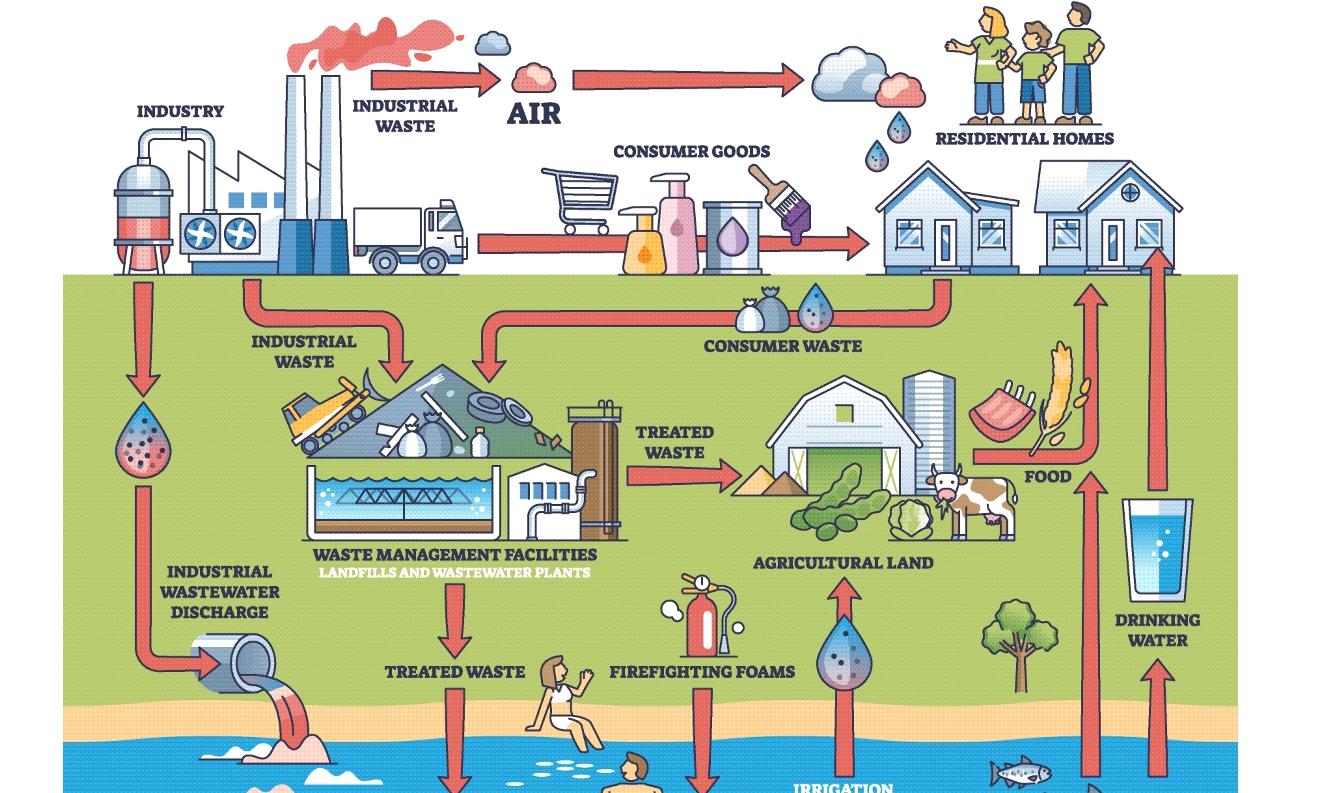
Kommentare