We provide science-based information on health, nutrition, and sustainability — independent of sponsors, the food industry, and dietary supplement manufacturers. Find out more: our mission.
A balanced, plant-based diet with few to no industrially processed foods generally provides sufficient macro- and micronutrients, with the exception of vitamin B12. However,phytochemicalsare particularly relevant for maintaining health and healing, even though they are not considered essential nutrients – apart from vitamins.
---
Basics
Vitamin D is a group of fat-soluble vitamins. The two most important members of this group are vitamin D2 (ergocalciferol), which occurs in plants, and vitamin D3 (cholecalciferol), which is produced in animal organisms. Since the human body can produce vitamin D3 itself in the skin when exposed to sufficient sunlight, it is not a vitamin in the strictest sense. Rather, vitamin D3 is a prohormone.
Occurrence
Only the provitamin ergosterol is found in trace amounts in plant-based foods. Mushrooms have the highest content: chanterelle (5,3 µg/100 g), morel (5,1), shiitake (0,4), and giant button mushroom (0,2).2 Intake via plant and animal-based foods (e.g., fatty fish) covers only 5 to 20% of the vitamin D requirement. Therefore, direct sunlight on the skin is essential for the production of vitamin D3.
On sunny summer days, the daily requirement is more than covered by this alone. In winter, however, UVB radiation is insufficient. The body no longer produces enough vitamin D in the skin and begins to deplete the reserves built up during the summer.3
Intense sun exposure is considered a cause of skin cancer. However, a study from southern Sweden shows that women with sufficient sun exposure have fewer melanomas than those who receive too little sunlight. Long-term sun exposure causes squamous cell carcinomas (non-melanoma skin cancer), while sunburn and excessive radiation increase the risk of melanomas.6
Storage and preparation losses
Vitamin D is sensitive to light and oxygen, but cooking losses are minimal. Since vitamin D intake from food plays a minor role, preparation losses are of secondary importance.
Nutrition - Health Vitamin
D plays a vital role in regulating blood calcium levels and bone formation. It also fulfills many other important functions in the body, as has been increasingly recognized in recent years. Sunlight has further benefits – but with excessive exposure, the disadvantages outweigh the advantages.3
The need for exogenously administered vitamin D depends strongly on the duration and intensity of UV exposure and the associated endogenous vitamin D synthesis. The recommended intake of 20 µg/day for children and adults assumes insufficient synthesis in the skin. In infancy, a prophylactic dose of 10 µg/day is recommended.3 The US Institute of Medicine (IOM) recommends a daily intake of 15 µg.9
Risk Groups
Risk groups include, in particular, seniors and people who spend most of their time indoors. Other risks include the consistent use of sunscreen or covering the skin almost completely with clothing outdoors.5
Deficiency Symptoms
Vitamin D is considered a critical vitamin. According to a national traffic study, 90% of the population in Germany does not meet the recommended intake levels.3 Vitamin D status is also suboptimal in other countries. Serum 25(OH)D concentrations below 30 nmol/L indicate a risk of deficiency. Furthermore, a serum 25(OH)D concentration below 25 nmol/L is a traditional threshold used in Europe to define vitamin D deficiency due to a metabolic bone disorder.8
Among the symptoms of vitamin D deficiency, rickets in children is the most well-known. It leads to bone deformities, particularly of the sternum, skull, and spine. Osteomalacia (softening of the bones) is the equivalent in adults. It manifests as diffuse bone and muscle pain.3
Oversupply
Oversupply does not occur with strong UV exposure or through diet. Only massive overdoses from vitamin D supplements can lead to hypercalcemia, the acute symptoms of which are vomiting and dizziness. In the long term, kidney calcification can occur.3 There is a large margin for higher vitamin D intake without risk of overdose. Amounts up to 2500 µg are not toxic if they are limited to once every 4 months or daily for a period of 4 days.7
Functions in the body
Vitamin D has a wide range of functions and affects health in many ways.3,4,5
The classic functions of vitamin D include maintaining calcium (Ca) and phosphate (P) homeostasis. Therefore, vitamin D is involved in bone mineralization, muscle contraction, nerve conduction, and cell function throughout the body.
Furthermore, calcitriol plays a role in regulating gene expression, cell differentiation, and cell proliferation: receptors for vitamin D, which can activate calcidiol, have been found in over 30 different cell types and tissues. These include immune cells, brain, muscles, heart, pancreas, thyroid, thymus, ovarian epithelium, intestine, breast, and prostate tissue.
"Calcitriol" has, among other things, immunomodulatory and anti-inflammatory properties, is involved in glucose metabolism and blood pressure regulation, and influences brain metabolism and fertility.
There is growing scientific evidence that a good vitamin D status contributes to the prevention of common chronic diseases, including musculoskeletal disorders, metabolic syndrome, type 2 diabetes, cardiovascular diseases, autoimmune diseases, infectious diseases, cancer, and mental illnesses.
Absorption and Metabolism
In the skin, previtamin D3 (not provitamin D3!) is produced from 7-dehydrocholesterol with the help of UV-B radiation. This is thermodynamically unstable and undergoes a rearrangement, resulting in cholecalciferol (vitamin D3). This process is regulated. As a result, the body is protected in the short term from vitamin D3 overproduction due to excessive radiation. In the long term, increased melanin production in the skin provides protection against vitamin D3 toxicity. The body produces a similar amount of vitamin D3 during brief sun exposure (with a sufficiently high UV-B component) lasting a few minutes as during comparable exposure over a longer period.3
Vitamin D3 enters the bloodstream and is transported to the liver via vitamin D-binding protein (DBP). There, hydroxylation produces the intermediate calcidiol. The kidneys can then convert calcidiol into the biologically active hormone 1,25-dihydroxyvitamin D ("calcitriol") through further hydroxylation. This step is tightly regulated. Excess calcitriol inhibits its production, while parathyroid hormone and low phosphate levels promote its production.3
People with darker skin need more time outdoors to produce the same amount of vitamin D. The level of 7-dehydrocholesterol in the skin decreases with age. Furthermore, the skin's ability to produce vitamin D3 decreases by about a factor of 3 with age compared to a 20-year-old.3
Storage - Consumption - Losses
Vitamin D is produced in the skin after UVB exposure and is also obtained from food. After ingestion, it enters the bloodstream and is converted in the liver to calcidiol, the main form of vitamin D that circulates in the blood and reflects vitamin D status. Some of it is stored in adipose tissue.11
In Nordic countries, serum calcidiol levels only decrease by 20 to 40% during the winter, even though the UVB winter lasts for more than six months. The half-life of calcidiol in the blood is approximately 15 to 25 days, but can reach up to 82 days after vitamin D supplementation.11
Studies with radiolabeled vitamin D showed that the whole-body half-life is approximately two months.12 This reserve is necessary to compensate for the large fluctuations in vitamin D supply from sunlight. Excretion occurs via the water-soluble calcitroic acid in the bile.3
Structures
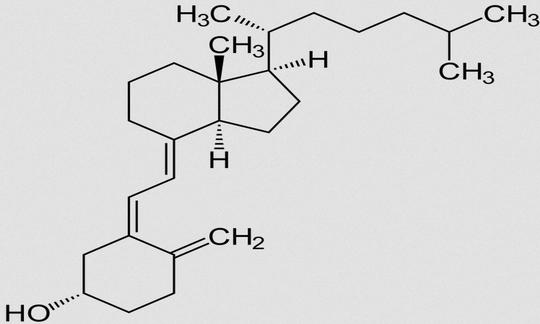
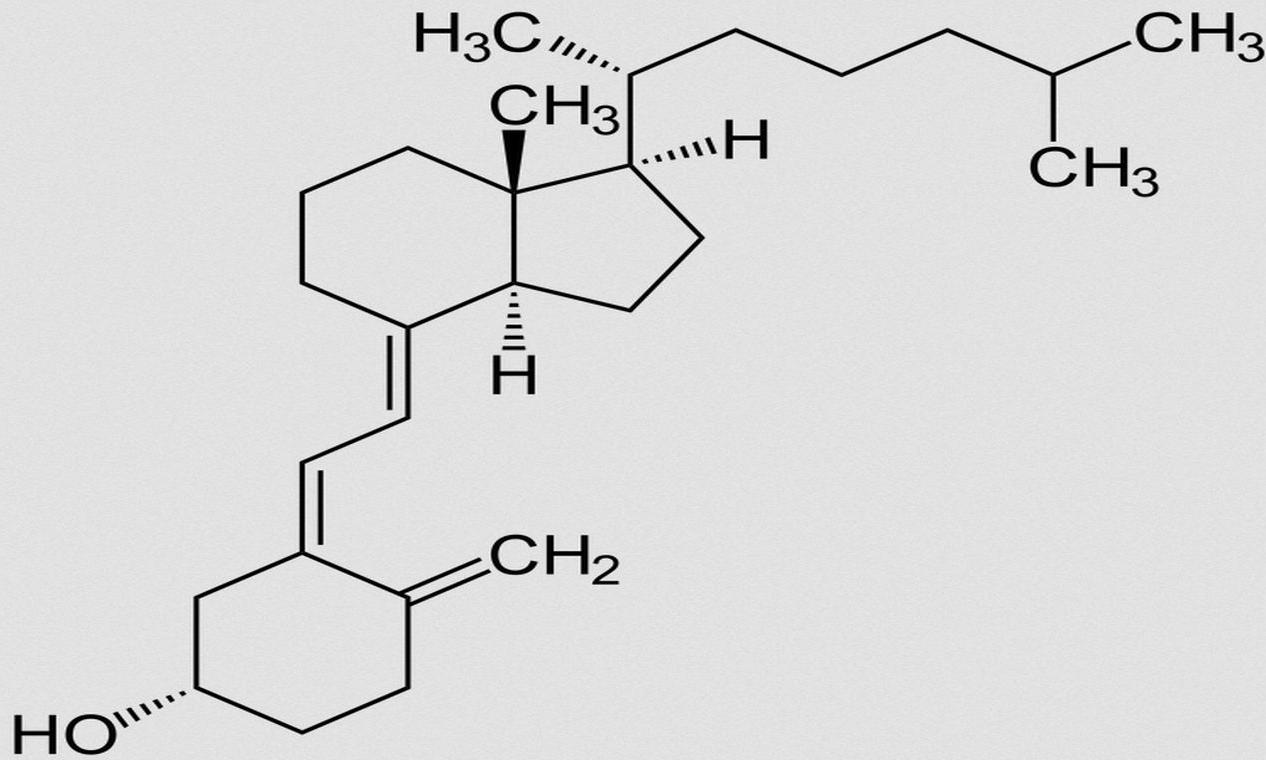
Cholecalciferol and "calcitriol" are highly potent secosteroids with structural similarity to steroid hormones.








Comments